Category: Research & Exhibitions

Regular review of Contemporary Artists – Final selections

This is the final selection of paintings from the Contemporary British Painting website:

Contemporary British Painting

With this final selection I have taken a different approach to my review and commentary on the paintings. I have selected my preference from the five or six paintings of each artist and will write my response to the selected work. This will be performed without any reference back to the site to read the artists or curators statements. My aim is to capture my feelings and to try and articulate them without any influence or expectation.

51 : Barbara Peirson
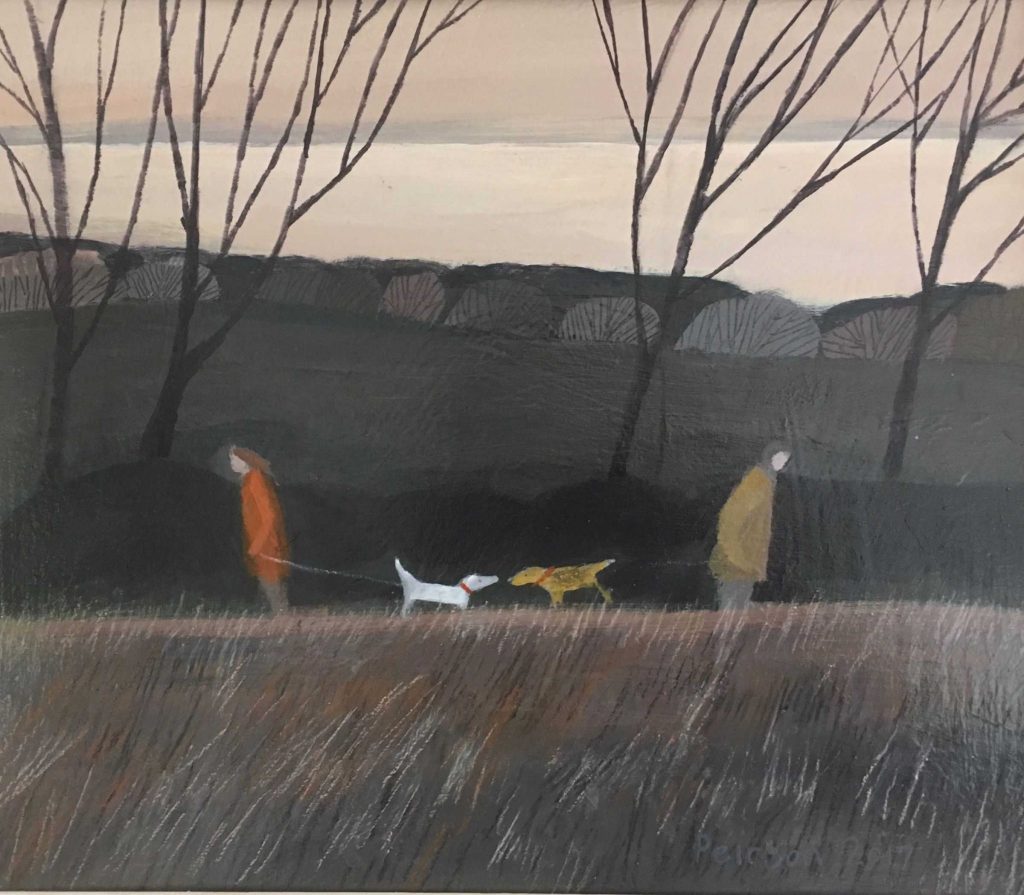
Chance encounter, Acrylic on board, 50 x 50, 2018

This painting appeals to the sentimental side of me. It is all about the point of near contact between the two dogs. In a naïve way it suggests the scene by Michelangelo on the Sistine chapel where the fingers of God and man nearly touch. This is what Comes across to me in that transitory moment where the two dogs introduce themselves. That the two humans are ambivalent of this interaction typifies how many of us pass each other by without acknowledgement. The autumnal scene is communicated in stripped back simplistic style which nonetheless is expressive.

52. Ruth Philo
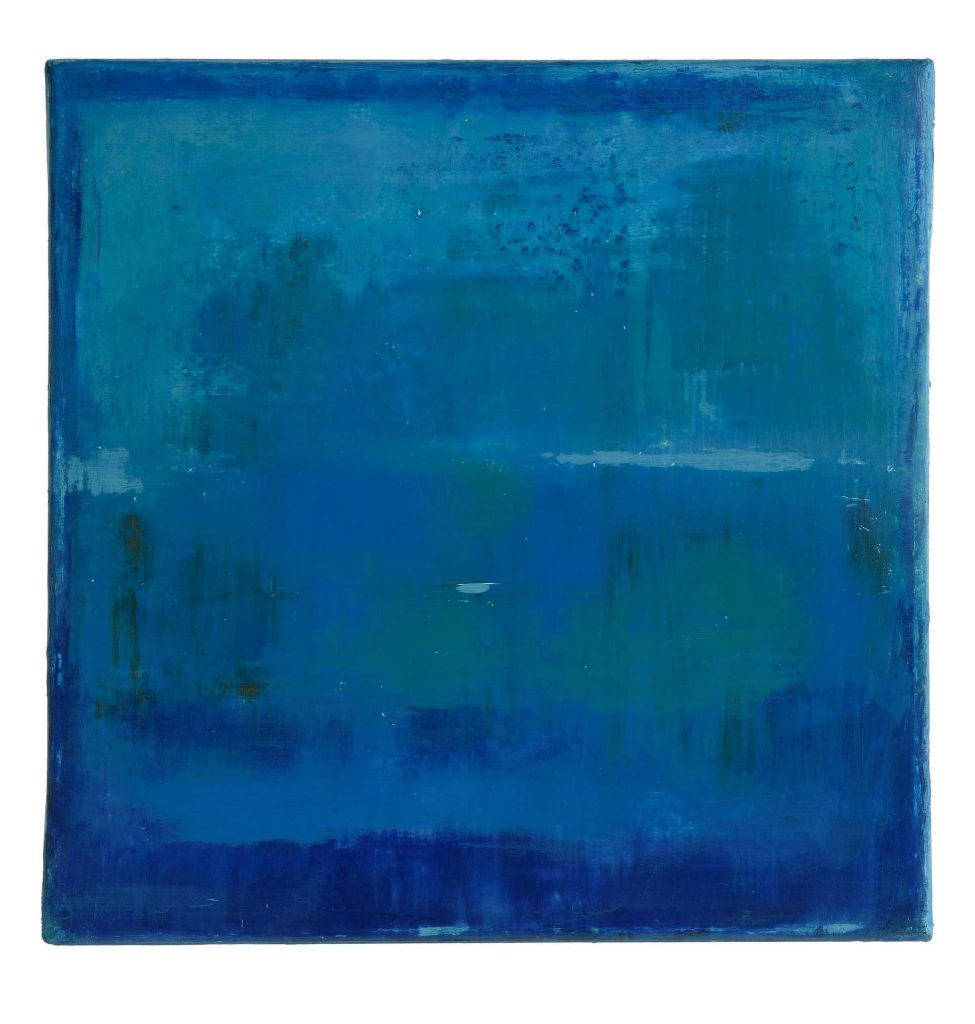
Breath, Oil – wax and gesso on canvas, 30 x 30 cm, 2015

I was drawn to this abstract painting due to it’s similarity to the paintings of Mark Rothko. The Seagram murals by Rothko at Tate Modern, where I have spent much time looking at the paintings, are brought to mind. Once you relax in front of these paintings and allow the mind to wander a myriad of shapes and forms play across the canvas. Obviously the painting above by Ruth Philo doesn’t have the grandeur of the Seagram Murals as it is only 30 x 30 cms but perhaps it represents a small section. I am also reminded of an abstract painting of mine which has a similar quality. I have also now given this painting an ambiguous title.
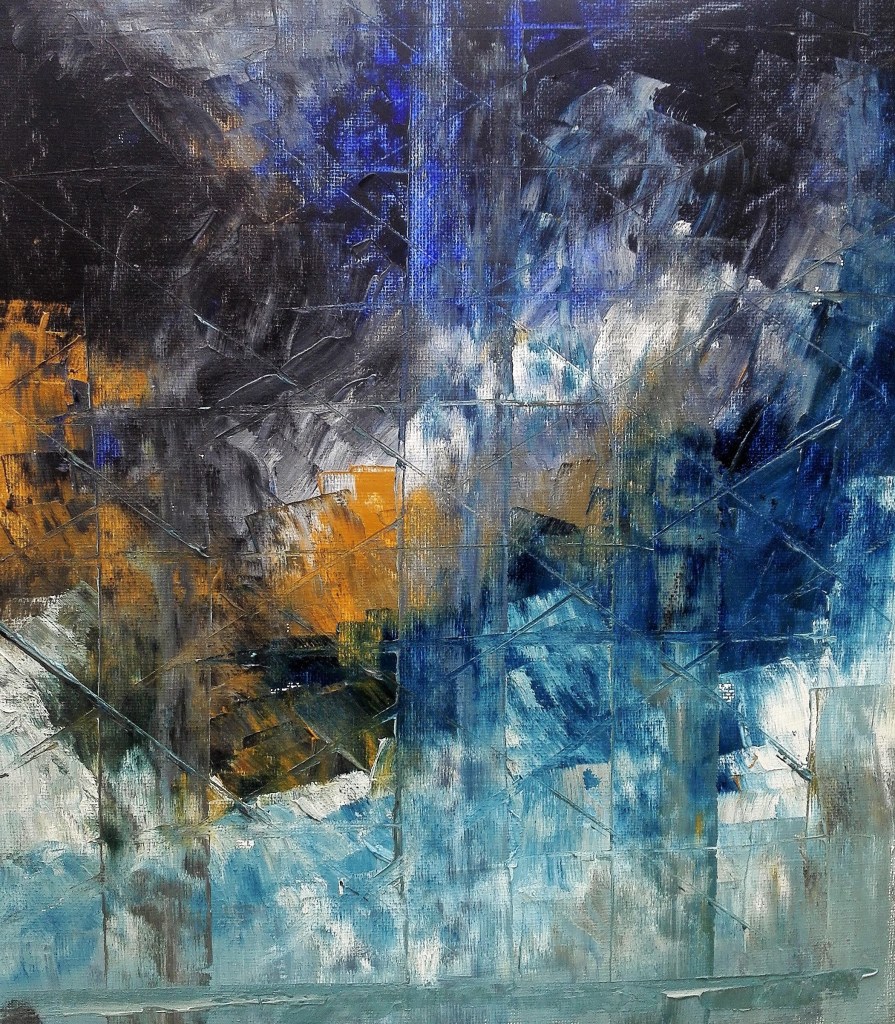
Mark Taylor, Memory of summer, Oil on canvas, 28 x 25 cms,2020

53. Alison Pilkington

A sculpture that will never get made, Oil on canvas, 50 x 40 cm,2019

I find this painting hard to read. It is a figurative study that has an unsettling look as it hovers somewhere between dream and reality. Is it forming or dissolving?

The title ‘A sculpture that will never get made’ indicates that the subject has form but this is partly negated by the ephemeral wisps of forms that surround it. Could it be that the sculpture can’t be made as it is in a transient state?

54. Narbi Price
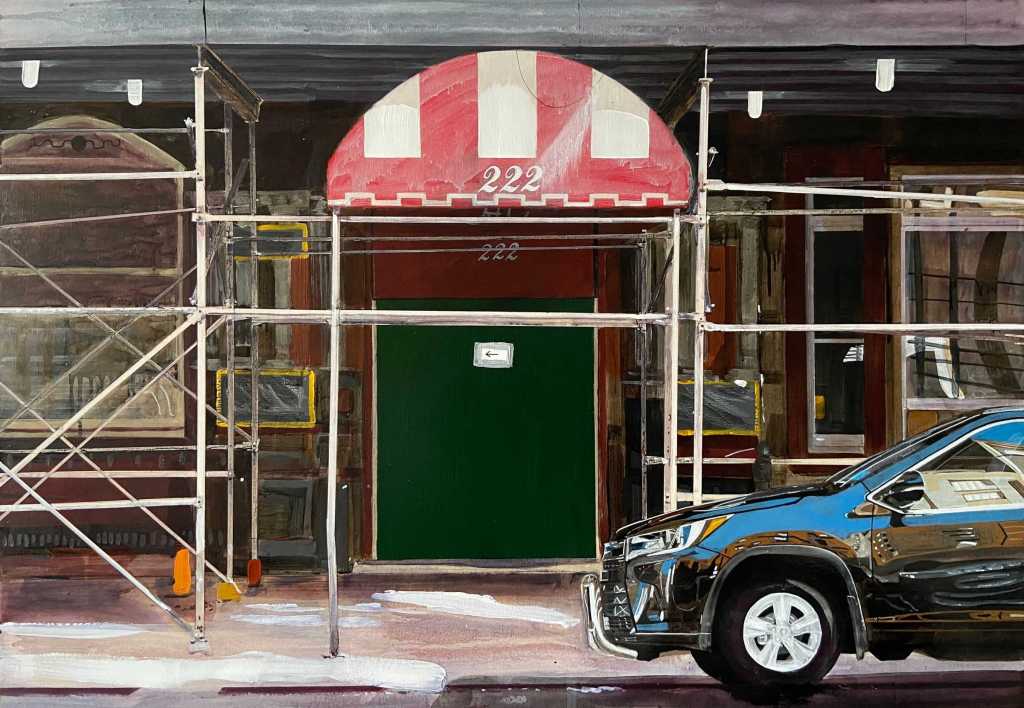
Untitled awning painting Chelsea Hotel, Acrylic on board, 70 x 100 cm,2020

I wonder whether this painting is of the same Chelsea Hotel that was the title and setting for the famous song by Leonard Cohen. Whether it is or not wouldn’t detract from the photorealistic depiction. At first glance the painting could easily be assumed to be a photograph. It is only on closer examination that the meticulous brush strokes and finely applied paint reveals itself. I am also struck by the gleaming, highly polished car situated at the bottom right of the painting. The images of the surrounding buildings, which are reflected in the mirror like surface, are finely observed and handled.

55. Freya Purdue
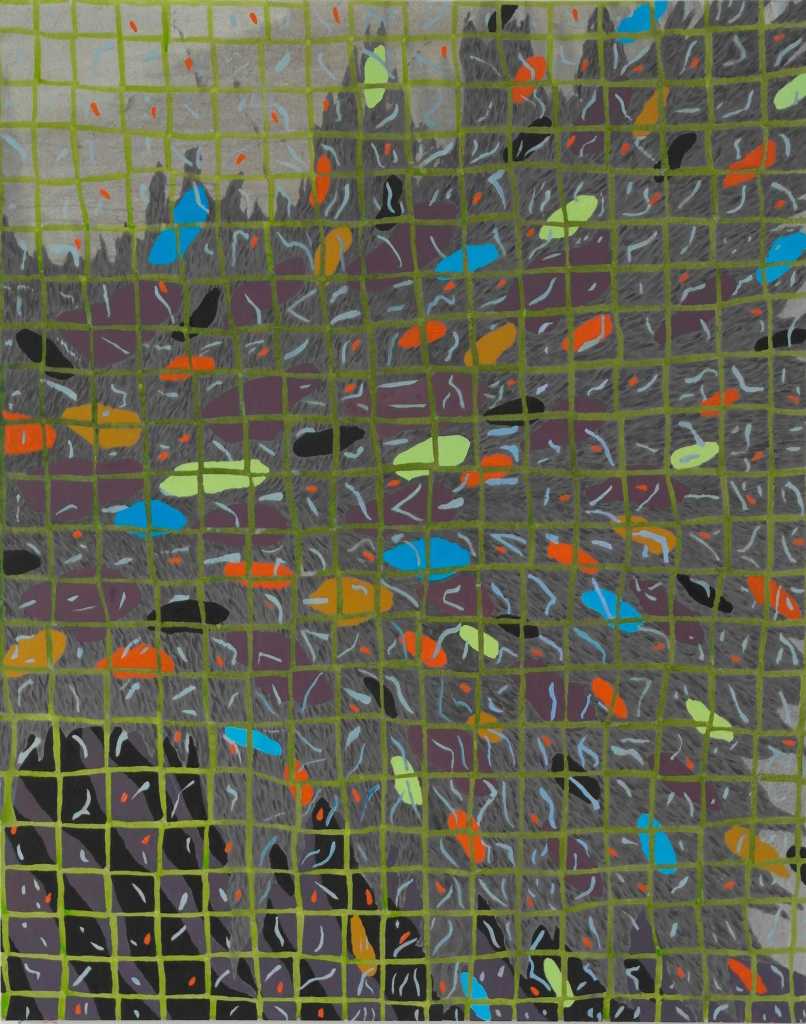
Quercus, Oil on canvas, 150 x 120 cm, 2018

The water is flowing beneath the grid that our feet we are standing on. The colour pebbles and fish flicker against the river bed and the vegetation. This is what I see when I look at this painting. Was this the intention of the artist, I don’t know.

56. James Quin
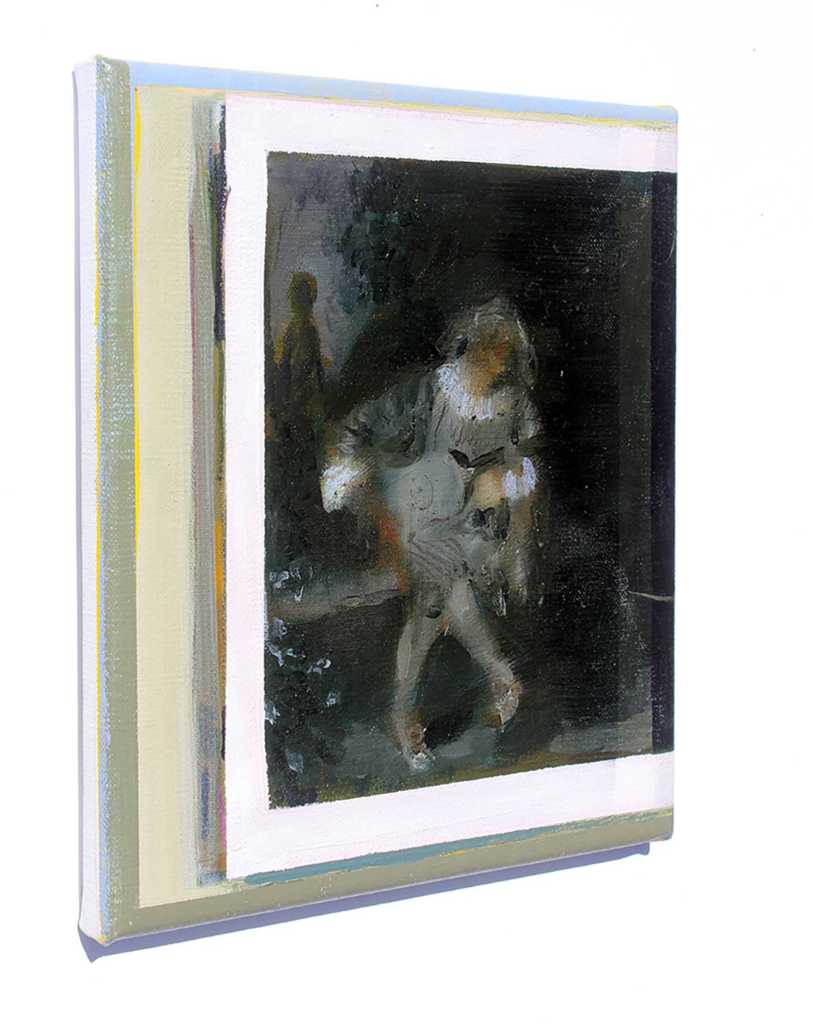
Repetition from reproduction, after Watteau, Oil on linen

This painting was one of a collection where the artist created a blurred reproduction of a painting from art history. In each one they give a clue to the original in the title, in this example ‘after Watteau’. Is the artist intending to blur the links back to the original works or remind us of the past?

57. Greg Rook
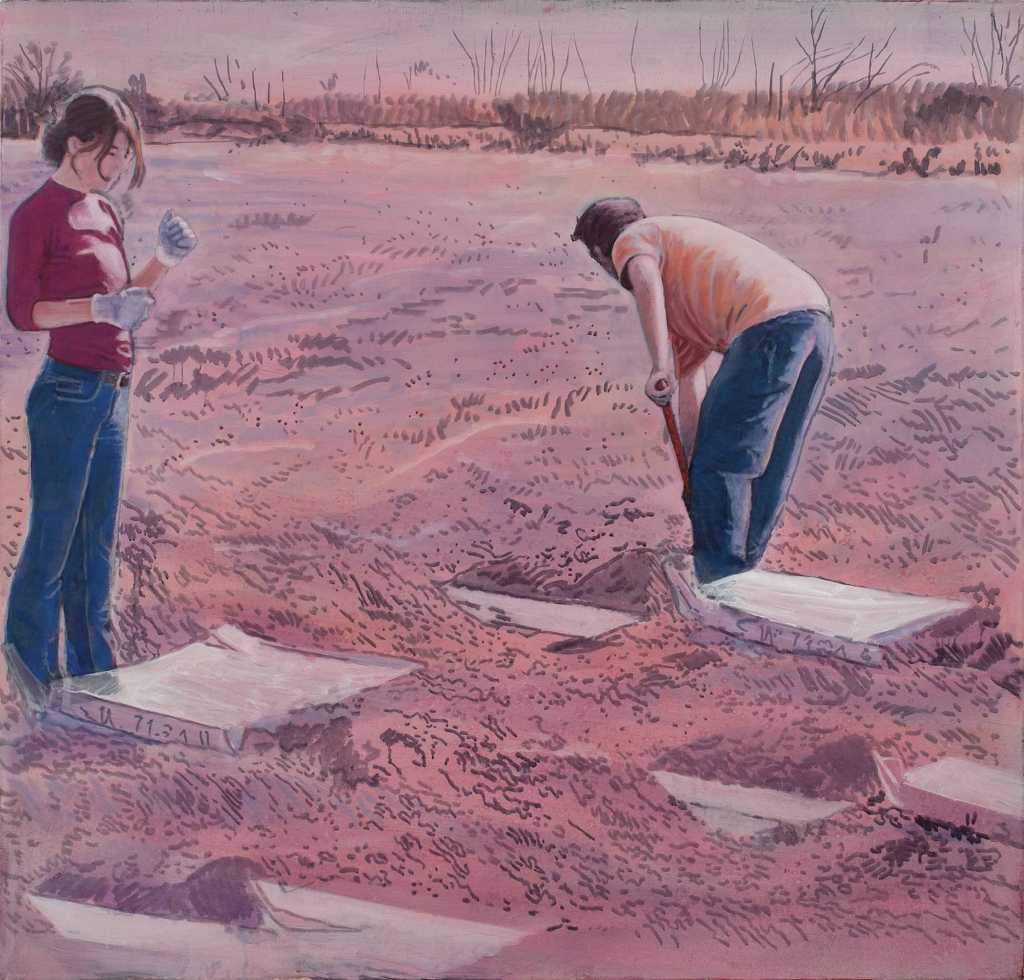
It is the land they represent, Oil on canvas, 118 x 123 cm, 2019

In the year of Covid 19 this painting takes on a poignant significance. I note that it was completed in 2019 and therefore could act as a prediction. However it is more likely to reference a conflict or conflicts in general where the outcome has not been good. The male figure digs the graves whilst a woman looks on. The soil is thin and sandy, orangey red in colour and the background bleak with leafless trees. The title hints at the circle of life returning the bodies to whence they came.

58. Katherine Russel
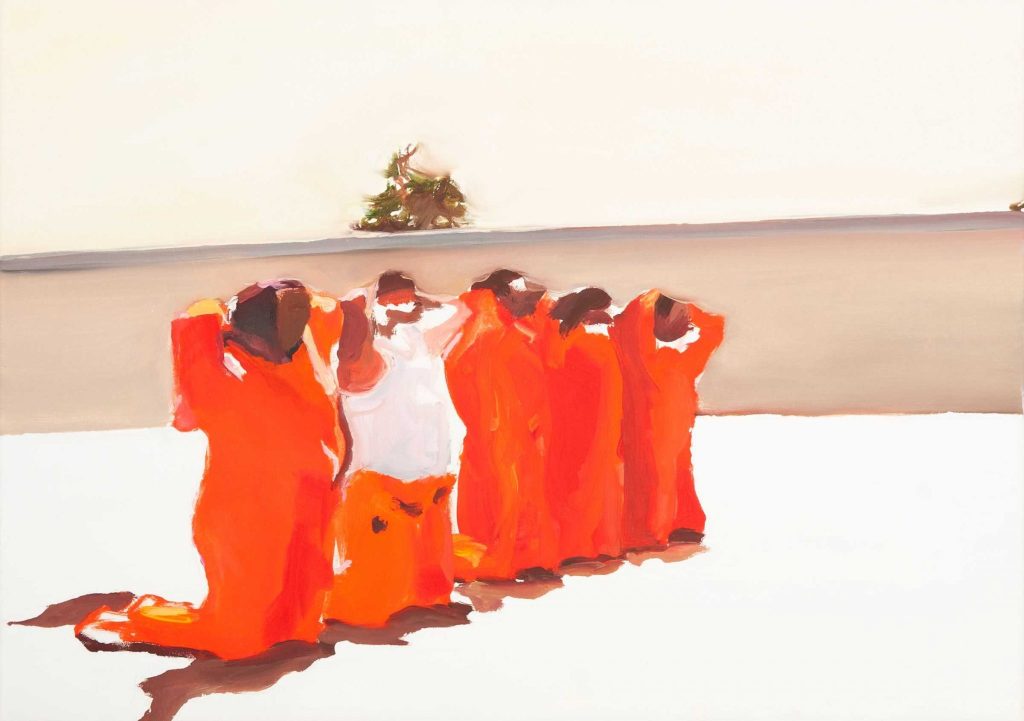
Like Guantanamo, 70 x 50 cm, 2018

The blurred forms of five kneeling men, hands above their heads await there fates. They are all dressed in identical orange clothes except for one whose top is absent and reveals a white t-shirt. The shadows of the men are more or less directly below them suggesting that the sun is high above, beating down on the hard white surface. A high wall in the background with a tree top just visible above it completes the scene. A depiction of imprisonment and fear.

59. Wendy Saunders
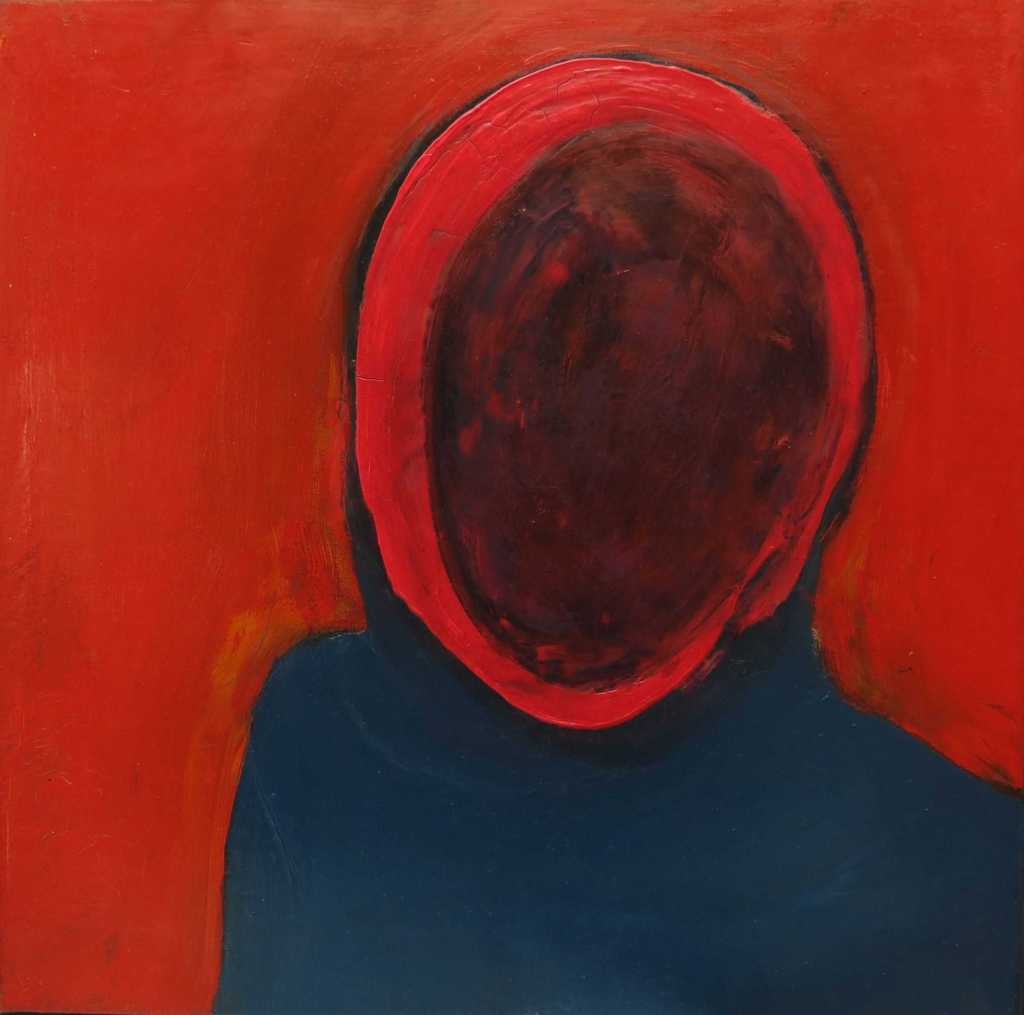
We are all Pussy riot, Oil on linen, 40 x 40 cm, 2013

The key to this painting is in its title where it references Pussy Riot the Russian feminist protest punk rock and performance art group. The groups membership has always been numerous and changeable making the individuals members of less importance. They are often photographed wearing knitted balaclavas to hid their identities. Wendy Saunders painting uses this anomality to great effect, the simple figure is featureless, the pose is threatening and the colours bold and challenging.

60. Stephen Snoody
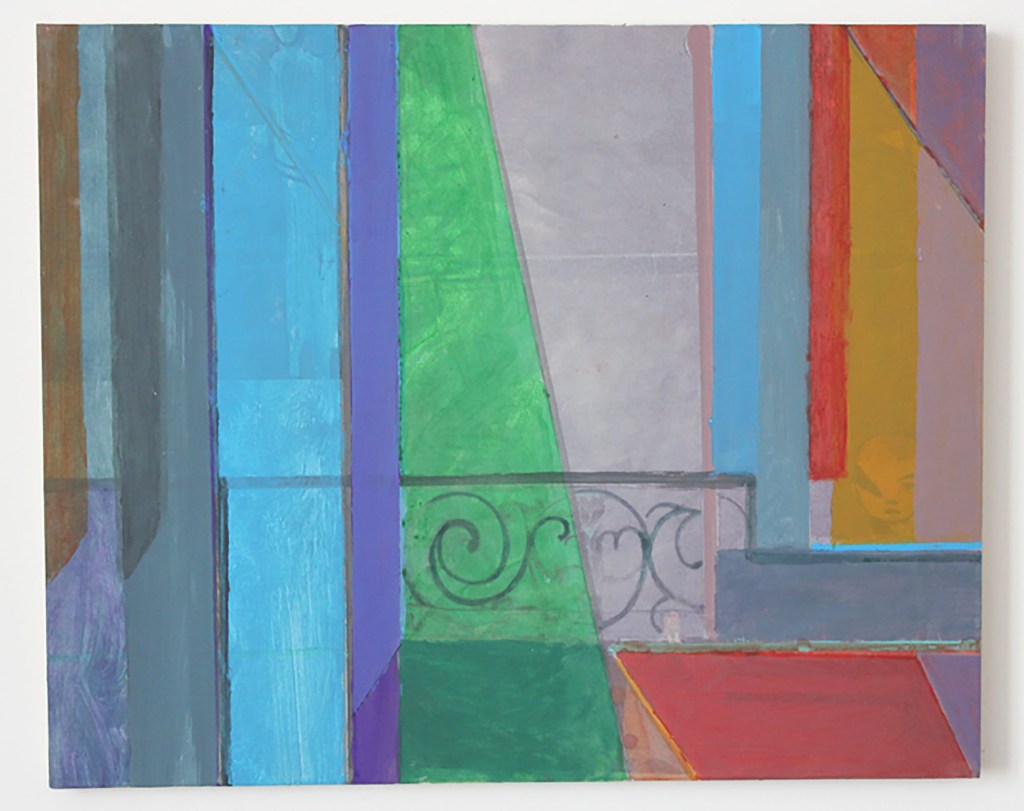
Untitled 132, after Matisse

The influences of Henri Matisse run through this painting. The blocks of pastel colours, the suggestion of looking out of a room towards the view outside are an amalgamation of idea and parts of paintings by Matisse. Stephen Snoody has been honest with the viewer as to the influences which, I feel, enhances the experience of looking at this painting.

61. David Sullivan
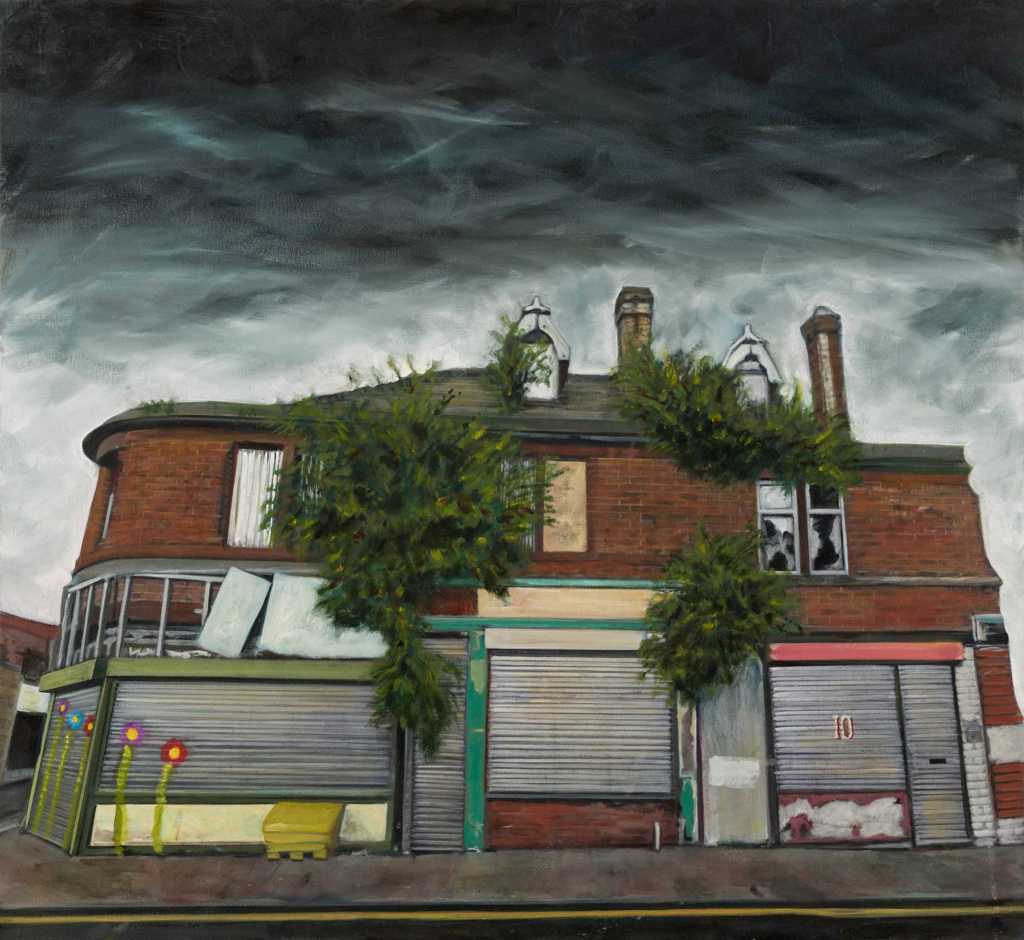
All the riches of Britain, Oil on canvas, 90 x 97 cm, 2014-15

This painting immediately resonates with me as there are numerous links to my own practice and subjects matters. The painting depicts a row of run down shop fronts which are all part of a decaying building. There are shrubs growing out of the brickwork, the windows are either smashed or boarded up and the shop fronts are covered by shutters some of which carry graffiti. The scene is depicted under on ominous looking leaden sky. To top it all there is a direct reference to the political and social economic situation in which the scene exists as the title of the painting is ‘All the riches of Britain’.

62. Harvey Taylor
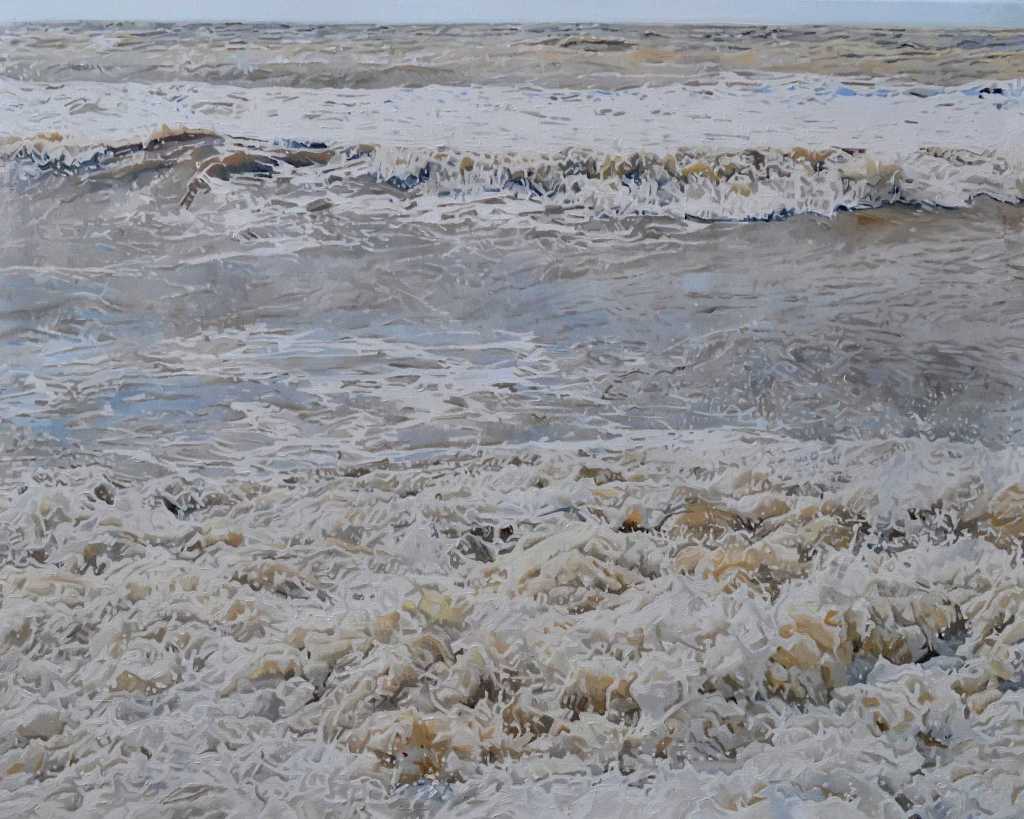
Foamy Sea, Oil on canvas, 70 x 100cm, 2017

A moving, as in the movement of the subject, study of the sea making landfall. It is not a particularly rough sea just a typical series of waves meeting what I suspect is a pebbled beach. The foreground is all foamy, bubbling whiteness, the middle ground is the sea taking breath in readiness for the next wave which can be seen forming just behind it, this leads to the choppy sea behind and in the background a thin line of distant sky. The whole scene is wonderfully observed and meticulously painted.

63. Molly Thompson
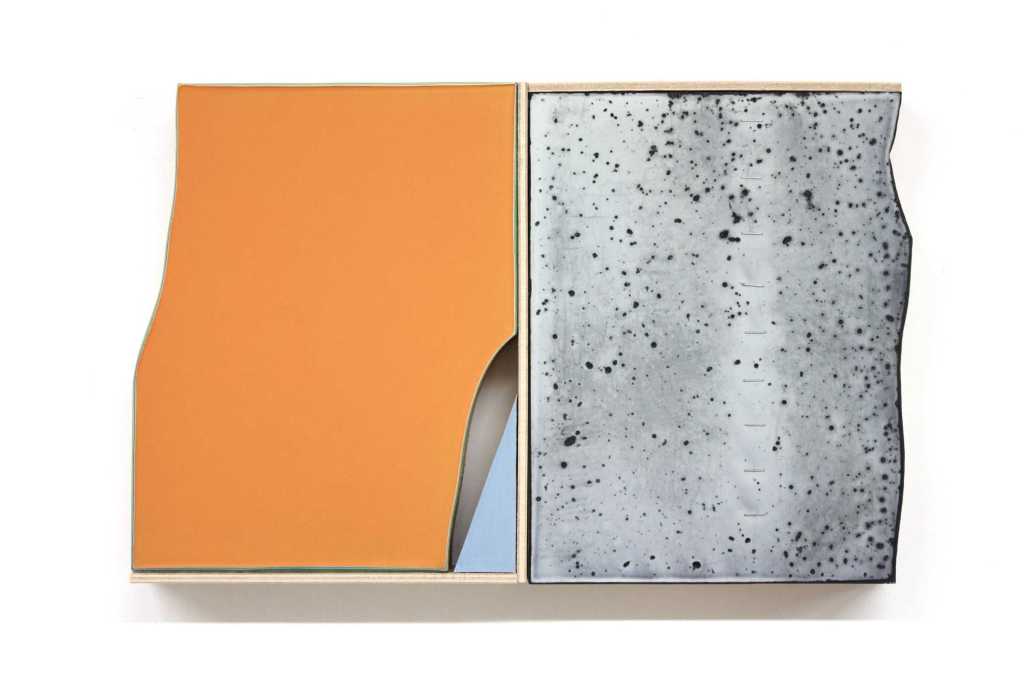
Bachgroundnoise 2, Acrylic on panel, 25.5 x 40 cm, 2020

This painting is much harder to read than the previous ones. I struggle to get past the literal interpretation of what I see. It is a near photorealistic painting of two wall tiles, one pale orange the other speckled grey, which have been presented to us partially framed and displayed on a white wall. The tiles have broken edges which the orange tile casts a shadow which although realistic doesn’t follow the contour of the broken edge. I guess that there is a clue to the work contained in the idiosyncratic title but it passes me by.

64. Judith Tucker
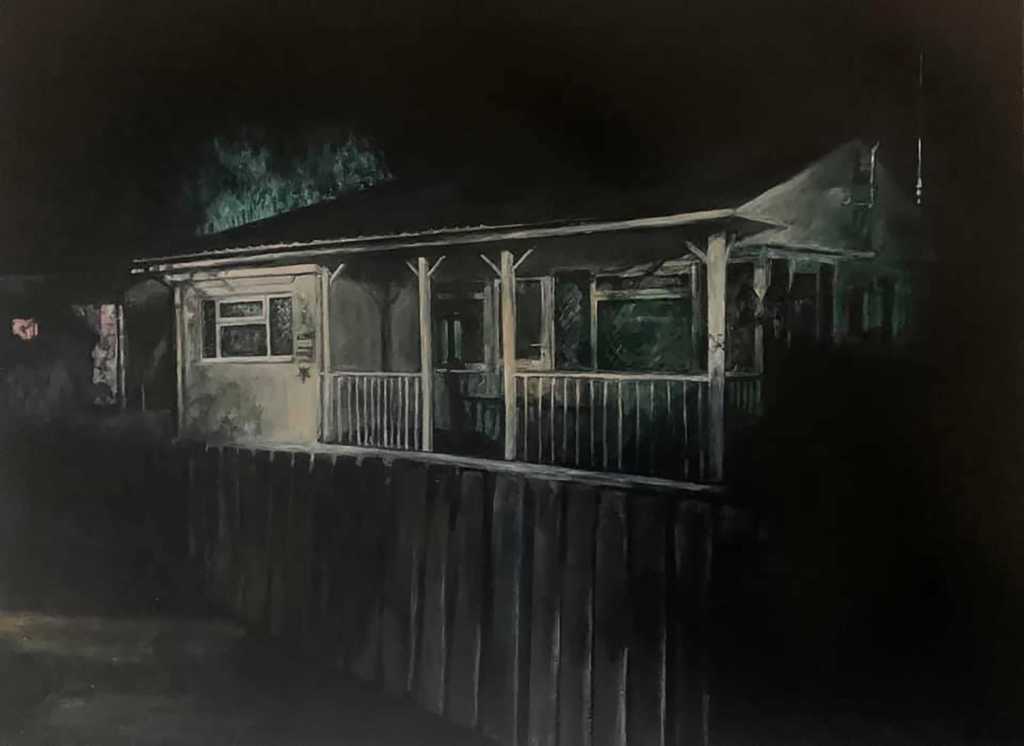
I only come here when the weathers good, Oil on linen, 60 x 80 cm, 2019

This painting very much resonates with my own practice. There are similarities in topic, composition, style and technique. In Judith’s painting we are shown what looks to be a holiday home, a chalet, perhaps situated neat to the coast. It is late, maybe the middle of the night, the chalet has a ghostly appearance hovering in the half light. There are shadows all around the building and there is no light emanating from it. All is quiet. What happens here, what has happened here? Nothing is revealed it is left to our imagination. The whole scene and the storytelling is supported by the cryptic title ‘I only come here when the weathers good’

65. Mary Webb
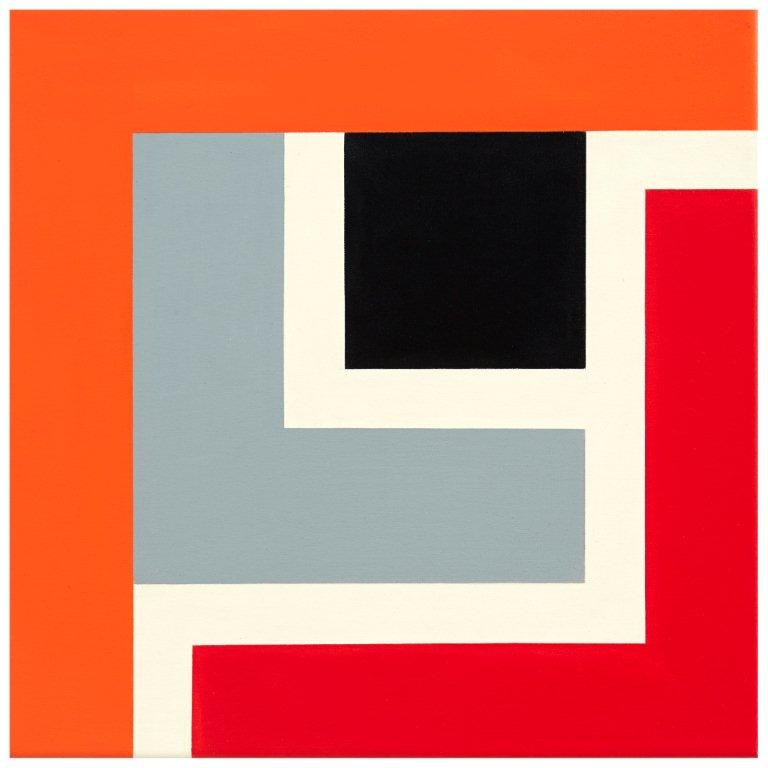
Utah XI, Oil on canvas, 45 x45 cm, 2014

When I was selecting this painting I recall that is was one of a series of works that in concept and appearance were similar to each other. All the paintings are on square canvas’s which are divided into straight lined rectangles, square and L shapes. The blocks are painted in single colours consisting of, toned down, red, orange, black and grey and the dividing lines are left white. The overriding link between the paintings is partially in common title ‘Utah’ and the homage that they pay to the paintings and ideas of Piet Mondrian.

66. Casper White
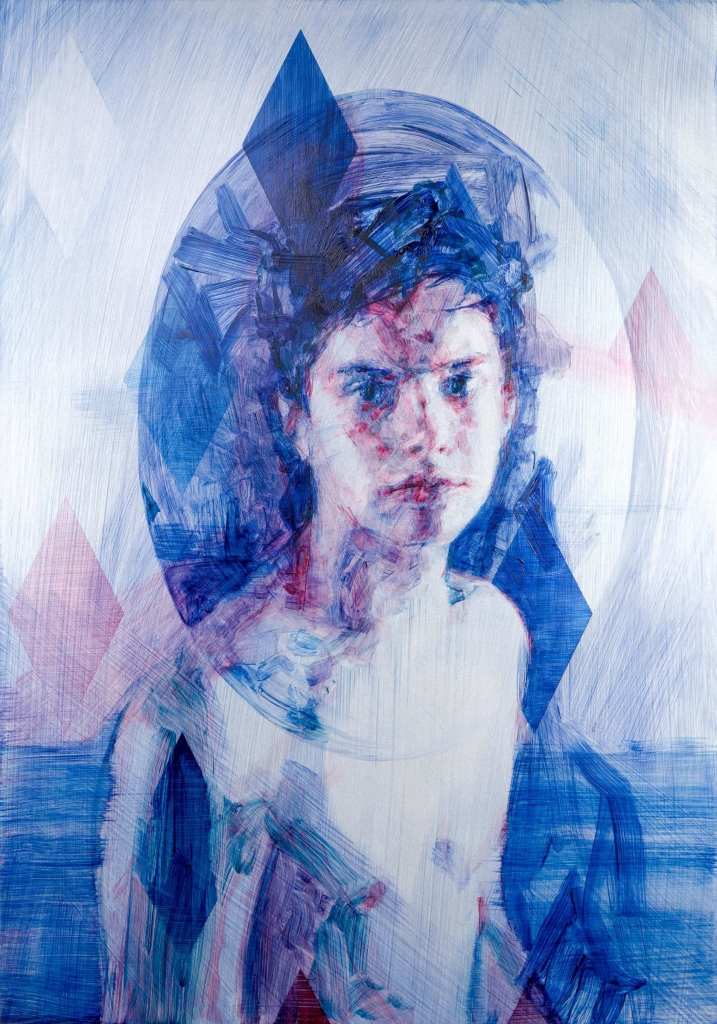
We try to feel it out, Oil on aluminium, 100 x 70 cm, 2019

With a minimal palette of colour, basically blue and red on a white background, the paint has been loosely scrapped and applied in layers to build up a haunting image. The figure emanates from intense gazing eyes that draw you towards the face. It is only when you manage to look away from the eyes and head that you notice that the body supporting it is really not there.

67. Joanna Whittle
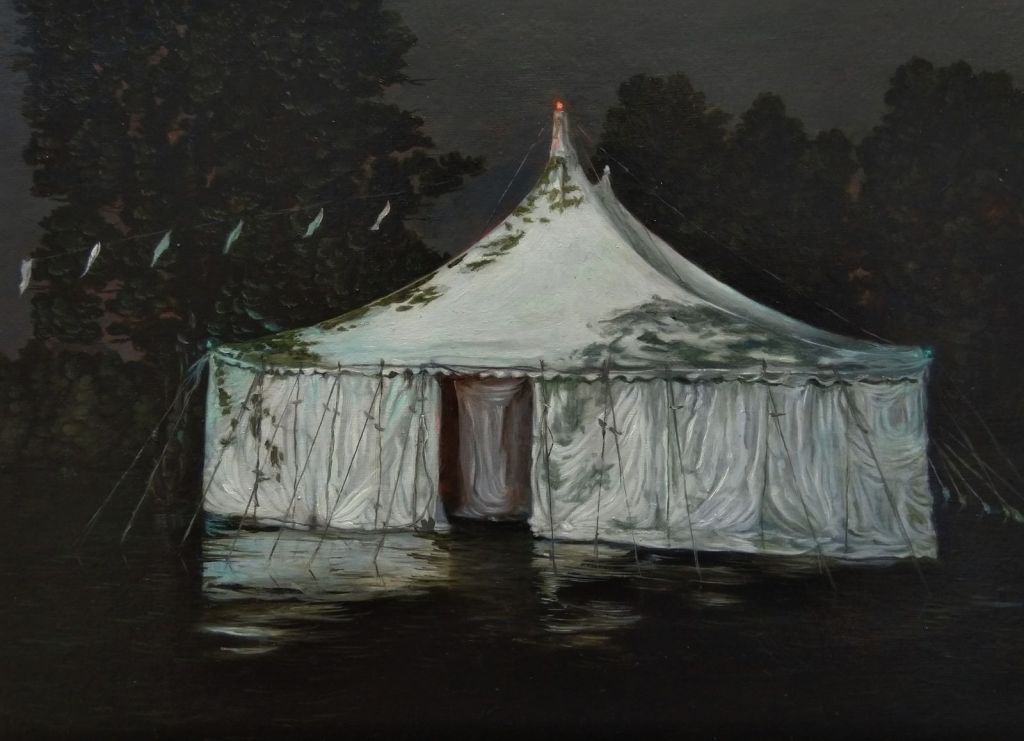
Ghost lights, Oil on canvas, 16 x 22 cm, 2019

This painting is one of a series where Joanna Whittle uses Marquees, tent and big tops in imaginative and slightly surreal ways. The painting above is a good example of where a seemingly banal subject matter is raised to an object of shimmering beauty which also suggest an underlying menace. The marquee has a ghostly demeanour. Its stark whiteness glows against the black background and shadowy exterior and it appears to hover in its space. Large parts of the painting are either dark shadows with minimal flecks of dull grey which emphasises the marquee. The most intriguing aspect is the entrance to the marquee, which is central to the painting. White canvas obscures our view of the dark interior. There is nothing welcoming. What horrors lie within?

68. Sean Williams
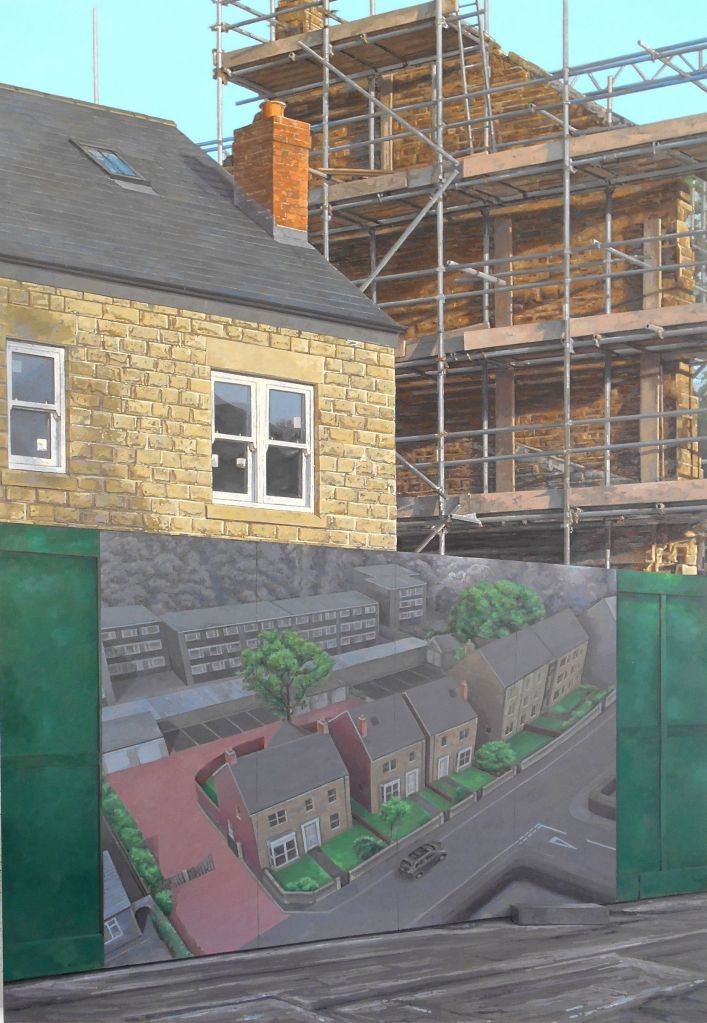
It Haunts It, Acrylic on board, 85 x 60 cm,2013

This painting could almost be an advertising photograph for a new housing estate. It is a tour de force in linear perspective coupled with photo-realism but, for me, lacks feeling, it feels cold. The intricate work that has been completed, especially on the scaffolding, has been painstakingly rendered and I suspect took the artist many hours to complete. The title adds an air of intrigue ‘ It Haunts It’ as it raises a question as to what is haunting what? To my mind it is the idealistic, ‘artists impression’, of the housing development which sits in front of the building work which is challenging the builders to replicate it. I also imagine a quiz question asking the where the hoarding is located.
Regular artist review: Contemporary British Artists Nos 41 – 50. A new approach

As I having been working through Parts 4 & 5 of this course I have been reading / studying ‘How to write about Contemporary Art by Gilda Williams’. The book was recommended a essential reading by Level 3 (HE6) students on a Zoom meeting. An extract from this book was part of the reading for Exercise 4 in Part Five.

In section 2 three questions are recommended as an approach to adopt when writing about an artwork. These are:

  1. What is it? What does the artwork look like?
  2. What might the work mean?
  3. What does it matter to the world at large?

I shall use this framework for the next ten reviews where I will pick a single painting and attempt to answer these three questions. The approach will be to select one painting from the next ten artists in the Contemporary British artists website. One a day for the next ten days. My rationale is to practice this technique until it becomes engrained. Additionally my aim is to improve my analytical and writing skills.

For the first few I have adopted a regimented format, asking the three questions and answering them. I will modify this as I progress through the ten reviews.

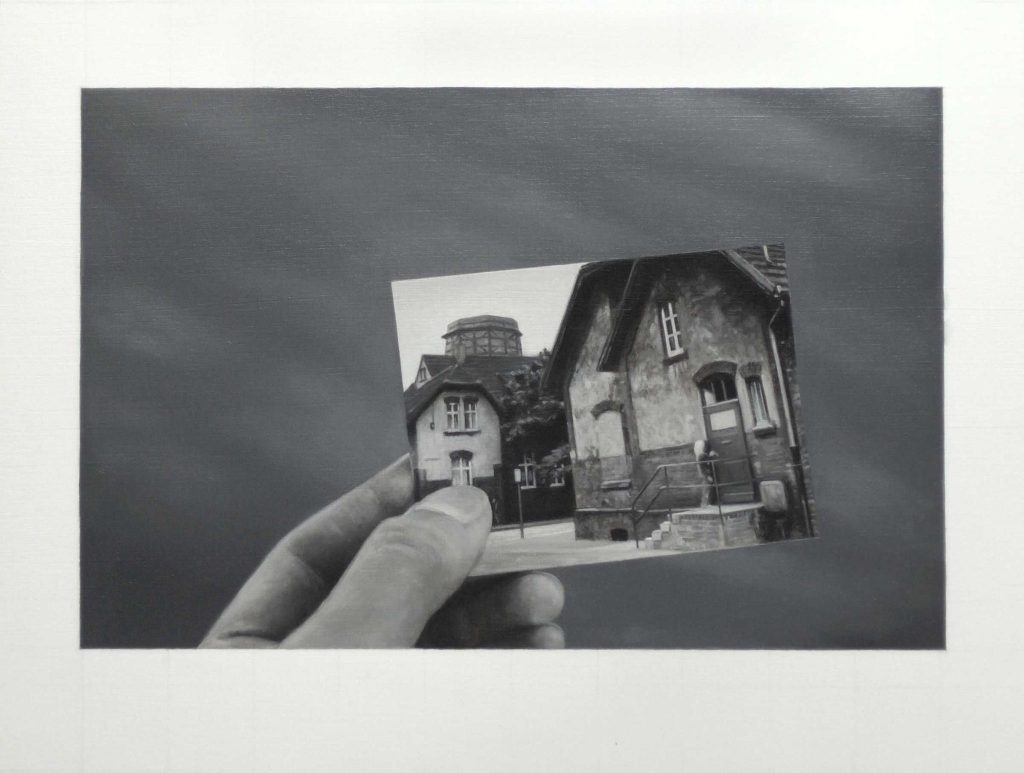
No 41, Nicholas Middleton,

A moment of true feeling, oil on paper, 25x30cm, 2018

What is it? What does it look like?

The painting is photorealistic study in black and white which shows the fingers of some ones left hand holding a black and white photograph or perhaps it is a postcard. The background to the hand and the photograph is grey, slightly undulating in tone. The photograph or postcard depicts a town scene which is set in what appears to be a suburban setting in the 1950’s – 60’s. In the foreground is a building, probably a house with a short set of steps leading to a door. This house is situated on the corner of a street. The middle ground is occupied by another house above which, in the distance, is another building which I’m not able to determine what it is.

What might the work mean?

The way that the photograph is being held suggests that it is being compared to what the holder is seeing. It is as if there is a search going on. Have I found what I am looking for? What has changed around here?

The painting about memory. A search for a past that is fading away.

What does it matter to the world at large?

From a artistic perspective the painting is an example of the photorealism technique. The clever use of a photograph within a painting make this reference clear. The artist is adding his work to this particular genre.

No 42, Cara Nahaul,

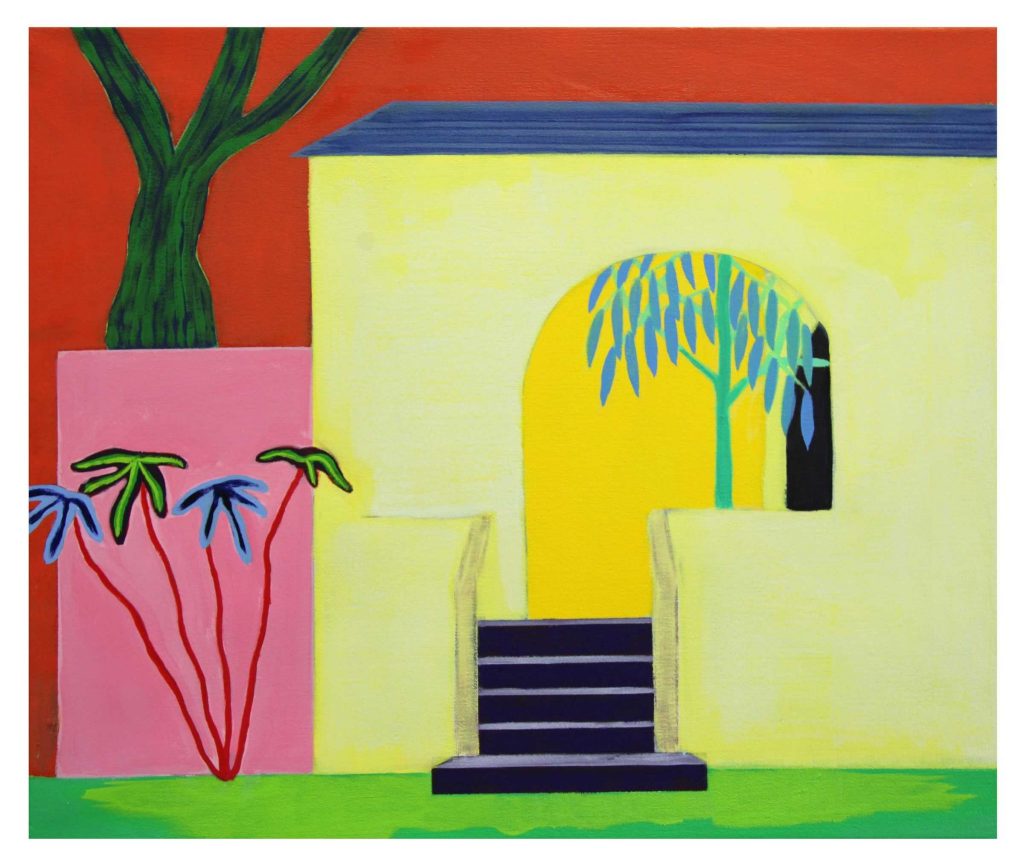
Cara Nahaul, Luna House, 50 x 60cm, 2019

What is it? What does it look like?

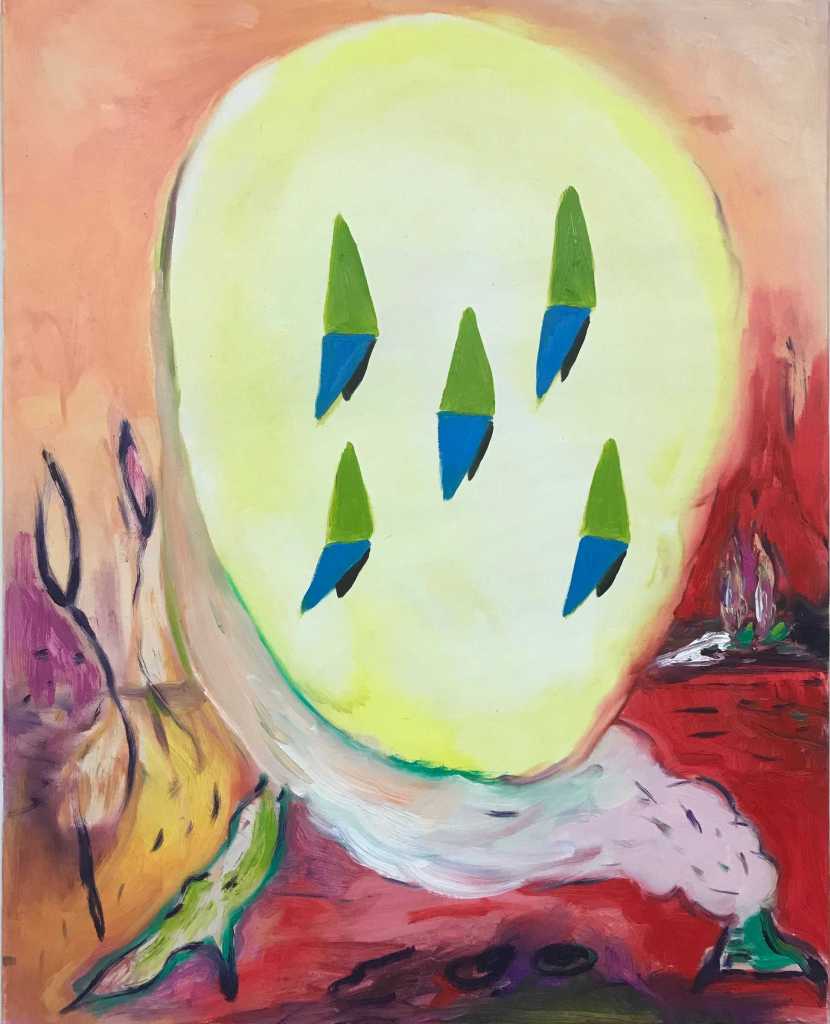
In this painting which looks like it has been painted using acrylics we are shown a bright lemon yellow building, five steps are leading us into the interior which is a warm yellow. An ornamental tree is visible inside. The building and surroundings have a middle eastern or African appearance. To the right of the yellow building in the semi shadow of a pink coloured wall is a four stemmed plant with four large leaves, two are blue, two are green. The background is a dark orange nearly red which suggests sunset. The trunk of a large tree breaks up the background above the pink wall. The composition has been simplified into geometric shapes and the paint has been applied in large slabs of colour with slight tonal variations

What might the work mean?

The painting evokes a sense of calm. It is a tranquil scene in which the observer is enticed into the warm interior of the building. The artist is showing us where they feel safe.

What does it matter to the world at large?

It is a statement that there is safe place, a home for us all. The warmth that we all cherish can be found in the simple pleasures. Look beyond the uncertainties, discard what is not needed.

No 43, Paul Newman,

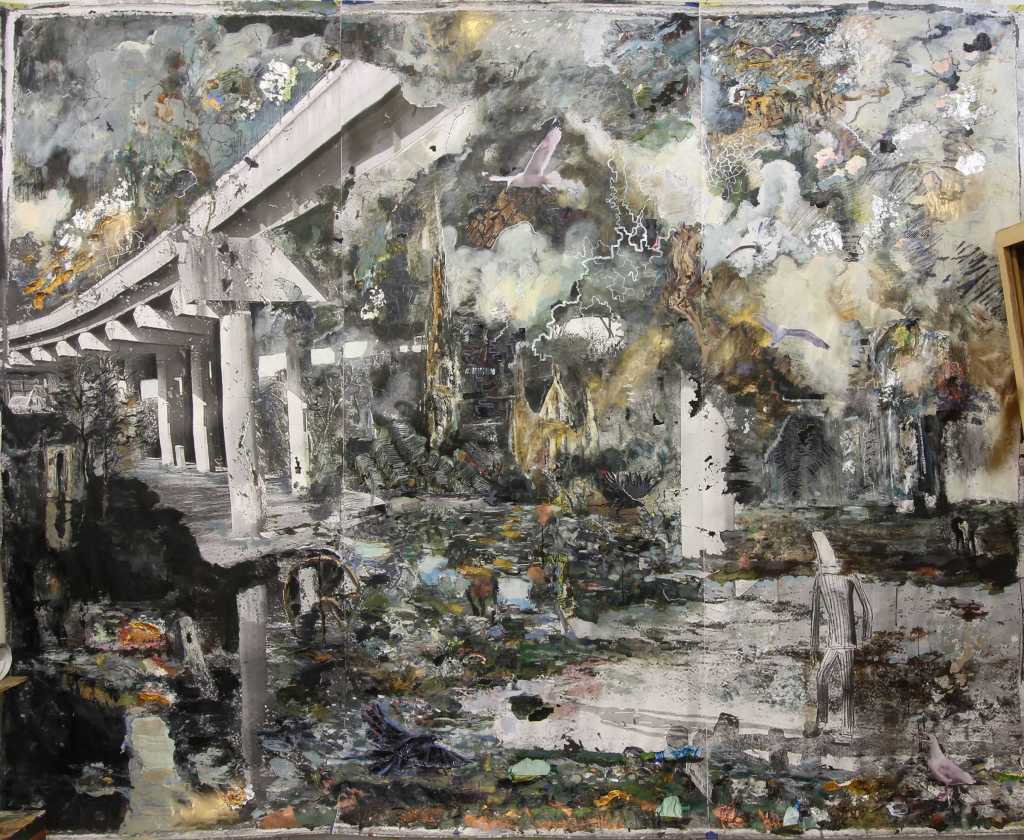
It’s not the end of the world, Mixed media, 190 x 260cm, 2016-19

This is a large work in mixed media. It depicts an apocalyptic cityscape. Set under a raised concrete bridge the remnants of buildings which appear to have been destroyed by fire or bombing are barely visible. Rubble and a pool of leaked water dominates the foreground in which a figure, human like, is present. The scene is rendered in a cold palette of colours, predominantly greys and white with raw sienna and small highlights of light blue. The work has obviously been, changed, reworked and added to over a period of time as it took three years to complete.

It is a comment on the human destruction of the world which we have created. How we create, build and ultimately destroy these creations, making our planet uninhabitable.
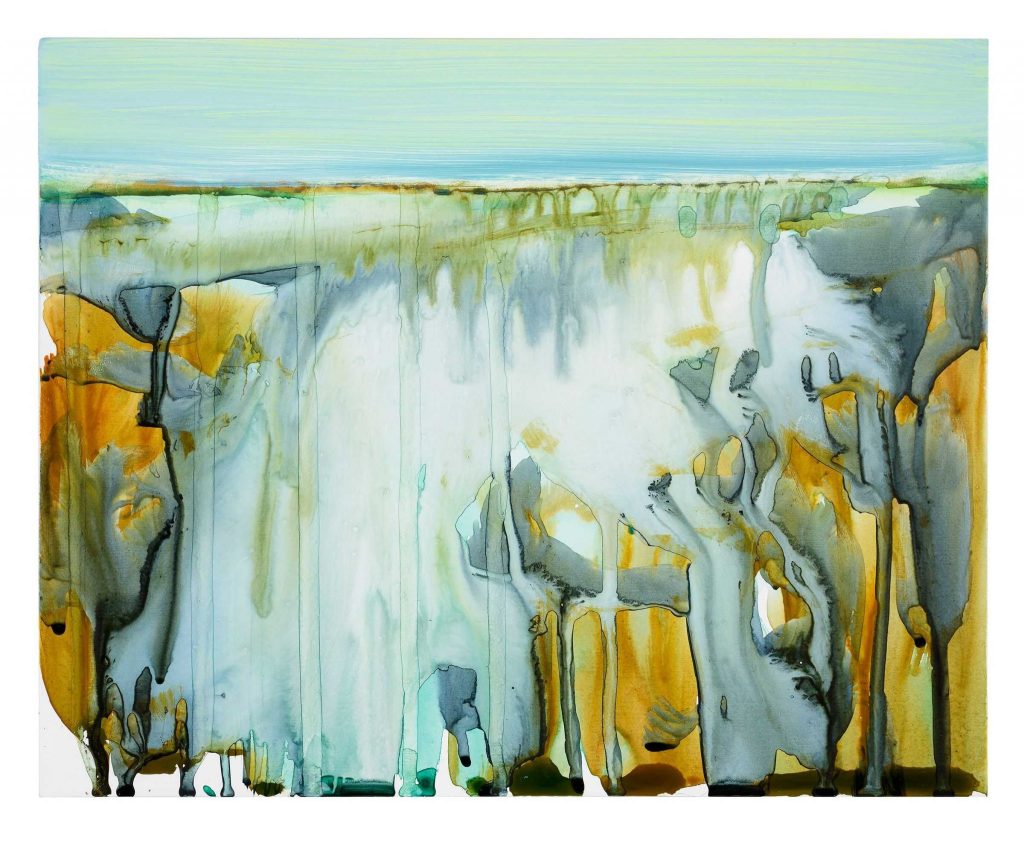
I see links to the paintings J. M. W. Turner in this work in the way that the composition is presented.
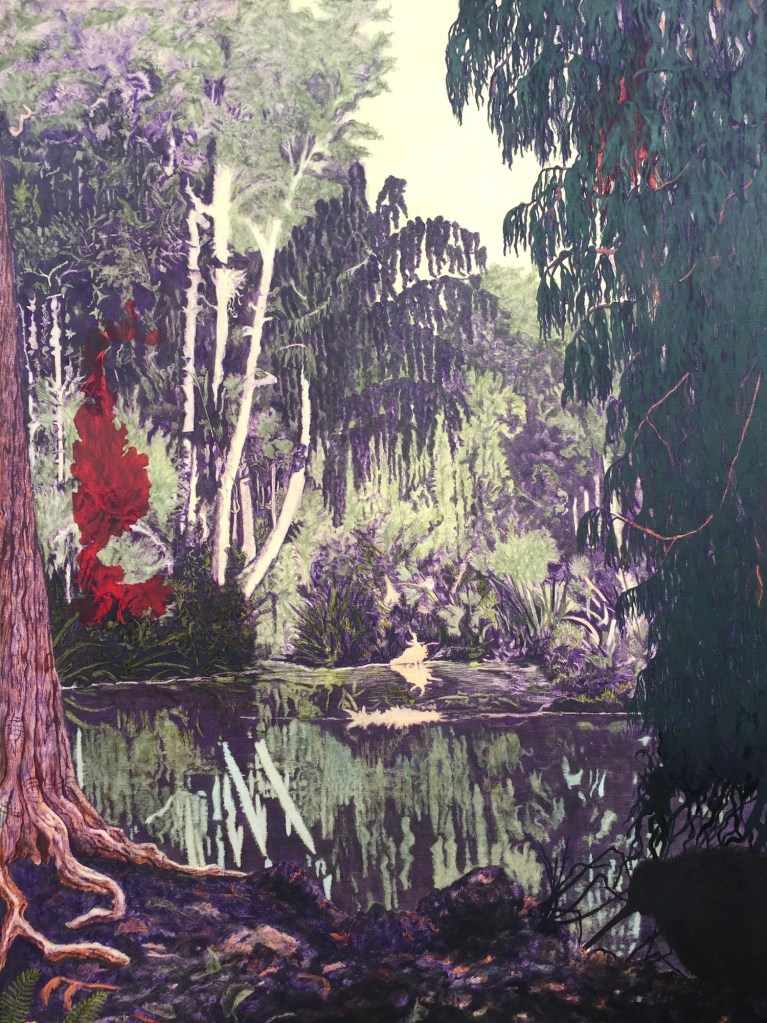
No 44, Stephen Newton,

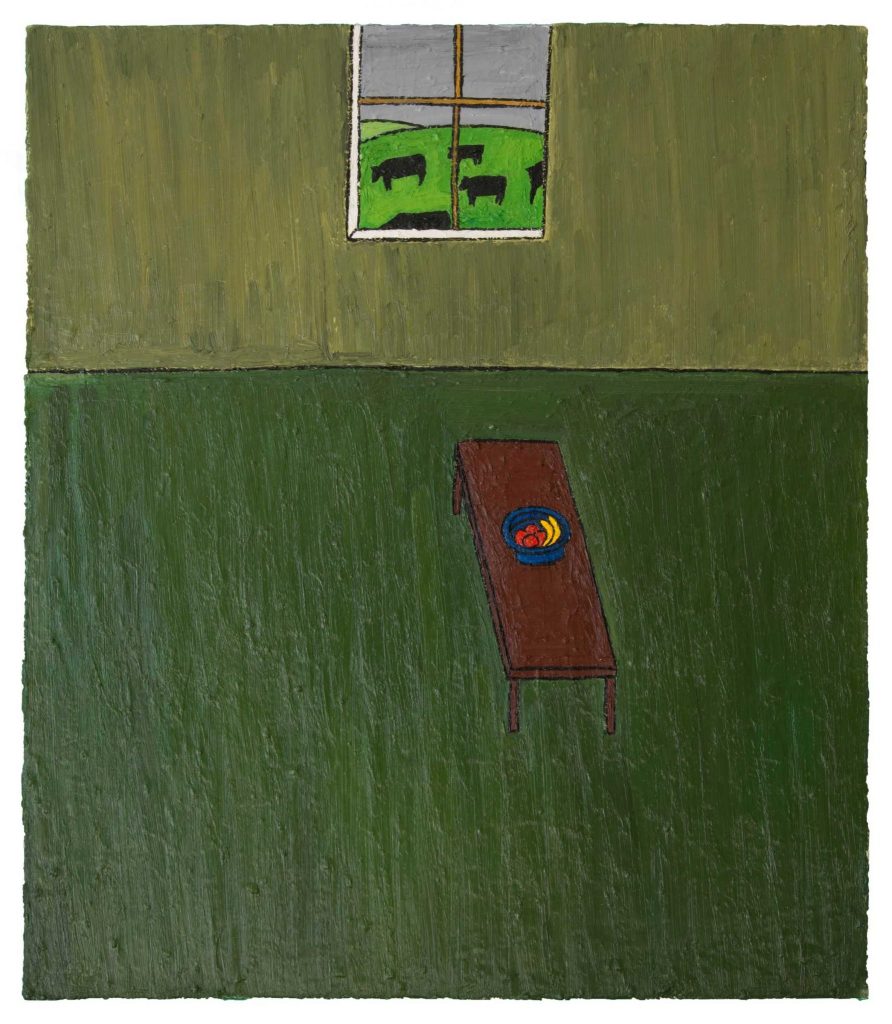
Bowl of Fruit on a table, Oil on ??, 102 x 86 cm, 2013

The title of this painting does indeed indicate the subject matter. However it is how the subject is portrayed and how the paint has been applied that is of more importance. The bowl of fruit consists of four oranges and two bananas, the bowl is blue. These are painted as simple shapes as is the brown table on which the bowl is placed, which is in a room. The table with the bowl is located just off centre both horizontally and vertically taking up only a small proportion of the painting. The main part of the painting, two thirds is taken up by the dark olive green carpet on which the table sits. The remaining third is a pale olive wall with a window through which a simple landscape of sky, two hills with five cows can be viewed. The paint, which looks like oil paint, the description doesn’t tell us, is applied thickly with only minor tonal variations.
There is a sense of space, but dark space which indicates loneliness and a sense of longing. This is amplified by the view which is suggesting an idea of freedom.

I see echoes in this painting to the work of Vincent Van Gogh and his depictions of his room in Arles.

No 45, Kirsty O’Leary Leeson

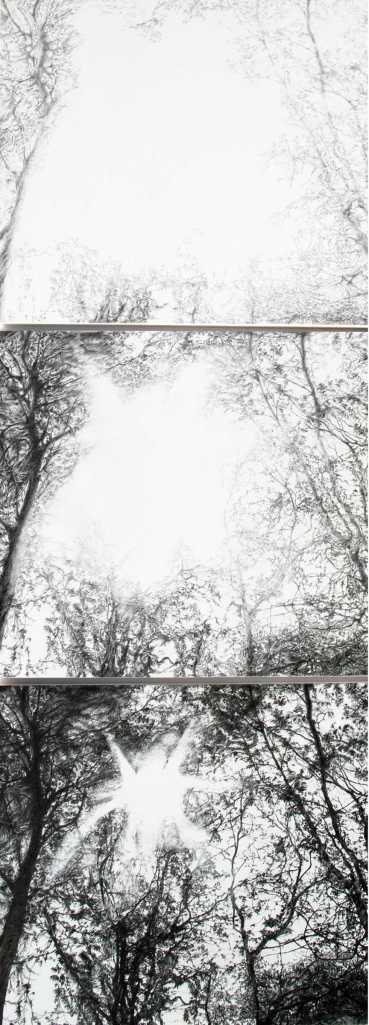
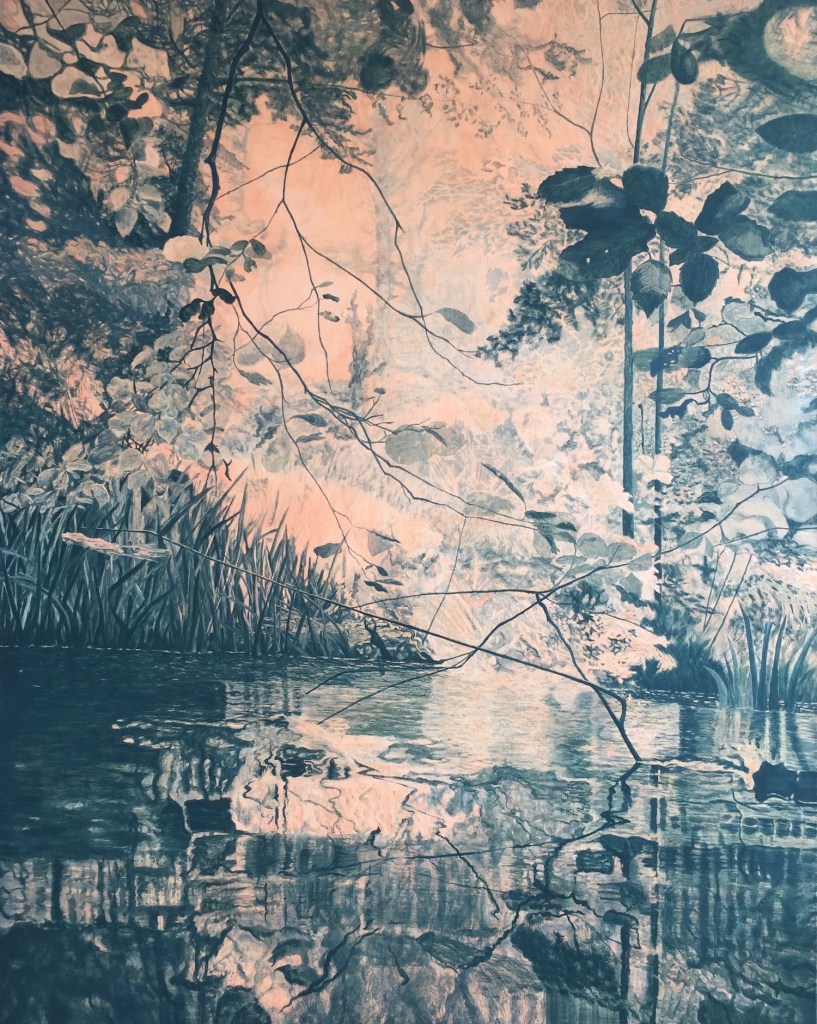
Lost from view, Pencil on gesso primed wood, 30 x 100, 2016

This work is presented as a triptych in which the three pencil drawings are stacked vertically one above the other. The scene is a tree-scape where the observer is placed looking up through the trees towards the sky. The viewpoint for each drawing is exactly the same. The trees have some leaves, suggesting either early spring or more likely autumn. The sun is piercing through the tree-scape directly into the observers eyes. In the first drawing the sun is penetrating the uppermost canopy. In the second the penetration of the sun is stronger and in the third it is at the point where eyes need to be averted.
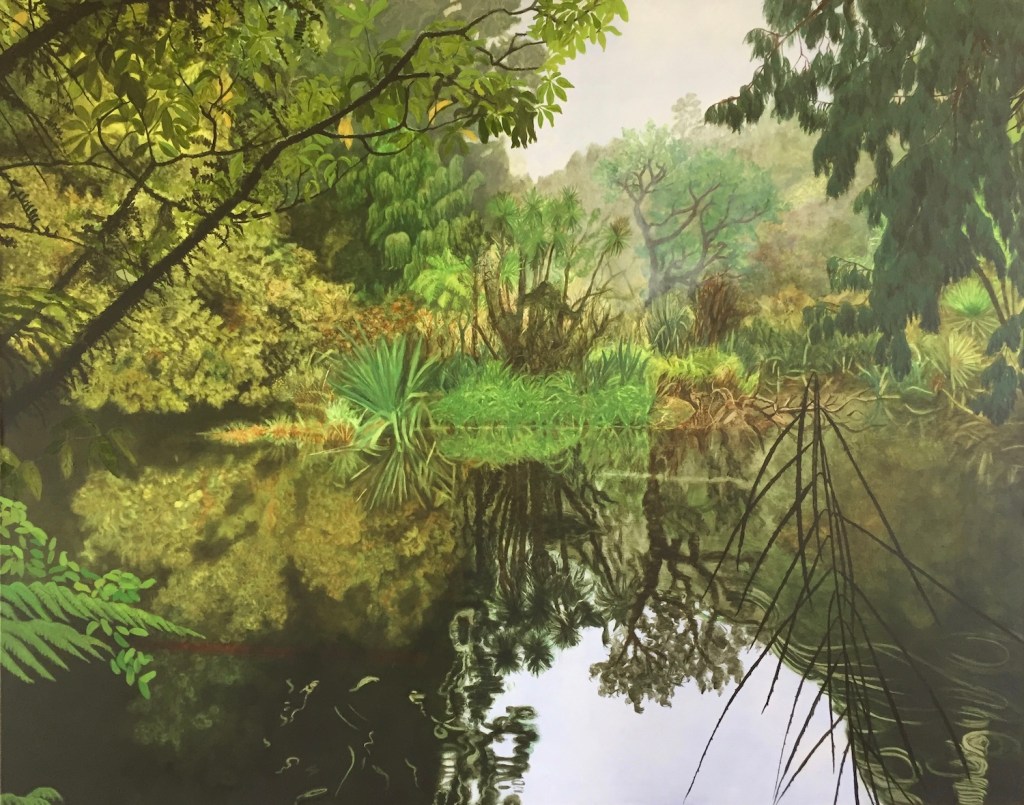
The three drawings work together to form a dialogue with each other in a series which explores the movement of time and space. Whichever order the drawings are observed in, bottom to top or, top to bottom, they create a linear narrative in which the sun is either emerging from or receding into a cloud. I prefer the option that the sun is emerging as this creates the series of events in which we are looking at the trees, admiring them until the point where it becomes unbearable.
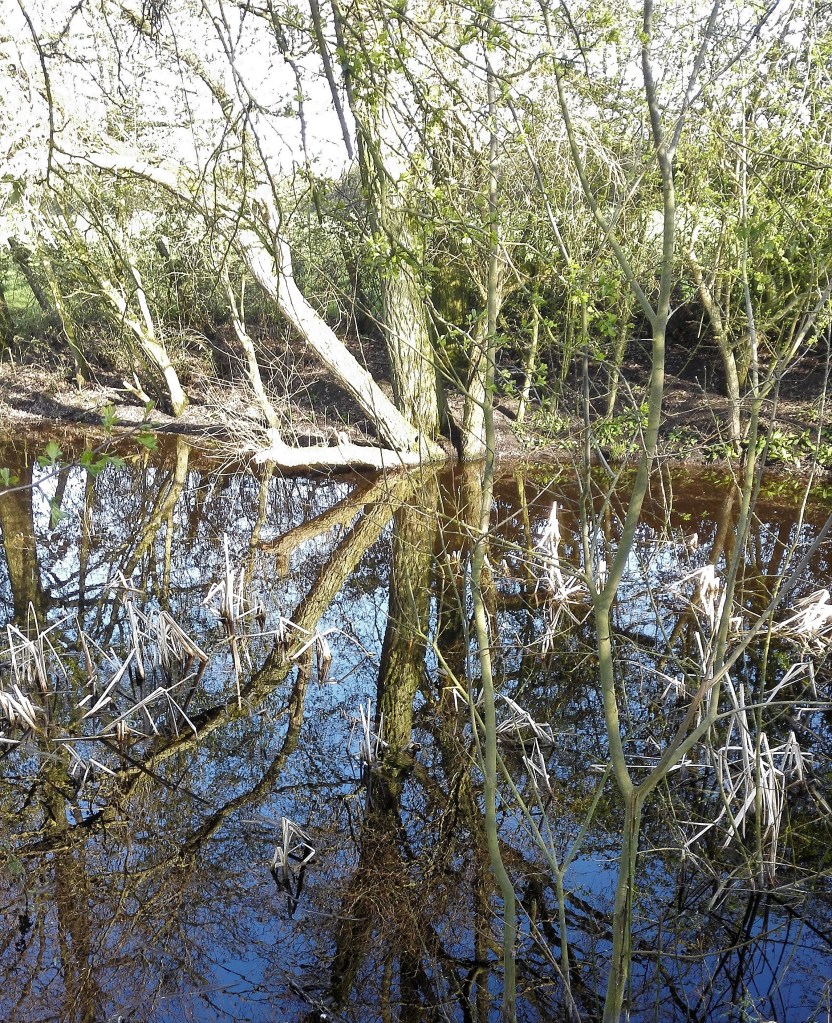
There is a connection in the experience of looking into the sun that is common to us all.

No 46, Sikelela Owen,

The Thinker, Oil on canvas, 150 x 100 cm, 2018

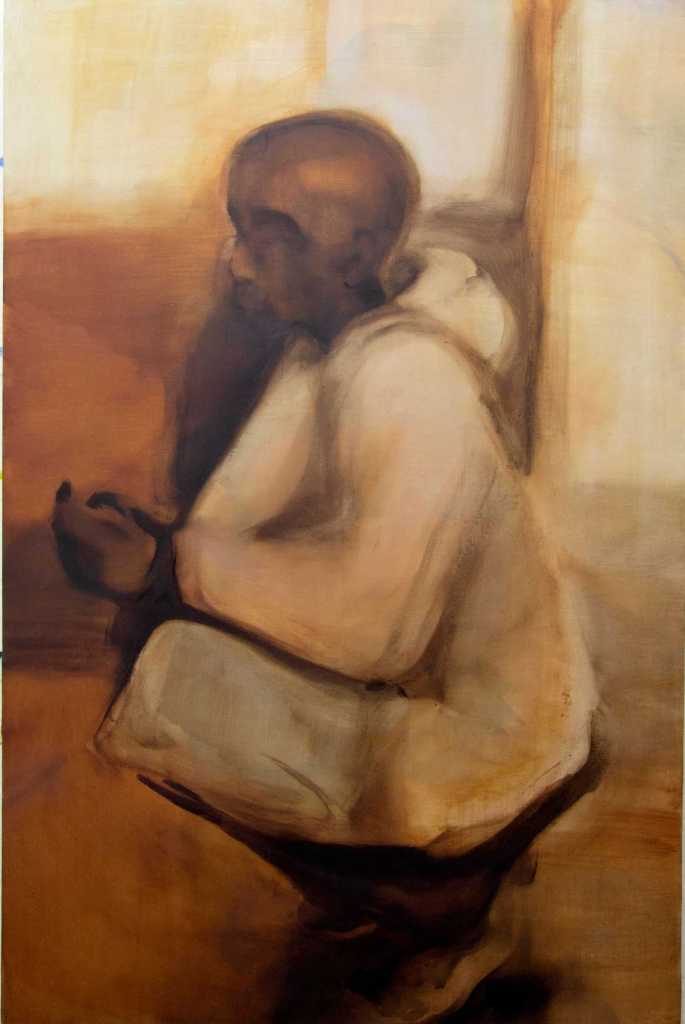
The title of this painting, ‘The Thinker’ immediately suggests some connection to the famous sculpture by August Rodin, which is an iconic work, universally recognised. To name a painting ‘The Thinker’ is to invite comparison which in turn risks unfavourable comparison. In this case I feel that there is enough space between the two works to allow the comparisons to be dismissed. Sikelela Owen’s ‘The Thinker’ is a portrait, full body, of what appears to be a young black man, crouching down and resting his body weight on his heels. His arms are resting on his knees with his hands held close together in front of him. His face, although not detailed, is looking into the middle distance focussing on nothing in particular and hence gives the appearance that he is deep in thought. The painting is a tonal study in brown hues which range from the dark brown shadows around his feet to near white on the wall behind him and on the top of his clothed shoulders. The whole painting is rendered in a soft, blurred, shimmering style which complements the contemplative mood.

No 47, Joe Packer,

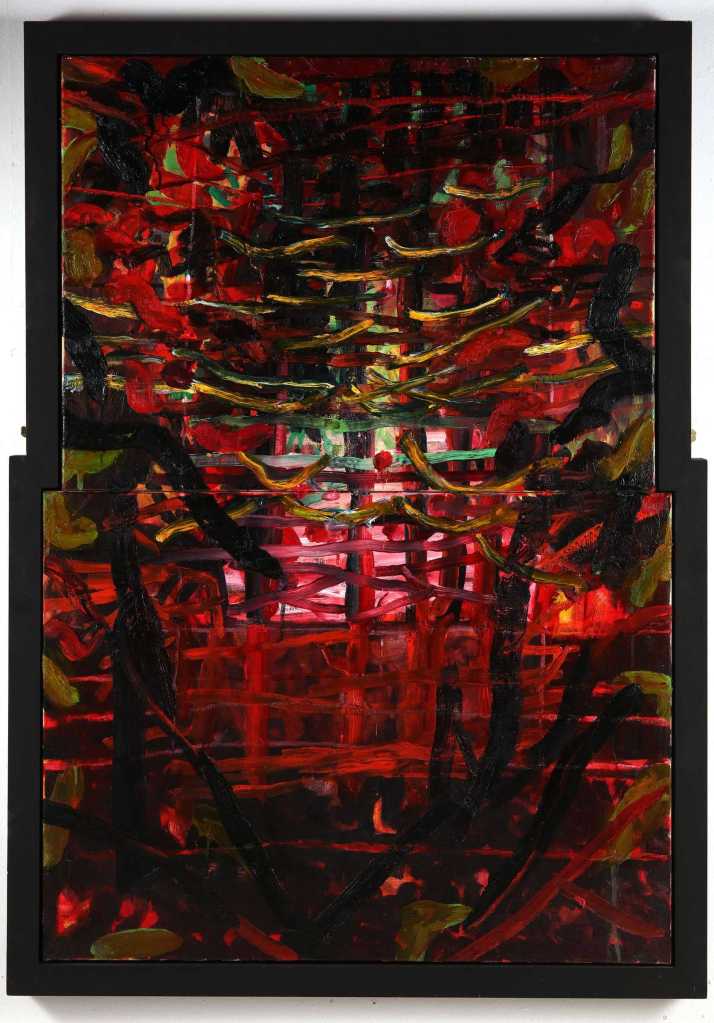
Heartland, Oil on canvas, 127 x 86 cm, 2017

This painting is an abstract work which seems to have been painted on two canvases. The colour is predominantly dark, nearly black, reds, with streaks of orange and green with hints of a white background. The brightest sections are to be found in the centre of the painting. It is at the centre where the brushstrokes are more apparent. These area number of strong vertical and horizontal lines which have been applied in a gestural manner. Flicks of orange and green create the colour interest to the painting.

The horizontal and vertical lines create a barrier to a potentially brighter place beyond. Are we looking out or looking in, and at what? That is for the observer to contemplate.

No 48, Gideon Pain,

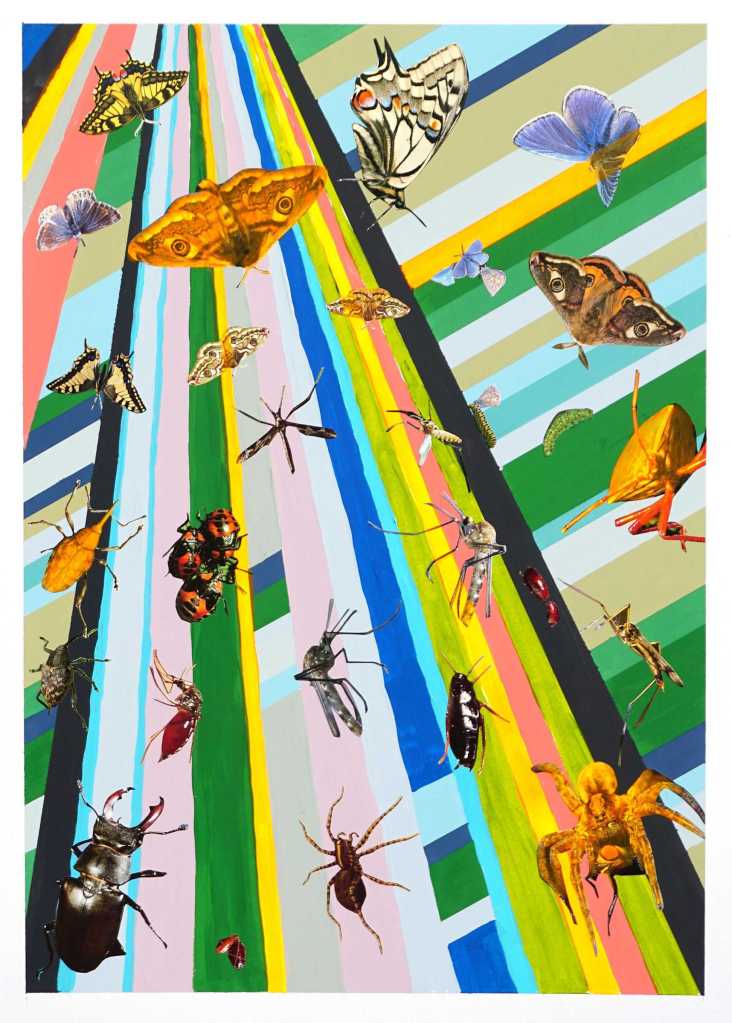
Bug Crush, Acrylic and collage on paper, 74 x 53 cm, 2020

This is a mixed media piece which has been using acrylic paint and cut out photographs. A paint has been applied in an offset linear array of vertical and horizontal line in a riot of colours. These lines recede towards a vanishing point outside of the painting. They suggest a high rise building upon which an array of bugs and insects are ascending. These bugs and insects are photographs of beetles, spiders, fleas, ladybirds, caterpillars, butterflies and moths. It is a reminder of how we share our world and how much we rely on them.

No 49, Stephen Palmer,

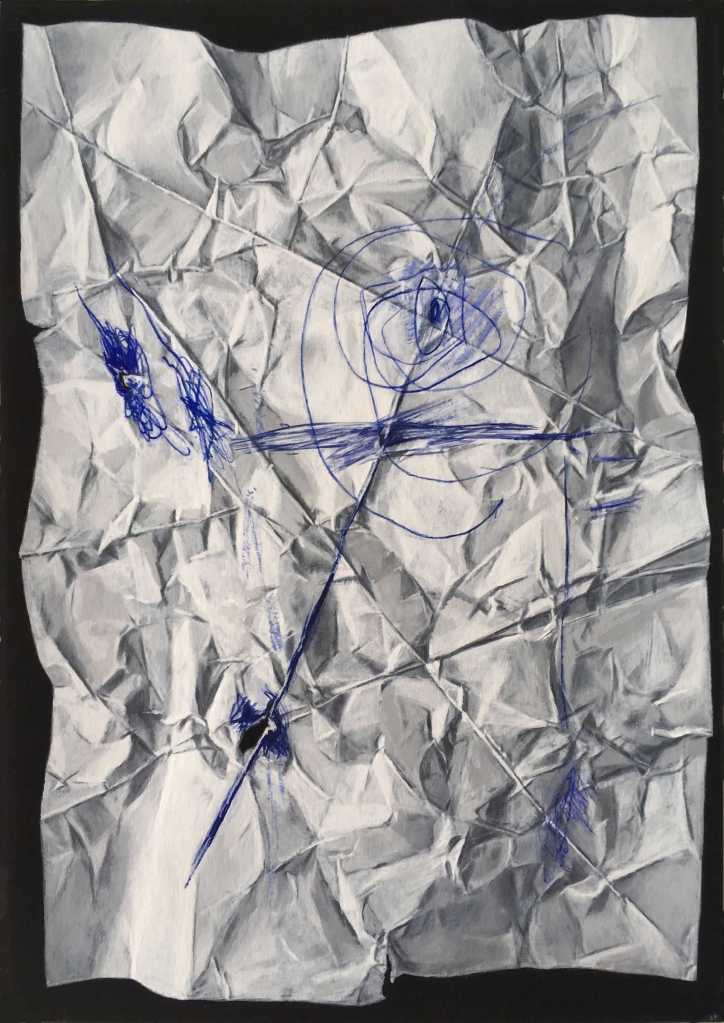
Doing the best that I can, Gouache on paper, 29.7.x 21 cm, 2018

This painting is part of a series of works whereby the artist takes a piece of black or white A4 paper which he then defaces by drawing on it, screwing it up and ripping it. It is then reconstructed or repaired as far as possible. This process is performed a number of times with most of the paper being discarded until one is deemed to be suitable for a painting or drawing. A new sheet of A4 paper is then used to make a photorealistic painting or drawing.

The resulting paintings challenge the conception of what constitutes a painting as the formal geometry, grid systems, mark making are made redundant.

No 50, Mandy Payne,

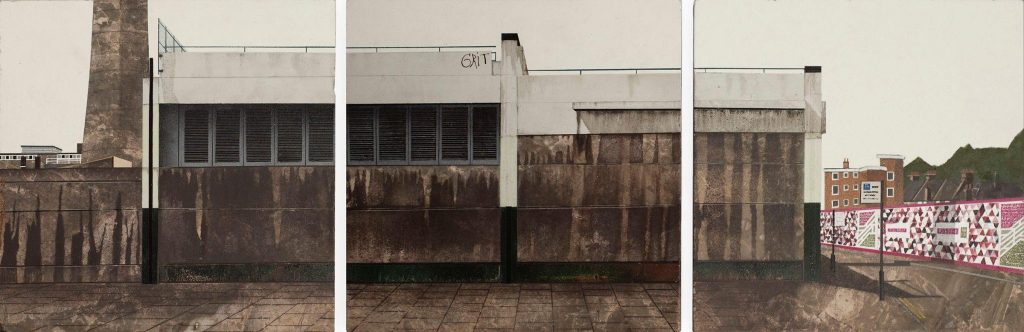
For the many not the few, Spray paint and oil on marble, (Triptych), 19 x 19 cms each piece, 2019

The paintings of Mandy Payne are about place, in particular her focus, for six years, was on Park Hill in Sheffield. This has now broadened out to include London, the North West and the North East. I am reminded of George Shaw’s depiction of Tile Hill in Coventry. Both artists paintings focus on the underbelly of these locations. The subjects are the dark side of buildings, stained by the weather, defaced by graffiti and seemingly unloved. Similar to George Shaw there is an absence of humans in the paintings of Mandy Payne, however the impact of human presence is implicit.

Payne brings her work close to the locations that she paints by using materials that have a direct physical connection to the place, concrete, marble and spray paints. The painting that I selected from her work for closer inspection is a triptych which has been painted on marble using oil and spray paints. The colour palette is muted greys and muddy washed out browns. The paintings concentrate on the side of a modern building, it could be a sports hall, school or small factory, however its purpose is not important. The building is all straight lines, rectangles and weather stained concrete. Reading from left to right the first painting gives an indication of where the building is situated. To the right, in the distance, are mores similar looking buildings and in the middle rising above and outside the painting is a large concrete tower. The middle, 2nd, painting concentrates on the next part of the building, it follows on from the previous one. In this painting the eye is drawn to some graffiti which has been sprayed on the side of the building near the top. The graffiti artist has used the flat roof to gain access to this vantage point. The third painting completes the right side of the building. To the right of it is a road which leads off into the distance. On the far side of the road is a wall which has been built incorporating mosaic designs and words. I guess that these are meant to brighten the location but have the opposite effect of amplifying the dourness of the surrounding area. Behind the wall, just visible, are the roofs of housing and a block of flats.

The title of the triptych is ‘For the many not the few’ which was a strapline used by the Labour party during its 2019 election campaign. A connection is being made between the place, who it is occupied by, and the hope for a better future.

Part Five – Contextual focus point – Link 42 ‘An Oak Tree – Michael Craig Martin’

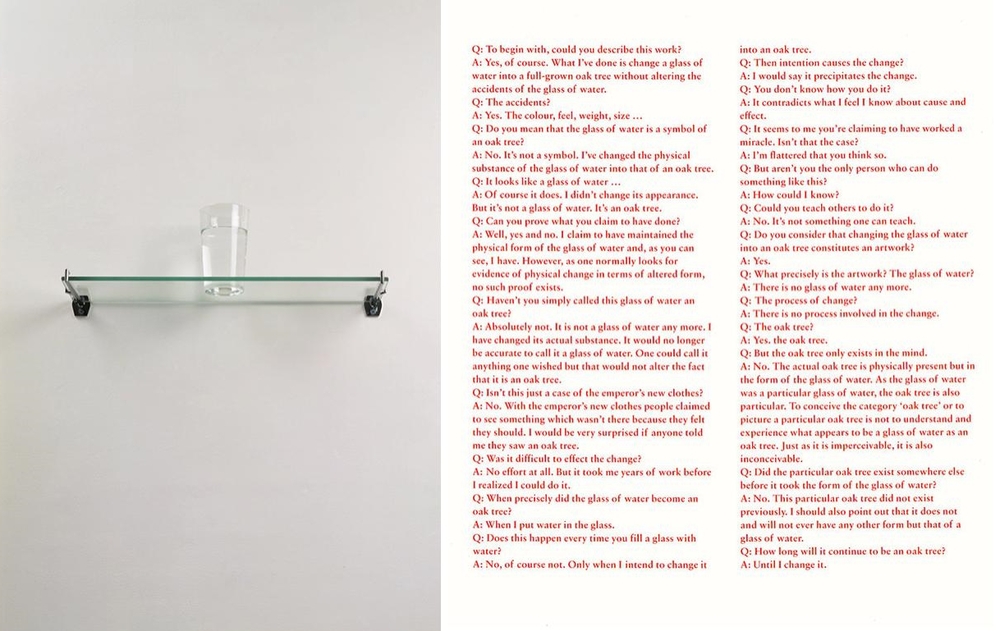
Michael Craig Martin, An Oak Tree, Assorted Objects and printed text, 1973

I view this work as an intellectual argument into what something is or appears to be. It is a challenge to the observer to take a step back and think again.

I am reminded of the work of Rene Magritte as in his painting titled ‘Cesi n’est pas une pipe – this is not a pipe’ which indeed it isn’t. It is a painting of a pipe. Therefore it is a representation of a pipe but it is not a pipe.

In the case of ‘An Oak Tree’ Michael has taken this argument a stage further. We are presented with what is clearly at first sight a glass of water on a glass shelf. However Michael informs us, the viewer, that we are in fact looking at an Oak tree. The objects are accompanied by a text in which we are informed why it is an oak tree. The text, written by the artist, in the form of an interview, challenges him to explain himself and ask why it is an Oak tree. The process of creating the Oak tree is presented along with the statement that the Oak tree exists in the mind and is physically present but in the form of a glass of water.

The piece is an example of conceptual art whereby the act of presentation, coupled with the dialogue, questions us to examine and think about what we perceive about the world in which we exist. In this example the artist describes what he has presented to us and explains why it is what it is.

This is better explained by the Michael in an interview on his website titled ‘I’m interested in language’. In this interview he states “I am interested in language and the way in which we interpret the world, understand the world, through the things we create.”

Part Five – Research Point 1 – Bob and Roberta Smith / Edward Ruscha

I do not intend to compare and contrast these two artists but rather explore their individual approaches to making art with words. I have not made extensive research into their individual practices. My intention was to examine a single work by each artist. To examine each piece and the impact that the artist was intending to illicit in the viewer. In both cases my interest was in trying to identify what cultural influences may have informed the work.

I’ll start with Bob and Roberta Smith. This is the pseudonym of Patrick Brill, a British contemporary artist, writer, musician, art education advocate and keynote speaker. Patrick comes from the leftfield canon of British artists. Although part of the established art movement he remains very much his own person choosing to do things his way. He comes from an artistic upbringing, his father was the landscape artist Frederick Brill who was head of the Chelsea school of art.

The work that I have chosen to examine is titled ‘Make art not war’ 1997. These words and other phrases are claimed to have been spoken to him by his father on his deathbed. Firstly what does the painting look like. It is square, 153 x 152 cm, painted on plywood using commercial paint. The background is split into two halves divided horizontally, the top section is painted white and the lower pale orange. Over this are painted the four words ‘Make Art Not War’. The typeface that Patrick has used is known as Signwriter’s block. This was developed in 1920 and was chosen, the artist explains in a video about the painting, as he enjoys the disciplined structure of the typeface. The letters are mostly black or blue except for two, one being white the other red.

The painting is part of a series of works that use humorous slogans which to promote art over violence. A further example being ‘Easels not guns’. The meaning of these paintings is fairly explicit in that their intention is to challenge the viewer to question human morality.

The simple message brought into the setting of an art gallery or museum forces the viewer to confront the message and to challenge their ideas of what a painting is. On its own a single painting can not change the world but it does set up a dialogue in which an alternative outlook is possible. In my opinion the painting is an expression of the culture and times in which it was created which has informed the artist. However the artist is not merely responding but is choosing to influence, is not making concessions but directing.

Make Art Not War 1997 Bob and Roberta Smith born 1963 Presented by Tate Patrons 2007 http://www.tate.org.uk/art/work/T12561

===============================

The second artist and second painting is by an artist who comes from a different cultural back ground. Edward Ruscha is an American artist who is associated with the Pop art movement of the 1960’s. He is well known for his paintings, collages and photographs. Originally from Oklahoma he states that his eyes were opened and that his work is heavily influenced by Los Angeles. His interest in words and typography have provided the primary subject of his paintings, prints and photographers. The words either comes from conversations, jotted down or are taken from dictionaries.

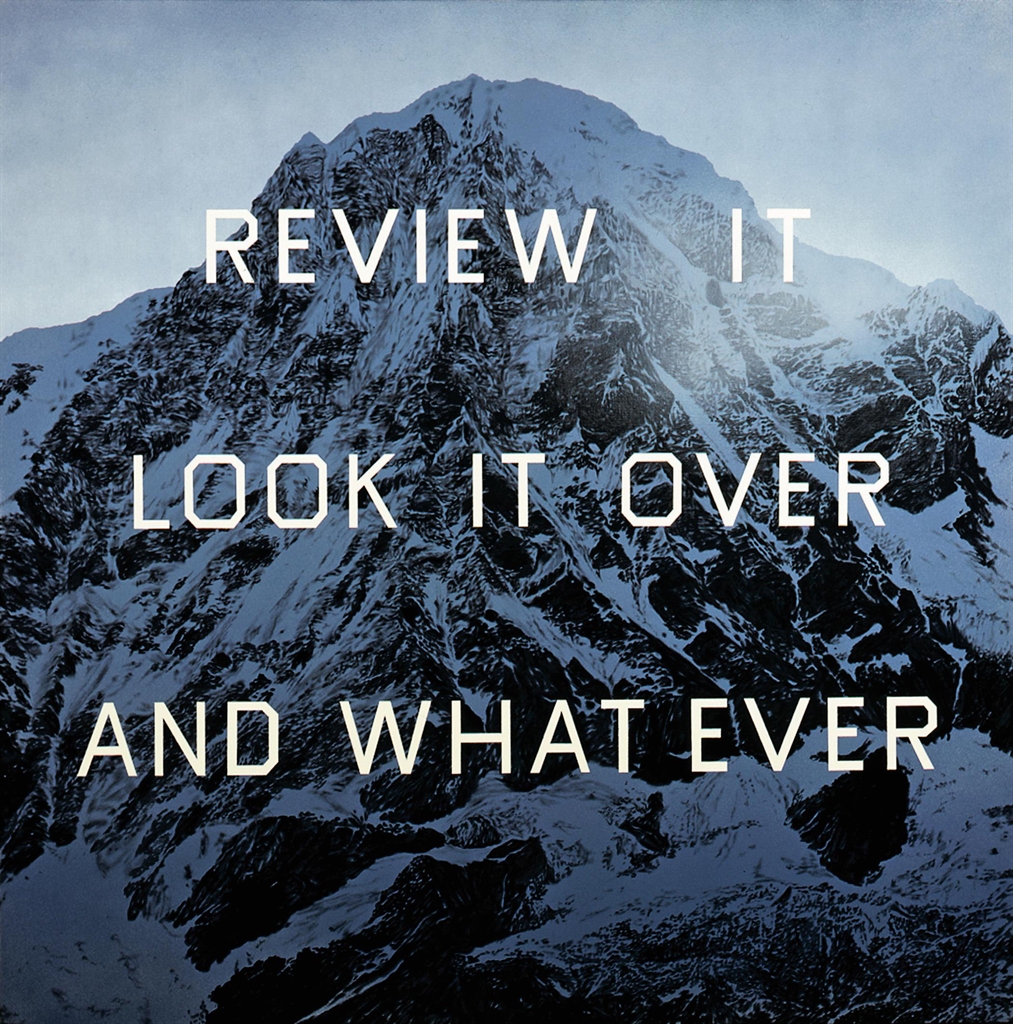
The painting that I selected to examine is called ‘Review it, look it over and what ever’. It was completed in 2004. The painting is on a square canvas, 152 x 152 cms. The background image is a mountain rendered in monochrome of Payne’s grey. It has been created with acrylics, pencil and charcoal. Over the background image of the mountain the words, (1) Review it (2) look it over (3) and what ever, are written in three lines evenly spaced using a simple typeface. All letters are the same size.

In trying to understand the meaning of the painting I visited Tate Moderns website and found a video of Edward discussing his art and the processes he employs. In the video he explains that his backgrounds are just that backgrounds but then goes onto say why he often uses mountains tops as backgrounds. They suggest glory, beauty and evoke the sound of trumpets playing although there is no noise present. When words are added it creates tension. To me, a question is raised in that as the viewer you are immediately drawn to the words and to think about what they could mean? Why have they been placed in this setting? The words or phrase ask to be contemplated. Had they been written on a page in a book would I have stopped and thought about them? I think that this would be unlikely. In this case the phrase is in three parts. The first is a command ‘Review it’ followed by an instruction as to how to ‘look it over’. The conclusion ‘ and what ever’ is yours. It is left to the individual no answer is provided.

You, the observer, are challenged, questioned and instructed by a painting to do something more than merely to observe and then left free to move on. To me this is an instruction to look beyond what is presented or given to you, draw your owns conclusions and from there follow your own path.

Edward Ruscha, Review it look it over and what ever, Acrylic pencil and charcoal, 152 x 152 cms, 2004

Regular artist view – Part 4 – No’s 31-40

31. Phil Illingworth (23/6/2020), today i started by reading the artist’ / curator’s statement. Quotes “Phil Illingworth’s painting practice is almost entirely experimental. Respect for the long tradition of the craft of painting. At the same time I play games. I’m also trying to push the limit of what a painting can be”

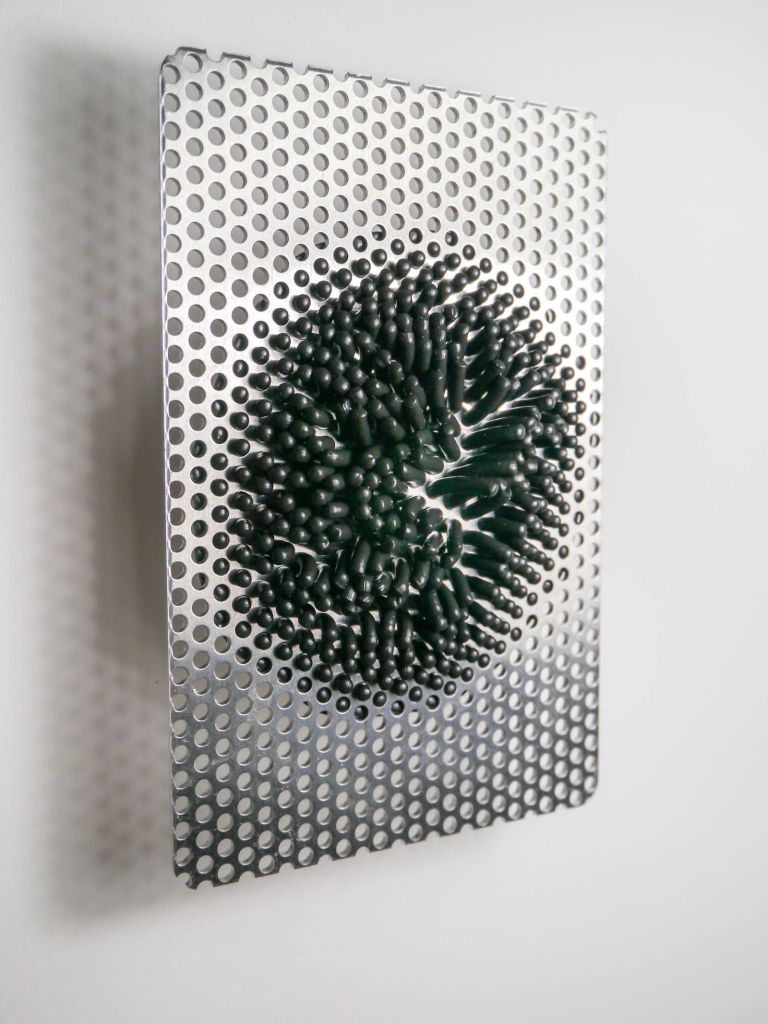
My thoughts: I found the works challenging in a positive way. I enjoyed the clean lines, the gentle undulating shapes, the choice of materials and the combination of materials. There is an element of the future, sci-fi inhabiting the works. I can also see the humour and playfulness present in them. They sit on the cusp between painting and sculpture.

The piece I downloaded, Shangri La, see below, typifies Phil’s work. There is almost something living about this piece. Is the black polymer coming out of receding. It appears to be in a state of flux.

Phil Illingworth, Shangri La, pigmented polymer and aluminium, 10x15cm, 2018

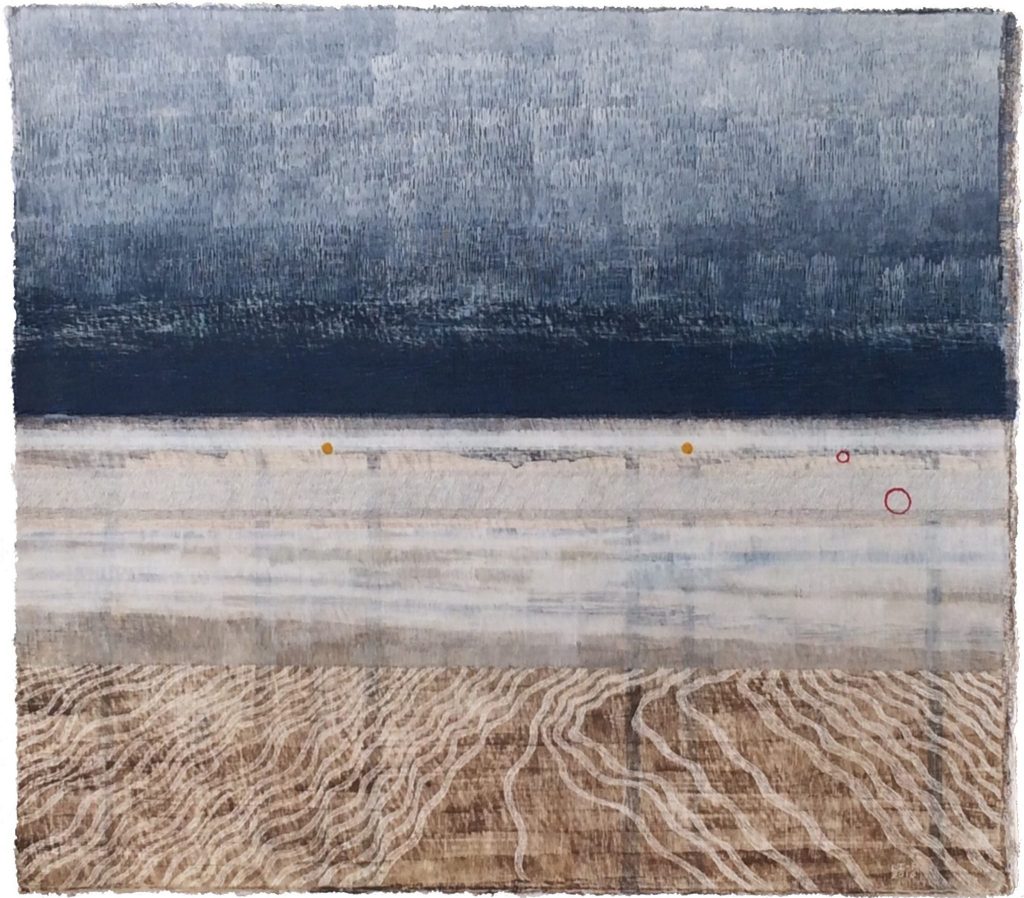
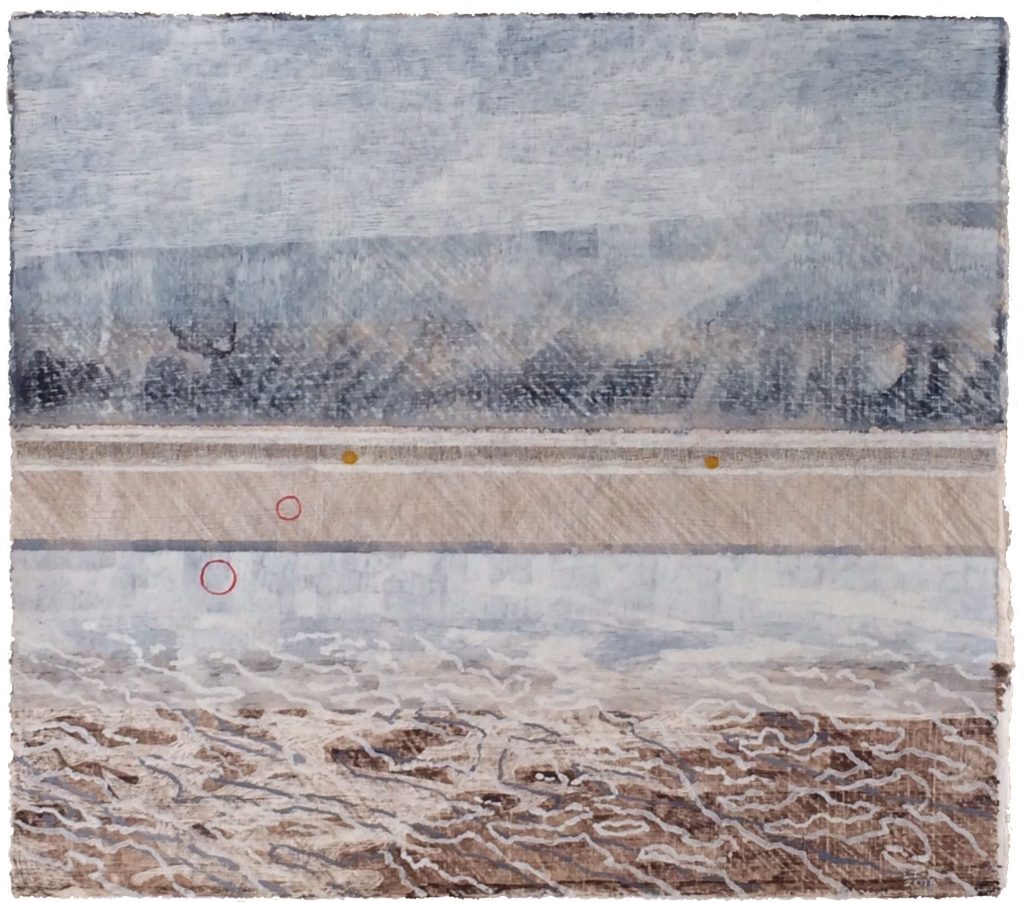
32. Linda Ingham, 26/6/2020 content includes a number of drawings with watercolour, silver point and ink. Mixture of topics and influences including abstract landscapes that capture a feeling of emptiness and loneliness, particularly her Far and Near series.

In her Artists statement she states that her process led practice is based on personal engagement with landscape and place. Increasingly involved with botany and folk histories of plants observed on location where she walks and her allotment. Pieces are often created using gathered plants and their traces within the layers.

The two paintings the I selected from her works are both interesting landscapes.

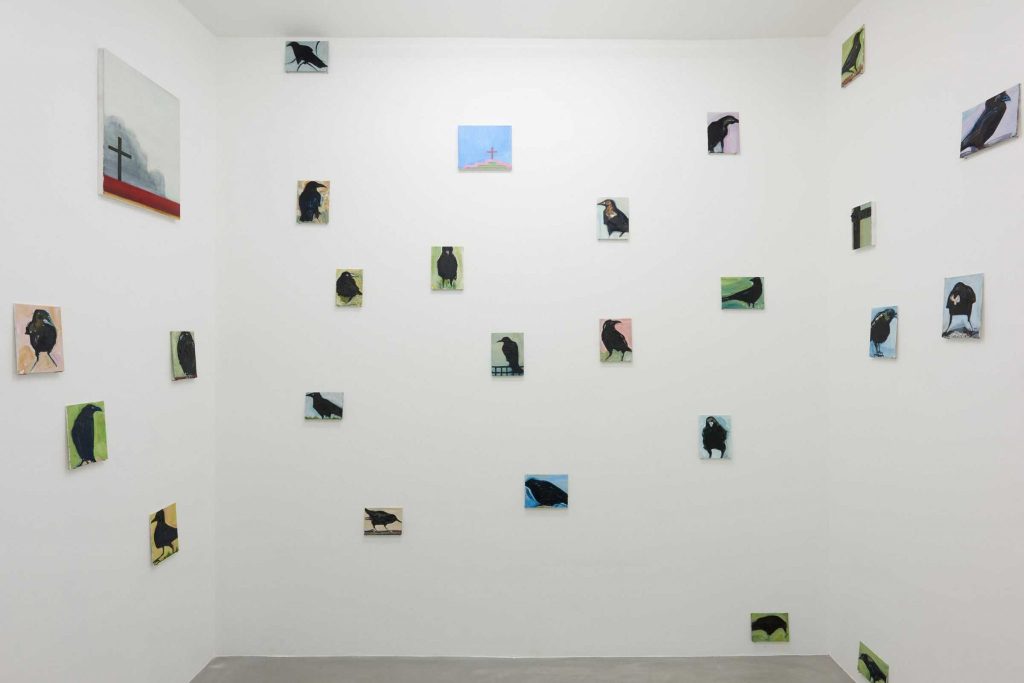
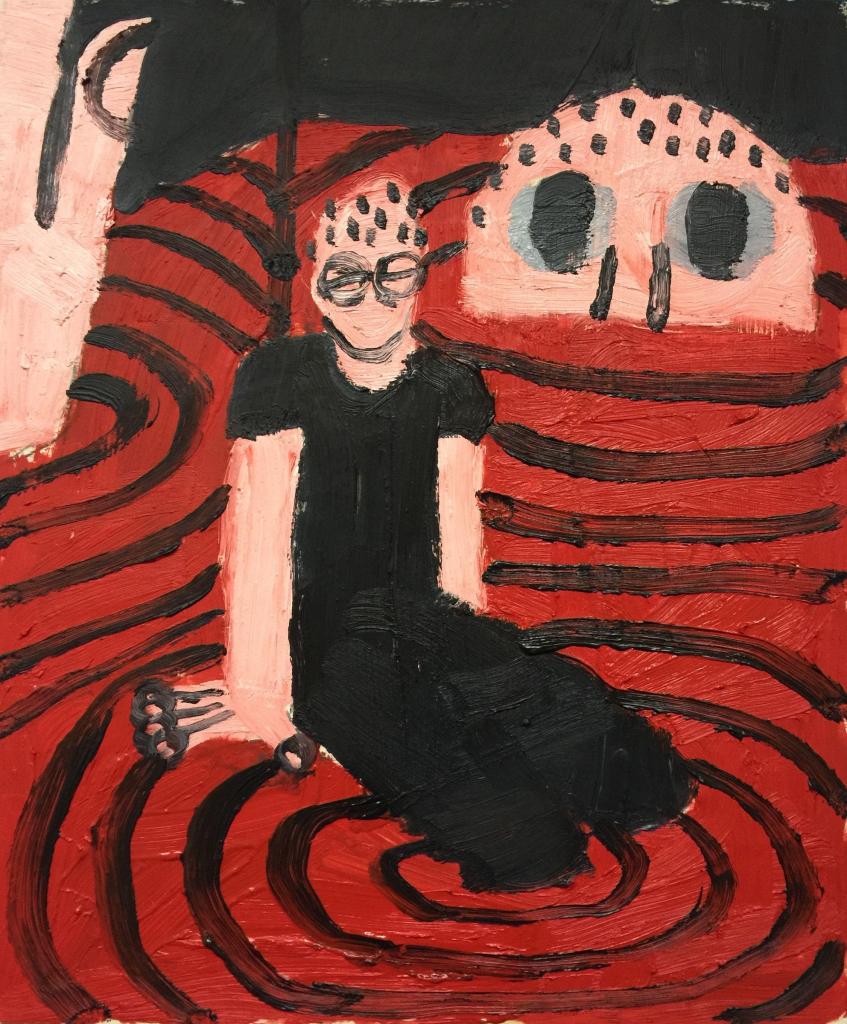
33. Matthew Krishanu (30/6/2020) strapline which I presume is from a curator “Matthew Krishanu’s recent paintings construct narratives exploring themes from memory, childhood and art history.”

My thoughts, there seems to be a focus on reminiscing, a look back to childhood. The figures are roughly painted, nearly crude but have a warmth. Of the paintings my favourite was ‘House of Crows’ see below. It has a nostalgic feel to it invoking Hitchcock’s ‘The Birds’ slightly menacing. I found ot later that the image that I was looking at was in installation view. This didn’t impact my enjoyment of it.

The paintings on the artists website, although belonging to the same style have more variation to them.

Matthew Krishanu, House of birds, 2019, installation view

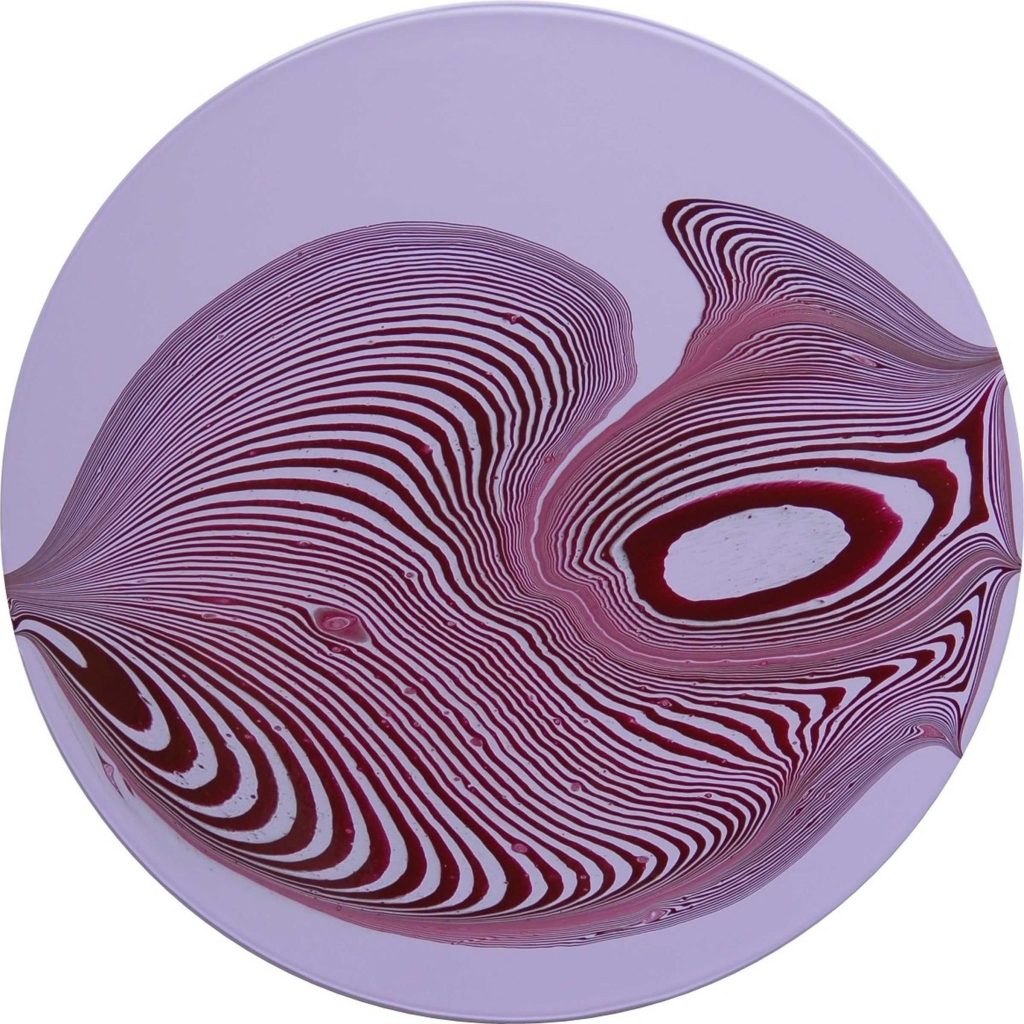
34. Bryan Lavelle, (5/7/2020) an investigation into the proerties of his chosen materials and the process of painting. No layers of hidden meaning or narrative waiting to be uncovered, nor does it elude to be anything that it isn’t, through making external references outside of the work itself. He sees his role as a facilitator, that is, he brings together, materials and process, (MDF, paint and gravity), and allows a dialogue to take place.

The works are all about the process and allowing the paint to do its work. I’m unsure as to how this process works, probably tipping. Interestingly I noted on the Degree art website where his paintings are for sale that the prices range from £400 to £1,250. Do I like them? Initially yes, but I feel that I would quickly become bored with them.

Bryan Lavelle, Tipping Point, Permanent light violet & burgandy #2, acrylic on MDF, 60cm round, 2019

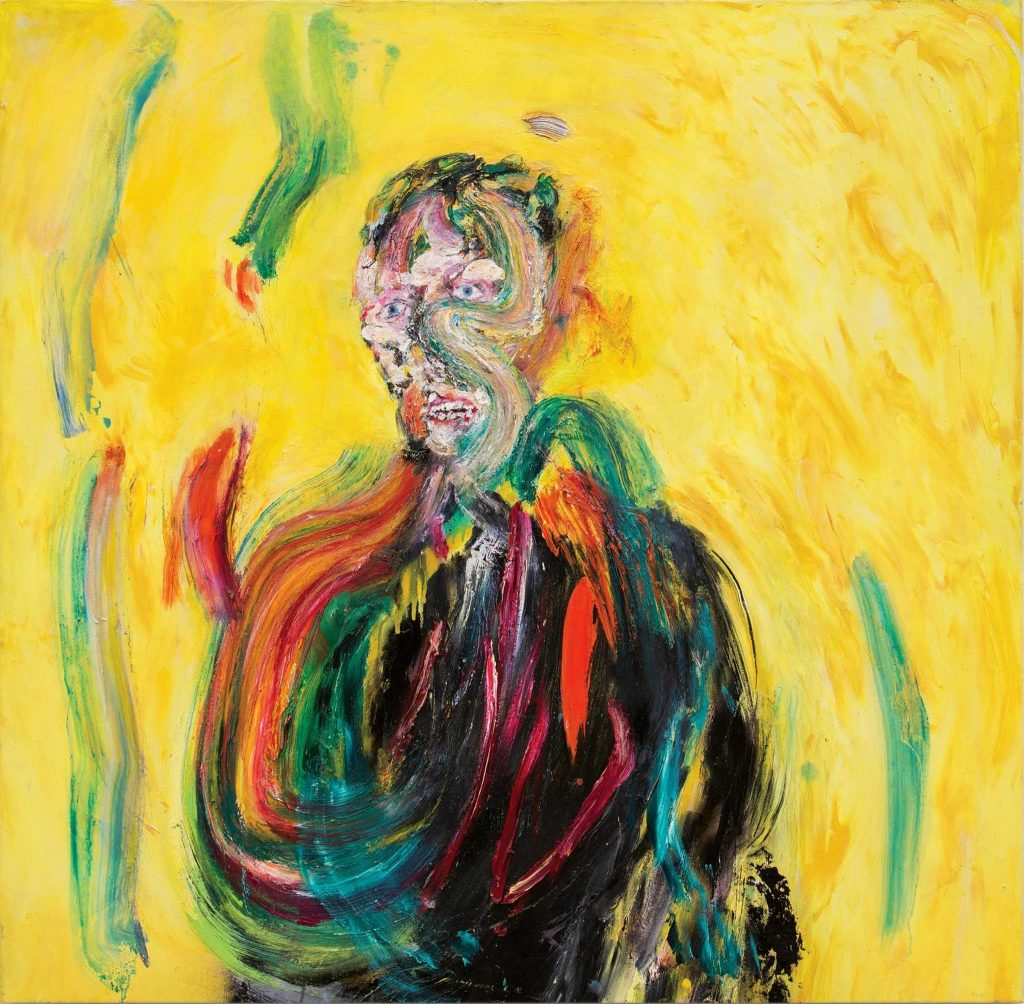
35. Andrew Litten (15/7/2020), first impressions were that the paintings had something of the Edvard Munch and Francis Bacon about them. Ghostly figures represented in multicoloured forms. Angry, agitated brushwork which indicates and then distorts features and form. The would seem to be an emotional input into the work.

Artists statement – Andrew’s work explores raw human existence. Like so many expressionist artists, Georg Baselitz comes to mind, in Andrew’s work the rawness is also the vulnerability. Andrew is searching for poetry, the poetry of living, loving, hurting and dying, the vulnerable, the powerful, the human.

Andrew Litten, A sudden involuntary chemical withdrawal, Oil on canvas, 120 x 120cm, 2016

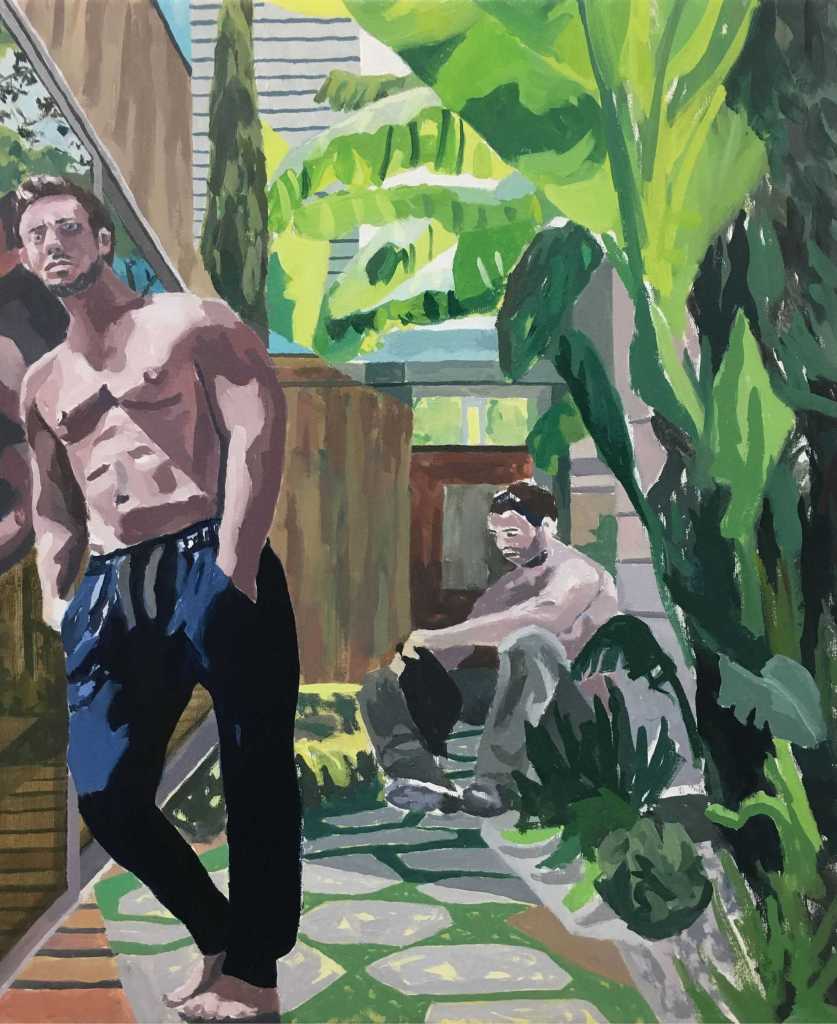
36. David Lock (20/7/2020), my first impression was that the paintings suggested homo-eroticism. A number of the paintings of the paintings are titled ‘Misfits’. The figures are expressive and shown in various positions, often confrontational in demeanour, often posing. The painting relies on strong tonal variation. A collage effect is often employed which breaks the paintings down into sections with colour variations marking the tears in the work.

Artists statement: David Lock’s paintings explore men and masculinities in a process of becoming. the painting utilises a collage approach. In the process of creating his ‘Misfit’ paintings he makes collages culled from advertisements and imagery from mainstream magazines. In their making, the collages and subsequent paintings, have a performance quality.

David Lock, El Muniria, Oil on canvas, 61 x 46cm, 2017

37. Paula McArthur, (4/8/2020),

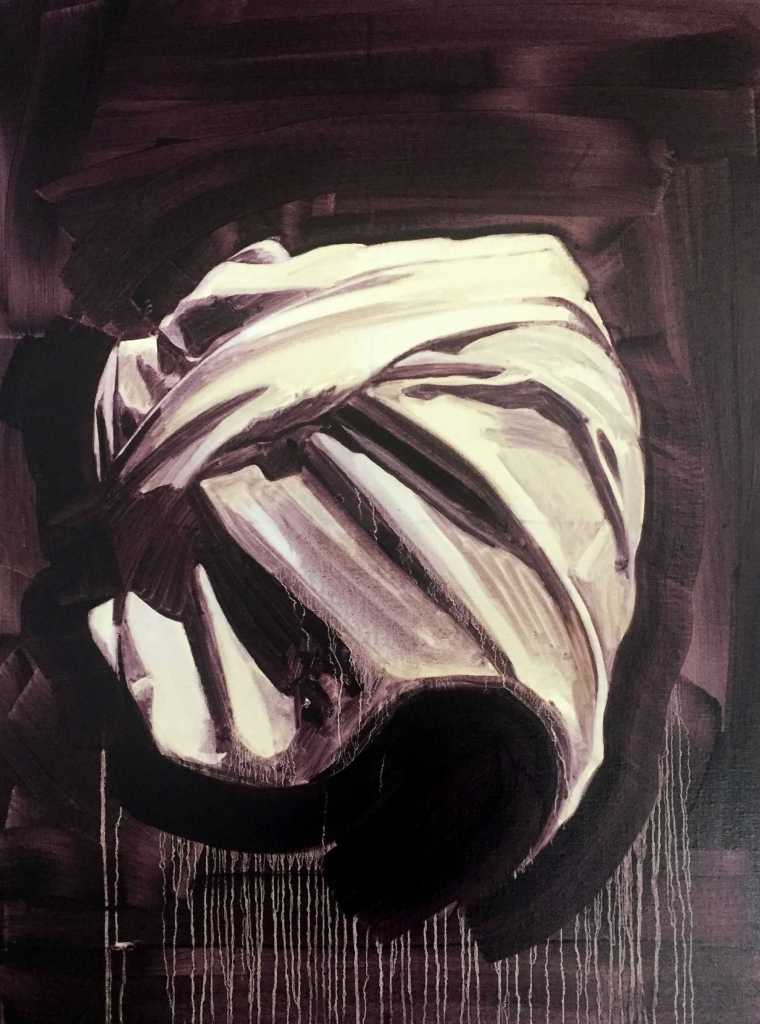
Paula describes her painting as contemporary interpretations of traditional memento mori and vanitas painting. I can certainly see this in much of her work. I was drawn to the fabric painting below which is not one of these. It had echoes of the work that I had completed during Part Three, Object as a stand in for the body. The fabric has not only taken on the aspect of the human form but it has also assumed a gesture of embrace. The title of the painting ‘To be next to you’ also helps to confirm this notion.

Paula McArthur, To be next to you, oil on canvas, 2017

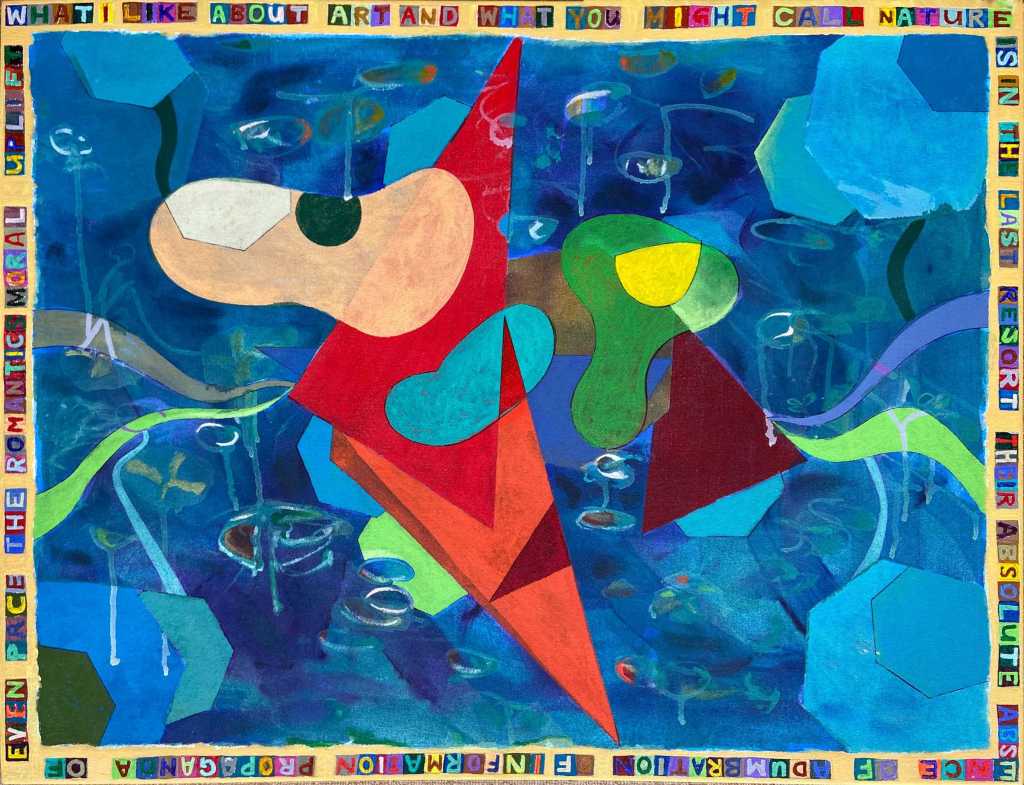
38. David Manley (19/8/2020), abstract artist who uses words / written text in his recent work. His comments on his recent works explain that he draws on a number of sources, observations of both land and seascapes, incidental details in them, basic geometry and in trying to complicate the structures within the pictures, often inspired by recent poetry, fifties interior design and 50’s – 60’s Jazz amongst other topics.

The painting below seems to be typical of his recent work. I was particularly drawn to the vibrant colours which contrast vividly against the pastel blues. The drips and drawn circles suggest droplets of water on a hard surface which gives the painting depth and and feeling of movement. The geometric shapes lay somewhere both on and beneath the surface of the painting. The words framing the picture add to the intrigue, they suggest rather than inform.

David Manley, On the margin, acrylic on canvas, 66 x 85 cm, 2020

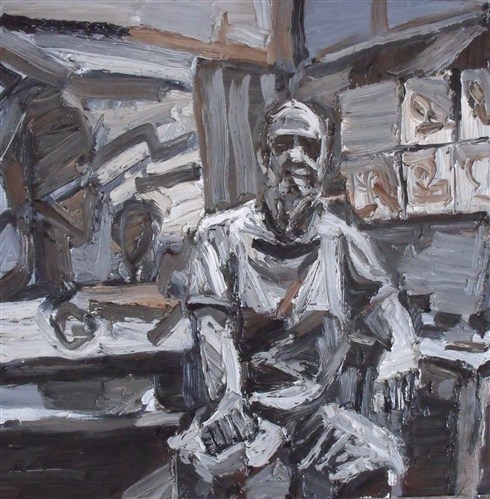
39. Enzo Marra, 27/8/2020 Figurative paintings that distil the image down to simple lines and sparse colours. The paintings initially appear to be naïve but on closer inspection reveal considered compositions. The proportions are well observed and executed. I noted from looking at his earlier works that they were grander in conception and design than his current works. This is supported by the comments of the artist himself who refers to this by stating that he has been attempting to further reduce the detail within the finished images. This can be seen from the two paintings reproduced below. Current work first.

Enzo Marra, Immersive Studio, oil on canvas, 61 x 51 cm, 2020
Enzo Marra, Frank Auerbach, 45.7 x 61.9, pre 2010

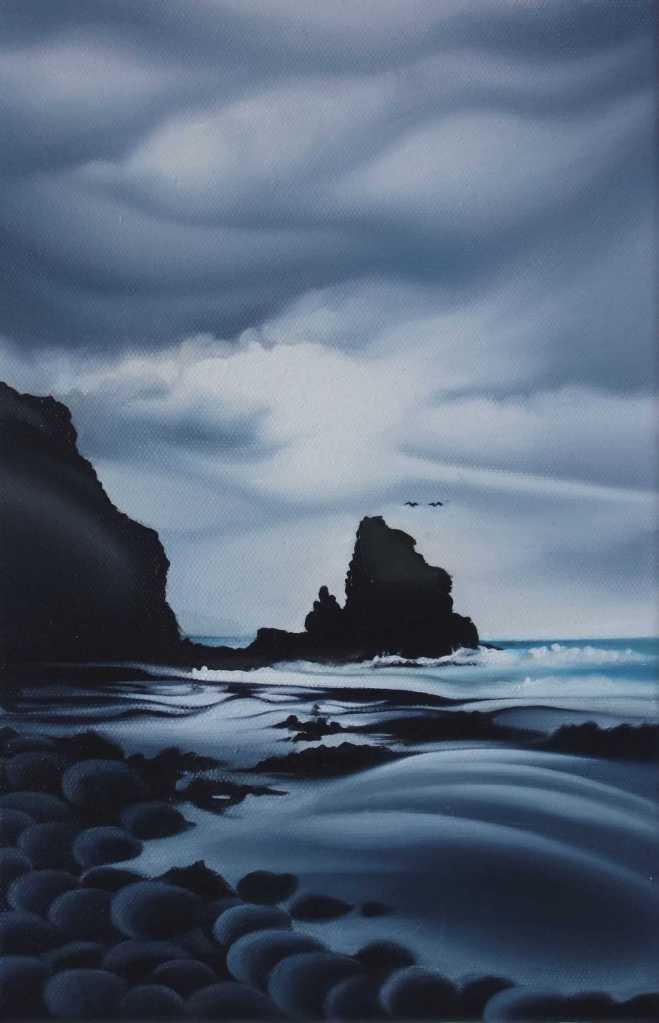
40. Monica Metsers, 28/8/2020 Surreal fantasy paintings created by layering and building up oil paint. The paintings are sometime based on actual places, as in the example below, or are imagined scenes. Lots of melding of the paint to create soft flowing shapes and patterns. a number of the paintings reminded me of the album cover artwork of 70’s Prog bands, think Yes, Genesis etc (Roger Dean). On the whole the paintings didn’t appeal to me although I know that I have tried to paint similar work in the past. To me it is the lack of grit, feeling of reality that I found with the paintings that disappointed. They seemed to be closer to fairy tale images than I would like. The example below is a case in point. what could have been a gritty, melancholic painting has been softened so that it now appear to be more akin to a photograph taken on a long shutter exposure time.

Monica Metsers, Talisker Beach – Isle of Skye, Oil on canvas, 20 x 30 cms, 2019

Always be an emerging artist

Whilst carrying out research into suggested artists I came upon an interesting blog. It was written by an art blogger who was explaining the methodology that they utilise when approaching an artists work.

http://danielgalas.blogspot.com/2013/05/elizabeth-peyton-and-critiquing-art.html the blog is attributed as Unknown

They had three categories:

Outsider artist: naïve / primitive by design or lack of technical ability. just doing what they do.

Emerging artist: critiqued with a smile, encouragement and a feeling of camaraderie.

Established artist: reviewed with a more critical eye. why successful easy target.

An artists making work with the expectation of gaining recognition and achieving monetary success is in the wrong line of work.

Daily Artists Research (Part Three) 21 – 30

21. Annabel Dover, (31/5/2020), (no links)

Annabel Dover

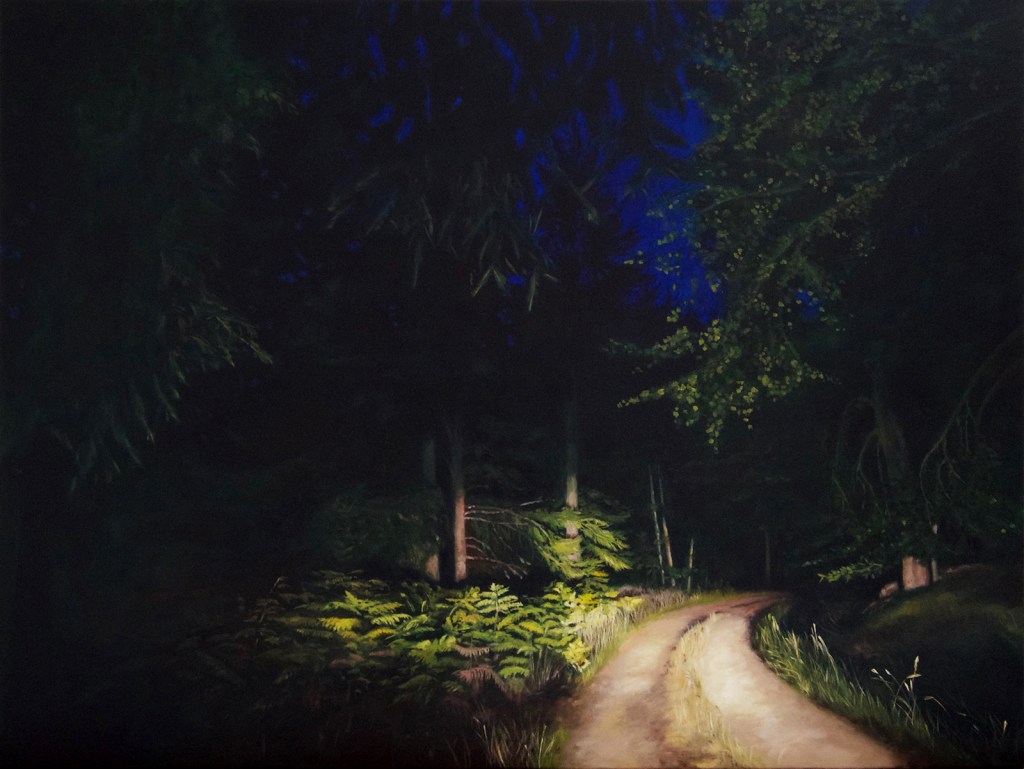
22. Natalie Dowse (31/5/2020), initial reaction, a mixed bag, two different types or styles of painting on exhibition in the six paintings. Between dog and wolf paintings are obviously part of a series, Woodland landscapes illuminated by car headlights, something almost Lynchian about them. The other are a series of closeup portraits with tears.

Artists statement: working from and using photographs often in a series but displayed randomly to construct alternative narratives and mark moments that are irrevocably in the past.

Natalie Dowse, Between Dog and Wolf 1, 2018, oil on canvas, 120x90cm

23, Fiona Eastwood, 2/6/2020, (no links)

Fiona Eastwood, No further information

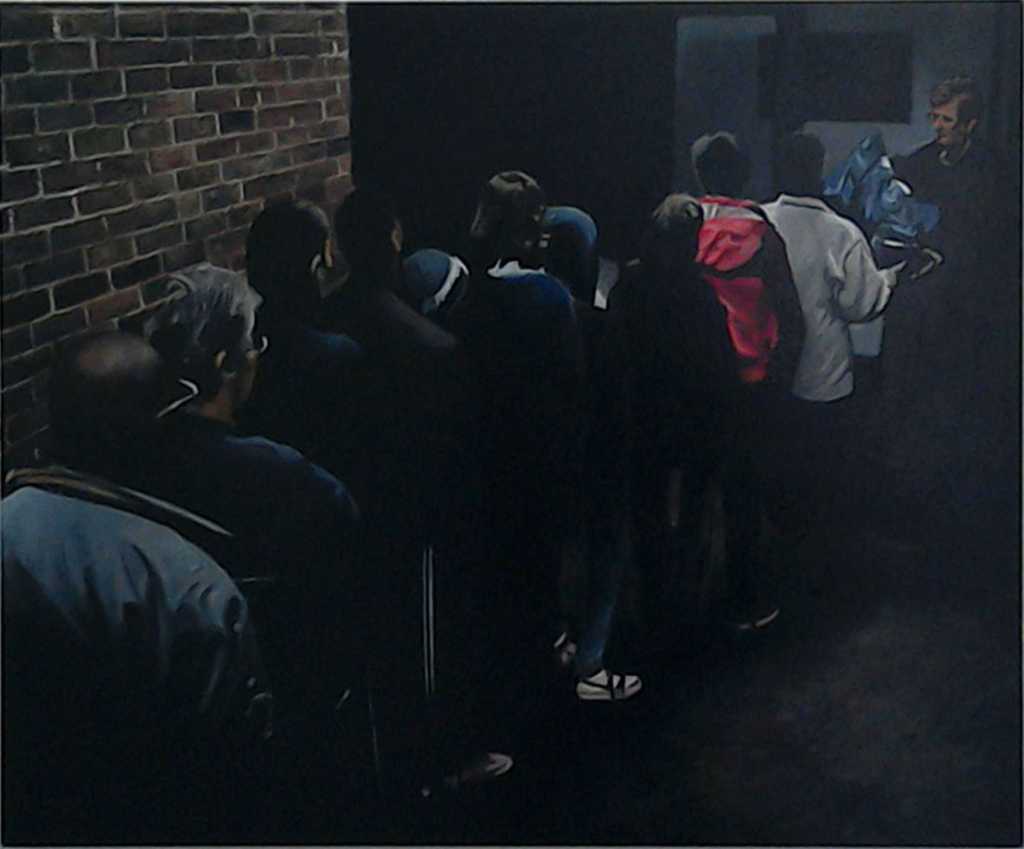
24, Nathan Eastwood, (2/6/2020), his paintings are made on primed gesso boards using enamels. The source material for the paintings are snapshot photographs. A quote from the artist ‘I just want to paint life as I see it, everyday realism, the ordinary person (the proletariat) getting on with life, social realities” The images are often captured using his camera phone and the paintings have an element of photo realism but retain loose brushstrokes and include trapped detritus in the paint. I found that the paintings reminded me of the stylised, simplified iconography of punk, ska or two tone.

Nathan Eastwood, Food Bank, Enamel on board, 2016, 53x64cm

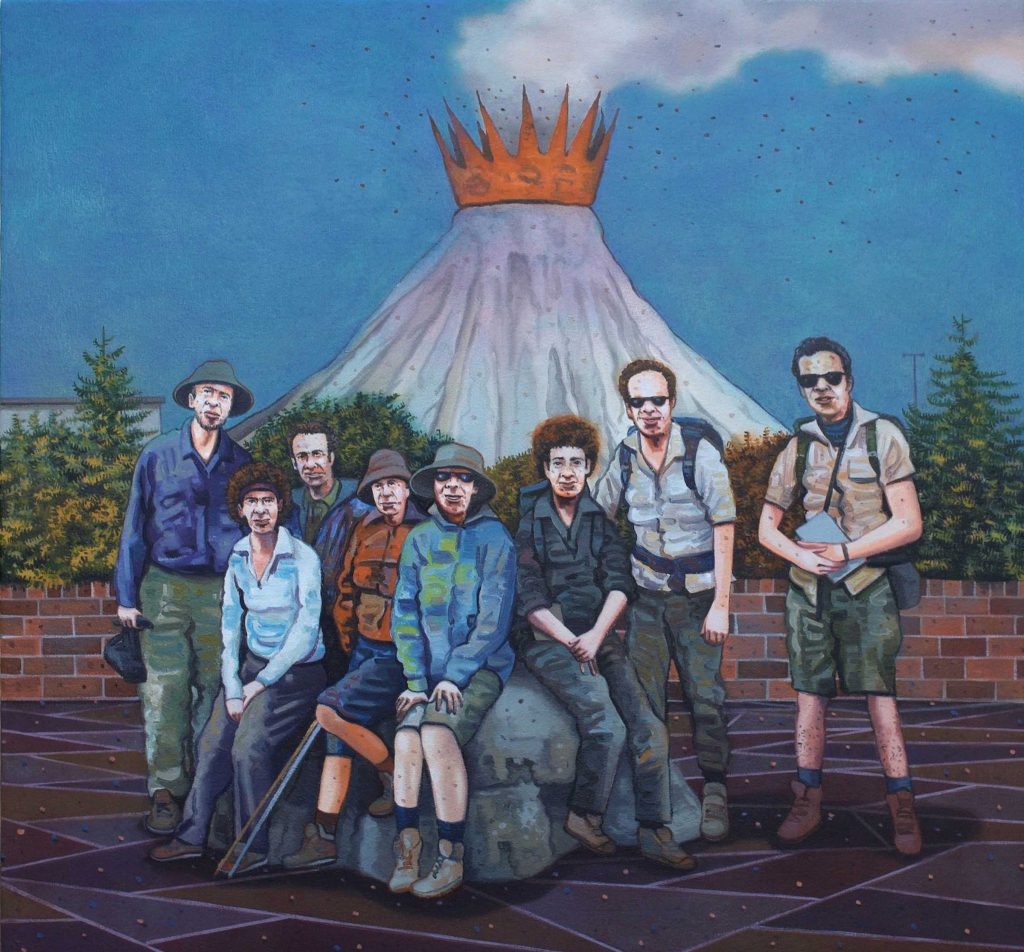
25. Geraint Evans, (4/6/2020), my initial thoughts on the six paintings that were on the Contemporary Artists website were that they were figurative studies which juxtaposed the figures against pre-historic images and cavemen. The paintings had the look of book illustrations. On the artists statement he refers to his styles as ‘stylised pictorial language’. He uses this to explore the idea that landscape is largely a social and cultural constraint.

There is humour and imagination in the paintings which are carefully constructed. From my perspective they lack visual interest beyond the initial focus. The work on the artists website was similar but had a wider vocabulary.

Geraint Evans, Ramblin’, oil on canvas on board, 2020, 204.8 x 190.5cm

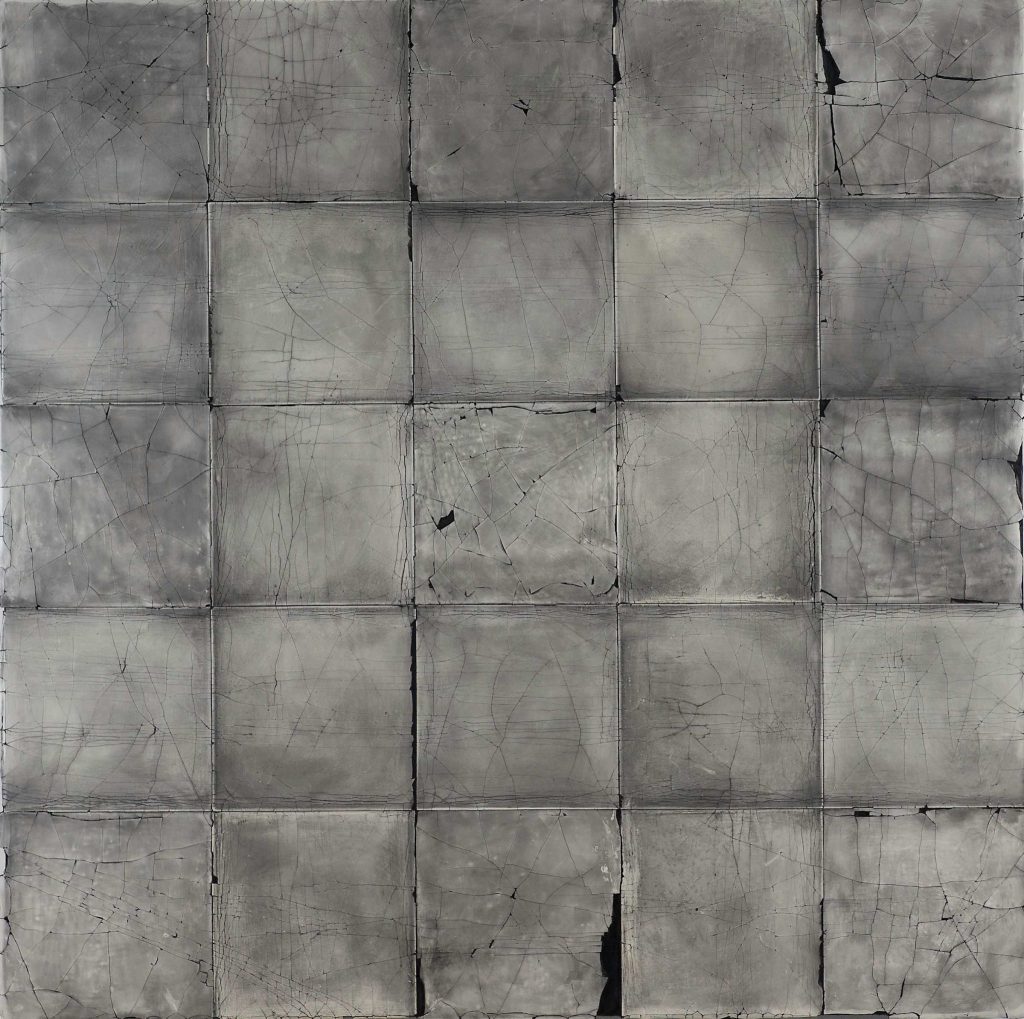
26. Susan Gunn (12/6/2020) my initial impressions, the paintings are about texture and tension. Cracks appear in jagged and flowing lines to create interest on the surface of the support. A range of materials is used to construct the paintings.

Curators statement extract: there is a subtle tension between the golden section formalism of their geometry and the unruliness of the free form cracking.

Artists website: similar work. many are monochromatic. When colour is used it tends to be a single colour perhaps a light and dark shade of the same colour.

Susan Gunn, Where are we now, DB linseed oil – encaustic wax – natural earth pigment – gesso, 204.8 x 203.9, 2016

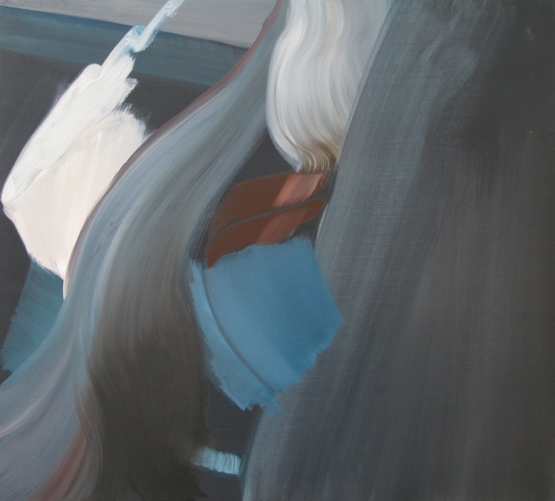
27. Susie Hamilton (14/6/2020) fairly primitive style, loose painting technique, gestural, pared back palette colour, figures present in all paintings.

Artists statement: I paint figures in wilderness either a natural wilderness or a bleak, urban space such as a superstore or shopping mall.

‘iconoclastic’ painting method

There is an energy to the paintings which I like. The unfinished look I find challenging.

Susie Hamiltion, Polar Twilight, Acrylic on canvas, 100 x 100cm, 2018

28. Alex Hanna (17/6/2020), initial impressions: monochromatic paintings oil on canvas or board. The titles suggest or indicate a subject matter that is, on first glance, not apparent. Paint applied loosely in a sculptural manner. Of the oil painting three are thick impasto works and three are more painterly in approach.

Artists statement: working on ideas based around the ‘ambiguous’ and materiality. Reductive colour system. Exploring the boundary between representation and abstraction and how the material qualities of paint become the subject.

Artists website: amongst the topics is a predilection for radiators, pill packs, incubators, linen, plastic bags and pillows. The works are about texture and tone, subtle tonal changes.

Alex Hanna, Row of Pill packs, Oil on panel, 20x25x4cm, 2019

29. Suzanne Holtom (20/6/2020), surreal fantasy, mystical paintings, figure hiding, suggested, amorphous forms, landscapes with illustrative qualities, muted pastel colours set against drawn lines.

Artists statement: paintings are heavily influenced by mythology. For inspiration the paintings of Rubens and the landscapes of Chuck Jones (Wily Cayote and Roadrunner) have been instrumental.

Interesting ideas and shapes, flowing forms and colours.

Suzanne Holtom, Scortcher, Oil on canvas, 130 x 150cm, 2020

30. Barbara Howey (22/6/2020), initial impact, gestural paintings, very loose application of paint which is allowed to flow and mix. I found that they varied greatly in quality and impact. Painting 1, circular support with rough blue and white cloudlike markings left me cold. (I did later learn the context of this painting which helped me to understand its meaning, I didn’t make me like it though. Painting 4, shown below, which felt like an abstract landscape I enjoyed. The flow of the the paint, the receding horizon line and the vibrant but limited palette all come together to give a pleasing composition.

Artist’s statement: Past three years her work has concentrated on the human destruction of the landscape brought about by the effects of industrial waste, fracking, agrichemicals and solar radiation management.

Artist’s website: I enjoyed most of the paintings in particular a number of the figure studies where I found her approach and style fresh.

Barbara Howey, Poison Idyll 3, Acrylic and watercolour on board, 2017, 8x10inches

Research – Jacksons email – Prize winner interview with Robyn Litchfield – Link to Exercise 1.4 & Assignment 3

Robyn Litchfield was the winner of the Jackson’s Painting prize 2020 in the Landscape / Seascape / Cityscape category. The winning painting, The Hollow Place, which is shown below immediately drew me in. I saw a link to a topic that I wanted to attempt but had, to date, avoided. It also resonated with the work that I had been completing for “Exercise 1.3 – The mirror as a stage”.

Robyn Litchfield, The Hollow Place, Oil on linen, 92 x 68cm, 2020

Robyn is based in New Zealand and her inspiration comes from the primeval landscapes there. She works both from photographic images from the 19th century and photographs taken by herself . Her working method is similar to my own in that she works from sketches, smaller painted studies then larger canvases. Her paintings capture landscapes and often use reflections to amplify space. The colour palette for each painting is limited and subdued. This gives the paintings a coherence. The colours are not typically representational of the actual colours. Most of her works have an amorphous shape which is added as an unconscious act.

Two more of her paintings are replicated below.

Robyn Lichfield, Forest Gloaming, Oil on linen, 120x95cm, 2018
Robyn Litchfield, Ship Creek, Oil on linen, 41x51cm, 2019

As stated earlier in this blog I am drawn to these paintings and see links to where I would like to take some of my work. I have a set of photographs which examine a similar topic, see below, which I will attempt to turn into a painting which will be my Assignment Three piece.

Research Point 5 and Links 32 & 33 – Short notes

Link 32, Katerina Grosse, these were large scale paintings which are part of the architecture of the building. The use of spray guns helped to increase her reach. The painting envelopes the buildings interior which in turn envelopes the viewer or occupant of the building as they move through it.

Link 33, The multiplication of being, or a reflective abyss? Mirrors

An essay into the role, mystery and intrigue that can be created by mirrors and reflective surfaces.

“Daguerreotype” process the first publicly available photographic process widely used during the 1840 -50s.

Examples of artists mirrors and mirrored surfaces.

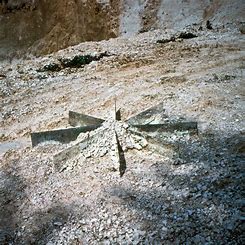
Robert Smithson

Six mirrors, chalk, Oxted Quarry, England

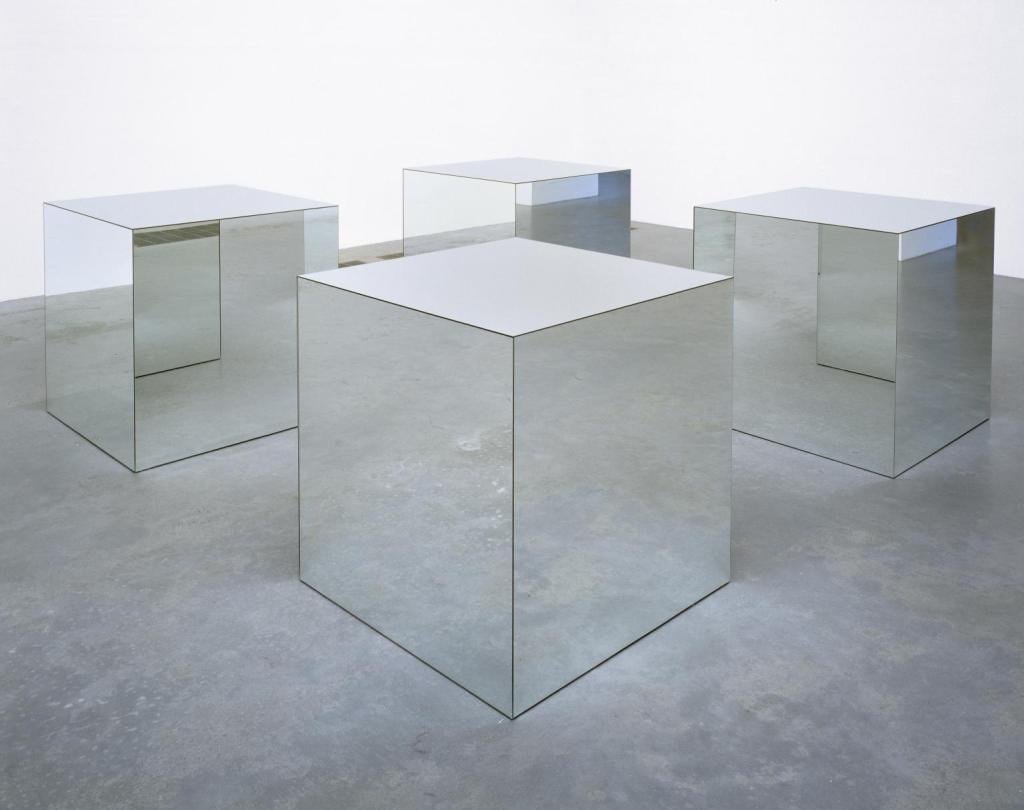
Robert Morris, minimalist

Untitled 1965, reconstructed 1971 Robert Morris

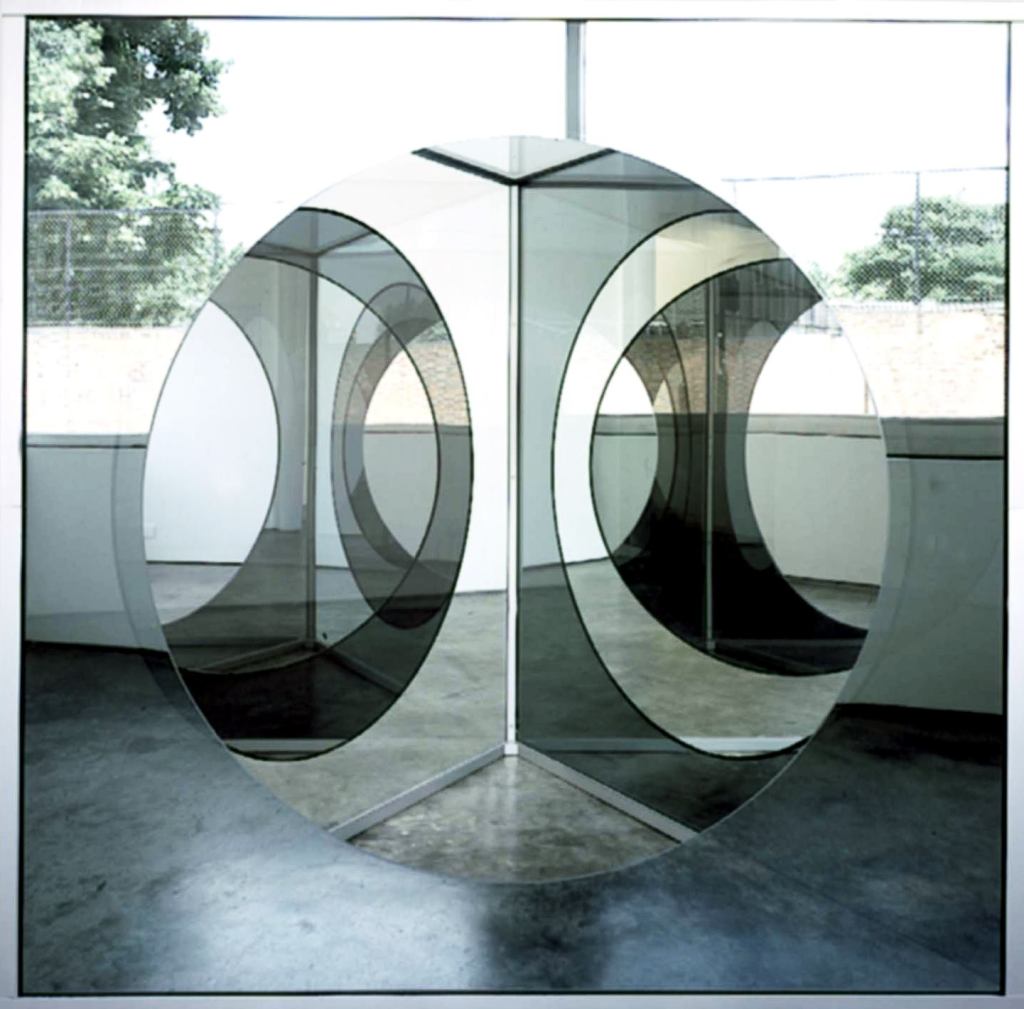
Dan Graham, installations and structures

Pavillions

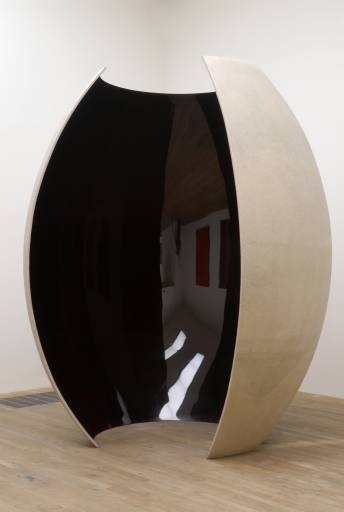
Anish Kapoor, specialising in installation art and conceptual art. The piece below I have visited in Tate modern on more than one occasion. The surface of the work is highly polished. Its presence changes as you wander around and into it.

Ishi’s Light 2003 Anish Kapoor

Part Three – Research Point 4 – Amy Sillman / Lisa Robertson – Jutta Koether and Reading point, link 31

Draft of Voice over for split screen, Poem by Lisa Robertson, Paintings and animation by Amy Sillman. The piece is an animated split screen video to which a poem has been set. I guess that the poem was the starting point for the work. The poem consists of a number of repeating sentences which are then linked to the changing images. To start with this was easy to follow but I found I got a little lost over the six plus minutes. However I didn’t find that this distracted as I was making continual links between the imagery and the dialogue. I found that the meaning of the repeated sentences changed over the duration of the piece. I guess that this was the intention. To my mind the words and images complemented each other and I believe it would be hard to watch the video without the dialogue. I don’t feel that it would make any sense. The poem without the imagery would still have meaning although the pictures would have to be made by the listener.

Jutta Koether – Seasons and sacraments, the video consisted of a talk by Jutta through her exhibition and the links and meaning of the works displayed within it. The exhibition, consisting of two rooms, is inspired by Nicolas Poussin. The first room is in response to his paintings ‘The Four Seasons’ and second room ‘The seven sacraments’. The talk consists of the challenge that the viewer is confronted with trying to make connections and find their way through the exhibition. There is a dialogue throughout the work. Without the back story or the knowledge of the Poussin paintings I feel it would be difficult to make sense of the work. My assumption is that there was information available to the visitors, this was not apparent from the video.

The reading point Link 31 consisted of a long text by James Elkins. the main thrust of the piece was the depiction or the use of time within art. I found it informative and through. There were plenty of interesting point that I need to reflect upon further.