Below are the final selection of works for my assessment submission. For completeness I have also added my finalised Critical review, Artists’ statement, Reflective review and selection of blog posts.
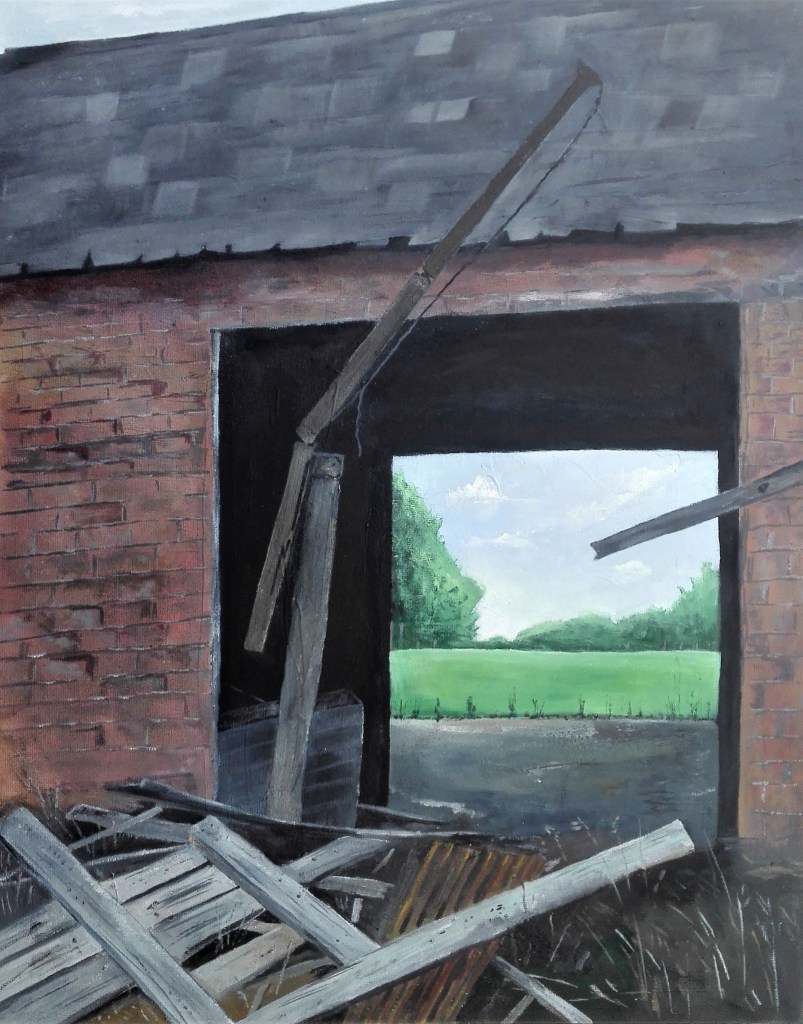
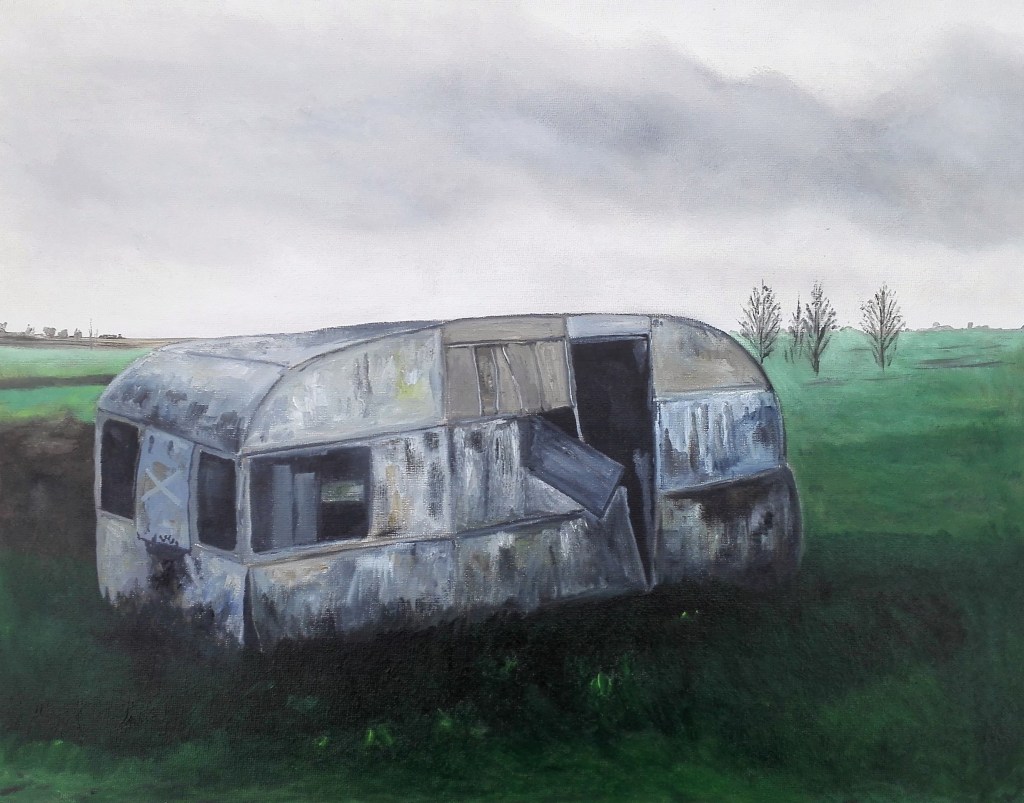
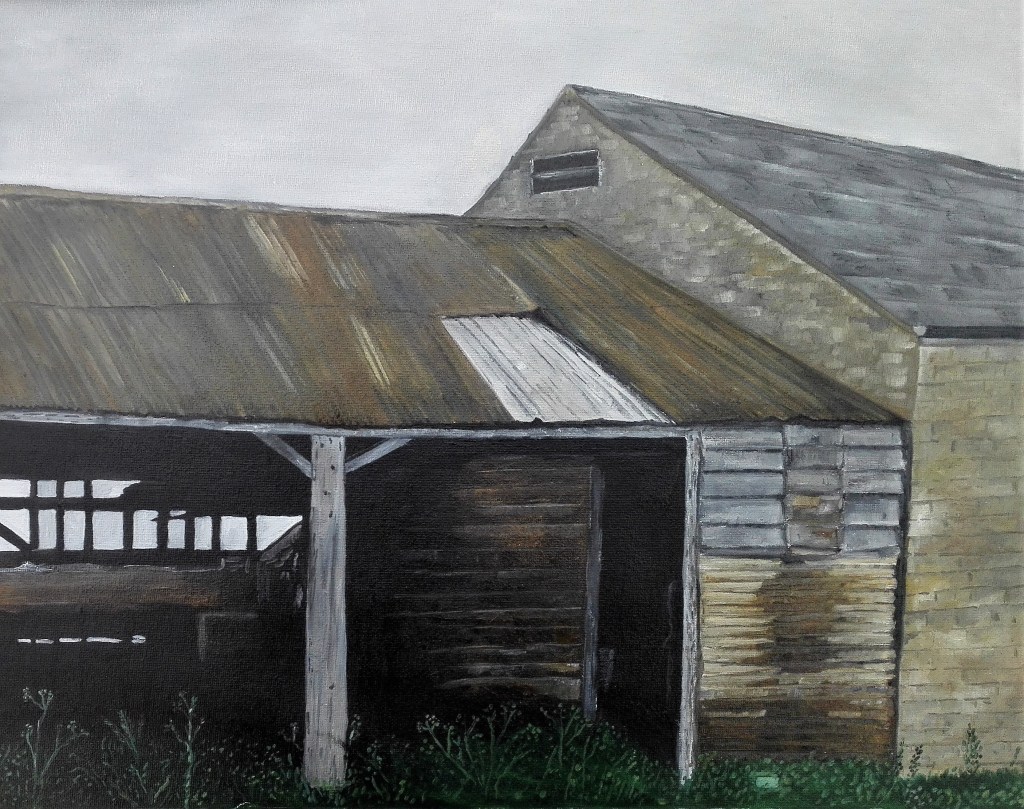
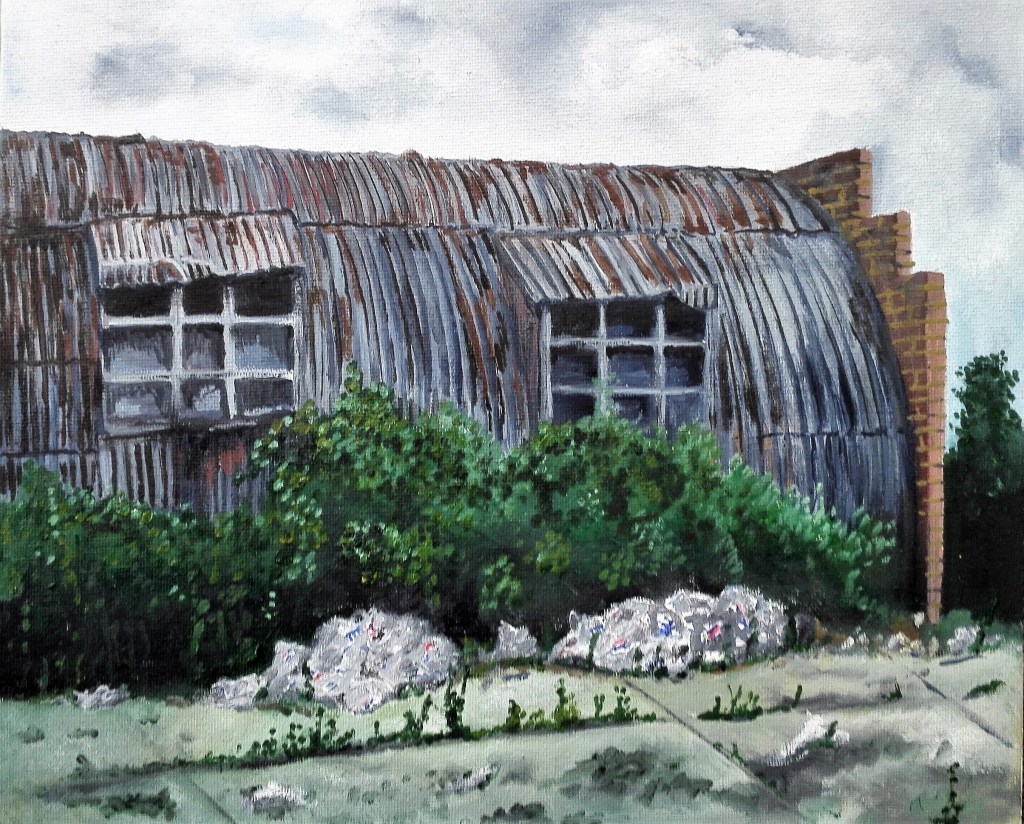
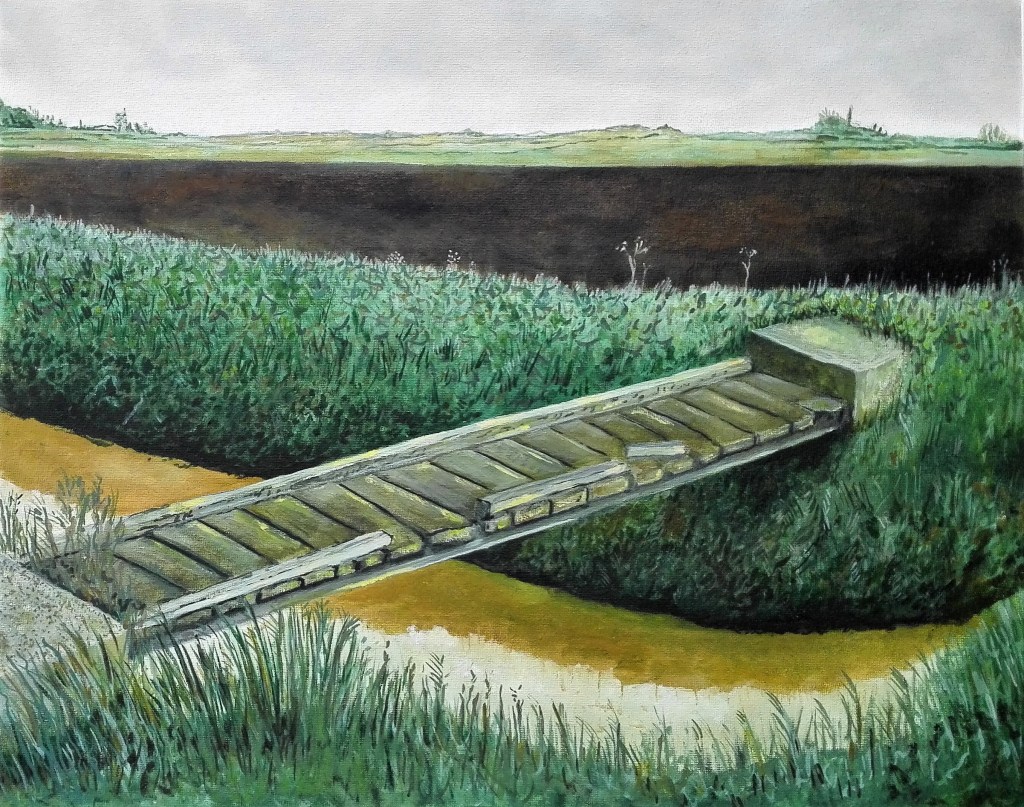
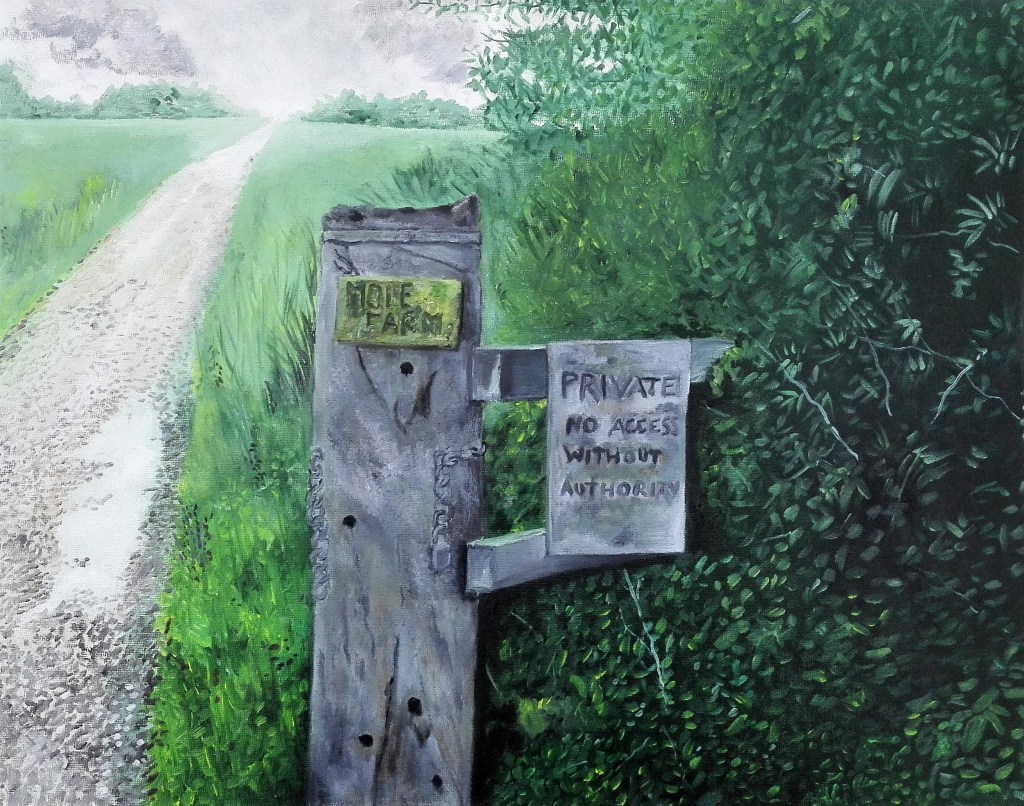
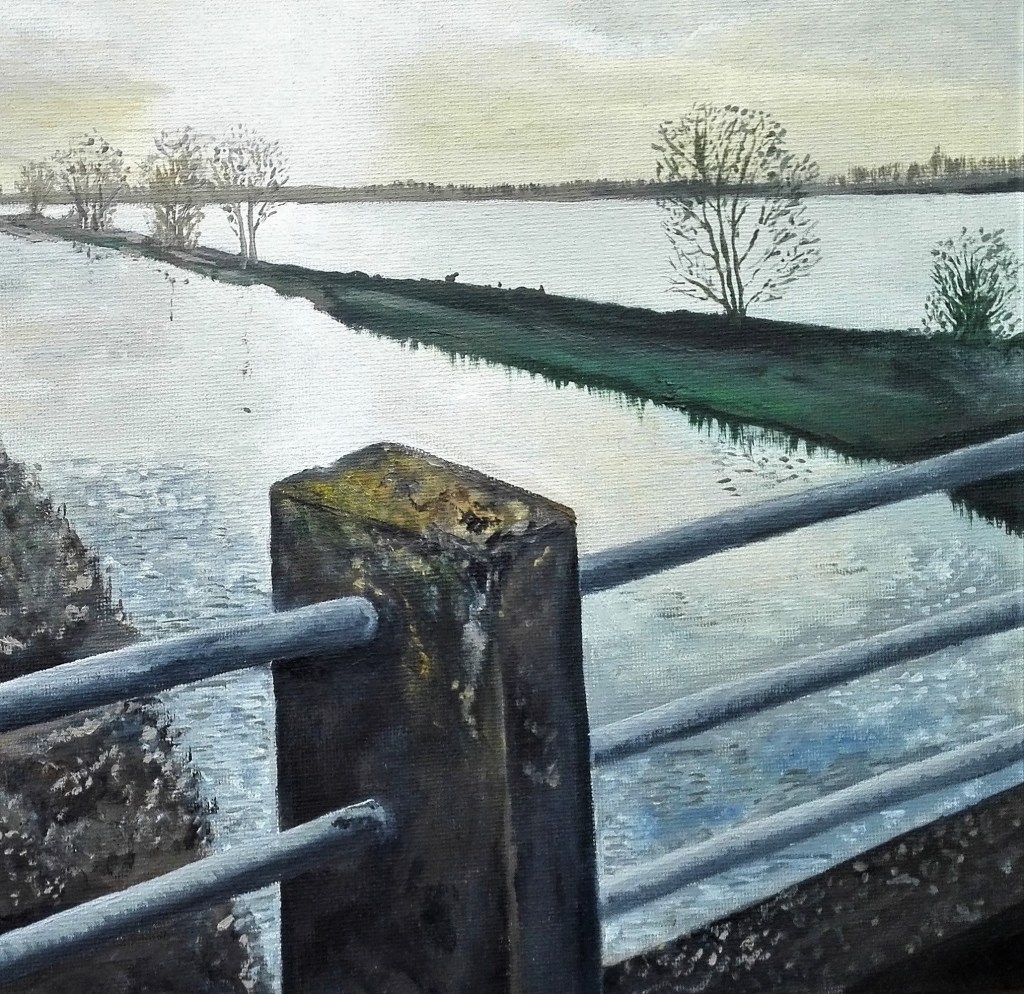
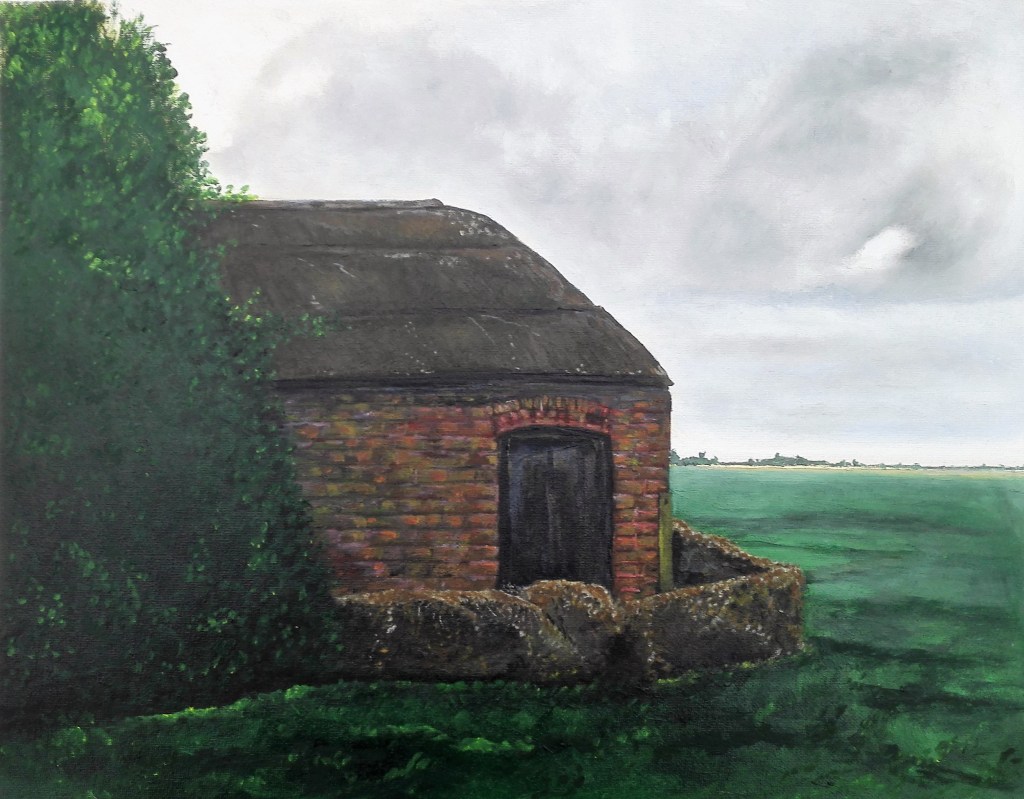
Decay in the landscape
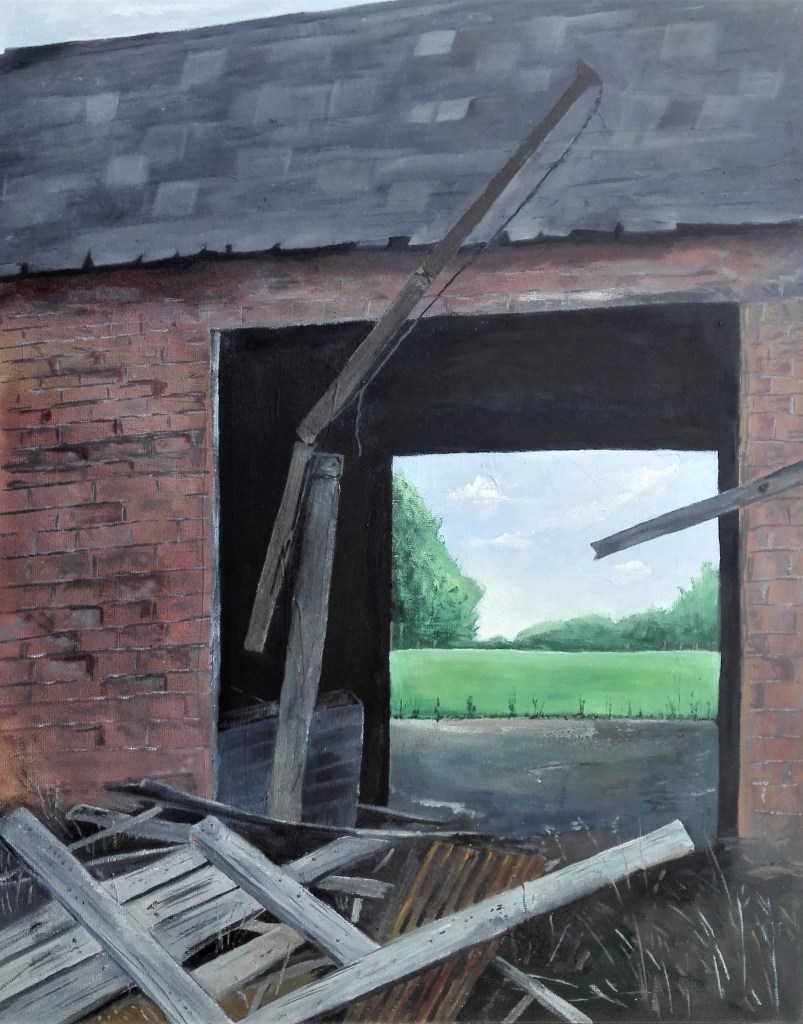
Ugly – Beautiful 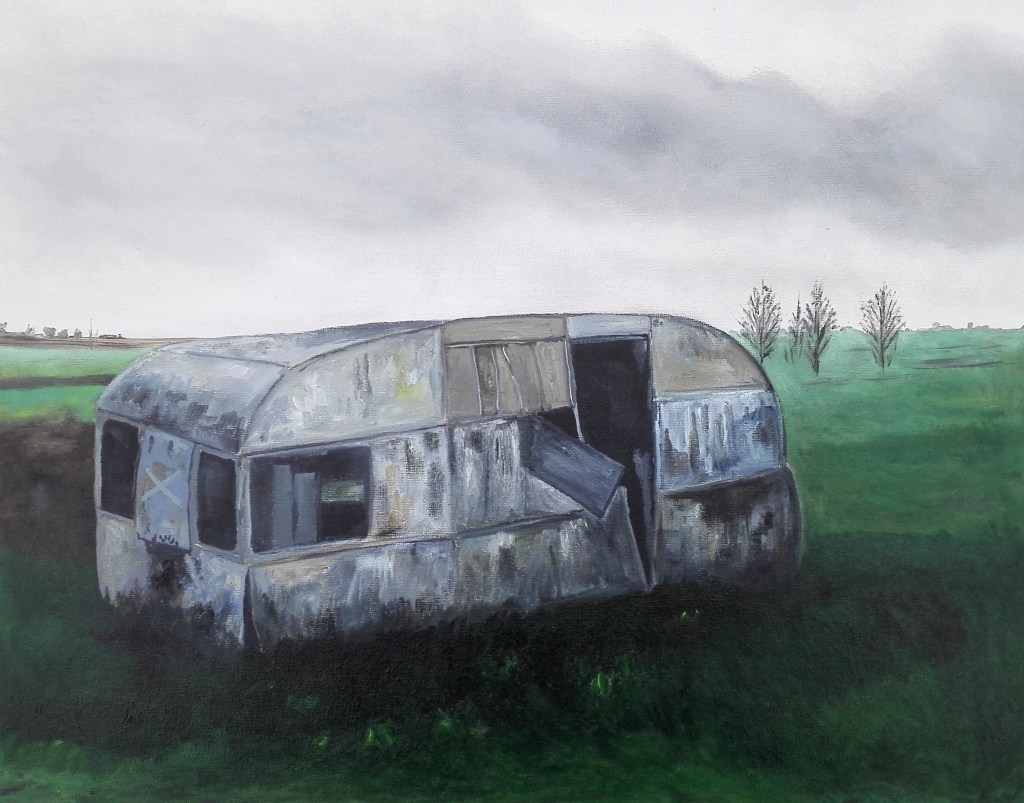
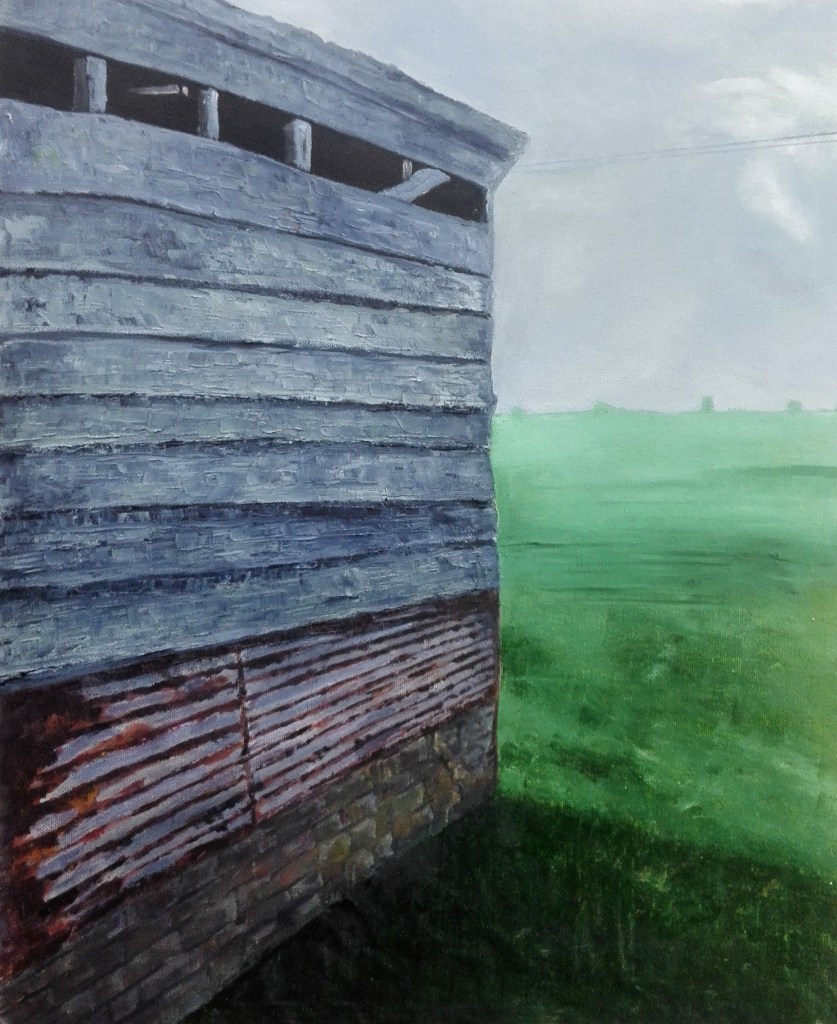
Winter break 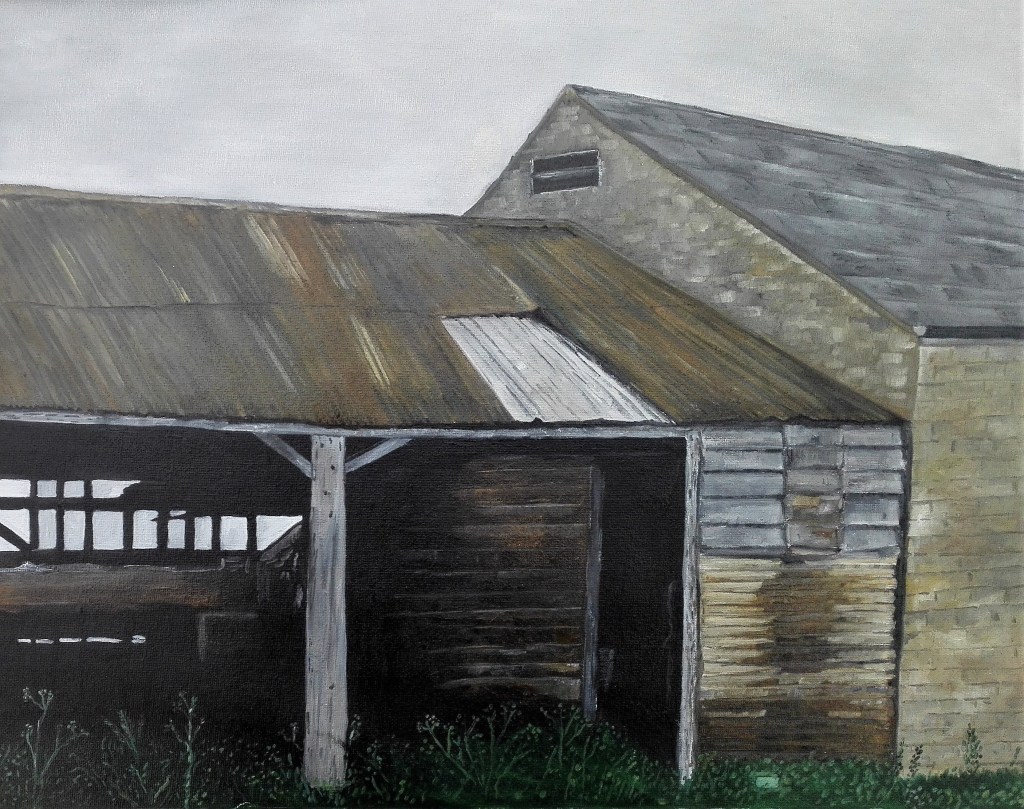
Barn dance invitation
Close up to deterioration
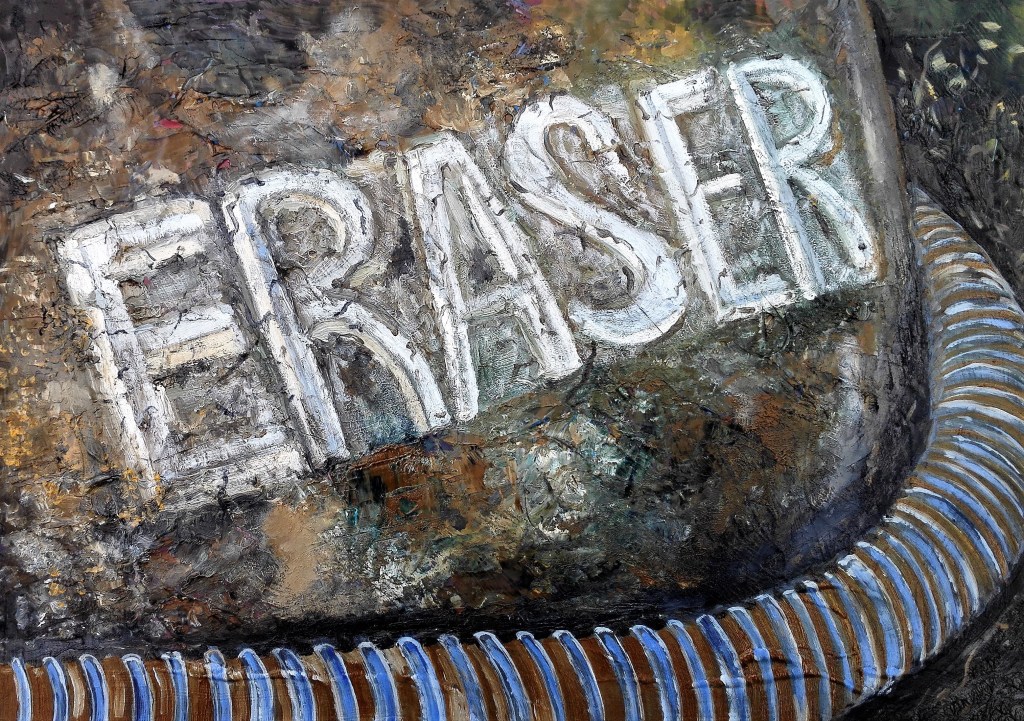
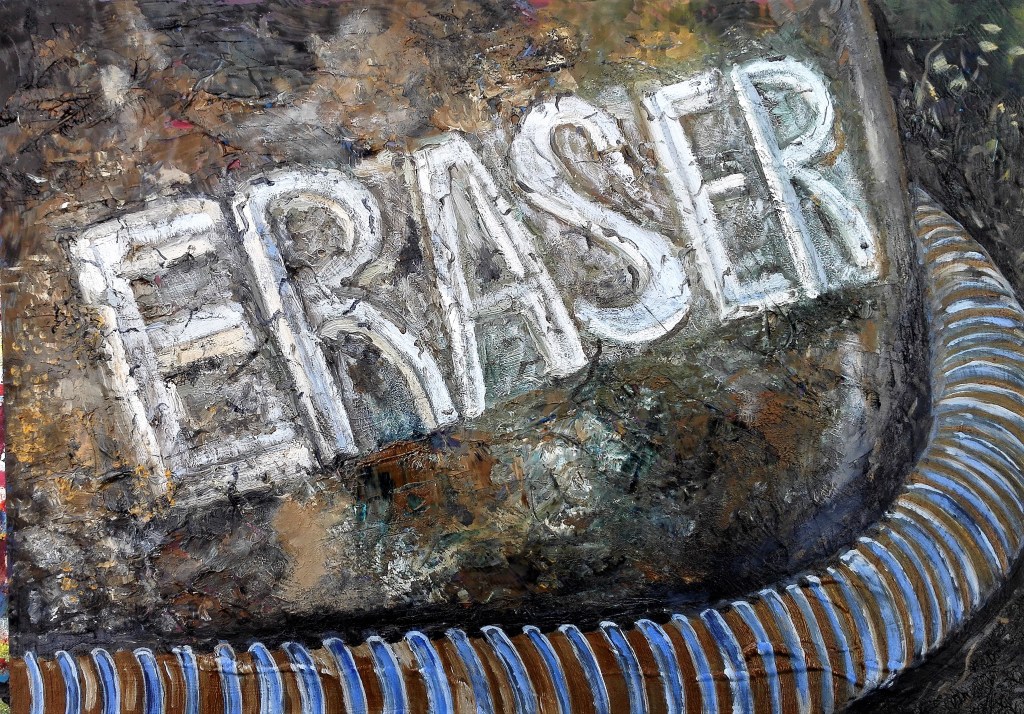
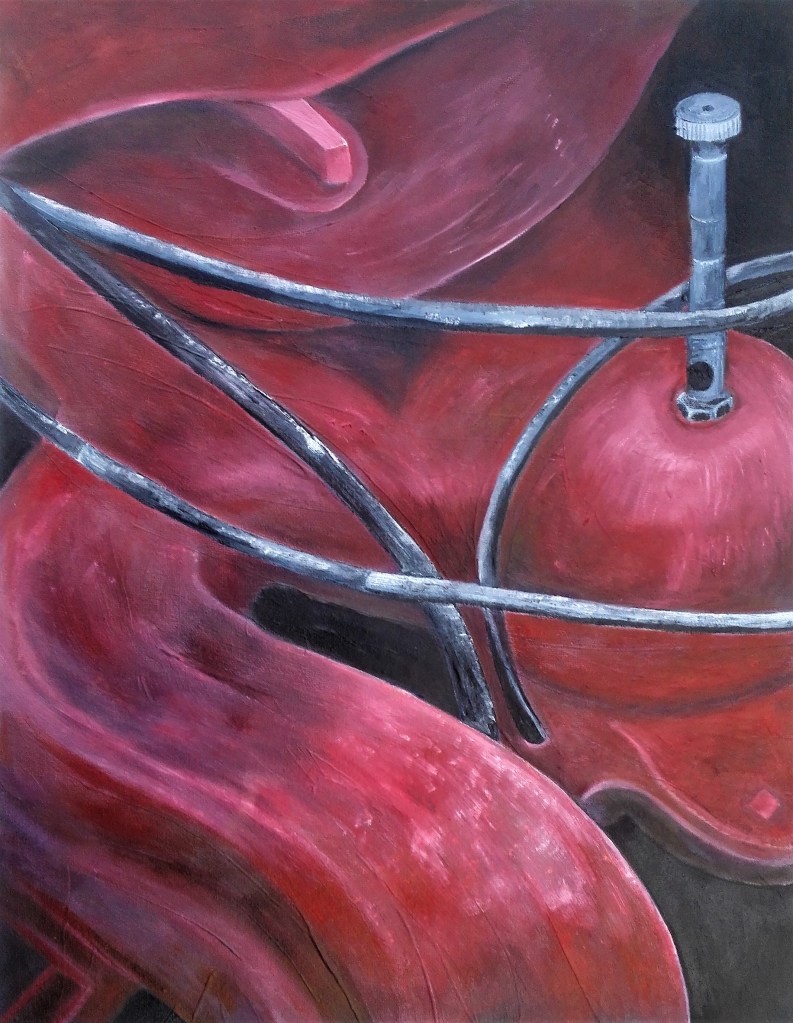
Eraser 
Eraser – detail 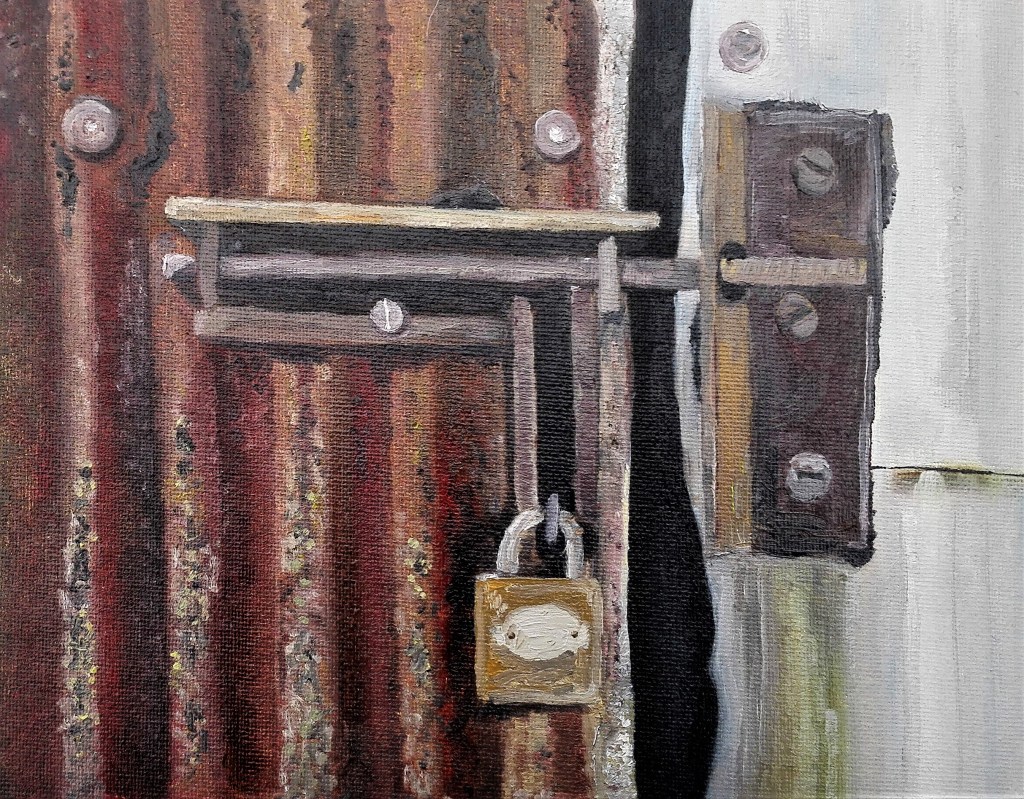
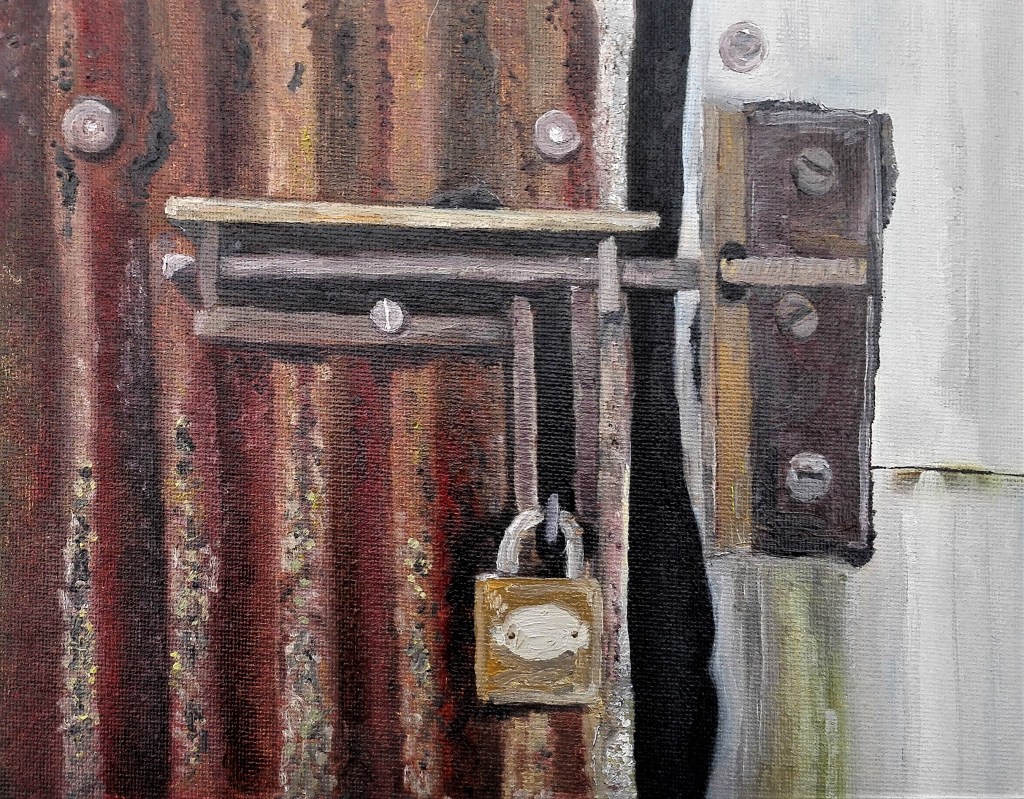
Locked up 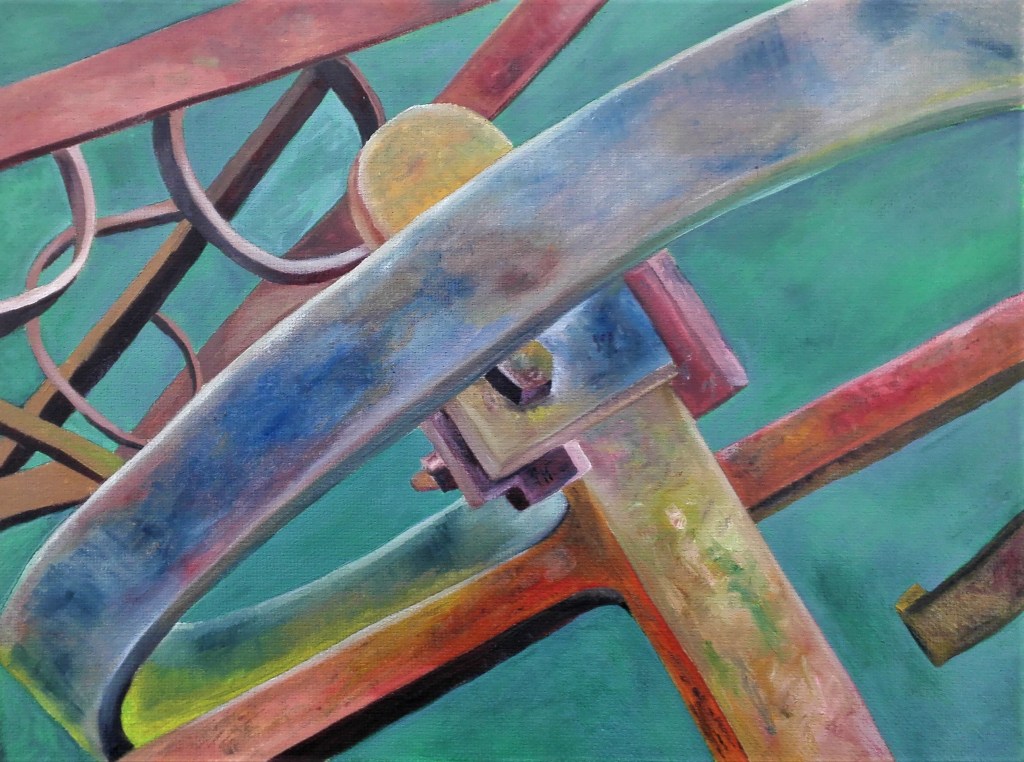
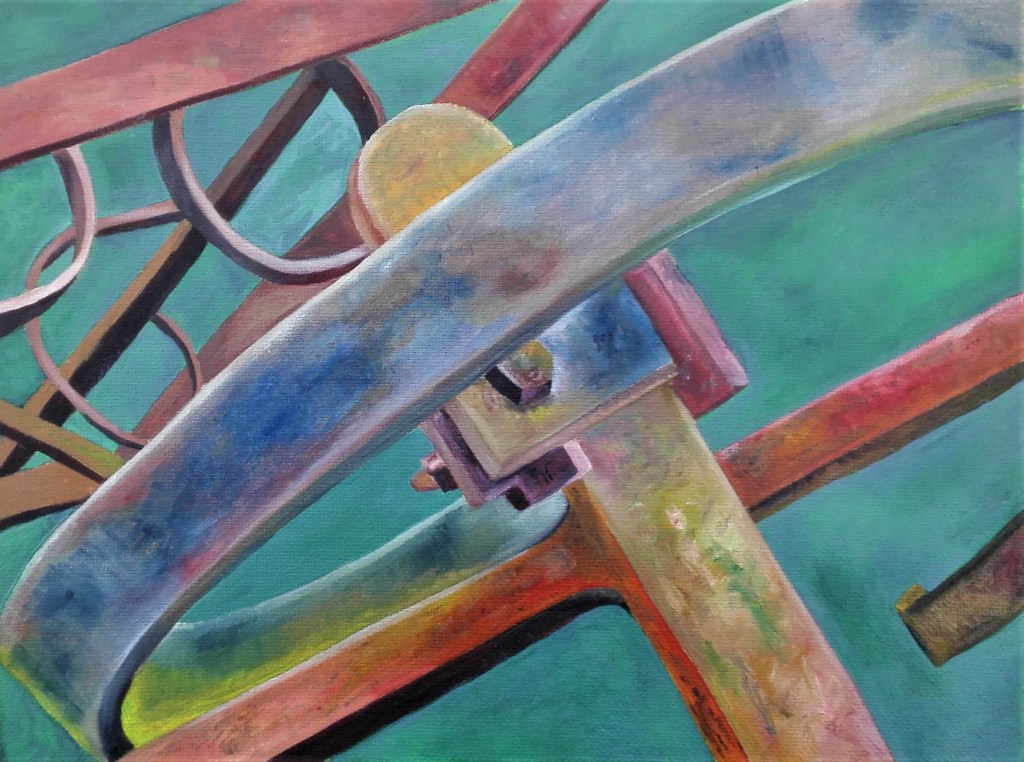
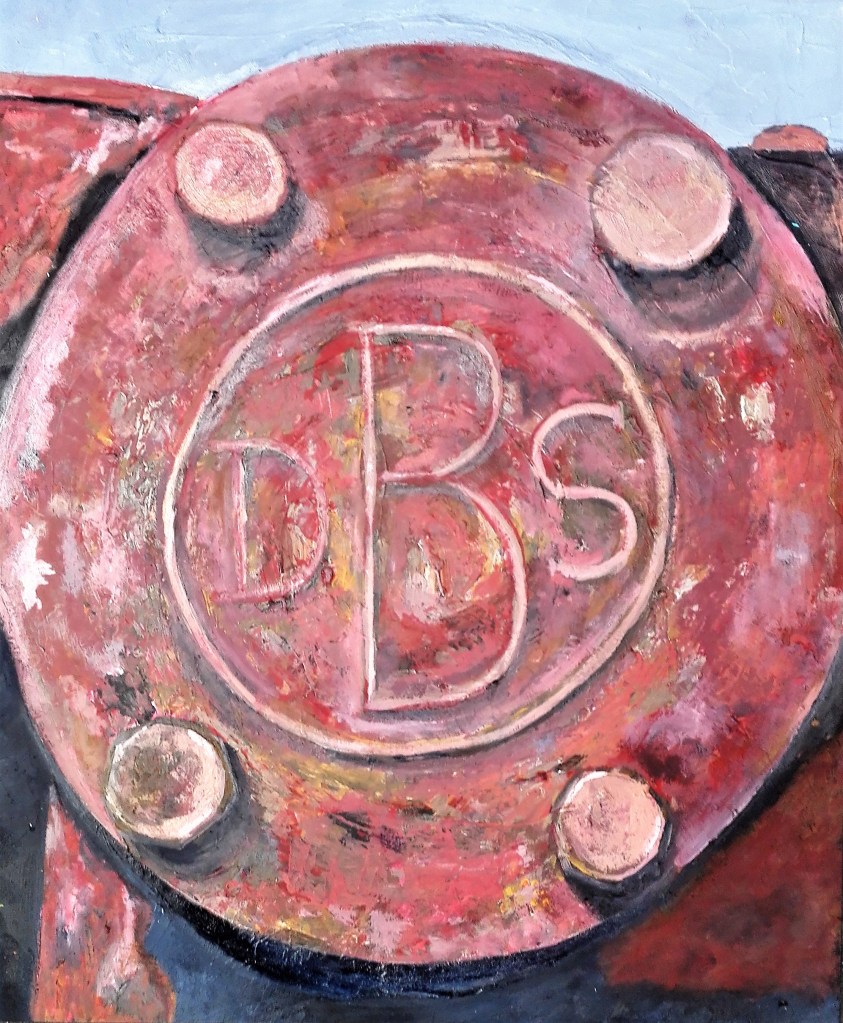
Old plough 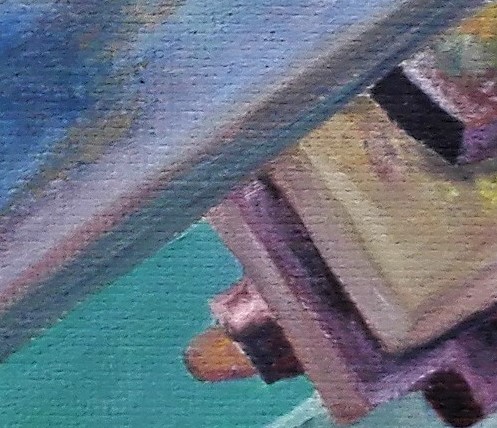
Old Plough – detail 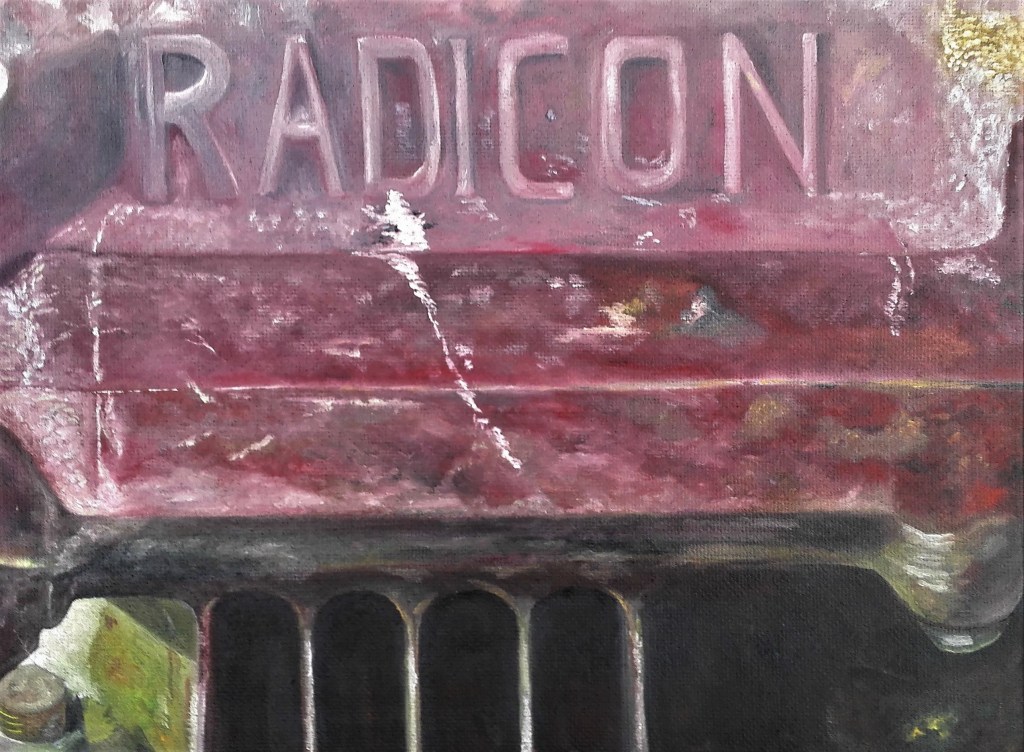
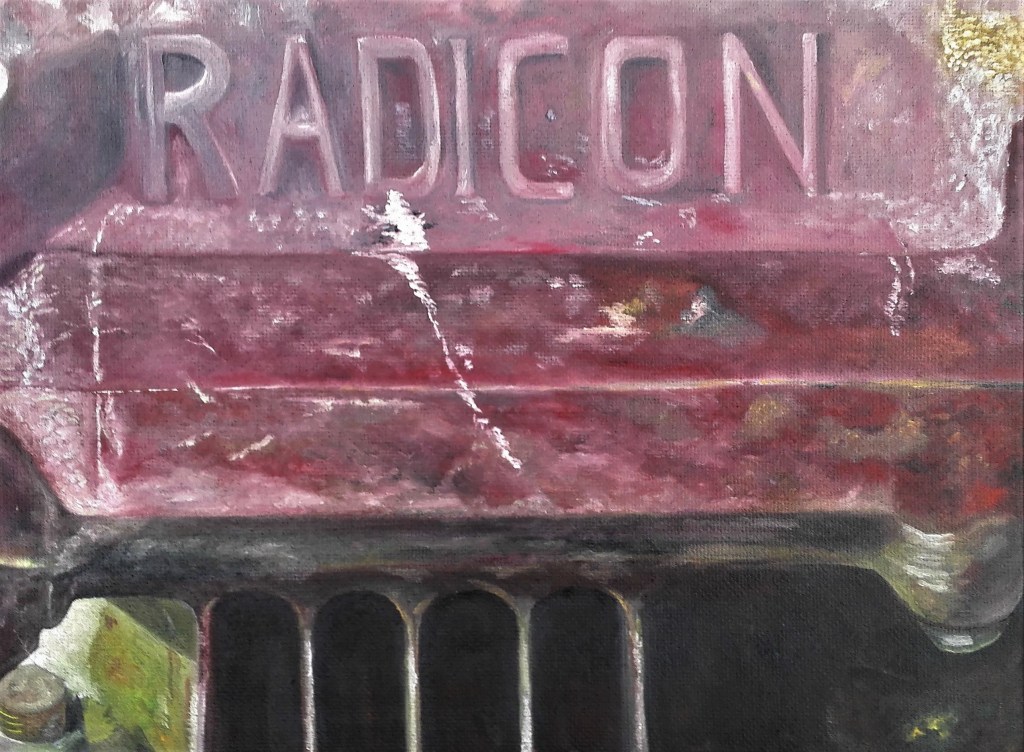
Radicon
Critical Review
See Critical Review tab
+++++++++++++++++++++++++++++++++++++++++++++++++++++++++++++++++++++++++++
Artist’s Statement – Mark A Taylor
My fascination lies in documenting the effects of the passing of time on the Fenland landscape in my locale. I try to show the landscape as it is today and the impact that the elements have had on man-made objects, documenting their slow imperceptible deterioration. Highlighting the cycle of development and decay of man-made structures in the landscape against the passing of time and the seasons.
I approach the subject in two distinct ways. The first, is to try to convey what I see when I walk within it; to record the features, the buildings, structures and the space they occupy in this often austere environment. As I do this I imagine the stories that may have been played out during the lifetime of the buildings.
The second approach is to examine objects close up; to focus on detail and features that may be overlooked by the casual observer. This approach tends to produce paintings that are ambiguous in nature and hard to identify.
+++++++++++++++++++++++++++++++++++++++++++++++++++++++++
Assessment Section 1
Below are ten links to my blog that represent a selection of the work, outcomes, experiments, contextual research and written reflections of my studies.
My blog URL is Mark Taylor ‘Studio Practice’ – A journey through my Studio Practice course with OCA (water.blog)
The password is Swampy01
The links are listed in chronological order starting with Part One. With each link there is a brief explanation.
1, Assignment One – Final Piece – Mark Taylor ‘Studio Practice’ (water.blog)
A blog on my Assignment One final piece which details the process, the work in progress and the final outcome in total and as a series of framed sections
A blog on my reflections on my Part Two Assignment submission ‘Totally wired’ including the Assignment piece and a short video of it.
3, Part Three – Project 1 – Reflections on Exercise 1.0 – Mark Taylor ‘Studio Practice’ (water.blog)
A blog on my reflections on exercise 1 of Part three including photographs of the process.
A blog detailing my work on Exercise 1.2, my thought process, sketch work and the final ‘Storyboard’ piece.
5, Part Four ‘Parts of a painting’ – Project 1 & Project 2 – Mark Taylor ‘Studio Practice’ (water.blog)
A long blog which details the varied experimental processes and paintings that I carried out for Part Four’s Projects 1 & 2.
A blog detailing my experimentation of using soap as a painting medium.
A blog detailing the process, work in progress and outcomes and reflection on this exercise. The blog includes videos of the outcomes.
A blog on my reflection after re-working my initial submission for Assignment Four which followed Formative feedback.
A blog reflecting on the use of words in art and a revolving presentation combining the three pieces that I completed for this exercise.
My final ‘Exhibitions’ blog where due to the limitations regarding Gallery visits due to lockdown I selected paintings from the website ‘Contemporary British Painting.com’ and critiqued these paintings. This was the final of six blogs which I have used to develop my art writing skills.
+++++++++++++++++++++++++++++++++++++++++++++++++++++++
Assessment section 2 – Selection of creative work.
Pieces submitted in two categories which follow my investigations in my Parallel project and are reflected in my Artists’ statement.
Category 1 – Close up to deterioration
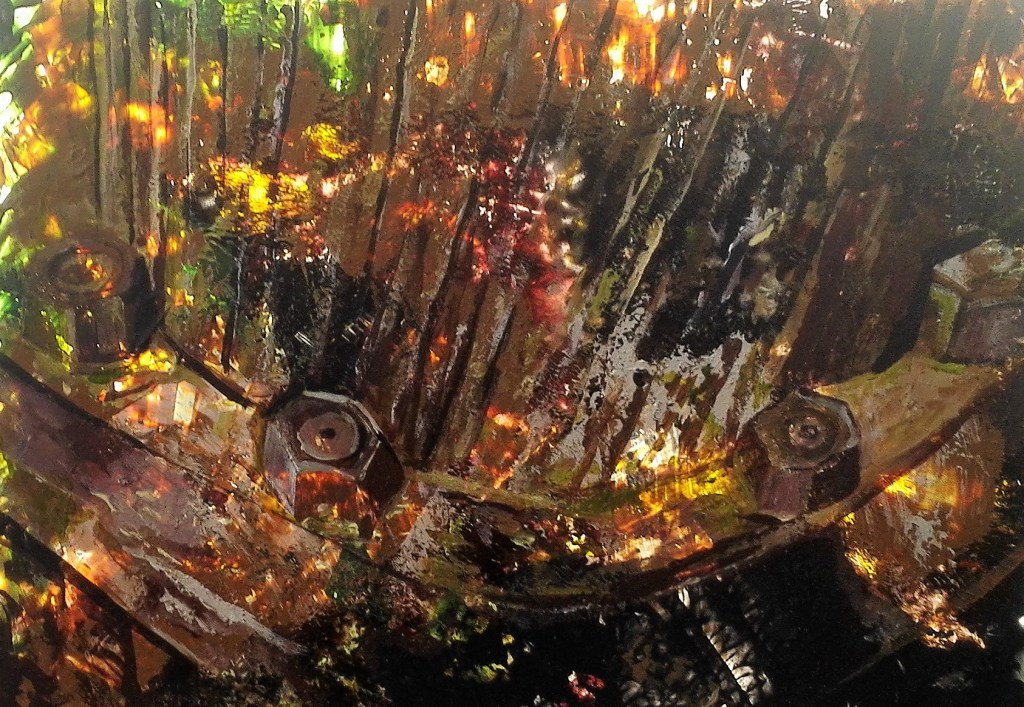
1, Eraser, Oils and acrylic on acetate, 21 x 29 cms (a study of part of an abandoned piece of farm machinery)
1a, Eraser, detail from painting
2, Locked up, Aqua oils on canvas, 19 x 24 cms (a study of the lock on an old farm building)
3, Old Plough, Aqua oils on linen board, 30 x 40 cms (a study of a section from an abandoned plough)
3a, Old Plough, detail from painting
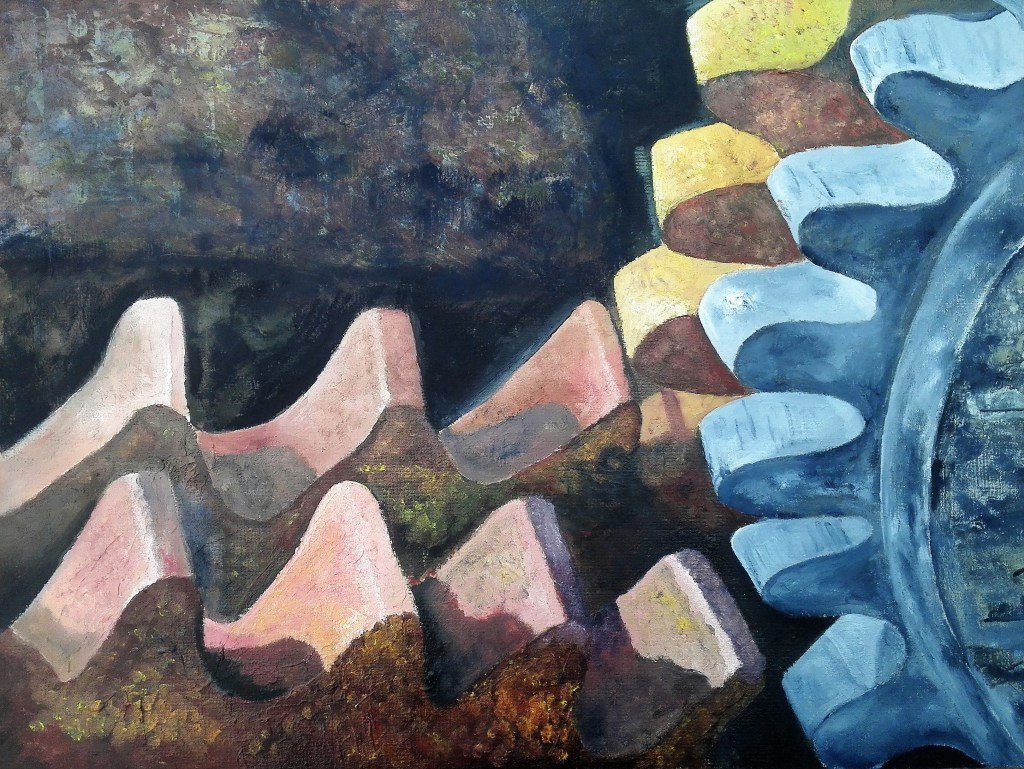
4, Radicon, Aqua oils on linen board, 30 x 40 cms (a study of part of a pump system in the Fens)
Category 2 – Decay in the landscape
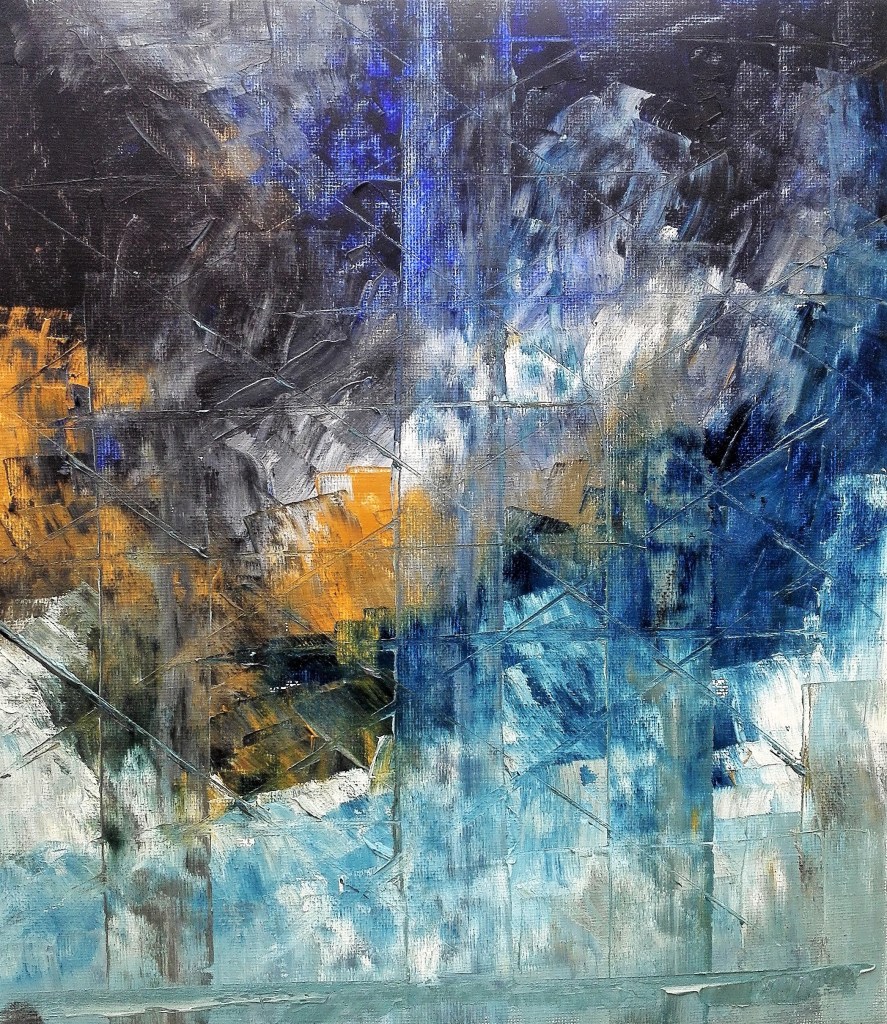
1, Ugly – beautiful, Aqua oils on canvas, 48 x 38 cms
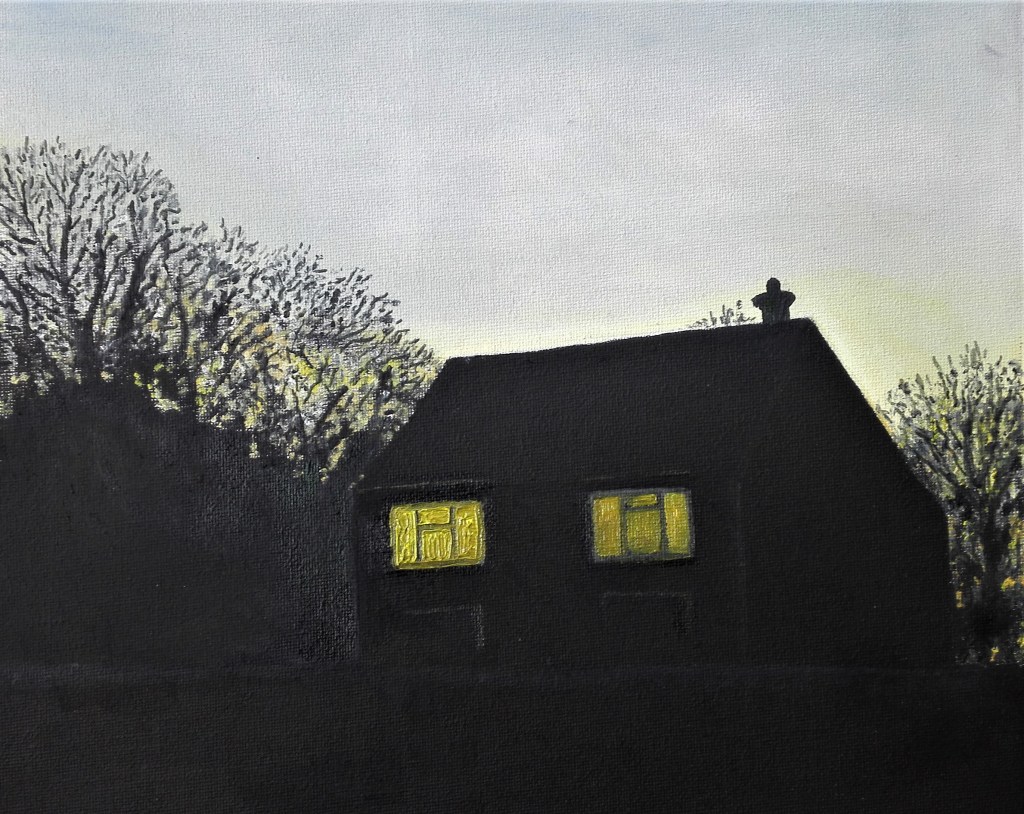
2, Winter break, Aqua oils on canvas, 38 x 48 cms
3, Barn dance invitation, Aqua oils on canvas, 38 x 48 cms
+++++++++++++++++++++++++++++++++++++++++++++++++++++++++++++++++++
Assessment section 4
Reflective Evaluation of my progress and outcomes during Studio Practice
Whilst working through the Studio Practice course I have kept in mind the two main areas that I would need to concentrate on to ensure a successful outcome. Firstly I would need to bear in mind the Assessment criteria for HE5 level courses and would use this as a guide when reflecting on each Part of the course. The second was to be open to the expected challenges and look to overcome these by using painting.
Demonstration of Technical and Visual skills
Materials, Techniques, Observational skills, Visual awareness, Design and compositional skills
I experimented with a wide range of materials throughout the course and particularly in the early parts. I used materials ranging from discarded electrical equipment and balloons to musical instruments and string as well as various paint and drawing mediums, inks, acrylics’, oils and water mixable oils.
These materials have been applied to a range of supports including kitchen foil, greaseproof paper, and gift wrap. One that I have found that lends itself to the application of paint is acetate. Its transparent properties can add interest to paintings particularly when displayed back lit. Two examples shown below.
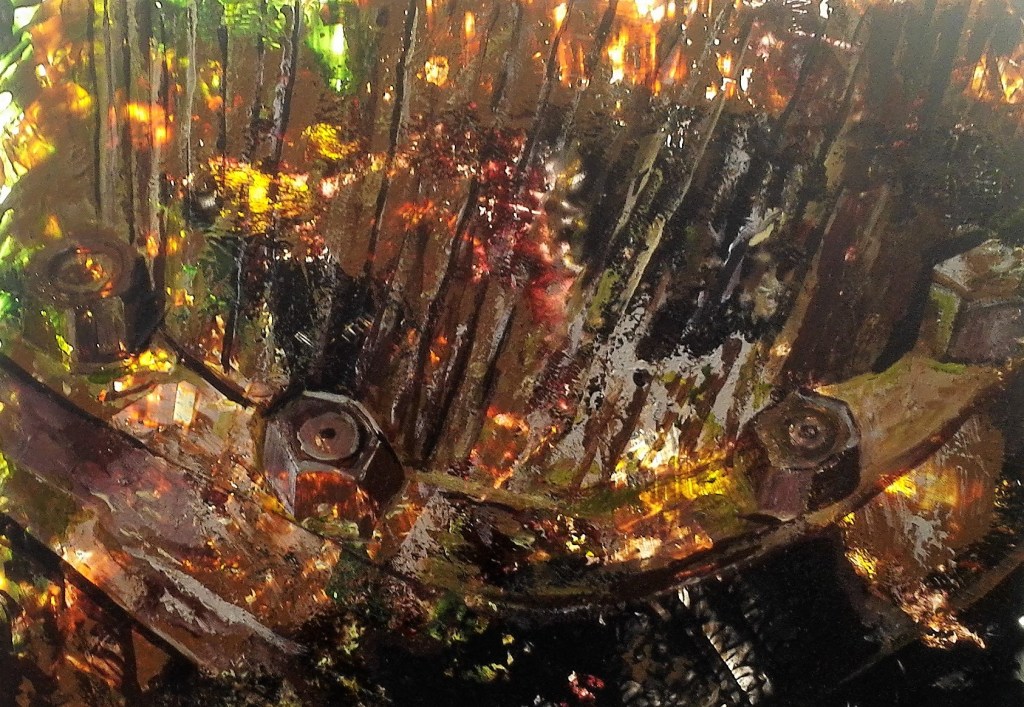
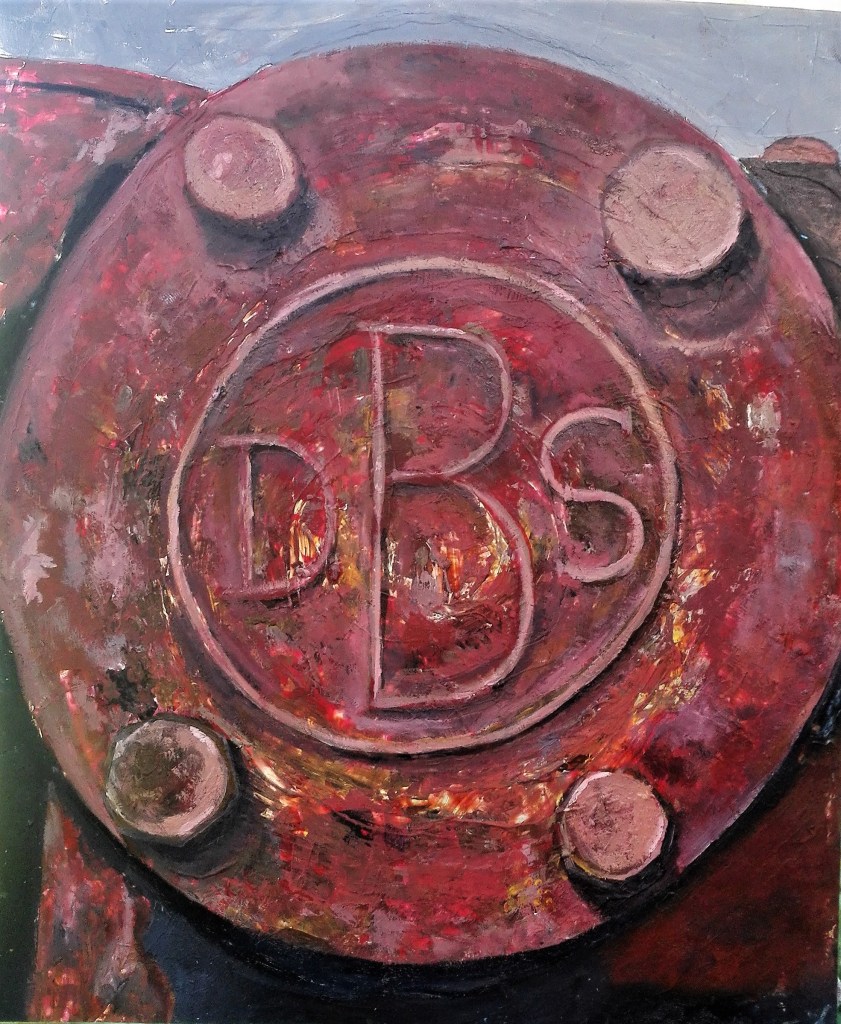
The most innovative material that I used during the course was soap. This was soap made using the cold press saponification process. My blog, link below, give more details.
Of the experimental work that I undertook in the earlier parts of the course the most satisfying were where I applied paint liberally onto acetates. This resulted in a number of pieces which have an added textural quality, see example below.
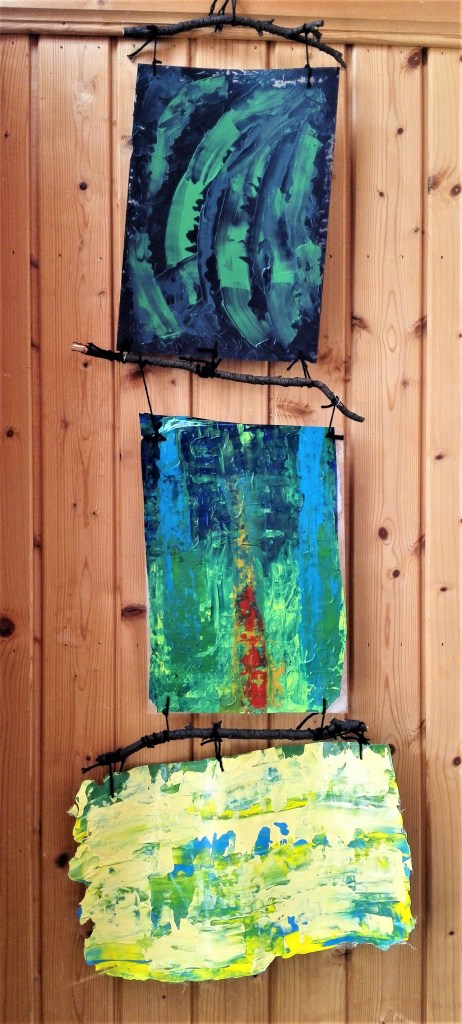
During my experimenting I have discovered techniques that I continue to refine in my paintings. These have allowed me to break down some of the rigidity of my earlier work and to further develop my personal style. The addition of a set of quality brushes in conjunction with the aforementioned water mixable oils has improved my painting.
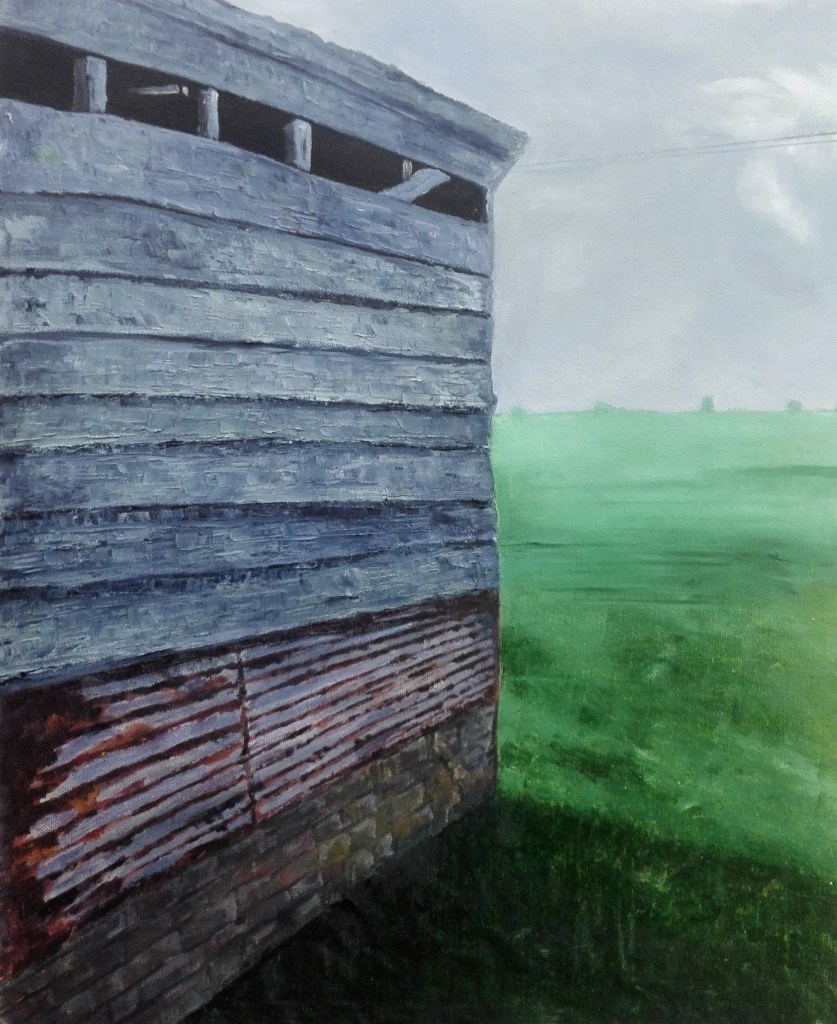
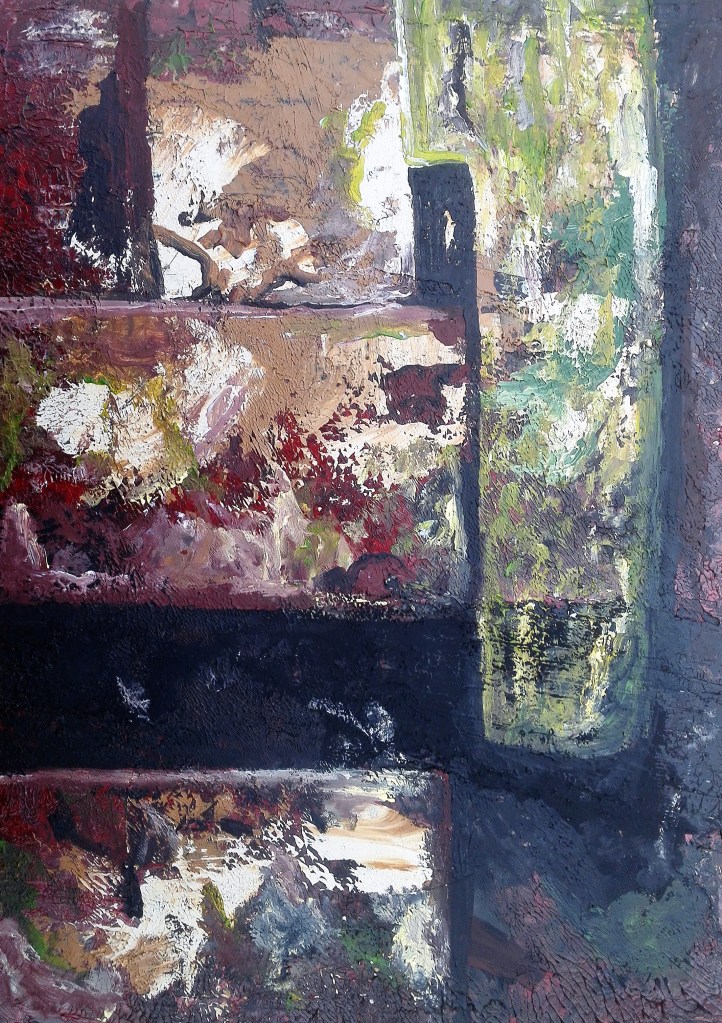
The Parallel Project became the main focus of my painting in which the two focus areas forced me to observe my local Fenland landscape in new ways. I looked to find innovative ways to portray the subjects which didn’t always result in satisfying paintings. This became apparent when editing my project portfolio. Paintings which I felt, to be contenders for the portfolio had poor composition or, in the case of the close ups, lacked visual interest. A couple of examples are the paintings below, the first composition utilises an unusual viewpoint which doesn’t quite work. In the second painting the subject matter has become overwhelmed by the colours and textures of the paint.
Quality of Outcome
It is no surprise when I look back over my coursework that there is a dramatic variation in quality. The experimental works are always likely to be hit or miss. It is what I learn from the processes that is important. However, amongst the sketches and preparatory work are some interesting outcomes, as are illustrated by the following samples.
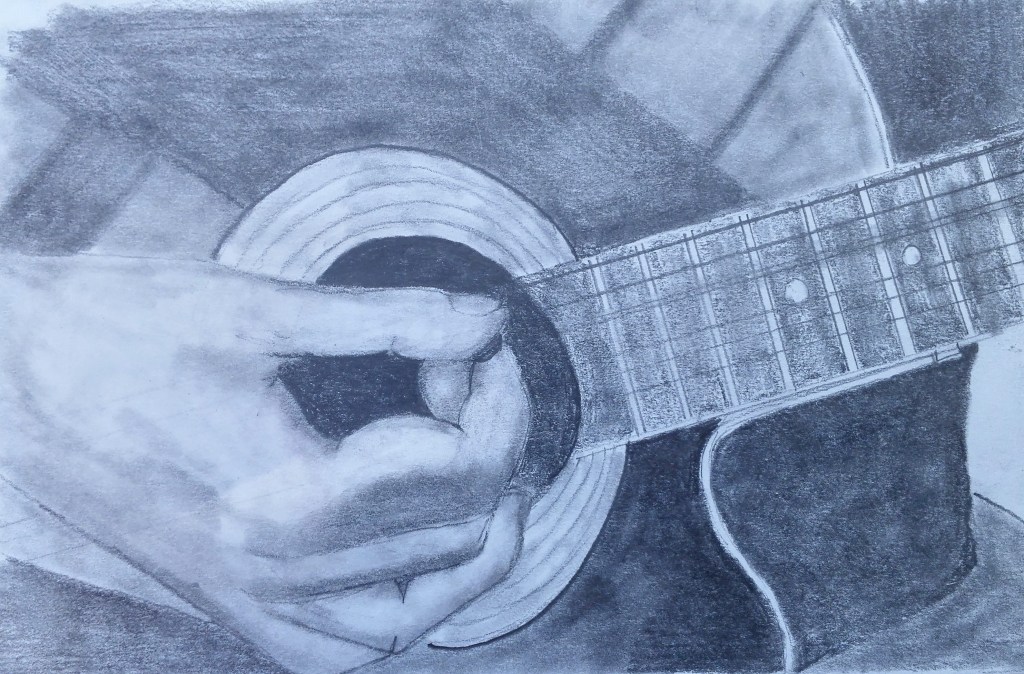
Sketches from ‘Body as canvas’

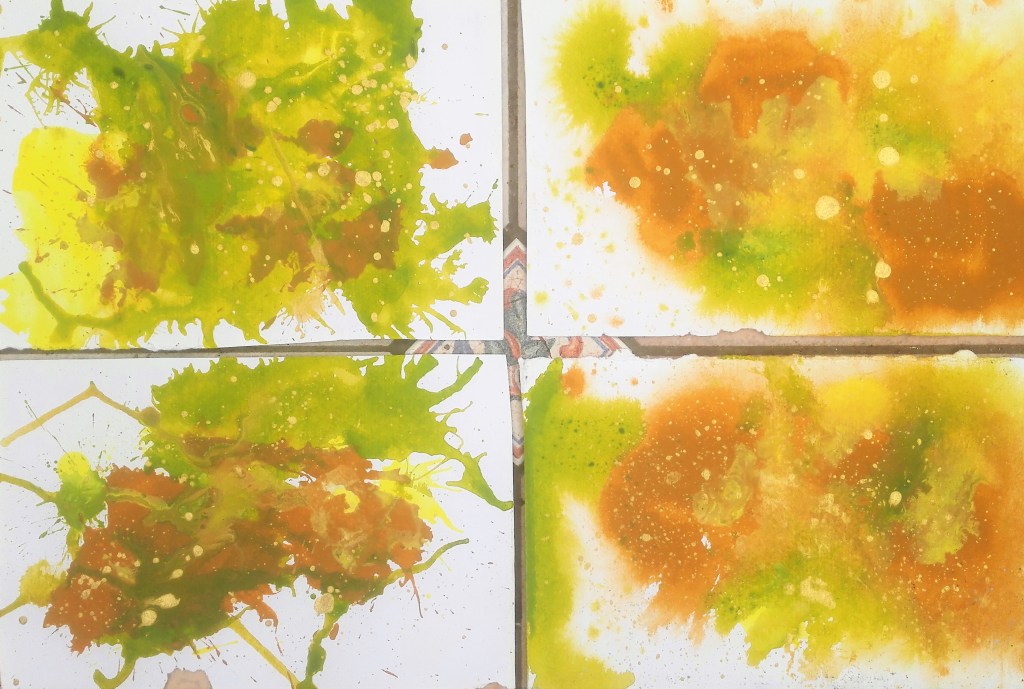
Colour Study collection
Sketch for ‘Ugly – Beautiful’ (one of my Parallel project pieces)’

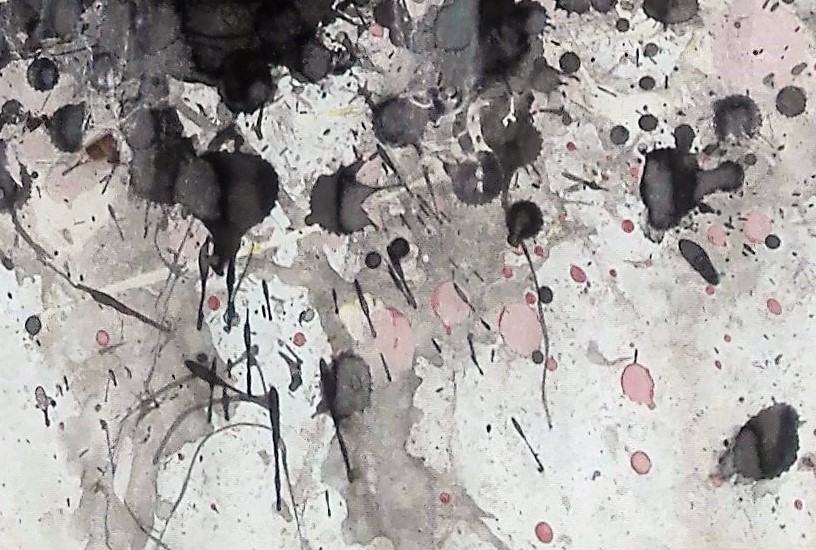
Wind painting extract from Assignment 1
Demonstration of Creativity
From lying on the floor with pencils in my hand to creating drawing machines. I made models and used cut outs to create collages. Experimented with numerous ways of applying paint to various supports in both abstract and conventional paintings. I feel that I fully immersed myself in the course but at the same time remained true to my main focus, painting.
Context
The contextual aspect of my artistic practice has evolved over the course to the point where I now feel comfortable in writing about my art and the art of others. The best example of being my ‘Critical review’.
The inability to physically visit exhibitions and galleries during lockdown forced me to set myself a challenge to research and write about online art. I found a technique explained in the book by Gilda Williams ‘How to write about contemporary art’ (Thames & Hudson 2014 reprinted 2019) which was useful to me. This involves answering the following questions, what is it? What does the artwork look like? What might the work mean? What does it matter to the world at large?
An example of this is the extract from my blog below.
+++++++++++++++++++++++++++++++++++++++++++++++++++++++++++++++++++++++++++
No 46, Sikelela Owen,
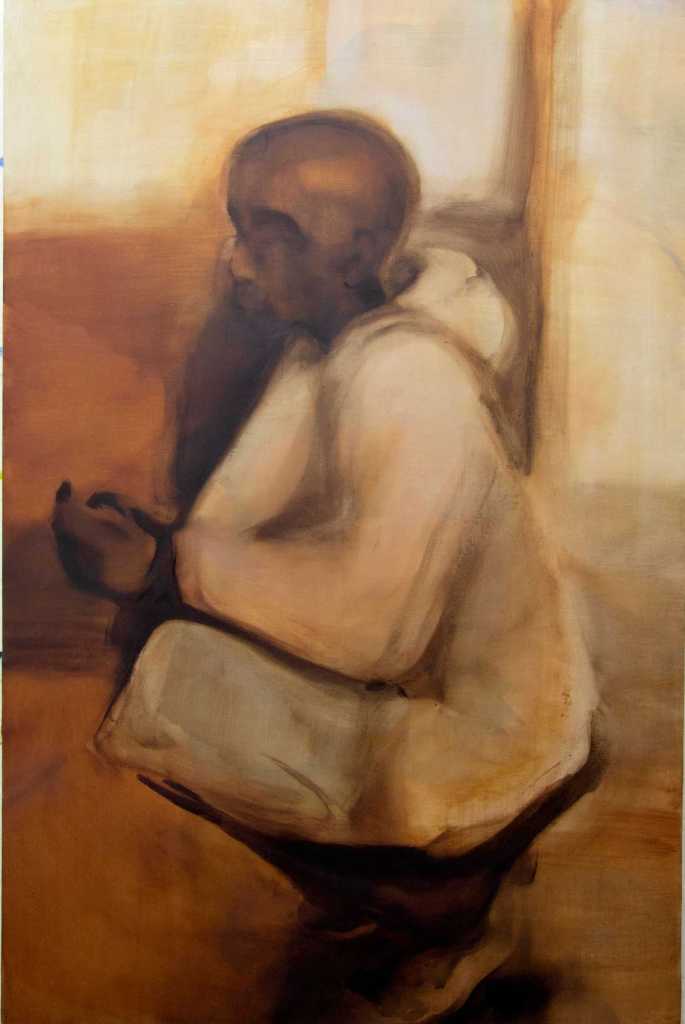
The Thinker, Oil on canvas, 150 x 100 cm, 2018
The title of this painting, ‘The Thinker’ immediately suggests some connection to the famous sculpture by August Rodin, which is an iconic work, universally recognised. To name a painting ‘The Thinker’ is to invite comparison which in turn risks unfavourable comparison. In this case I feel that there is enough space between the two works to allow the comparisons to be dismissed. Sikelela Owen’s ‘The Thinker’ is a portrait, full body, of what appears to be a young black man, crouching down and resting his body weight on his heels. His arms are resting on his knees with his hands held close together in front of him. His face, although not detailed, is looking into the middle distance focussing on nothing in particular and hence gives the appearance that he is deep in thought. The painting is a tonal study in brown hues which range from the dark brown shadows around his feet to near white on the wall behind him and on the top of his clothed shoulders. The whole painting is rendered in a soft, blurred, shimmering style which complements the contemplative mood.
++++++++++++++++++++++++++++++++++++++++++++++++++++++++++++++++++
Summary
I have found Studio Practice to be an engaging course which has challenged me. At the same time I feel that I have developed as an artist to the point where I am looking forward to progressing to the next level (HE6) and working towards my target of achieving a degree in painting.

 Mark Taylor 'Studio Practice'