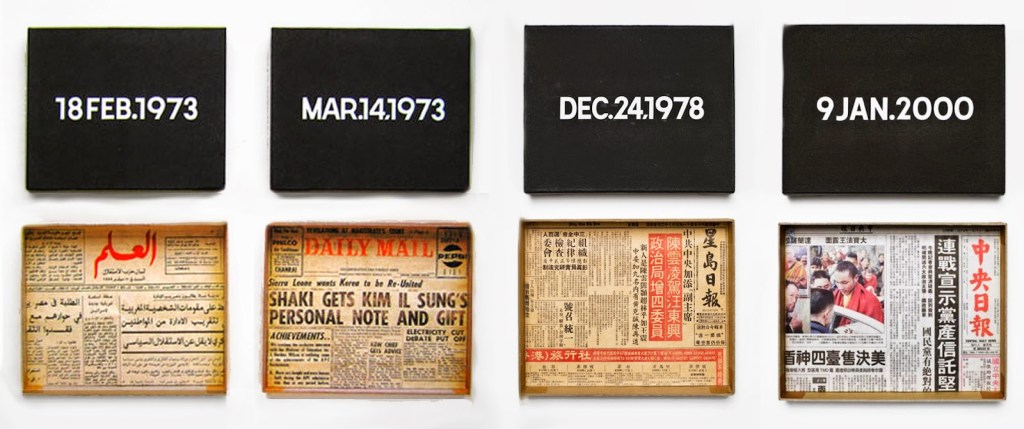
The ‘Date series’ of paintings by On Kawara, a Japanese conceptual artist, comprise nearly 3000 paintings in total. Each painting is created using the same methodology. The date on which the painting is made is painted in white lettering onto a dark background. The typeface is always the same, is in the centre of the canvas and is painted meticulously by hand. The size of the canvases are not uniform and the lettering is expanded or contracted in relevant proportion. The date is always documented in the language and grammatical conventions of the country in which the painting was made. If a painting is made in a country that doesn’t use the Roman alphabet then Esperanto is used. Where Paintings not completed on the day they are destroyed. Each year between 64 and 241 paintings were completed. Four examples of the paintings can be seen below along with a cutting of a newspaper of the day in question. This is also consistent across all the paintings.
On Kawara was an enigmatic and dedicated artist whose projects seemed to be as much about devotion as they were about art. In some respects the ‘Date series’ of work defines the artist and documents his lifetime, where he was and when. However it tells us nothing about what he was doing, why he was where he was, what he was thinking. They paintings themselves are stark images, regimented in there uniformity. They are undeniably factual but say nothing more about themselves other than where and when they were created. This in itself is more than most paintings tell us. The inclusion of cuttings from a newspaper of the day does give a clue to the circumstances in which the work was created. By the very nature of newspapers they are reporting on events in the days before the date in question and being only cuttings do not give a context to the painting. We are left to contemplate the passing of time in different places.
To date I have not really thought too deeply about how or why I title my work. In most cases my titles are descriptive. Usually descriptive as to what the painting is and / or where it is. For my abstract paintings these mainly remain untitled. I am mindful that there is a thin line between a good title and a potentially pretentious one. A good title can make the work come to life, it can indicate what the artist was trying to communicate. It can also give the observer information which may not necessarily be obvious. A good title can lift a painting or other artwork to a higher level. A pretentious title, although perhaps being well meaning, can create a barrier between the artist and the observer. In some cases it can have a detrimental impact in that there is no obvious link between the title and the work.
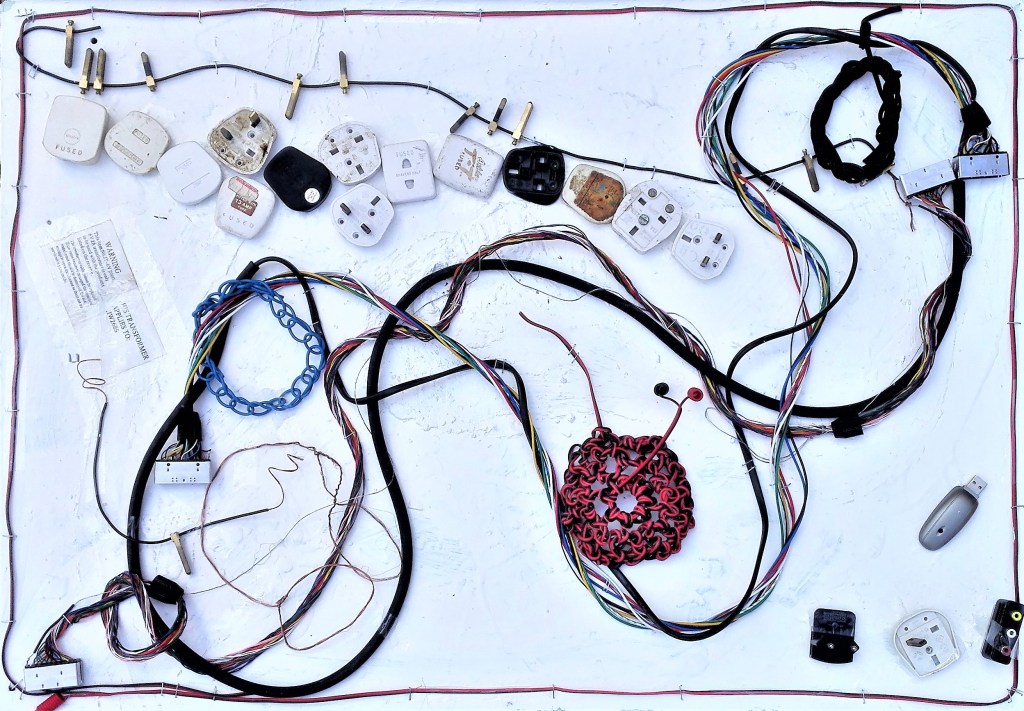
This exercise is my first serious look at giving my work titles beyond the descriptive. The only other instance where I have used a title where I have took a phrase and appropriated it to my work was for my Assignment 2 piece. This piece was a ‘Combine’ type piece that was constructed using discarded bits of electrical equipment and old wires. I entitled the work ‘Totally Wired’ which is a title of an iconic song by The Fall. A post punk band from Manchester which have been favourites of mine for many years. The work and the title went together well and I liked making the link to the song. I felt that it gave the piece extra importance to me.
Totally Wired
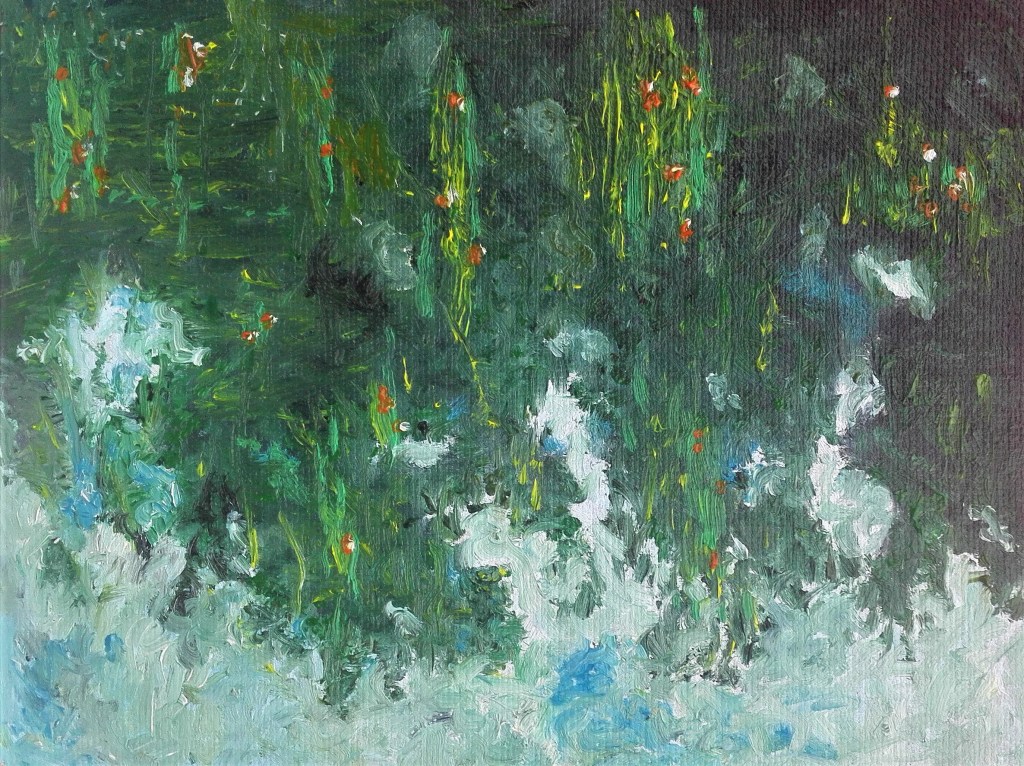
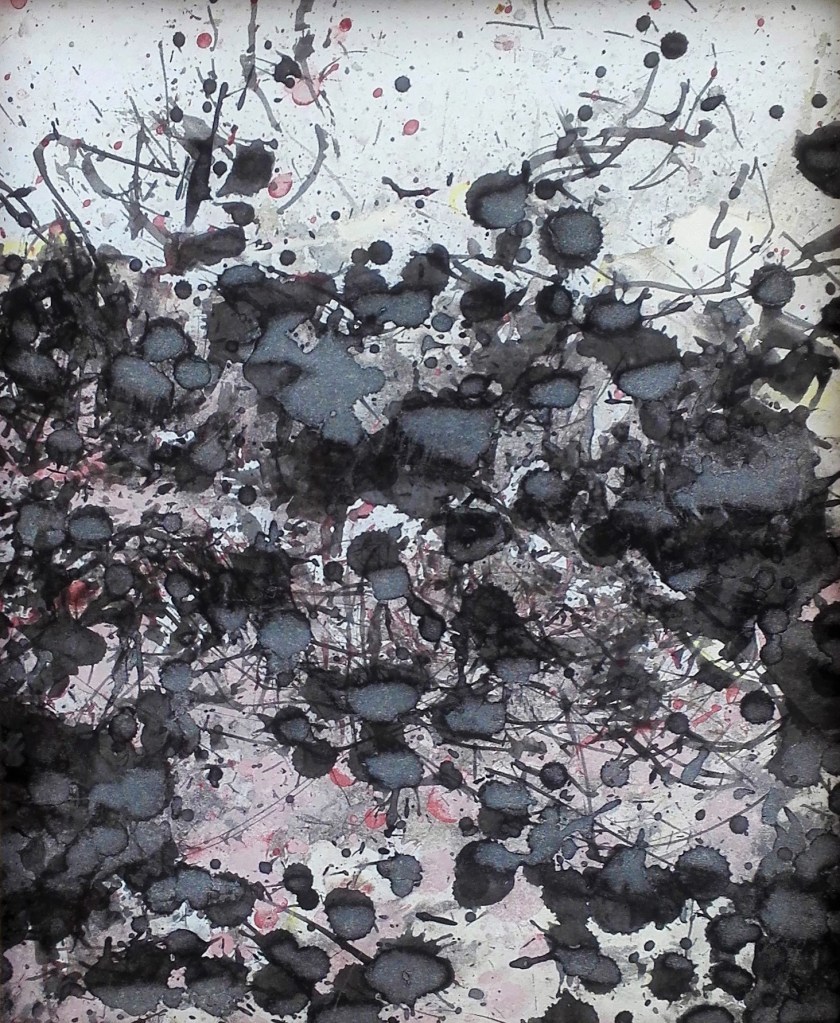
I decided that I would look to do something similar for this exercise. Before embarking on this I selected ten paintings that I had completed during my studies with OCA.
I would use these for the exercise. In the first instance I used the suggested ten prompts as the basis for the titles. The results are shown below, each painting has its original title in brackets, the prompt, and the new title.
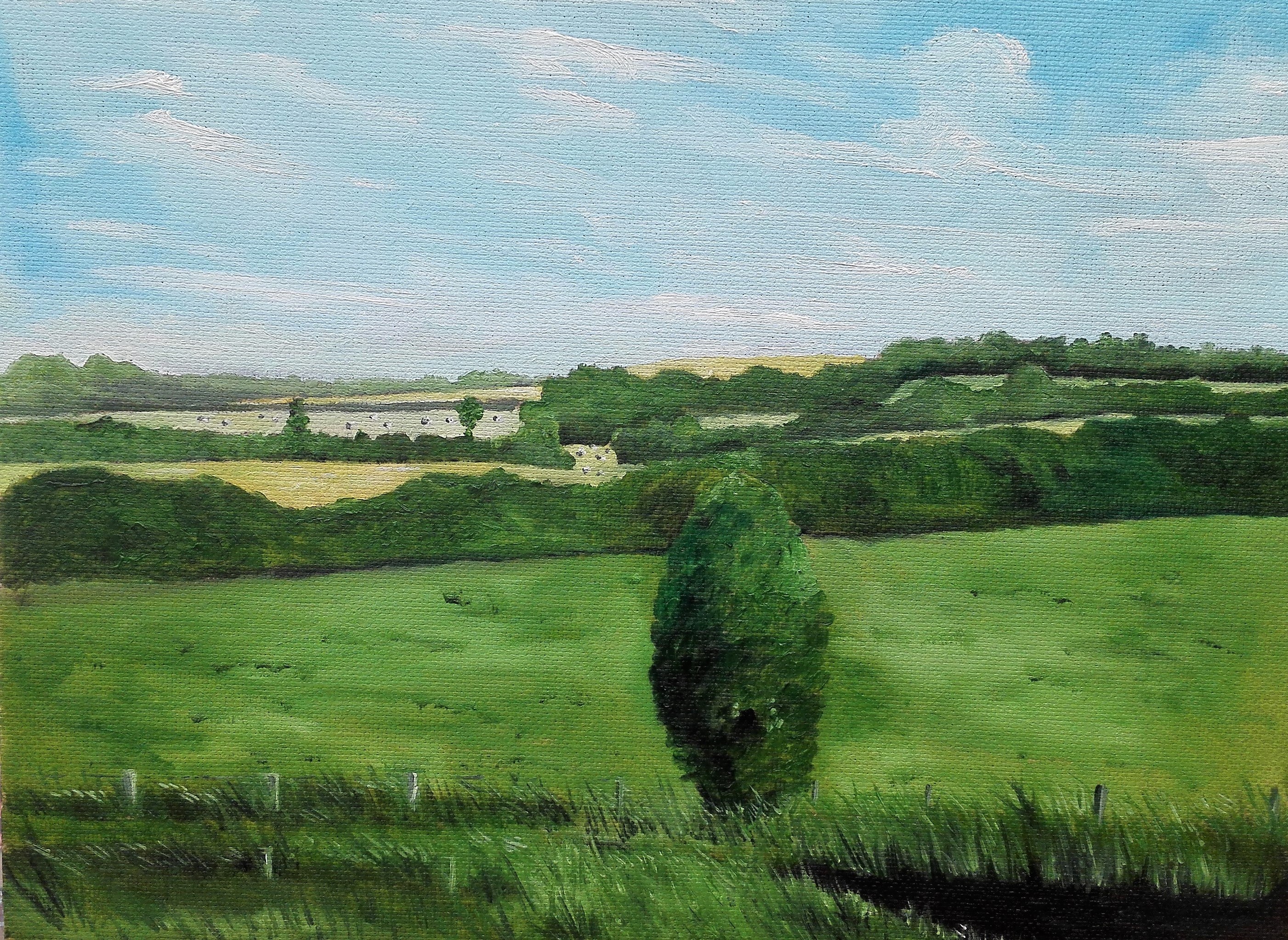
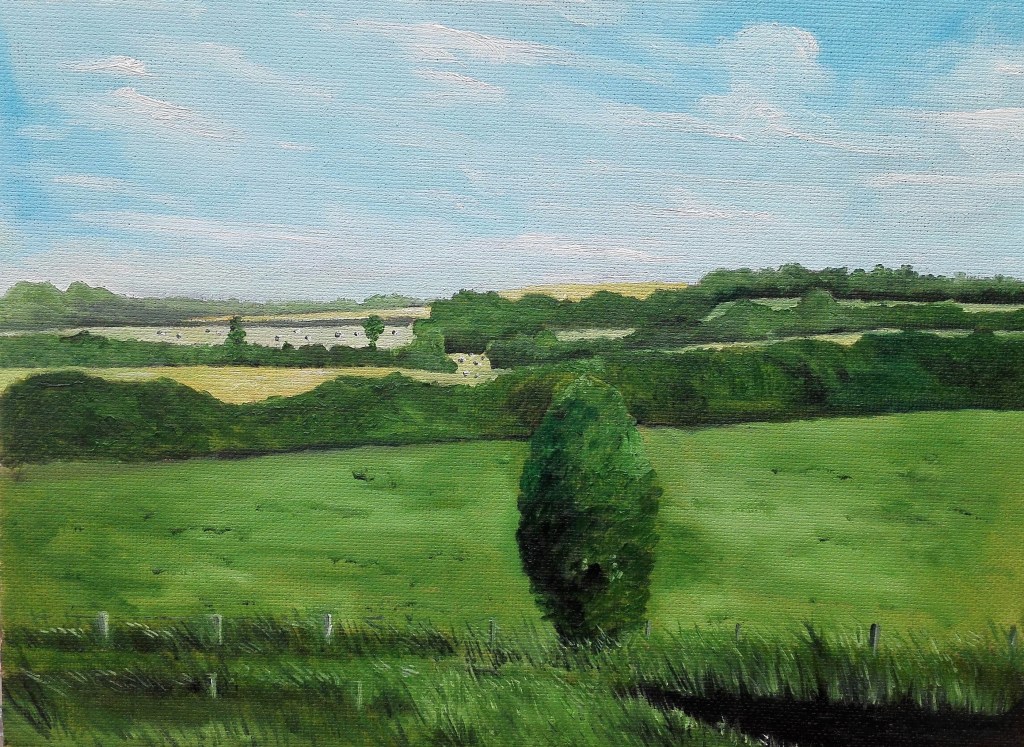
1. (Fenland View 2), A title that describes the image/object, “Fenland scene ‘Late summer'”
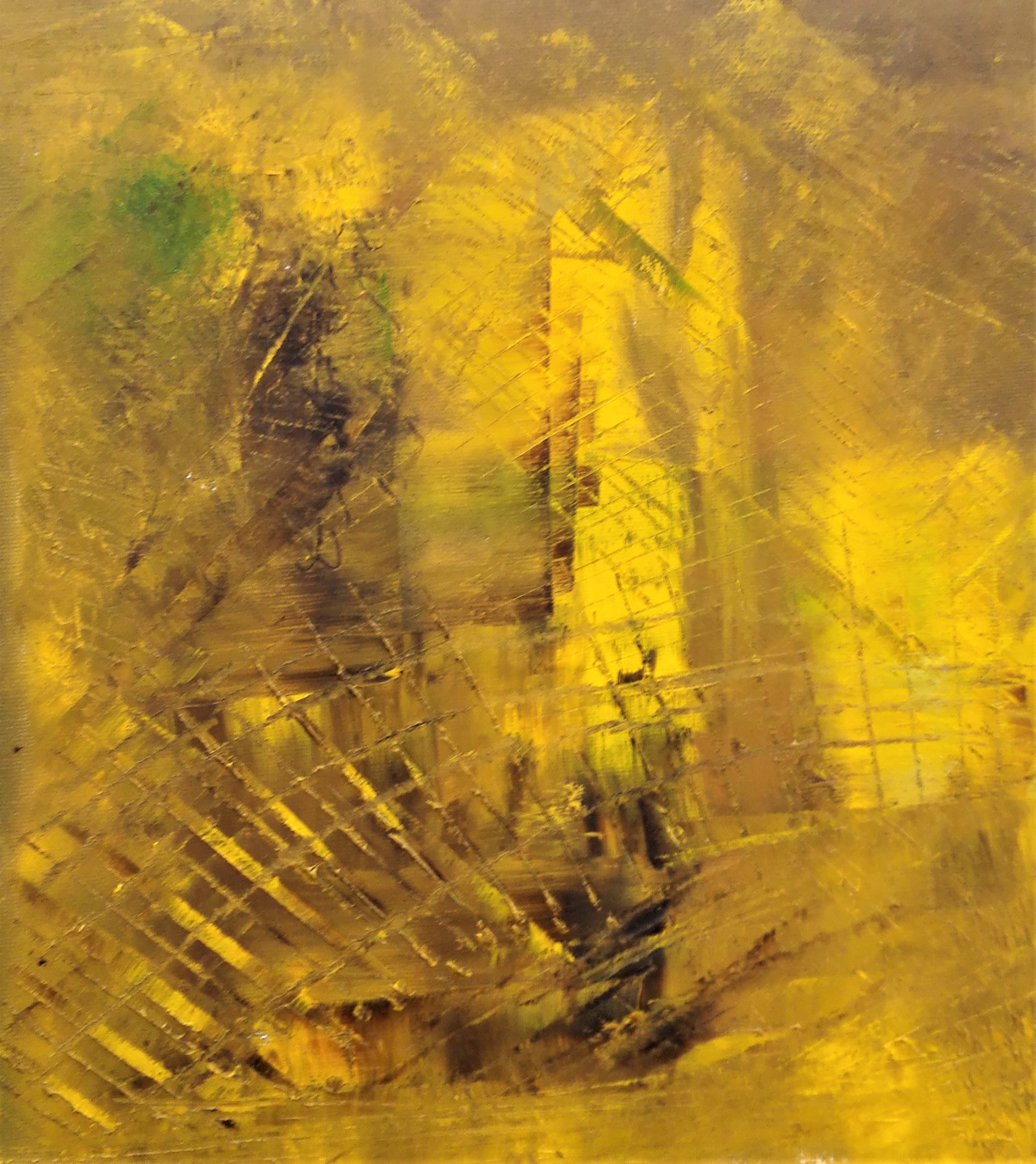
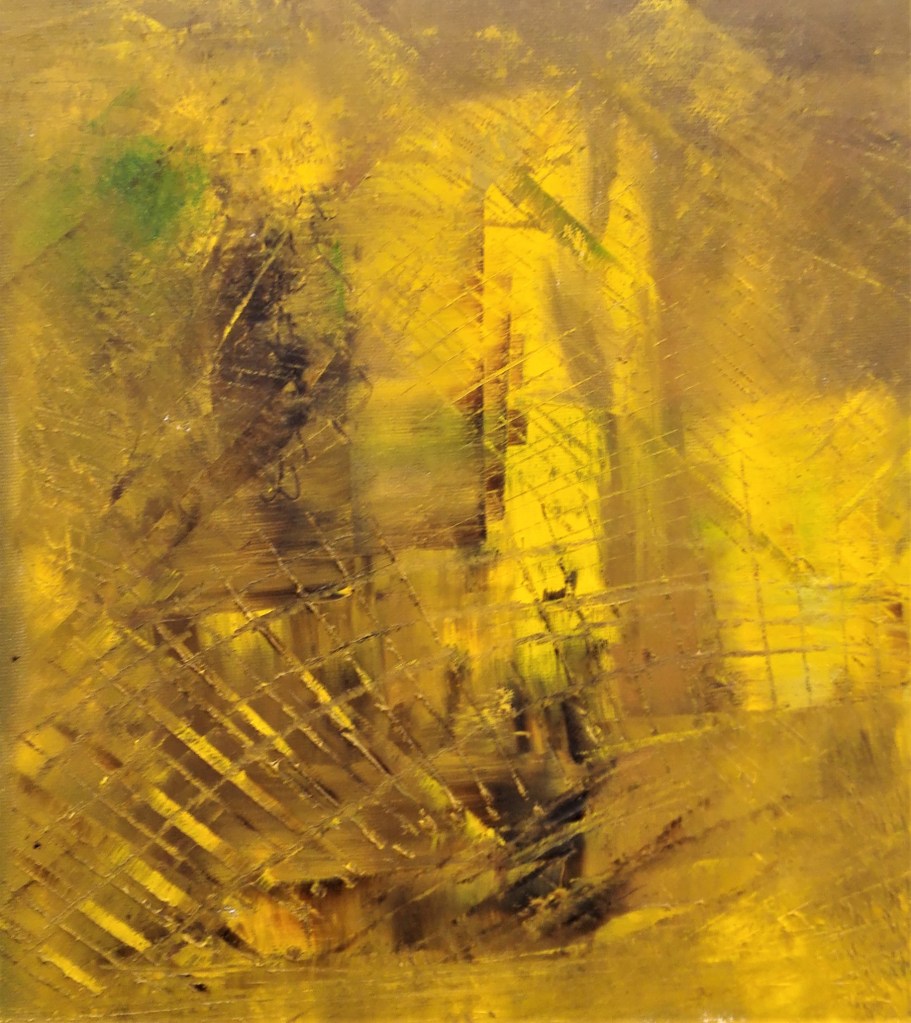
2. (Abstraction from Farmhouse and fields), A title that is an instruction,“Look, engage, imagine“
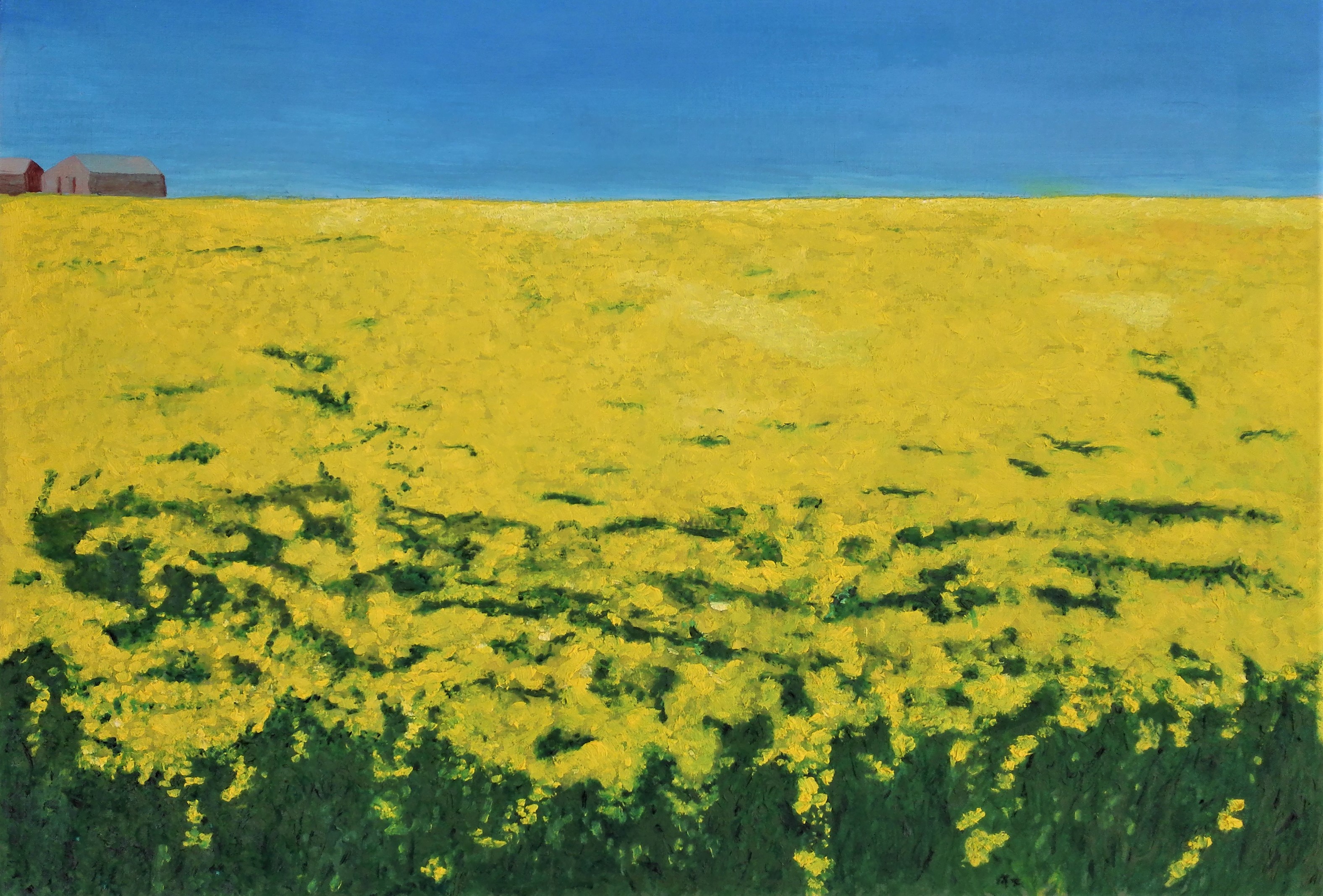
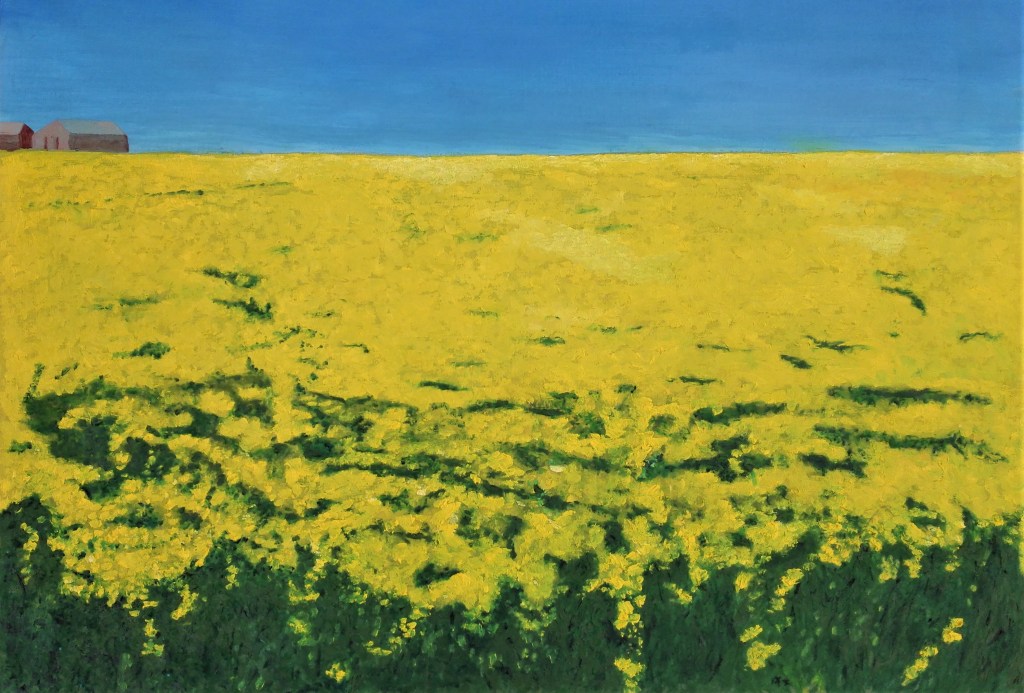
3. (Field of Rape), A title that is a question“How is your hay fever this year?”
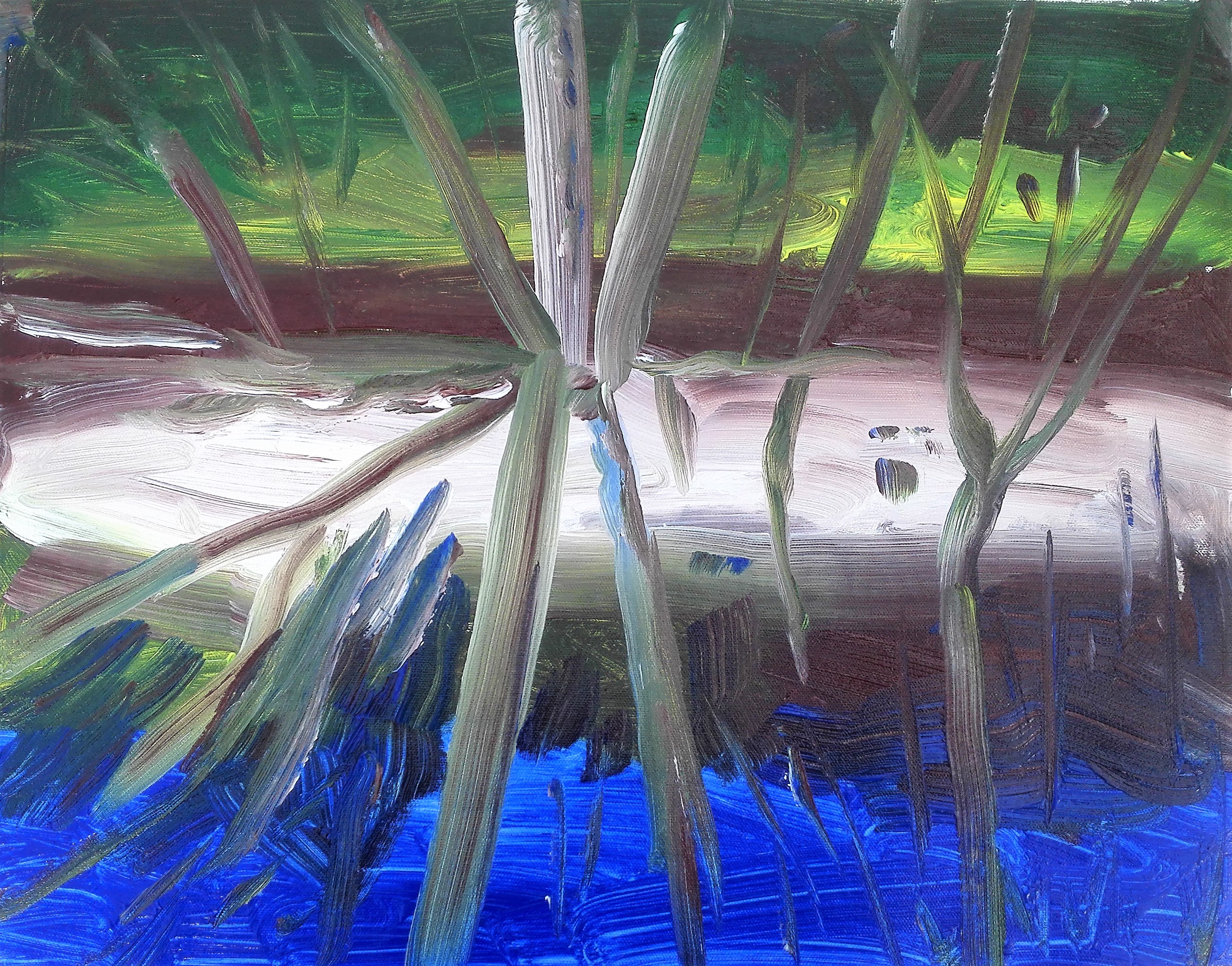
4. (Untitled), A title that is a poem, “Forests forever”
A poem by Maria Newberry ‘Forests forever’
“A call for reflection on the role of the delicate forests of Canada and whether we need everything it produces. We need to make shifts in our use of the forest.”
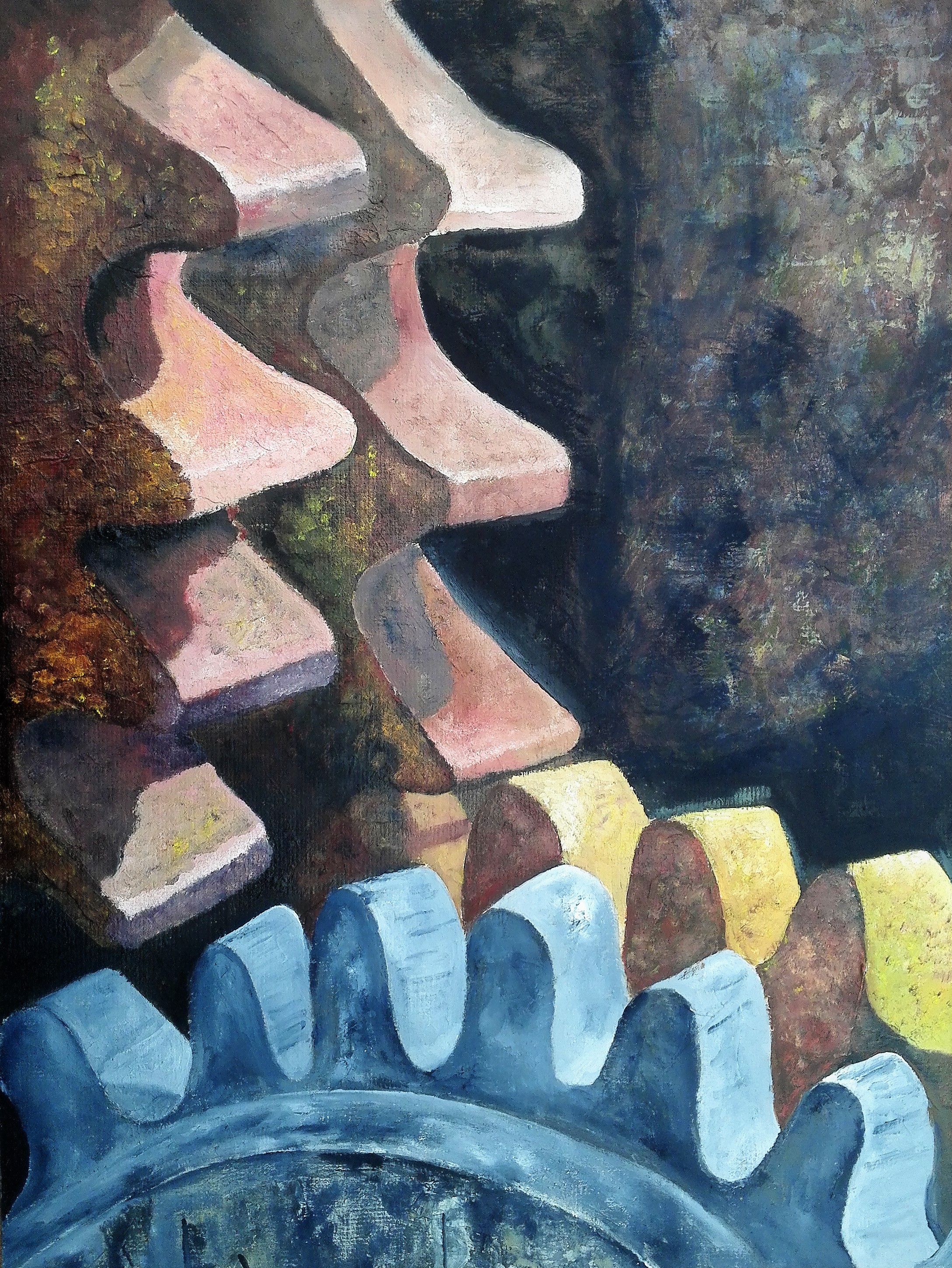
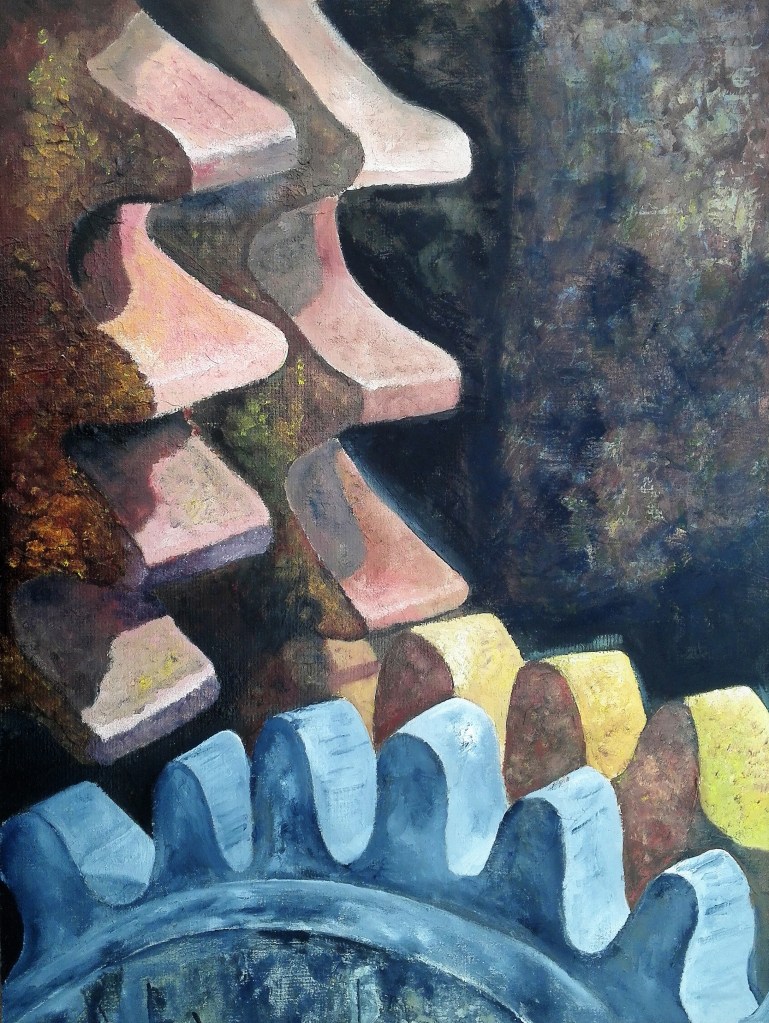
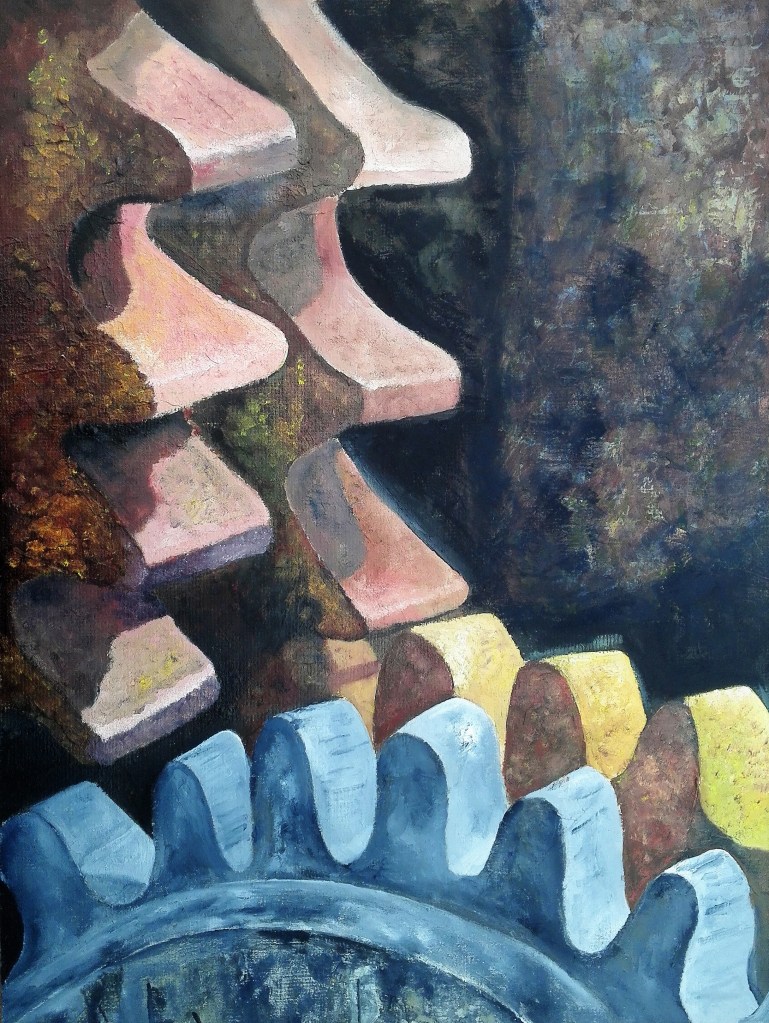
5. (Cogs), A title the addresses the subject matter of the image / object, ‘The Stopped Cogs’
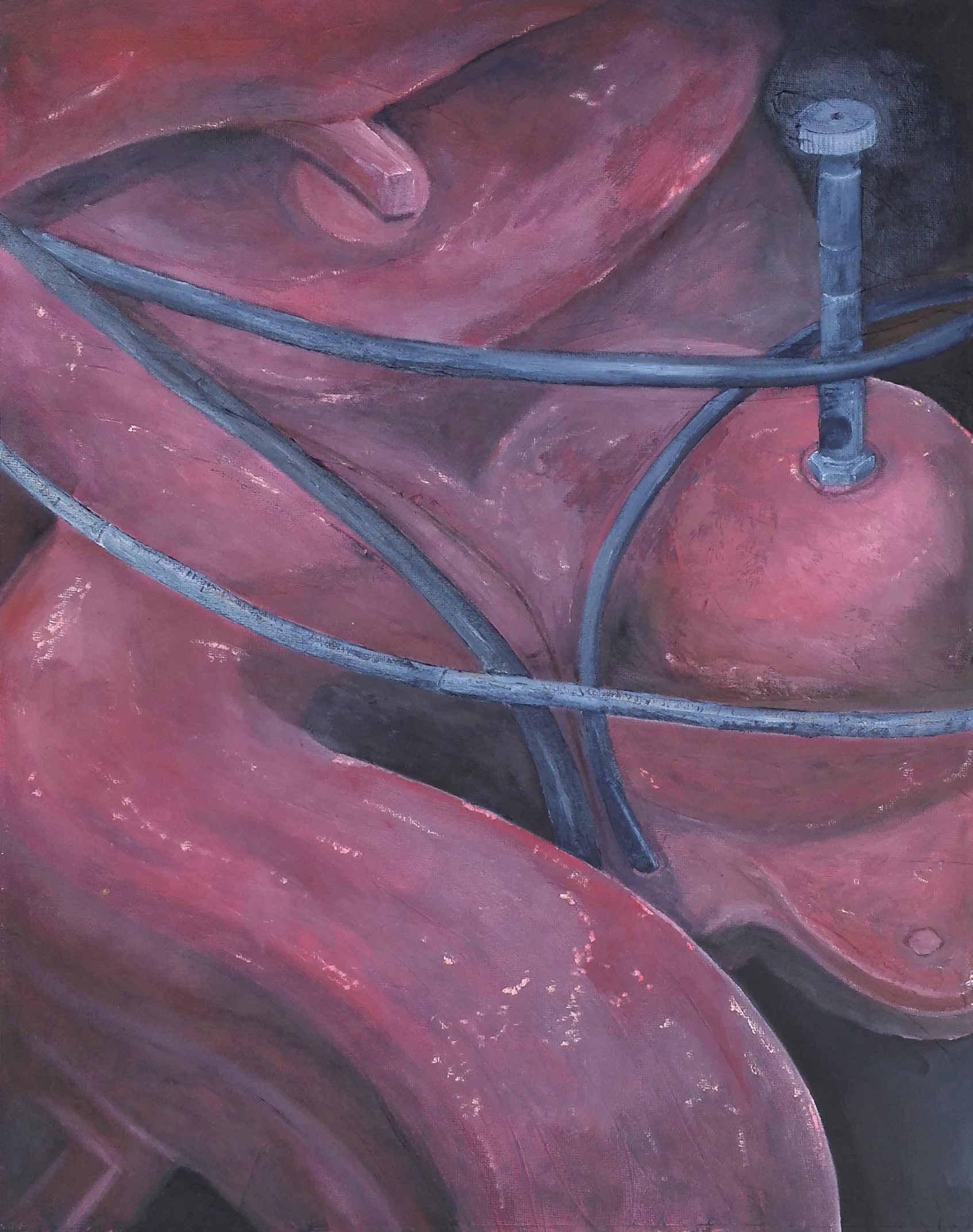
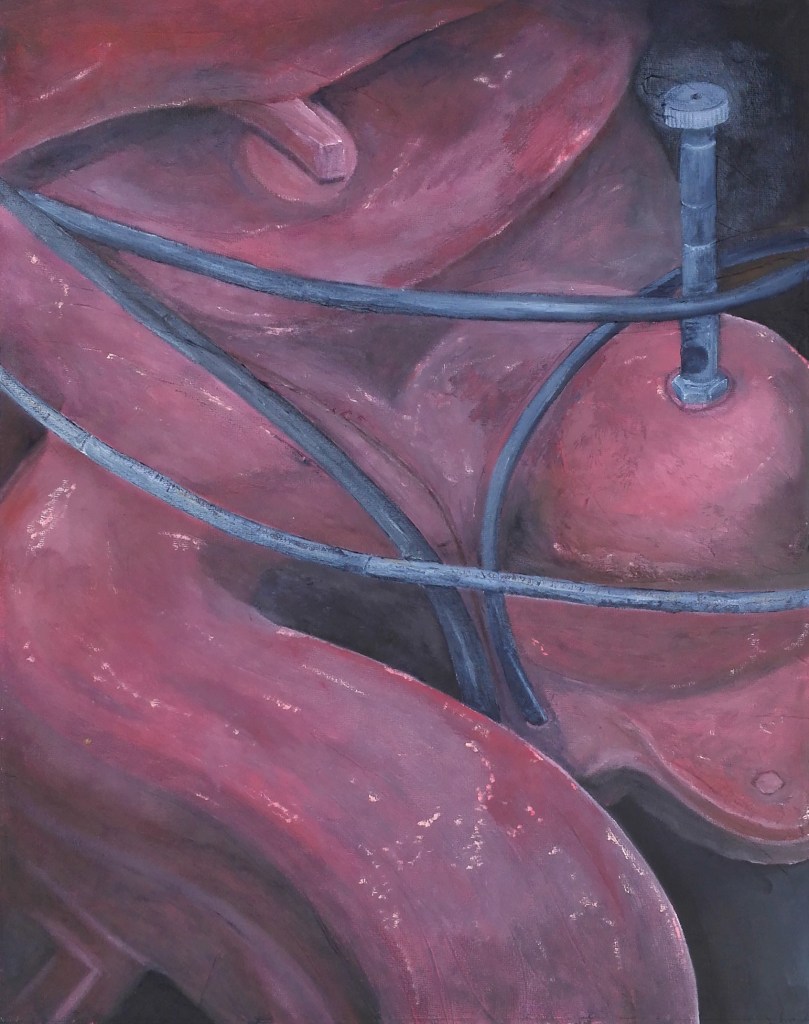
6. (Metal and cables), A title that assigns gender to the work, ‘Mr Engine is fading’
7. (Assignment 4 piece), A title that addresses the viewer, ‘Would you walk within?’
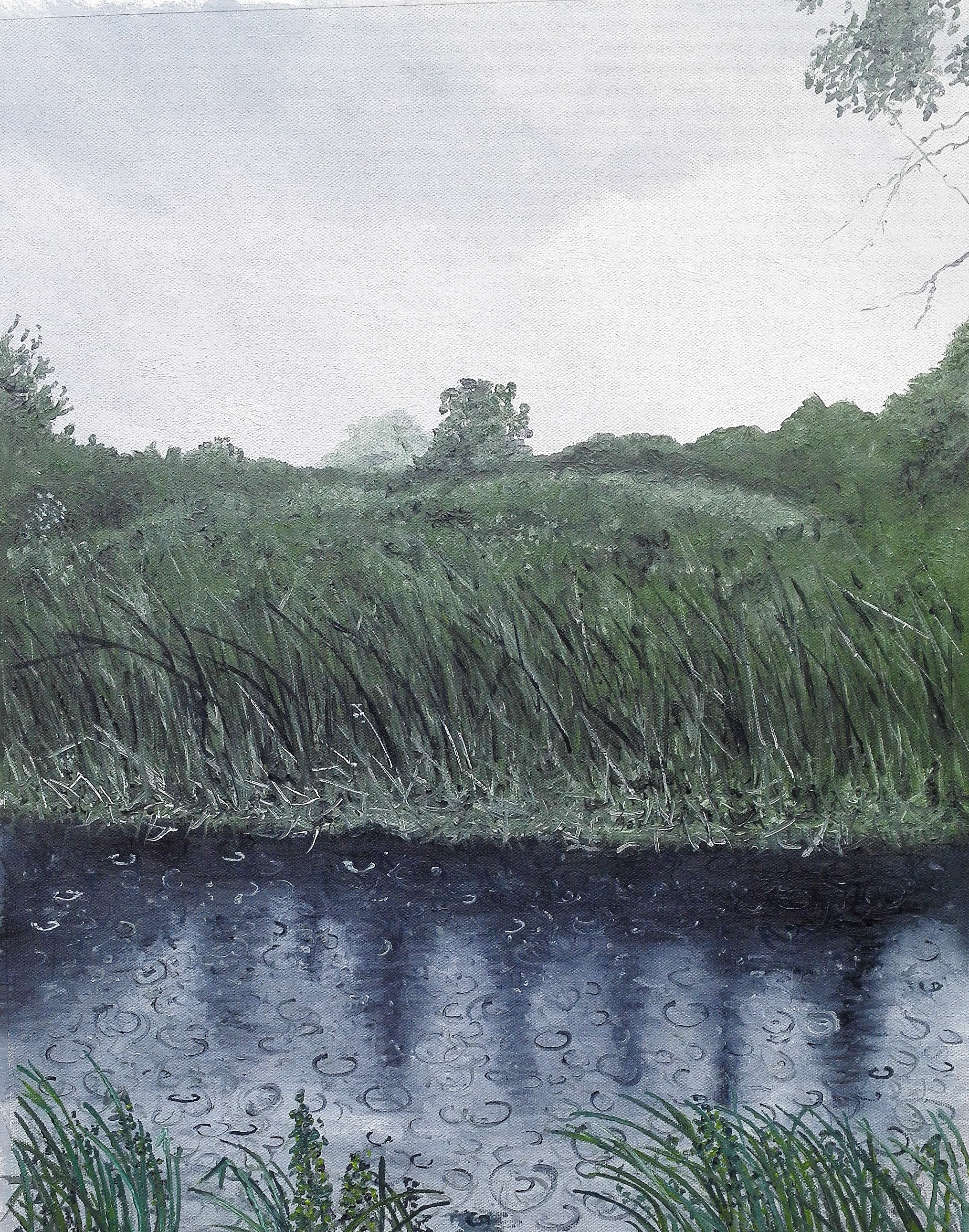
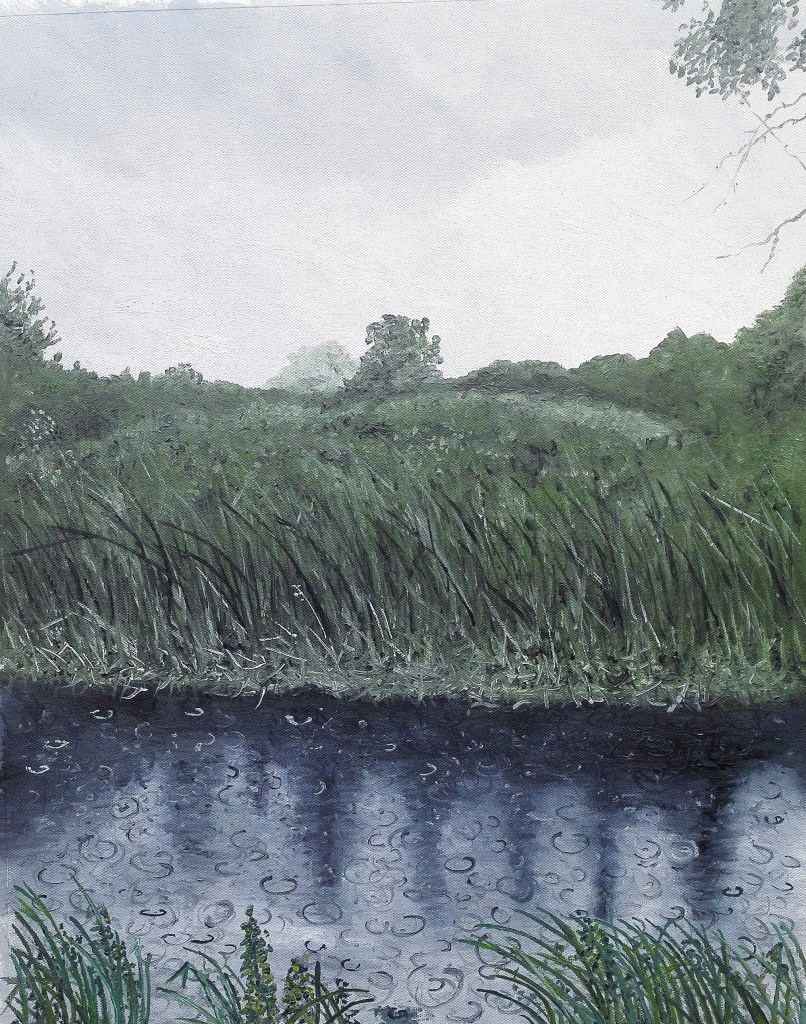
8, (Raining in the Fens), A title that locates the work in time and space, ‘Rain in the fens, Autumn 2017, taken from a photograph’
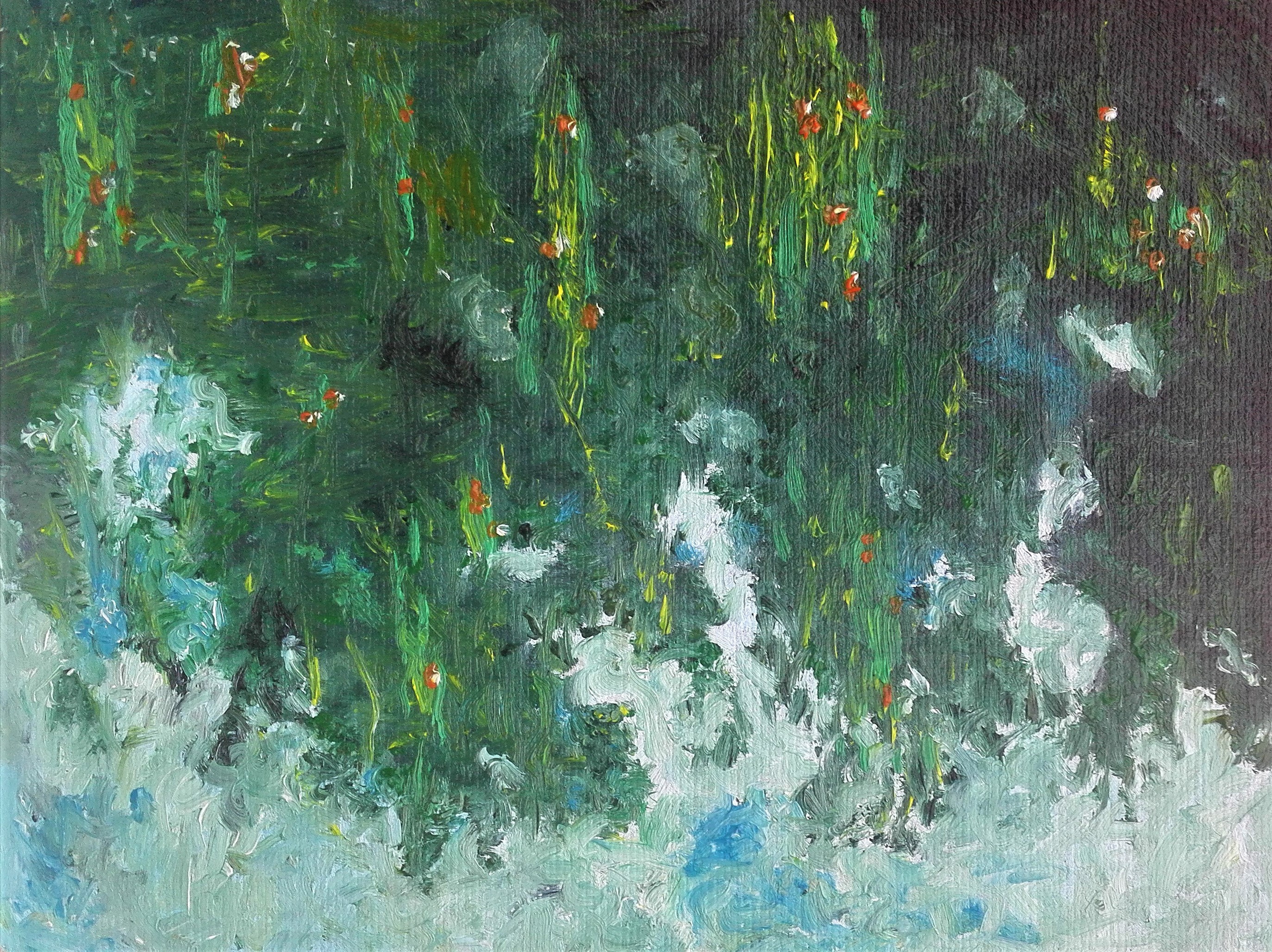
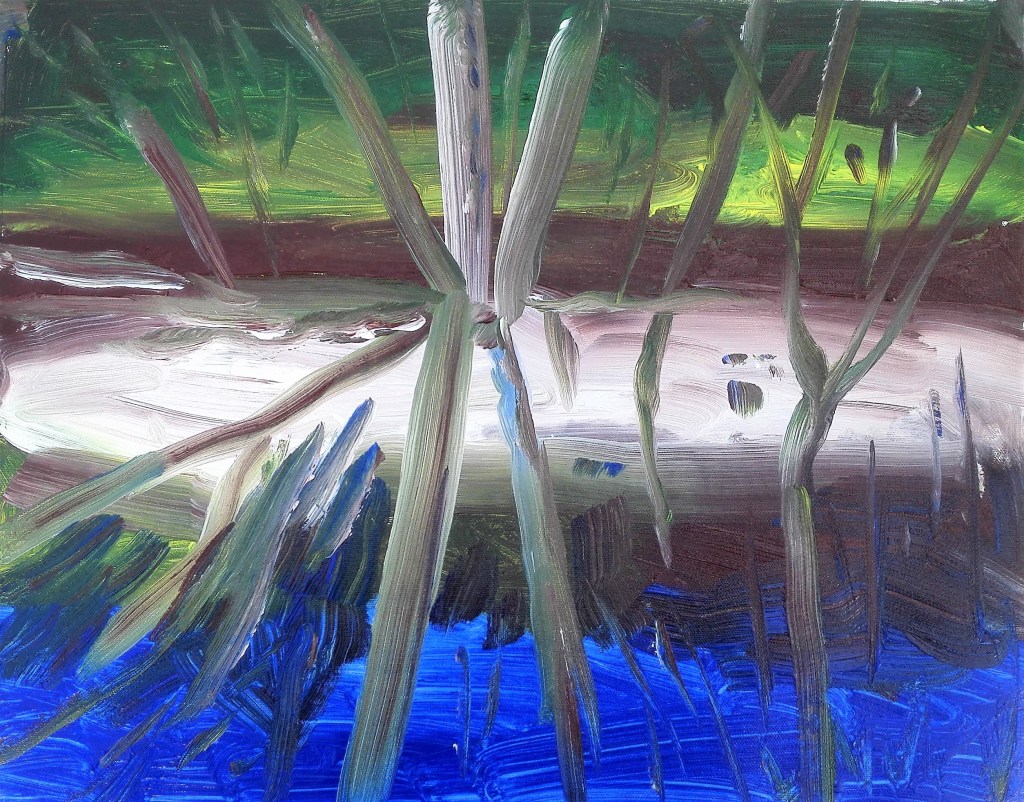
9. (Untitled), A title that is playful or puzzling,‘The trees invite you to dive in’
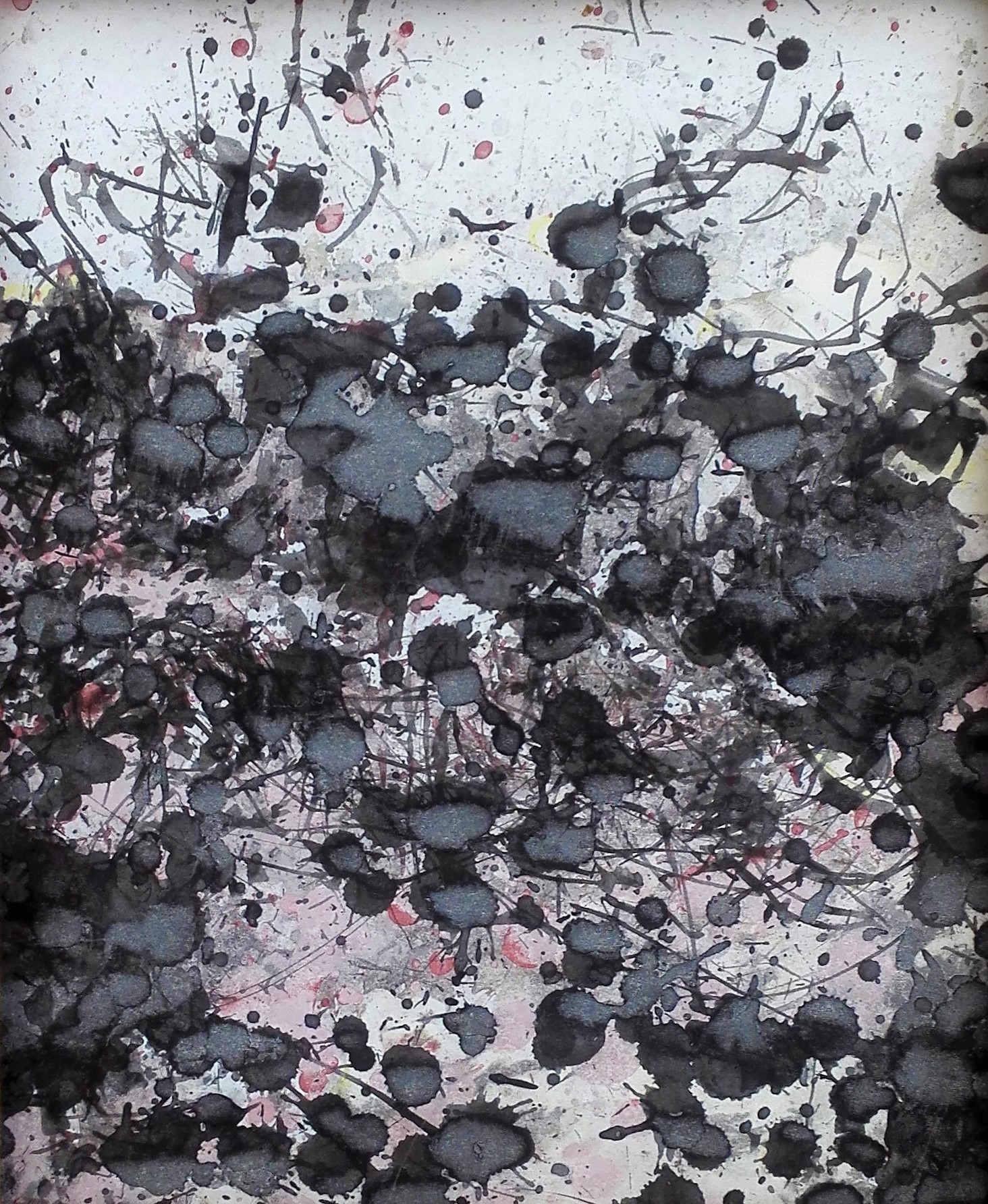
10. (Untitled), A title that disrupts the work,‘A counterpoint to parallel lines’
+++++++++++++++++++++++
I went through the exercise again but this time I took the titles from the names of albums by The Fall. I limited myself to album titles only so as to limit the choice. I have again shown the painting but this time with its new title only.
1. “Room to live”
2. “Imperial Wax Solvent”
3. “This nations saving grace”
4. “Your future our clutter”
5. ‘Bend Sinister’
6. ‘Grotesque’
7. ‘Live at the witch trials’
8, ‘Slates’
9. ‘The Frenz experiment’
10. ‘Cerebral caustic’
Some of these title work very well. To me they do not seem pretentious. I particularly like, 5, ‘Bend sinister, 6, ‘Grotesque’, 7, ‘Live at the witch trials’ and 10, ‘Cerebral caustic’ in each case they give a new meaning to the paintings.
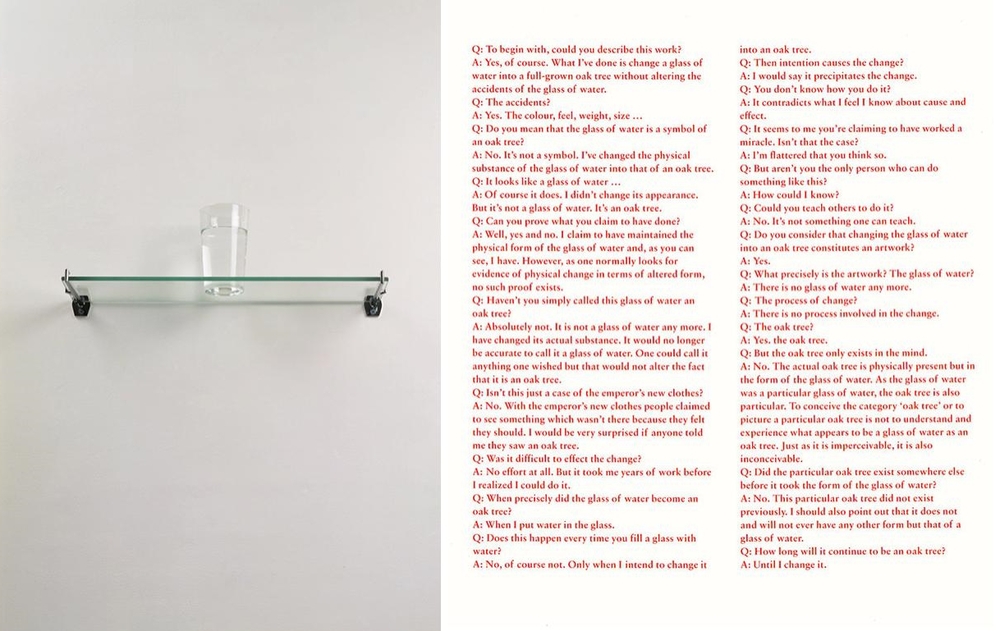
Michael Craig Martin, An Oak Tree, Assorted Objects and printed text, 1973
I view this work as an intellectual argument into what something is or appears to be. It is a challenge to the observer to take a step back and think again.
I am reminded of the work of Rene Magritte as in his painting titled ‘Cesi n’est pas une pipe – this is not a pipe’ which indeed it isn’t. It is a painting of a pipe. Therefore it is a representation of a pipe but it is not a pipe.
In the case of ‘An Oak Tree’ Michael has taken this argument a stage further. We are presented with what is clearly at first sight a glass of water on a glass shelf. However Michael informs us, the viewer, that we are in fact looking at an Oak tree. The objects are accompanied by a text in which we are informed why it is an oak tree. The text, written by the artist, in the form of an interview, challenges him to explain himself and ask why it is an Oak tree. The process of creating the Oak tree is presented along with the statement that the Oak tree exists in the mind and is physically present but in the form of a glass of water.
The piece is an example of conceptual art whereby the act of presentation, coupled with the dialogue, questions us to examine and think about what we perceive about the world in which we exist. In this example the artist describes what he has presented to us and explains why it is what it is.
This is better explained by the Michael in an interview on his website titled ‘I’m interested in language’. In this interview he states “I am interested in language and the way in which we interpret the world, understand the world, through the things we create.”
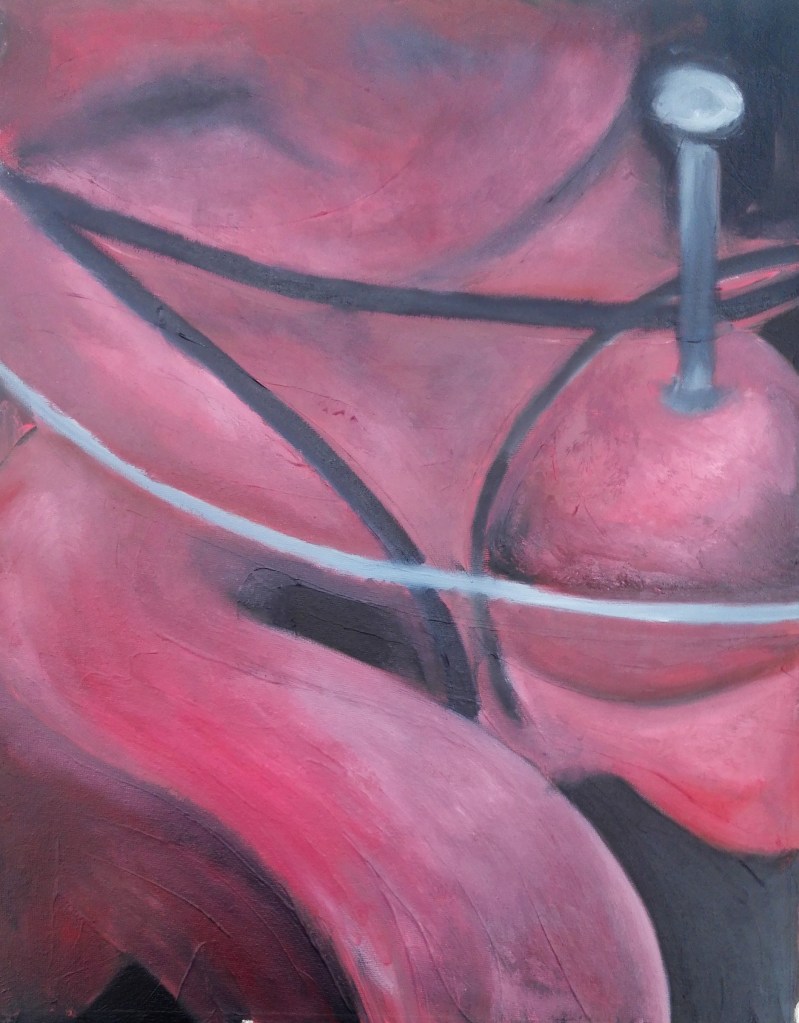
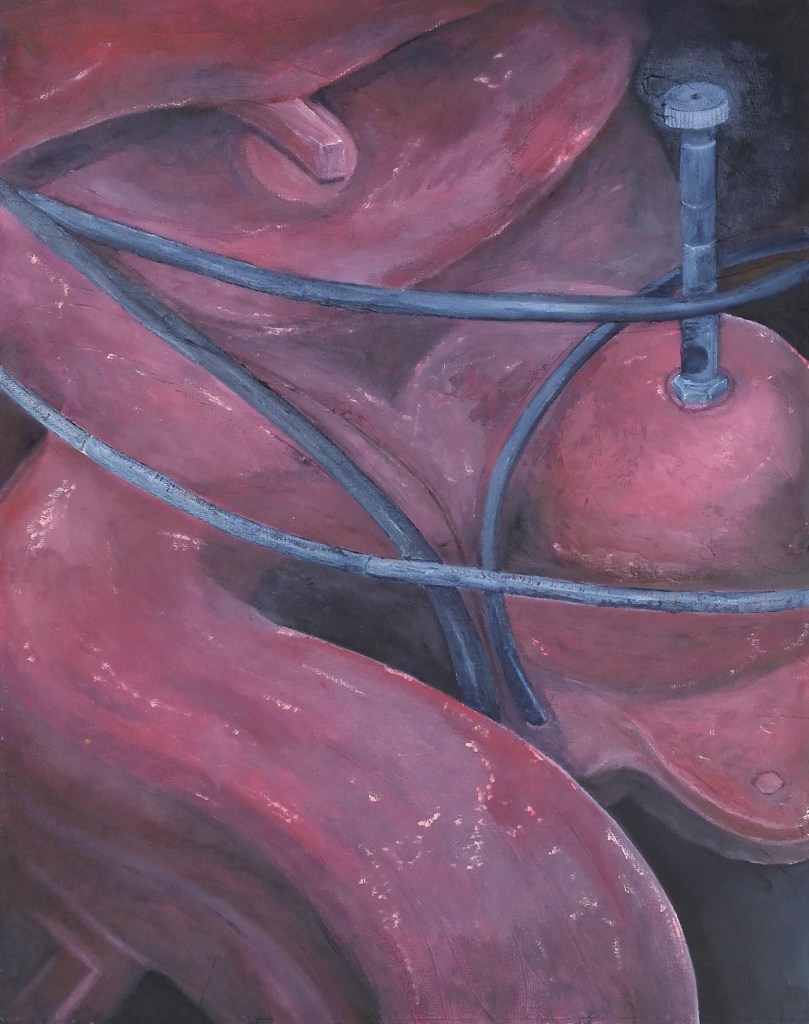
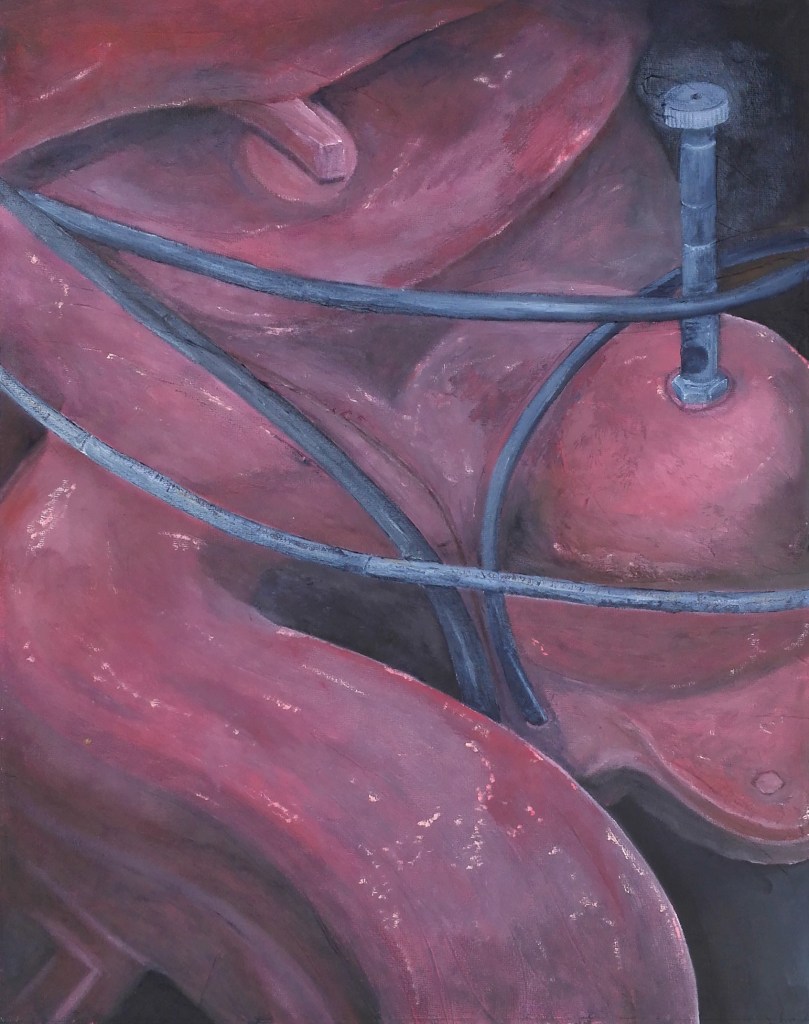
The painting below was completed shortly after the feedback review session for Part Four. The inspiration for the painting came from a photograph taken of part of discarded farm machinery. I manipulated the photograph by zooming in until I had a composition that I felt was interesting. I was attracted to how the paint had faded and deteriorated over time. It had been weathered had lost its lustre and become dulled.
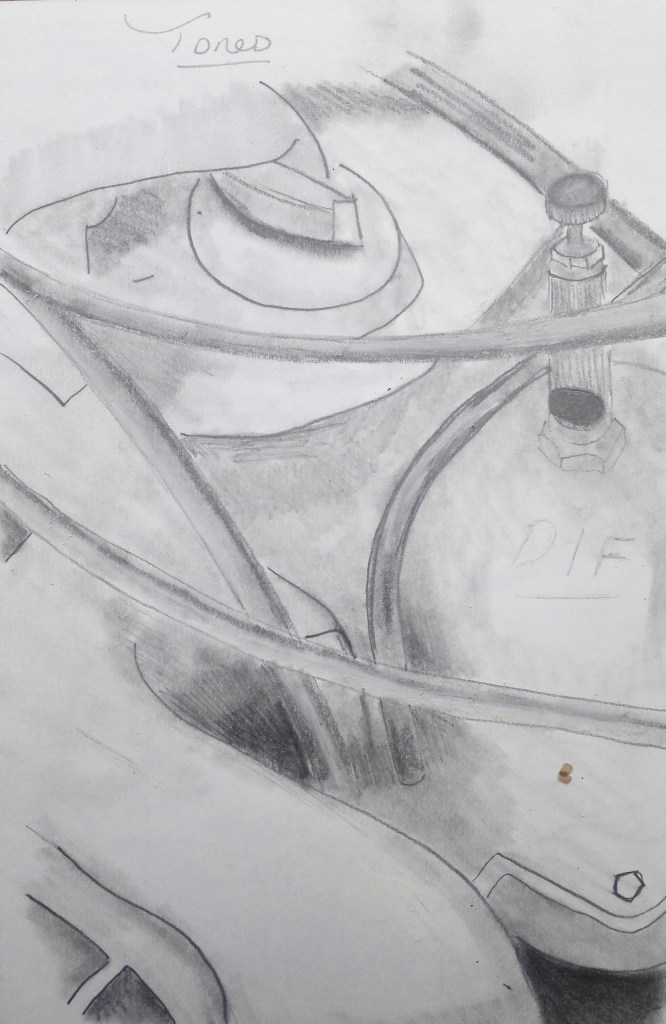
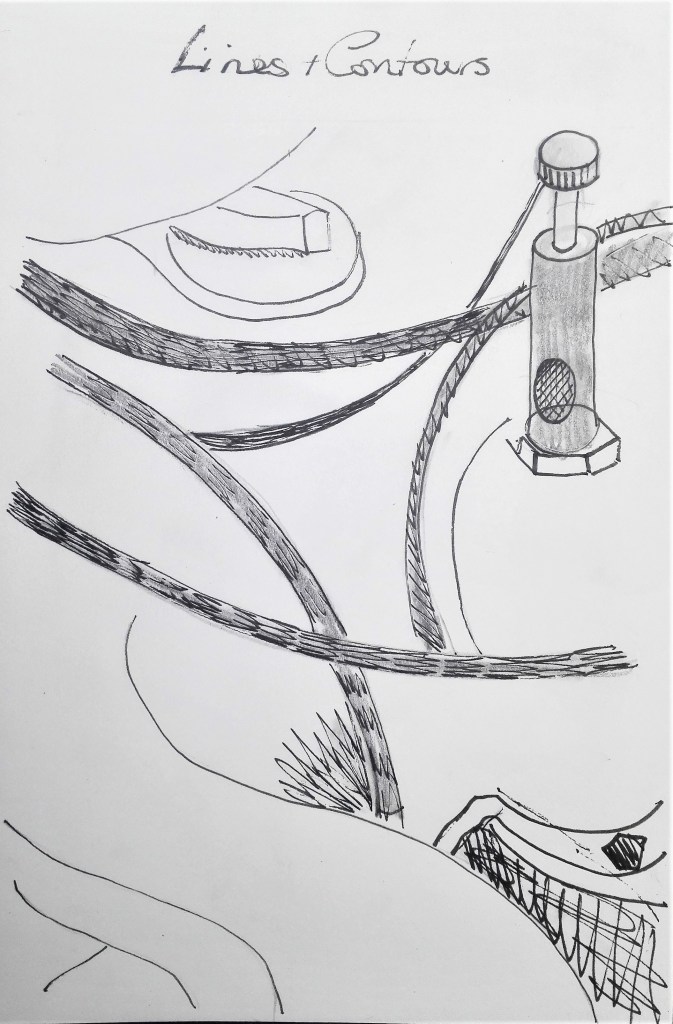
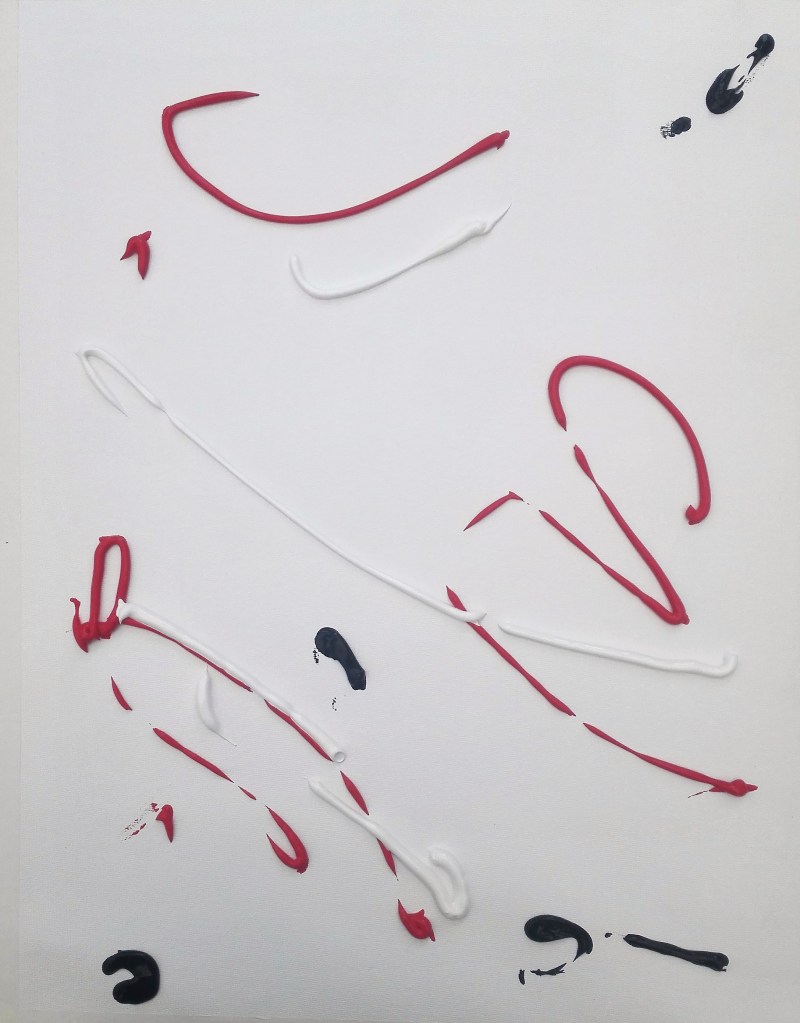
A couple of quick sketches to check the composition.
Tonal Study
Line Study
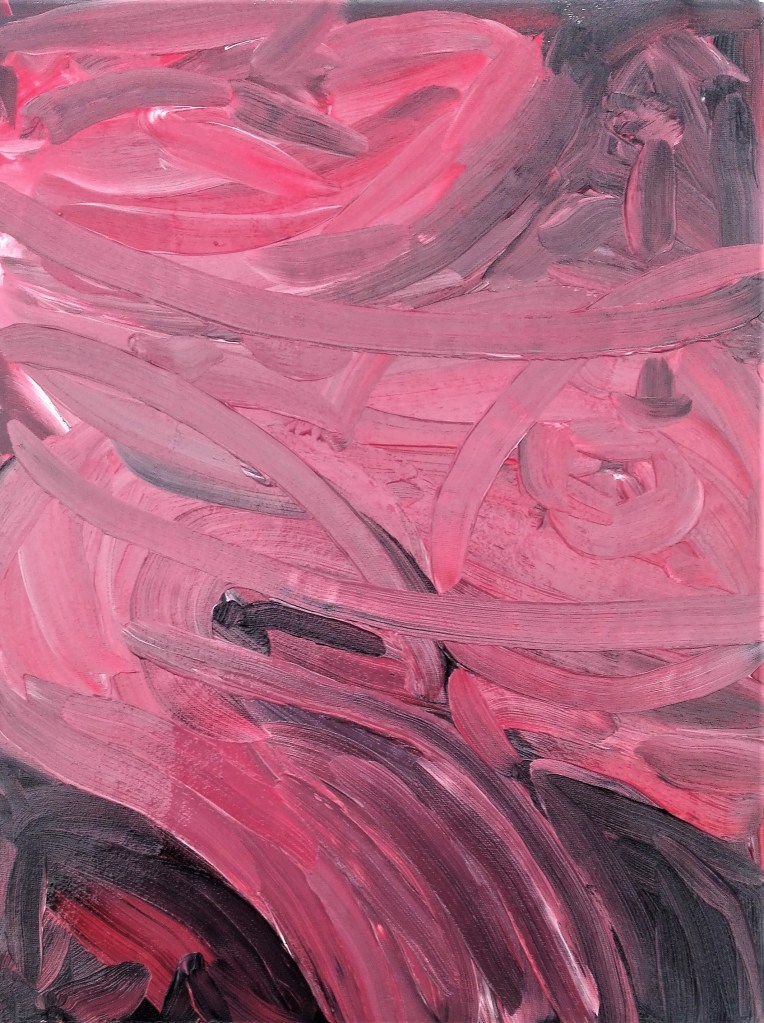
Using a support of a sheet from a canvas pad the starting point was to cover the support in acrylic paint applied in a gestural manner. This was then adjusted by picking out the tonal areas, dark and light and gradually allowing the form to emerge. This was done with both acrylics and aqua oils.
Metal and cables – work in progress
More detail was added, the tonal qualities were emphasised until I felt that I had a painting that expressed what I had seen in the original image. It is not explicit as to what it is. It has an anthropological look in that it suggests human form. The fluid lines convey a solid form on which the dull reflected light is emphasised by the deep shadows.
Metal and cables, acrylics and aqua oils and on canvas pad, 50 x 40 cms
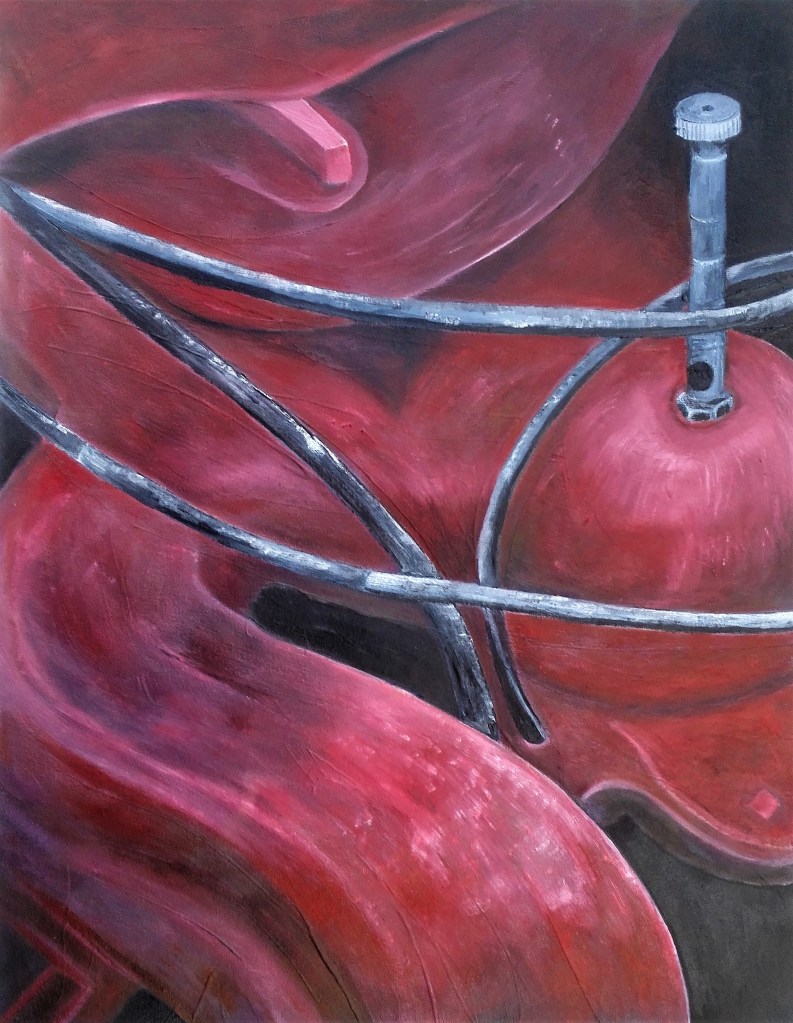
This painting was reworked to introduce a stronger colour and also to promote the tonal variations.
My Parallel project is now fully underway. I have a clear direction even though I have yet to decide whether the focus is going to be on close up studies or those which depict in the object in the landscape. At this point my guess is that I am likely to end up with a collection of works from which I will select those that form a collective narrative. I suspect that this will be a mixture of the two options. My focus is on exploring the impact the passing of time on buildings and machinery in the Fenland landscape. In doing this my focus will be on using paint in a textural way. The paintings will be pictorial in their execution but the object may not be identifiable. This will be particularly true of the close up paintings. These are more likely to have an abstract nature to them.
To date I have found that Part Four of the course was where a made the biggest breakthrough in my realisation of the notions that I wanted to investigate. The experimentation with alternative materials, supports and applications assisted me to uncover a methodology to explore the topic. I see the progress that I have made to date is aligning with the aims of my practice. My interests lie in trying to convey light, movement, the passing of time, nostalgia without becoming sentimental and melancholic. I am still informed by the landscape in which I currently reside. This has been a recurring theme through my studies, and although I have ventured to other topics, I keep returning to it. I can see myself exploring this topics in the future and thoroughly expect to be taking it Level 3 (HE6).
The artists that are currently influencing my work, in terms of ambition, but not directly in terms of scope, are George Shaw and Peter Doig both of which will be the subject of my critical review.
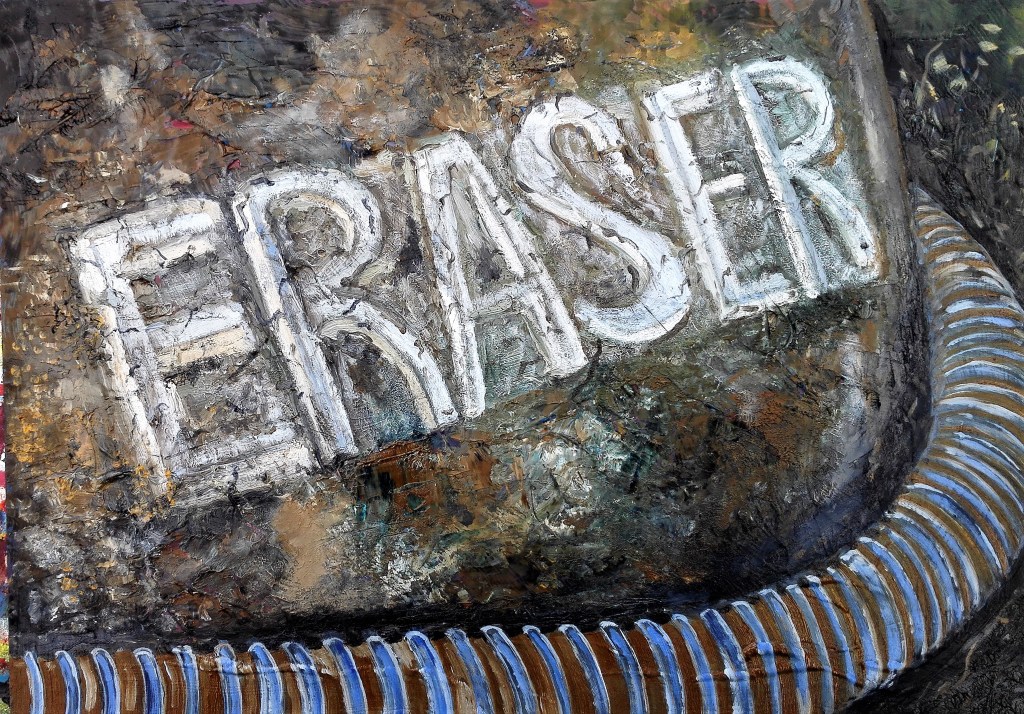
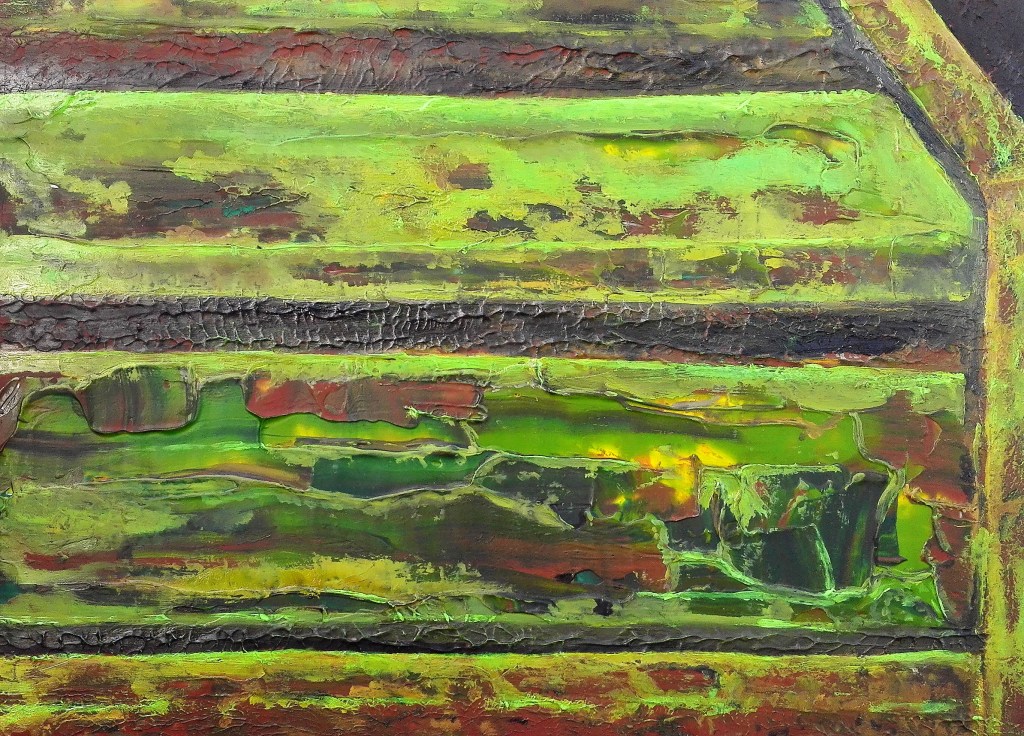
Of the works completed to date I suspect that four pieces are likely to be in consideration for my Assessment submission. Two of these have recently been reworked following feedback and these are now closer to what I am striving for. They are replicated below.
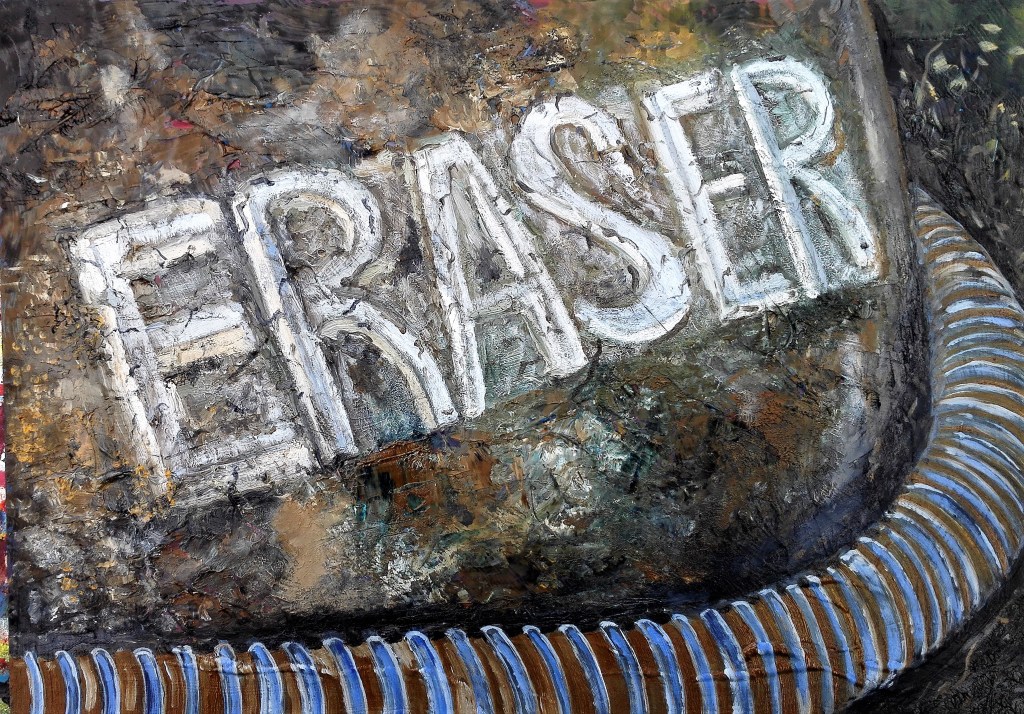
Eraser, Aqua oils on acetate, 21 x 29 cms
Derelict Outbuilding, Aqua oils on canvas pad, 50 x 40 cms
Metal and cables, acrylic and aqua oils on canvas pad, 50 x 40 cms
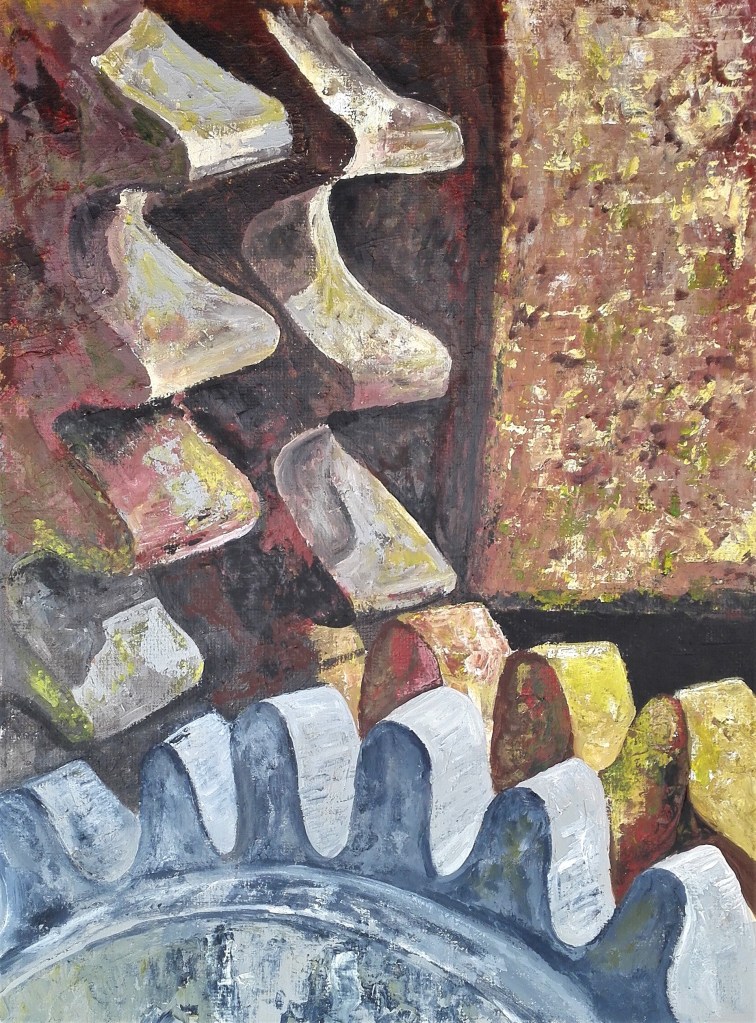
COGS, acrylic and aqua oils on linen board, 40 x 30 cms
I have yet to consider how I would want these paintings to be presented but I do expect that they will be able to hang together and convey a coherent narrative.
I do not intend to compare and contrast these two artists but rather explore their individual approaches to making art with words. I have not made extensive research into their individual practices. My intention was to examine a single work by each artist. To examine each piece and the impact that the artist was intending to illicit in the viewer. In both cases my interest was in trying to identify what cultural influences may have informed the work.
I’ll start with Bob and Roberta Smith. This is the pseudonym of Patrick Brill, a British contemporary artist, writer, musician, art education advocate and keynote speaker. Patrick comes from the leftfield canon of British artists. Although part of the established art movement he remains very much his own person choosing to do things his way. He comes from an artistic upbringing, his father was the landscape artist Frederick Brill who was head of the Chelsea school of art.
The work that I have chosen to examine is titled ‘Make art not war’ 1997. These words and other phrases are claimed to have been spoken to him by his father on his deathbed. Firstly what does the painting look like. It is square, 153 x 152 cm, painted on plywood using commercial paint. The background is split into two halves divided horizontally, the top section is painted white and the lower pale orange. Over this are painted the four words ‘Make Art Not War’. The typeface that Patrick has used is known as Signwriter’s block. This was developed in 1920 and was chosen, the artist explains in a video about the painting, as he enjoys the disciplined structure of the typeface. The letters are mostly black or blue except for two, one being white the other red.
The painting is part of a series of works that use humorous slogans which to promote art over violence. A further example being ‘Easels not guns’. The meaning of these paintings is fairly explicit in that their intention is to challenge the viewer to question human morality.
The simple message brought into the setting of an art gallery or museum forces the viewer to confront the message and to challenge their ideas of what a painting is. On its own a single painting can not change the world but it does set up a dialogue in which an alternative outlook is possible. In my opinion the painting is an expression of the culture and times in which it was created which has informed the artist. However the artist is not merely responding but is choosing to influence, is not making concessions but directing.
The second artist and second painting is by an artist who comes from a different cultural back ground. Edward Ruscha is an American artist who is associated with the Pop art movement of the 1960’s. He is well known for his paintings, collages and photographs. Originally from Oklahoma he states that his eyes were opened and that his work is heavily influenced by Los Angeles. His interest in words and typography have provided the primary subject of his paintings, prints and photographers. The words either comes from conversations, jotted down or are taken from dictionaries.
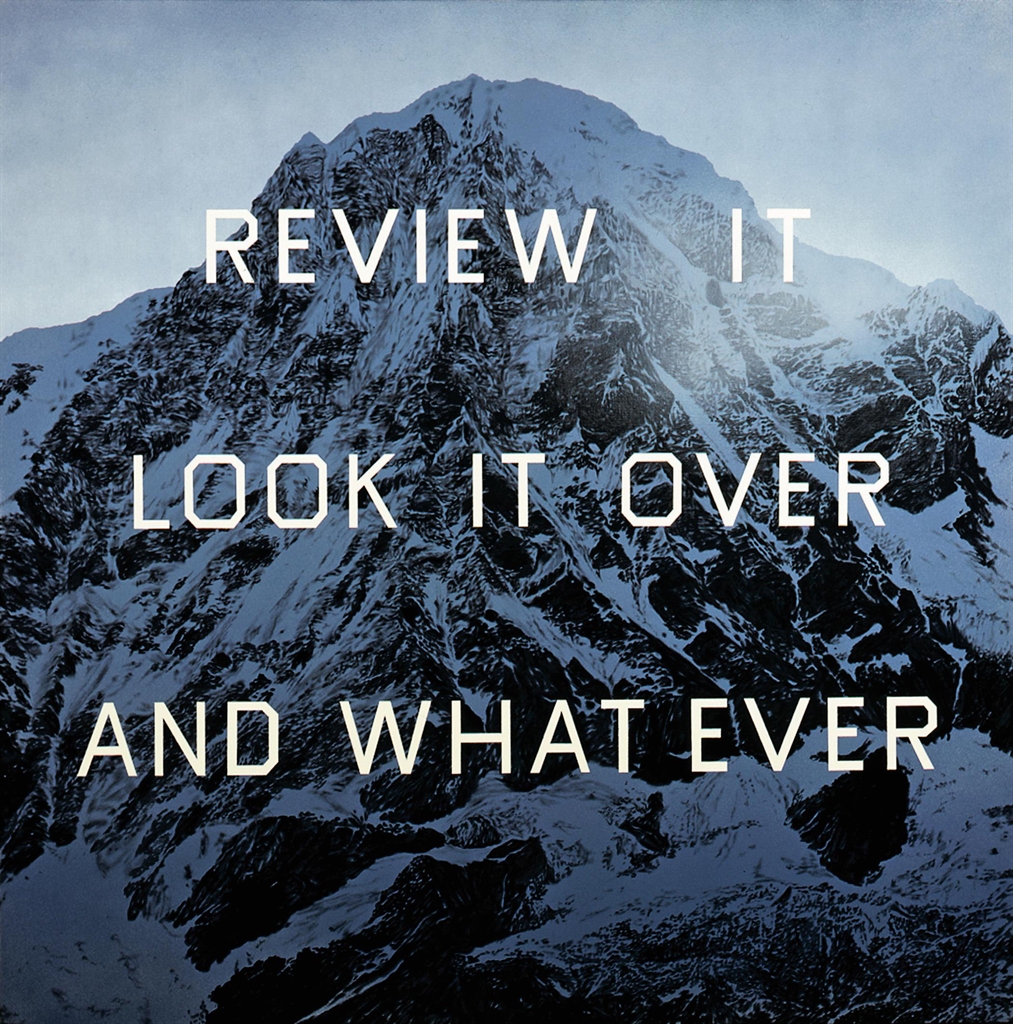
The painting that I selected to examine is called ‘Review it, look it over and what ever’. It was completed in 2004. The painting is on a square canvas, 152 x 152 cms. The background image is a mountain rendered in monochrome of Payne’s grey. It has been created with acrylics, pencil and charcoal. Over the background image of the mountain the words, (1) Review it (2) look it over (3) and what ever, are written in three lines evenly spaced using a simple typeface. All letters are the same size.
In trying to understand the meaning of the painting I visited Tate Moderns website and found a video of Edward discussing his art and the processes he employs. In the video he explains that his backgrounds are just that backgrounds but then goes onto say why he often uses mountains tops as backgrounds. They suggest glory, beauty and evoke the sound of trumpets playing although there is no noise present. When words are added it creates tension. To me, a question is raised in that as the viewer you are immediately drawn to the words and to think about what they could mean? Why have they been placed in this setting? The words or phrase ask to be contemplated. Had they been written on a page in a book would I have stopped and thought about them? I think that this would be unlikely. In this case the phrase is in three parts. The first is a command ‘Review it’ followed by an instruction as to how to ‘look it over’. The conclusion ‘ and what ever’ is yours. It is left to the individual no answer is provided.
You, the observer, are challenged, questioned and instructed by a painting to do something more than merely to observe and then left free to move on. To me this is an instruction to look beyond what is presented or given to you, draw your owns conclusions and from there follow your own path.
Edward Ruscha, Review it look it over and what ever, Acrylic pencil and charcoal, 152 x 152 cms, 2004
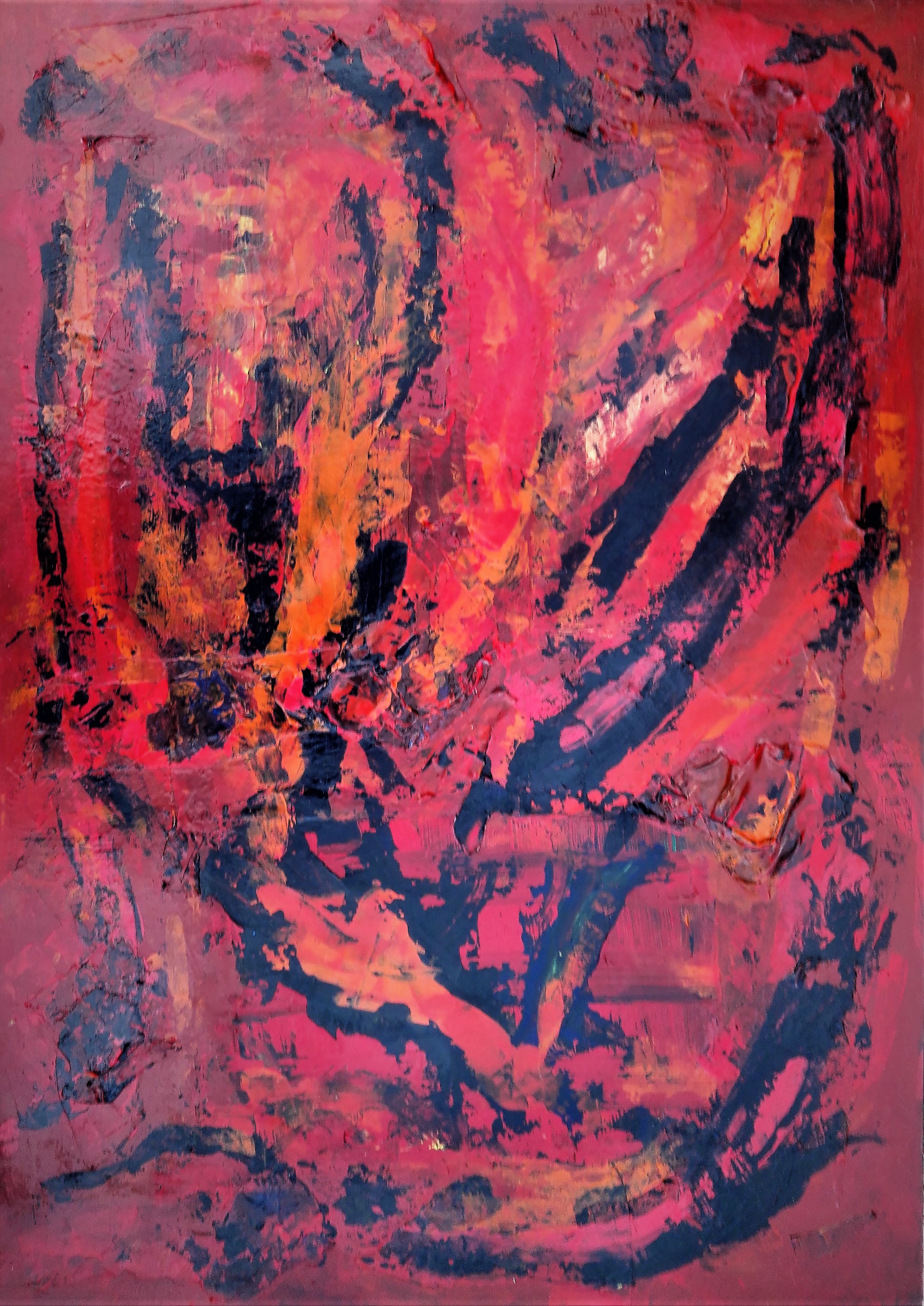
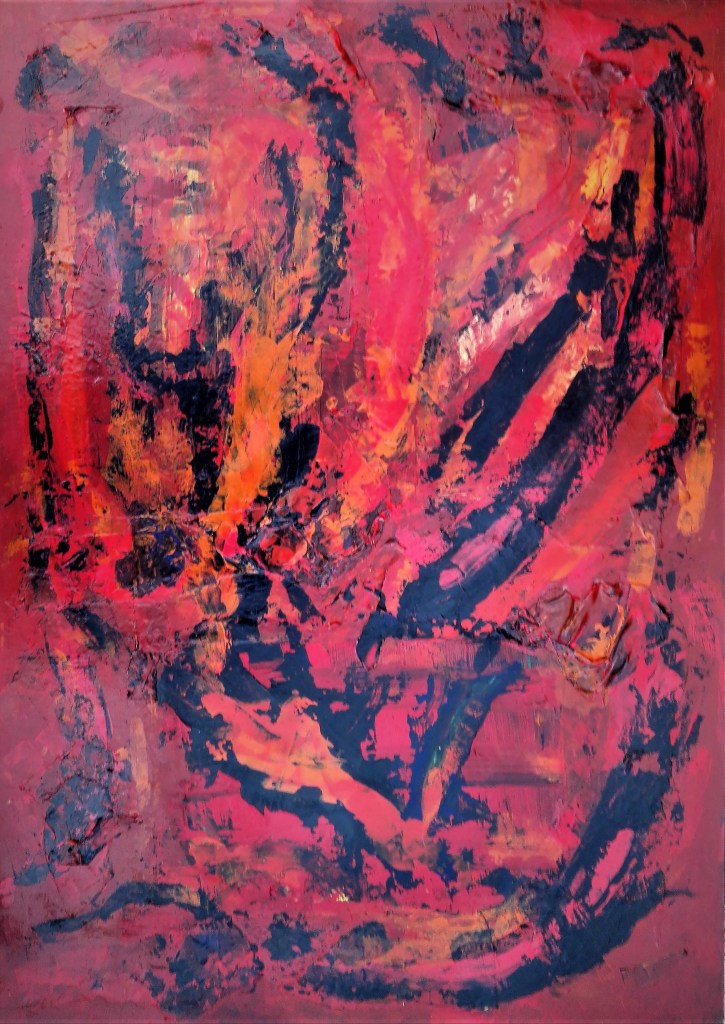
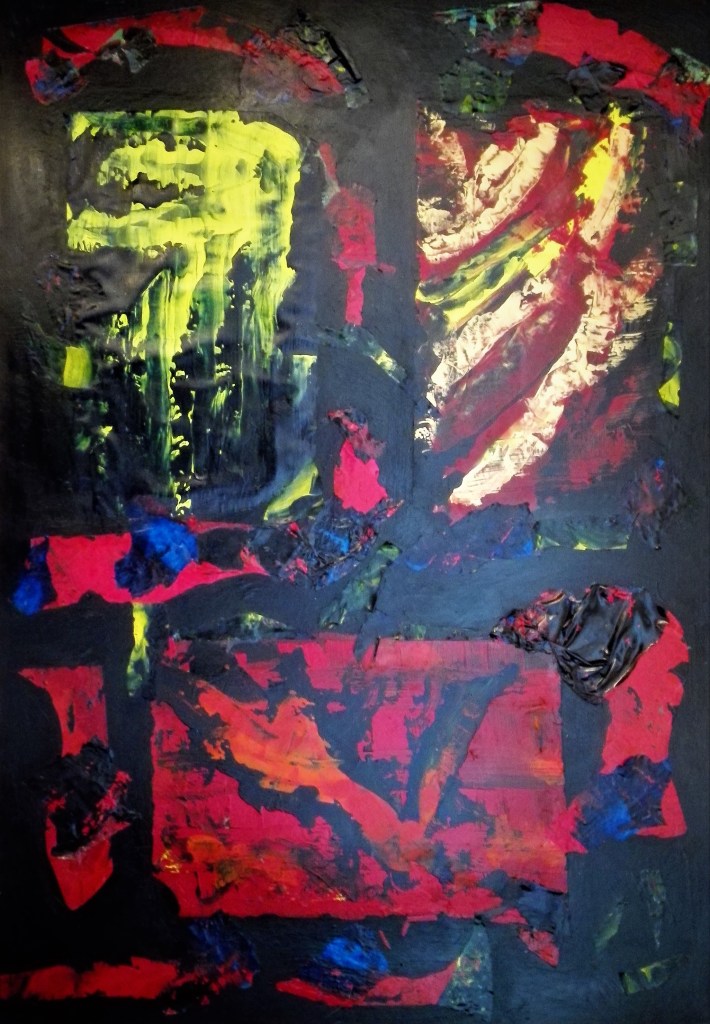
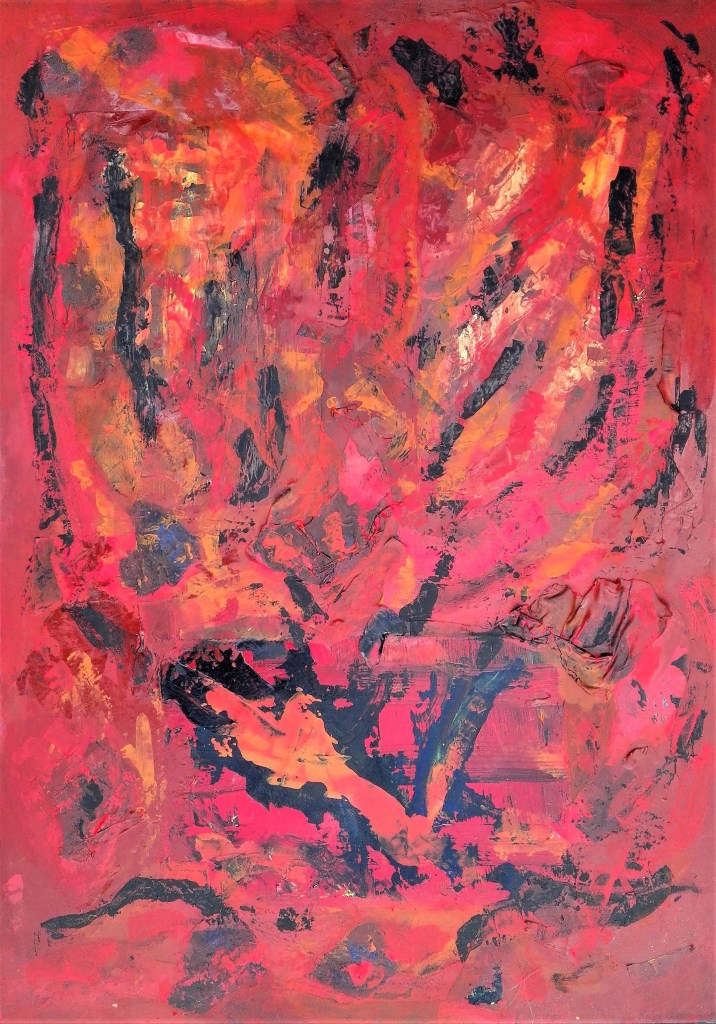
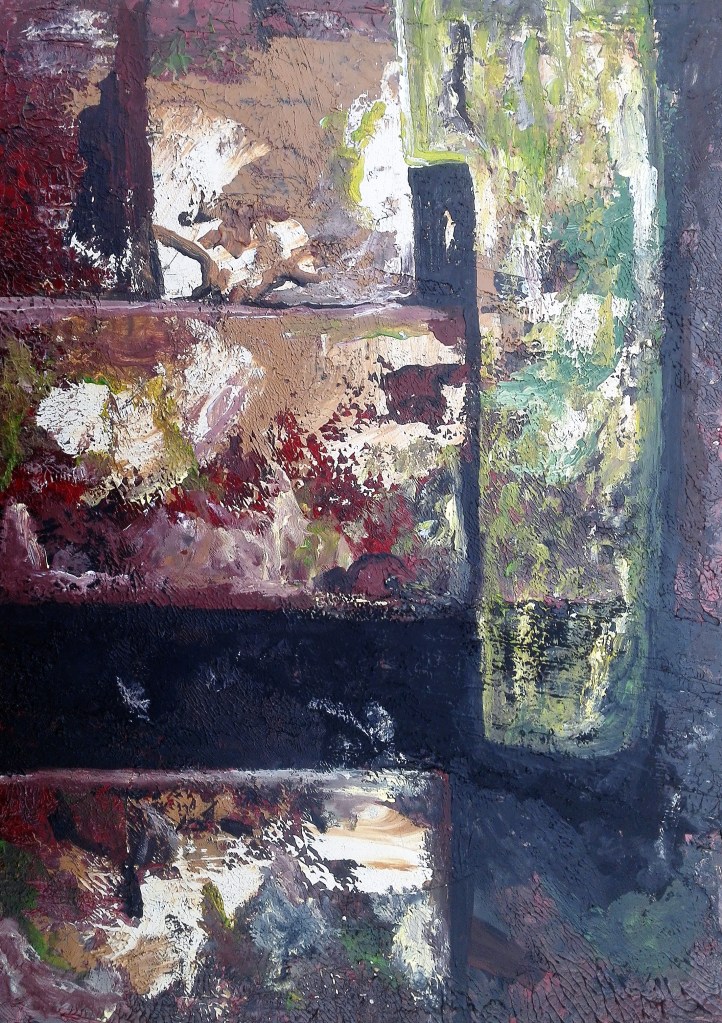
I summarised in my reflections regarding the final piece that I had completed for Assignment Four that I felt that there was potential for it to be reworked. This view was confirmed during the conversation with my tutor. It was felt that there were some strong points in the work but that it didn’t hang together. In trying to pull together different experimental pieces it lacked coherence. I had tried to link the pieces together using a black background as this colour was common to most parts. This had helped to some degree but the bright yellows and golds jarred and deflected from the stronger section in the centre middle part of the painting. The re-work needed to bring this part into the whole composition and inform the whole piece. In doing so most of the remaining painting would be altered so that very little remained. The dominant colours would be various reds and oranges coupled with black. The process was completed in two iterations, the first taking the painting from the submitted work to the next stage.
Assignment 4 piece and Rework stage 1
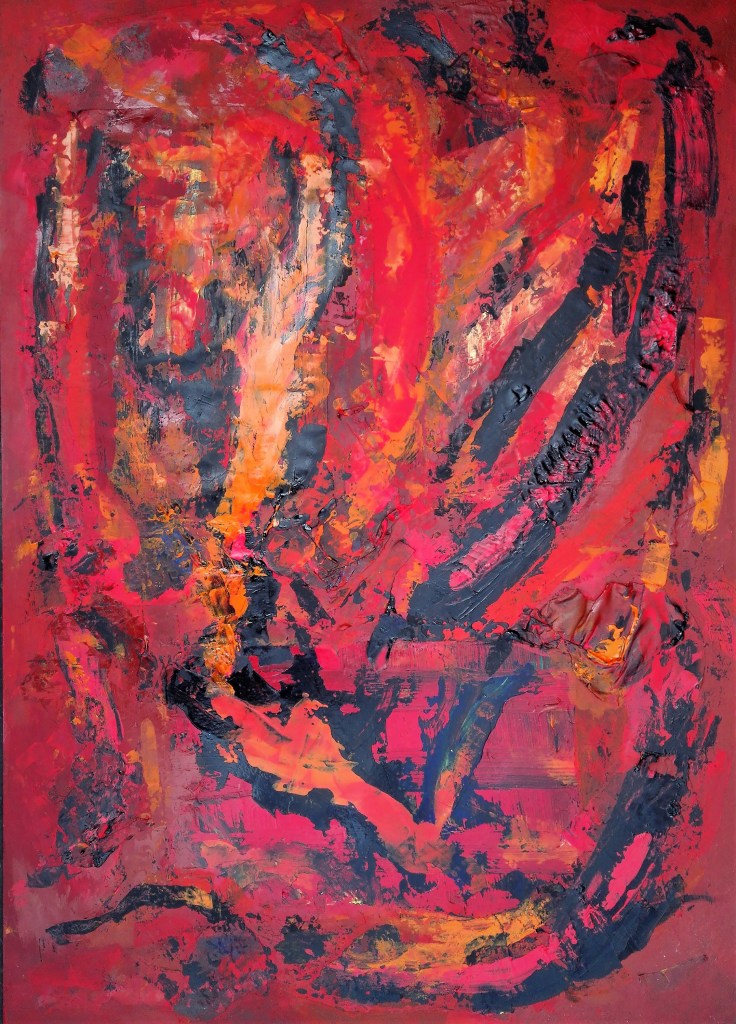
As can be seen above the background has been completely reworked and very little of the top section is now visible. Although the painting had moved in the right direction I felt it lacked drama. The brush and palette knife work was timid. Larger gestural mark needed to be made to bring energy to the work. These marks would respond to the feel of the bottom central marks and integrate into the rest of the piece. The progress is shown below before the final piece is replicated after a final coating of PVA adhesive was applied to gives the work a sheen.
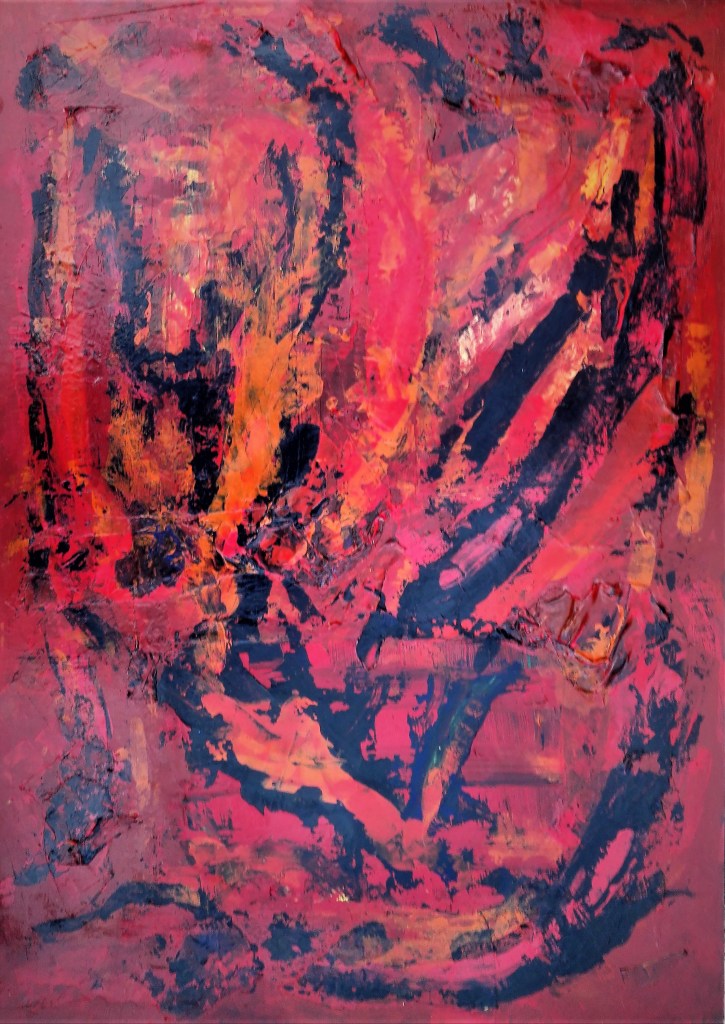
Interim and final painting pre coating
Completed painting. It now has energy and is cohesive. I find myself discovering new depths to the work each time I view it. Currently it is untitled but I am considering titling the work. This may emerge during Part Five.
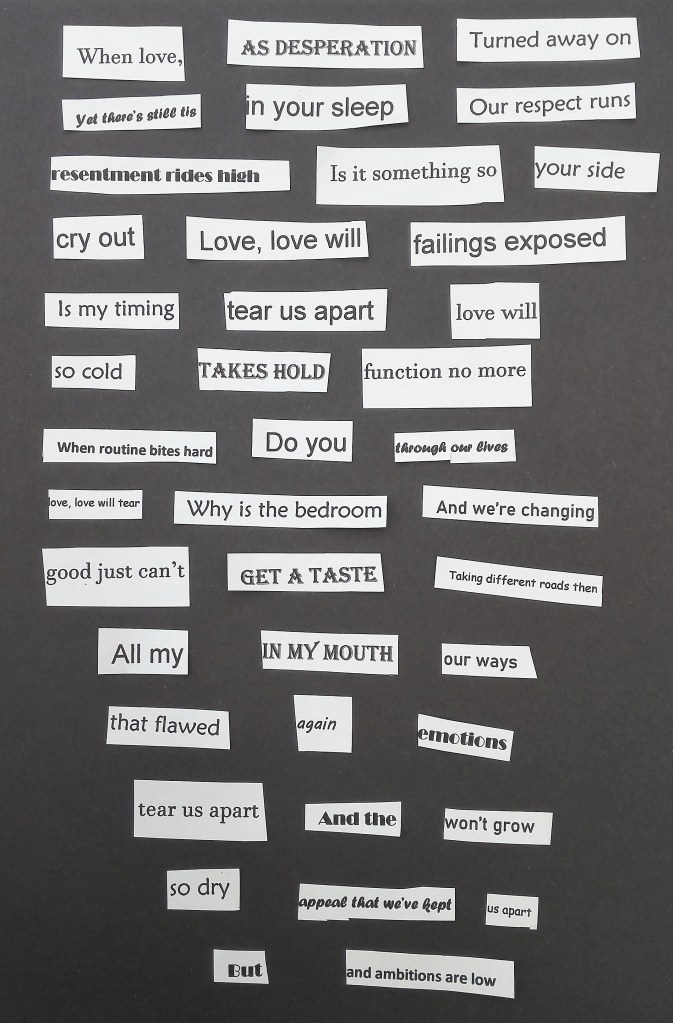
For my first investigation into Cut-up techniques I used the lyrics to the song ‘Love will tear us apart’ by Joy Division. My rather naïve thought was that as the words were already in a poetic style and included poetic meaningful phrases that more would emerge. This proved to be an error as I found that I kept being drawn back to the song. Was this because I knew it too well and the echoes of the phrases called out for me to make them whole again?
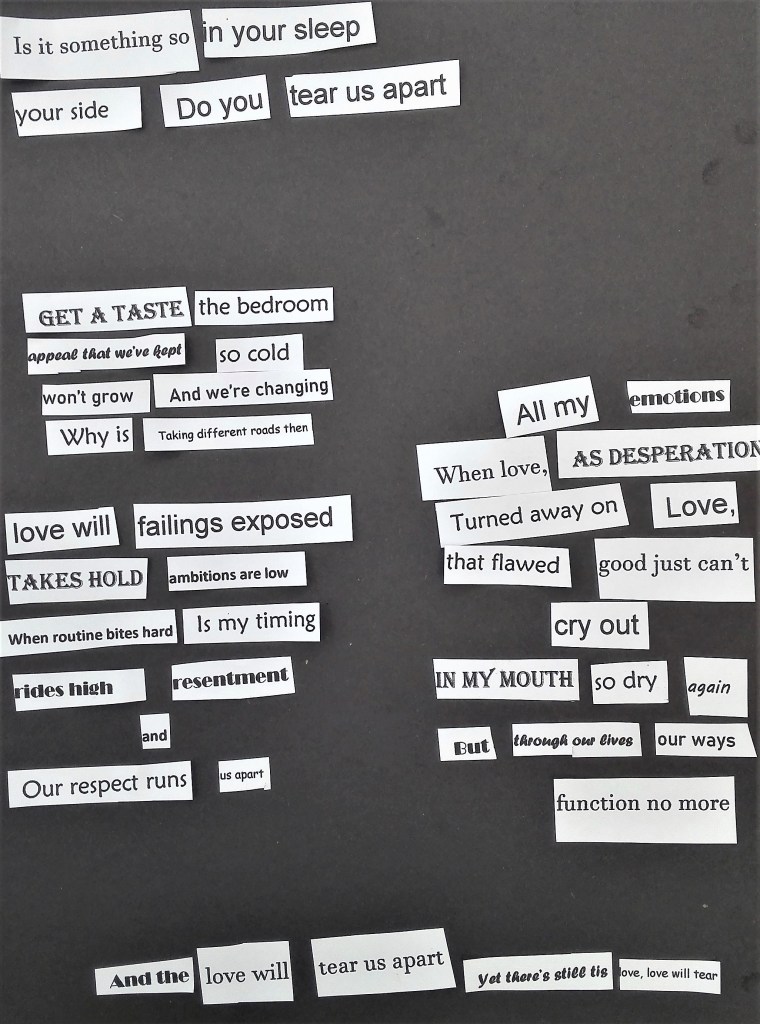
The process and the results. I was aware of cut-up techniques having seen several examples over the years. This included a documentary on David Bowie where he was using the technique to create interesting phrases for song lyrics. I hadn’t directly used the technique myself but have tried using random unconnected phrases and illogical rhymes when trying to write lyrics for my own songs. I must admit that I never found it to be particularly successful. Like many things it needs to be worked at, learnt, refined. Initially I typed out the words to the song, printed it out and randomly cut it up into phrases. These were randomly placed on card. The result was overpowering, too many phrases and half sentences that made little or no sense.
Part of the problem, which I have already indicated was that I couldn’t divorce myself from the structure of the song. Trying to break away from this I reduced the length of the phrases by cutting them up.
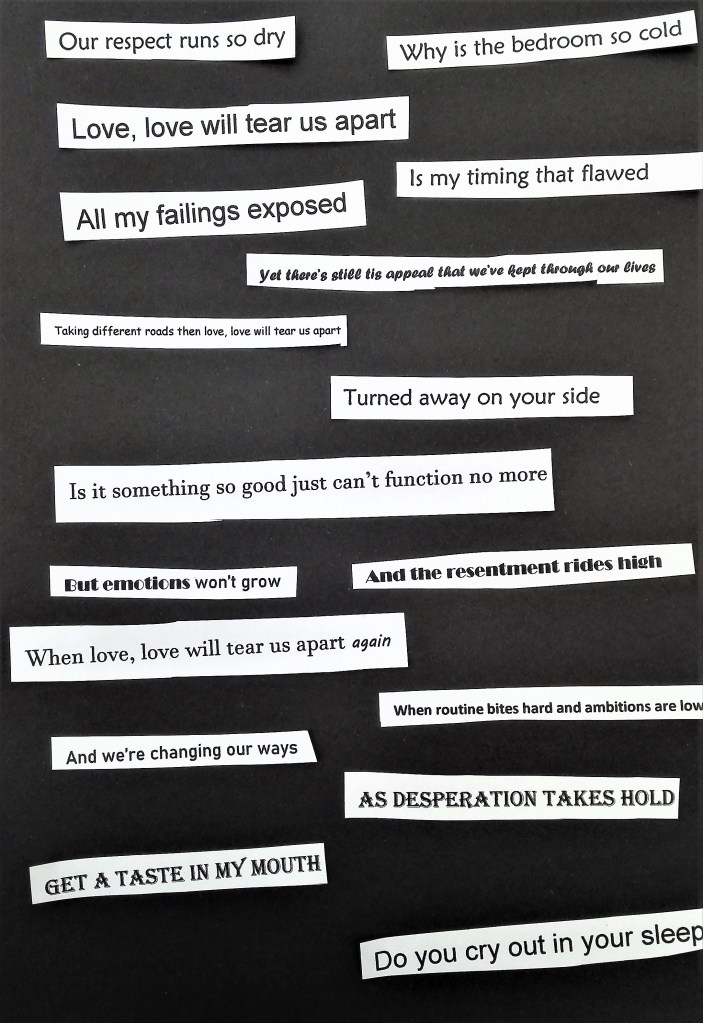
I then randomly selected seven phrases and tried to form these into a sentence. I repeated the process several times, adding words, re-arranging until I eventually ended up with four sentences, see below.
The results were disappointing. I hadn’t revealed a hidden gem of a line that I had hoped for. Being realistic it was unlikely for all of the reasons that I have already touched upon.
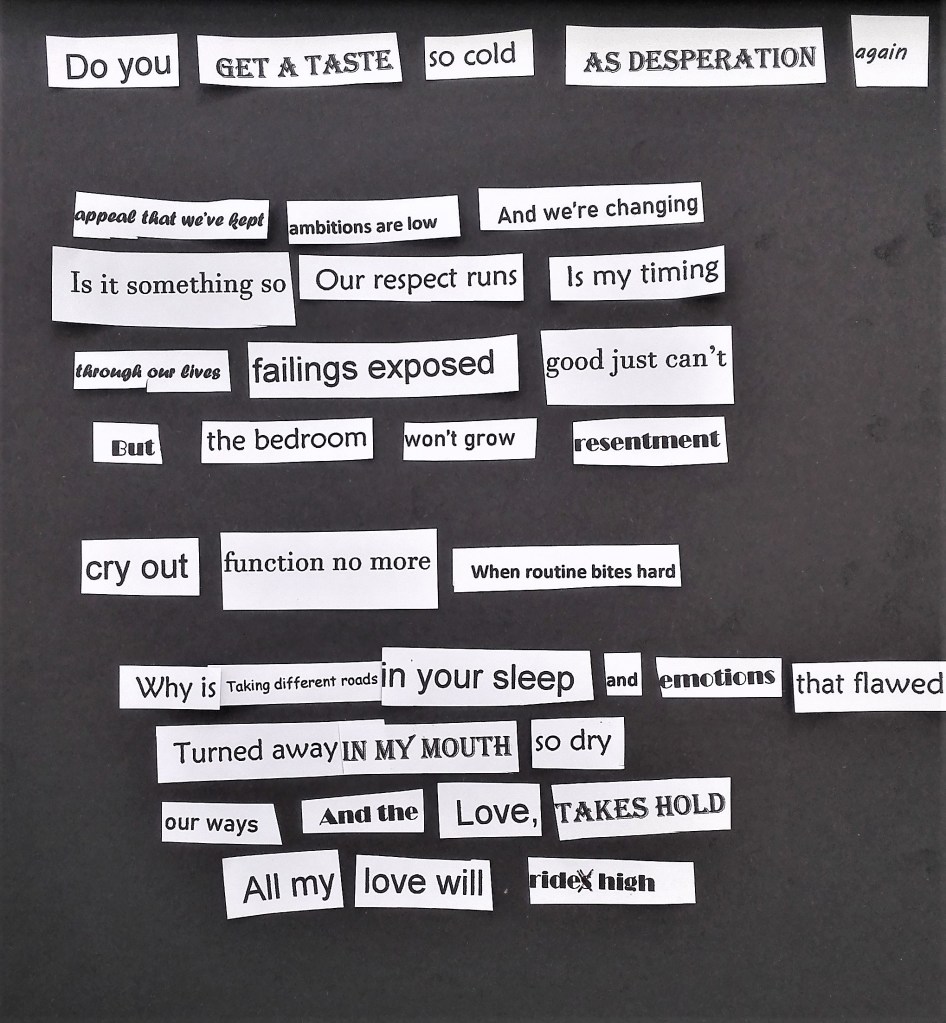
The second part of the exercise was to try to form two or more coherent phrases and make these into collages/paintings. Having created the text in different fonts and sizes had lent the creation of simple collages that had the look of ransom notes or punk iconography.
Collage of four
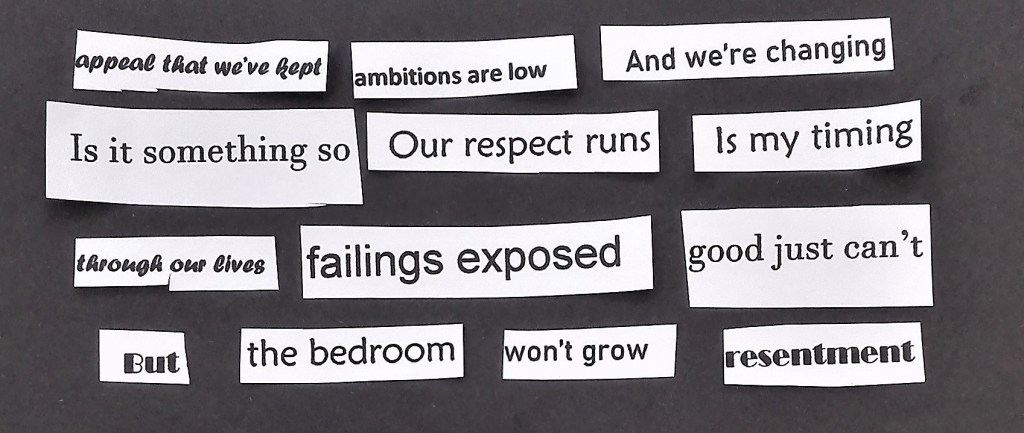
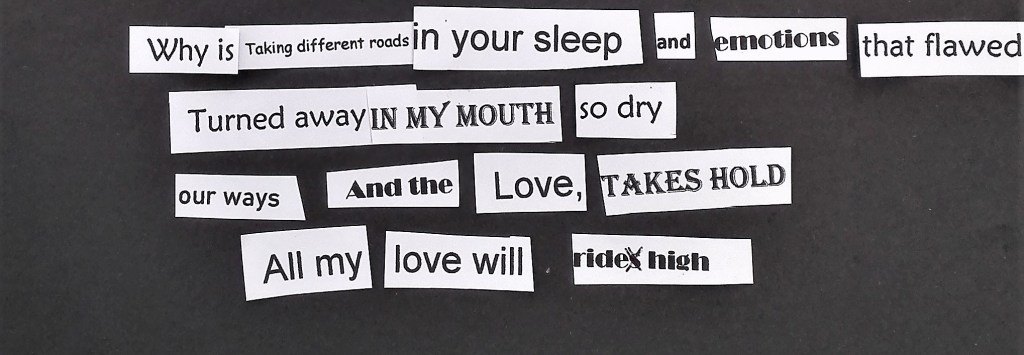
The collage above is of four different results. Individually they are:
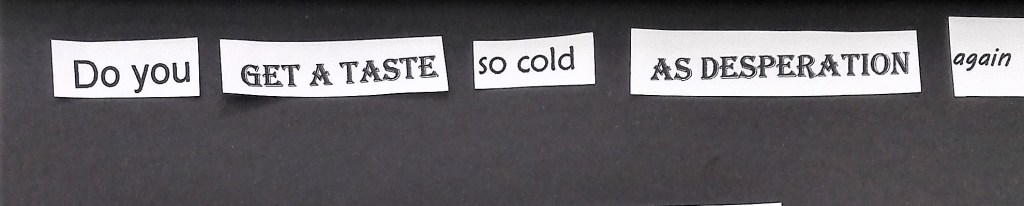
Question;Do you get a taste, so cold, as desperation again?
Poem / rhyme;
Appeal that we’ve kept, ambitions are low and we’re changing,
Is it something so, our respect runs, is my timing?
Through our lives feelings exposed, good just can’t
But, the bedroom won’t grow resentment.
A declaration;
Cry out, Function no more when routine bites hard, this might have been better as “When routine bites hard, function no more, cry out“
A second poem, in the form of a convoluted question
Why is taking different roads in your sleep and emotions that flawed?
Turned away in my mouth, so dry
Our ways and the love, takes hold
All my love will ride high
They all have some meaning, albeit vague in some cases. It had been a revealing exercise. To further examine the process and to get away from what I felt were, the constraints of using words and phrases that already had meaning, I tried did the exercise again but this time cutting out random phrases from a magazine, WWF Action.
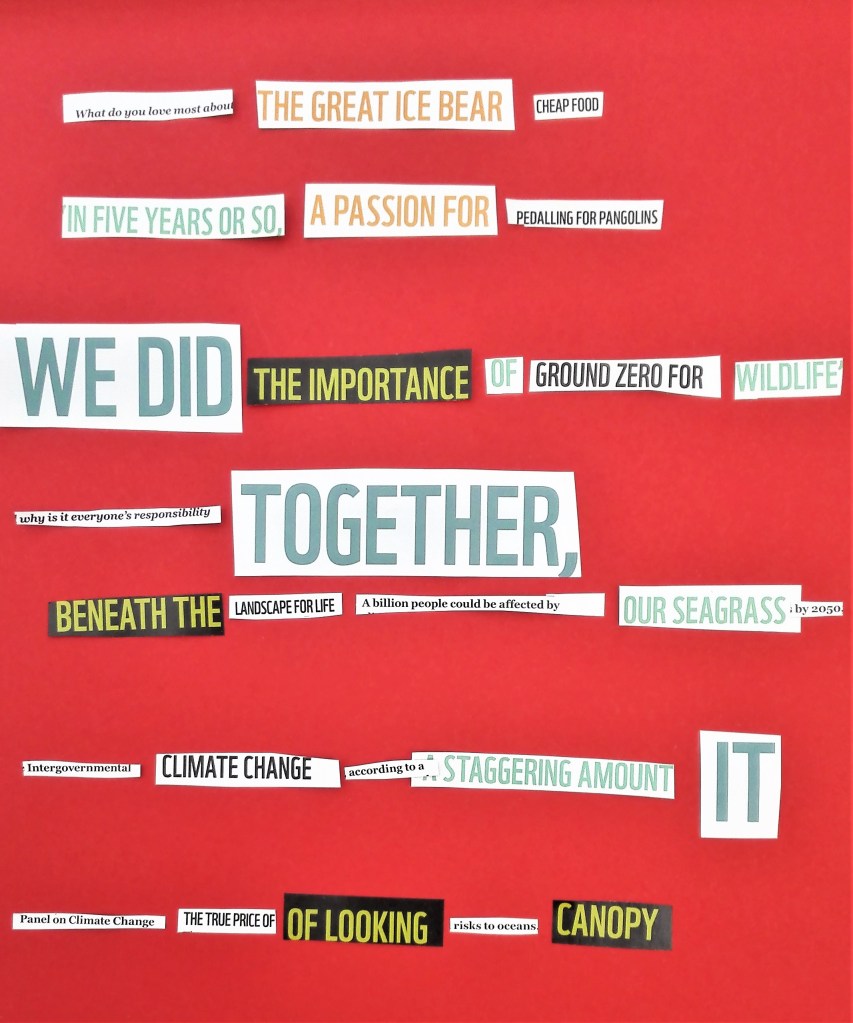
The results, I again created an overall collage which has then been broken down into a number of phrases.
The first, an enquiring question with a statement.
What do you love most about the great ice bear, cheap food? In five years or so, a passion for pedalling for pangolins!
The second, a manifesto statement
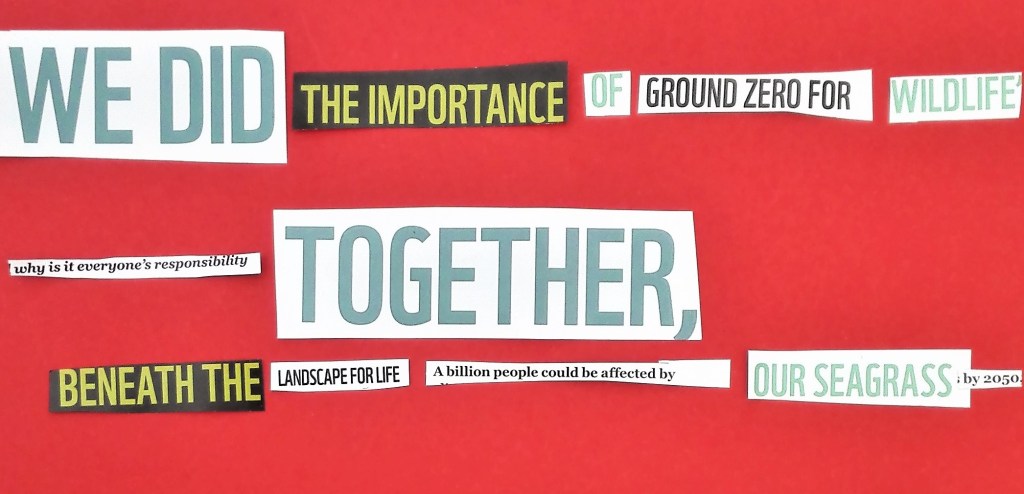
“We did, the importance of ground zero for wildlife. Why is it everyone’s responsibility, together, beneath the landscape for life. A billion people could be affected by our seagrass by 2050.“
The third, humour?
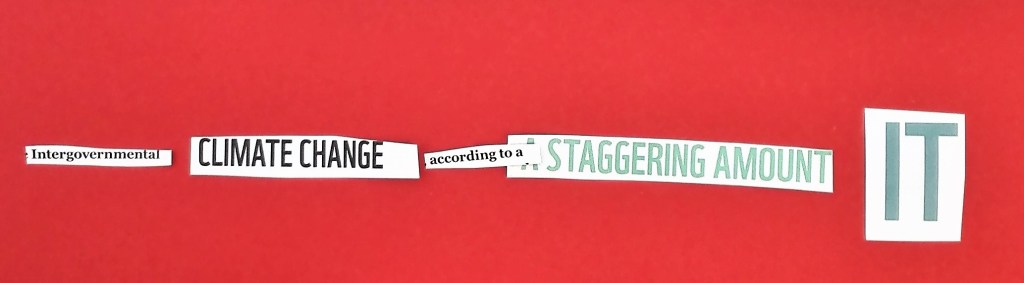
“Intergovernmental climate change according to a staggering amount (of) IT”
Lastly a declaration
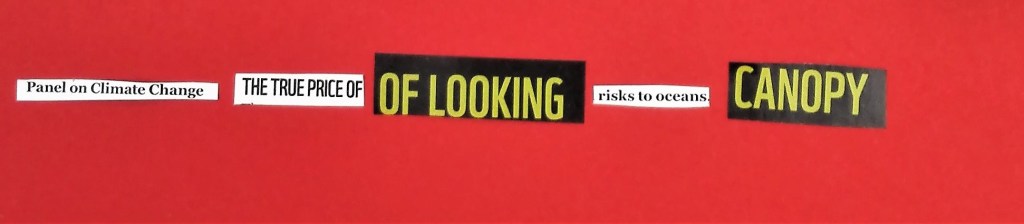
“Panel on climate change, the true price of looking, risks to oceans canopy!“
Conclusion: using words and phrases that, to me, were previously not consciously connected made the process of re-arranging the cut-ups easier to perform. Whether the results are more realised is questionable. As an idea generator I can see the value in this approach. It also ties into the work completed in Part Three, where the parts of a painting were taken apart. Dissection and reconstruction can create inspiration. It breaks down barriers in an unconscious way to form new possibilities.
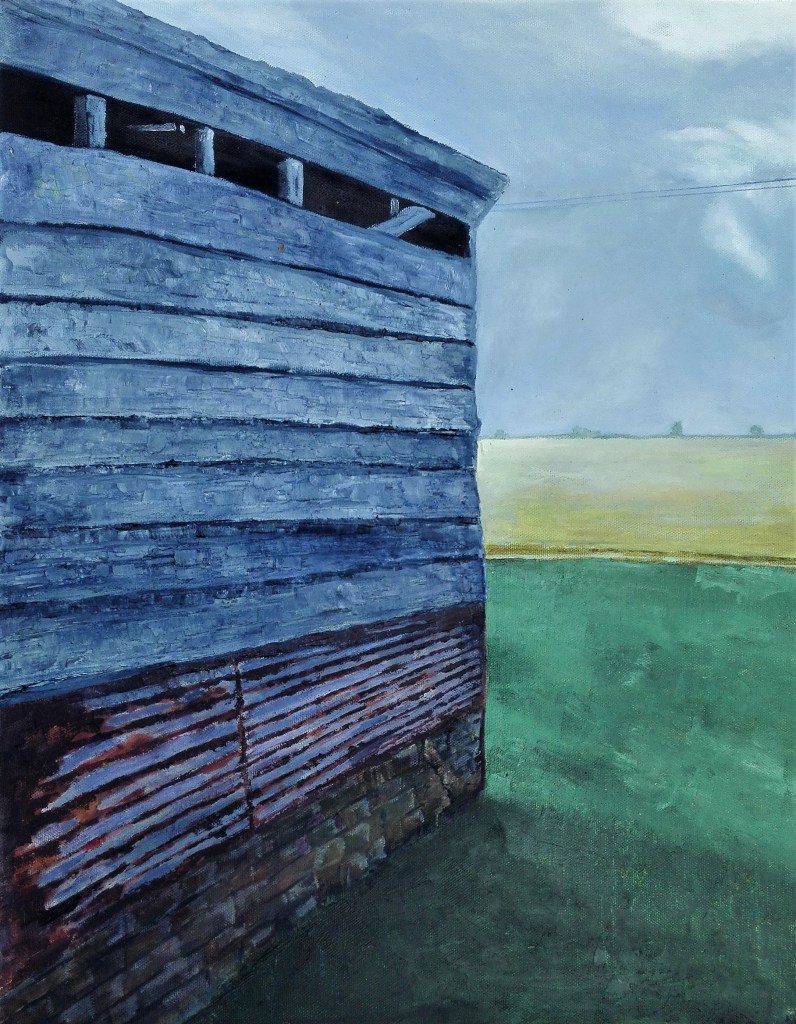
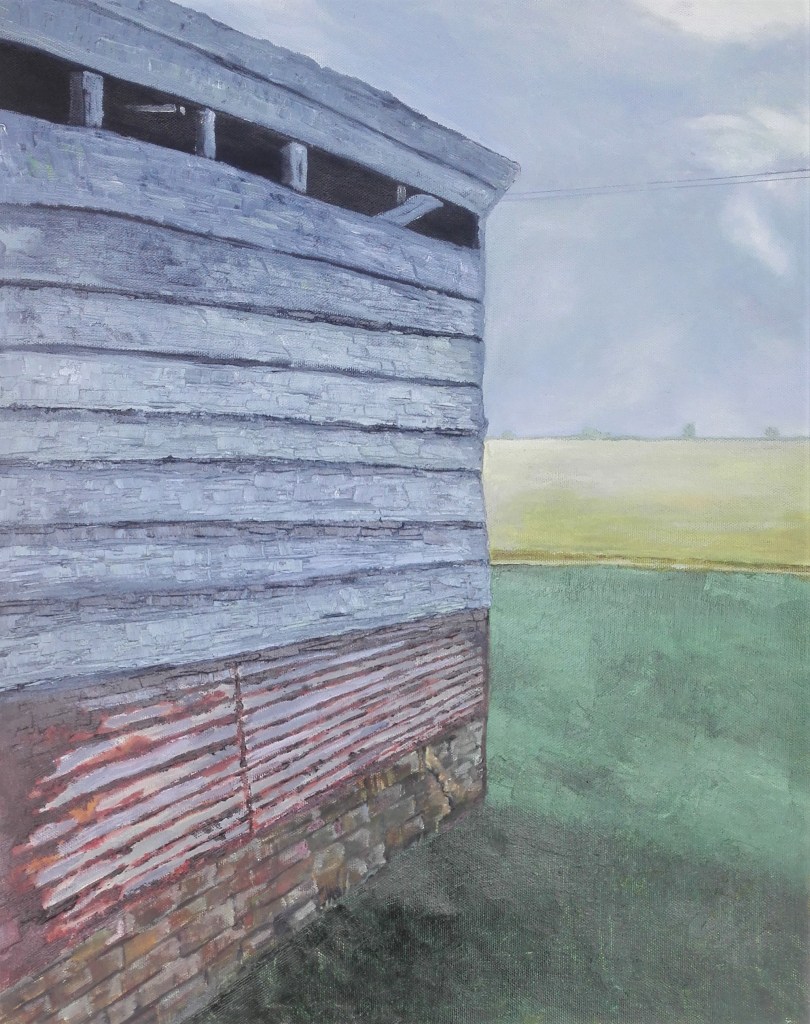
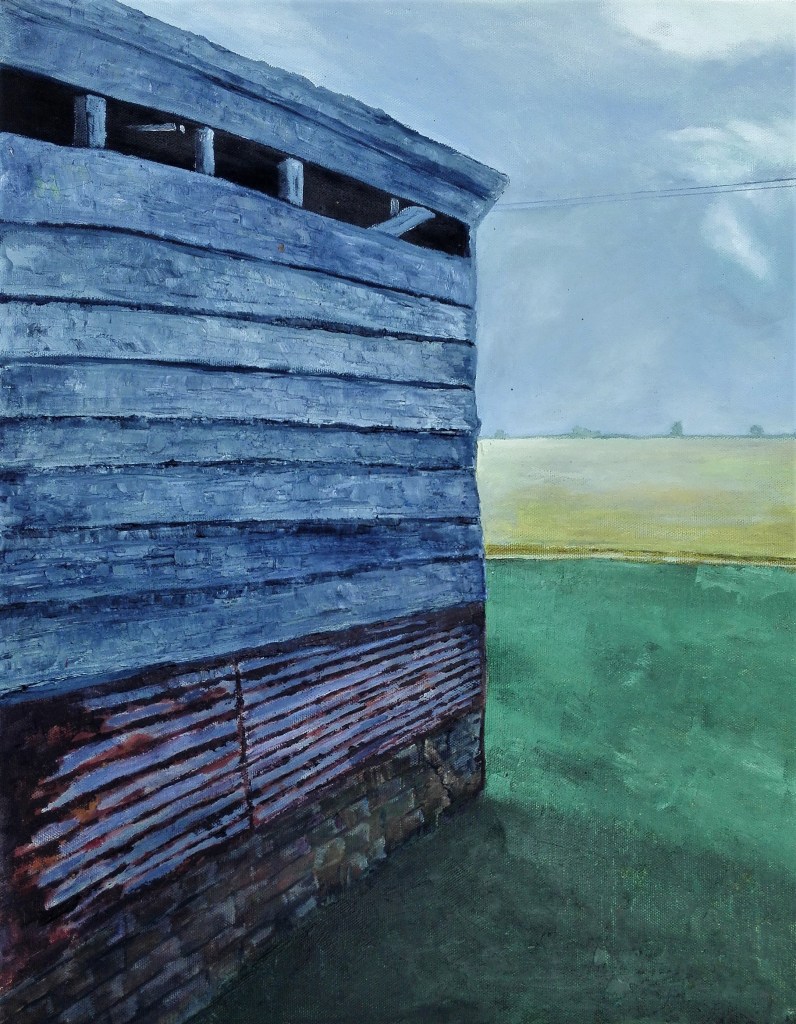
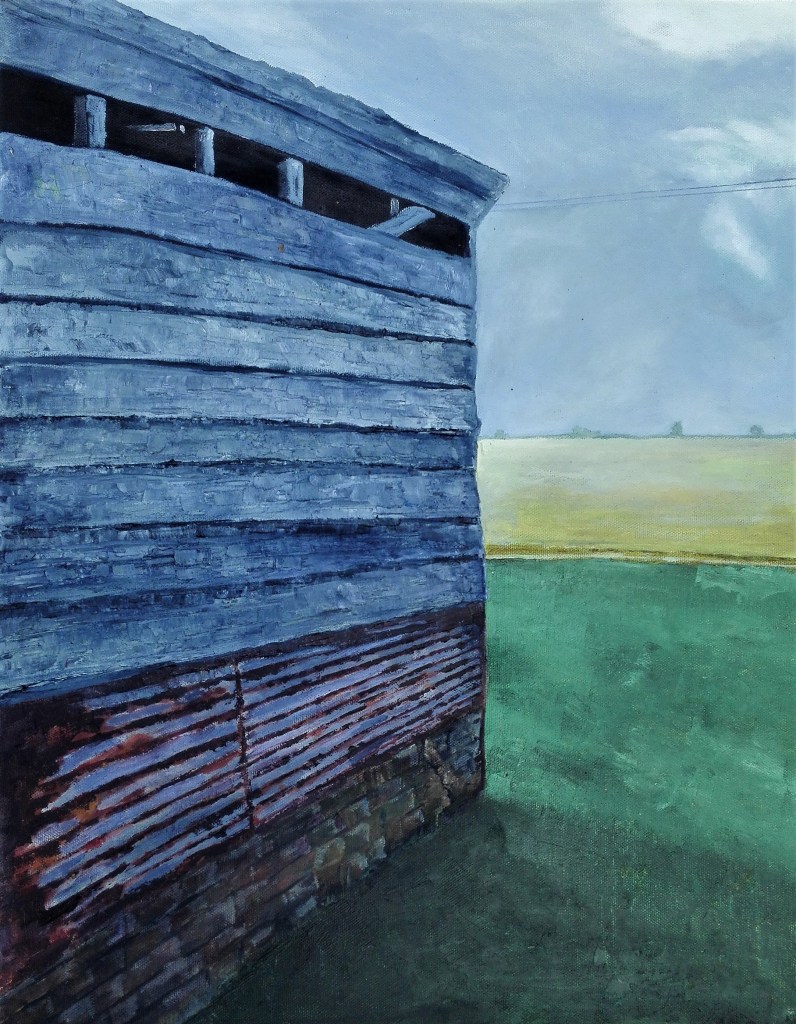
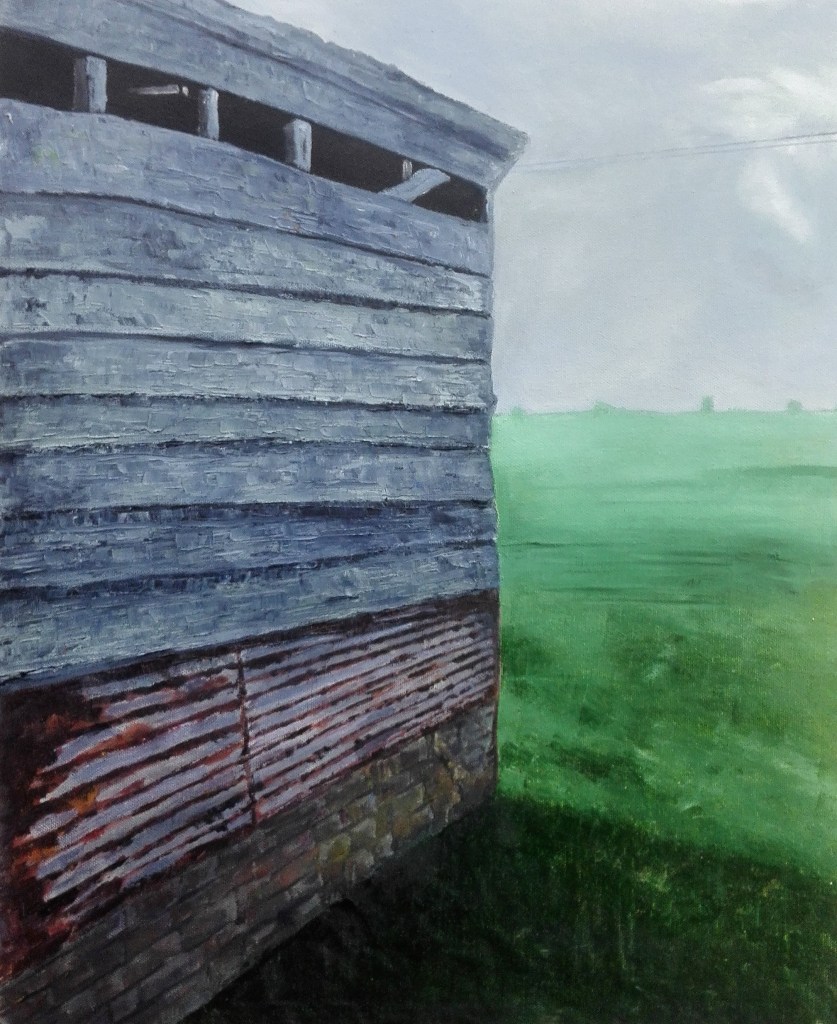
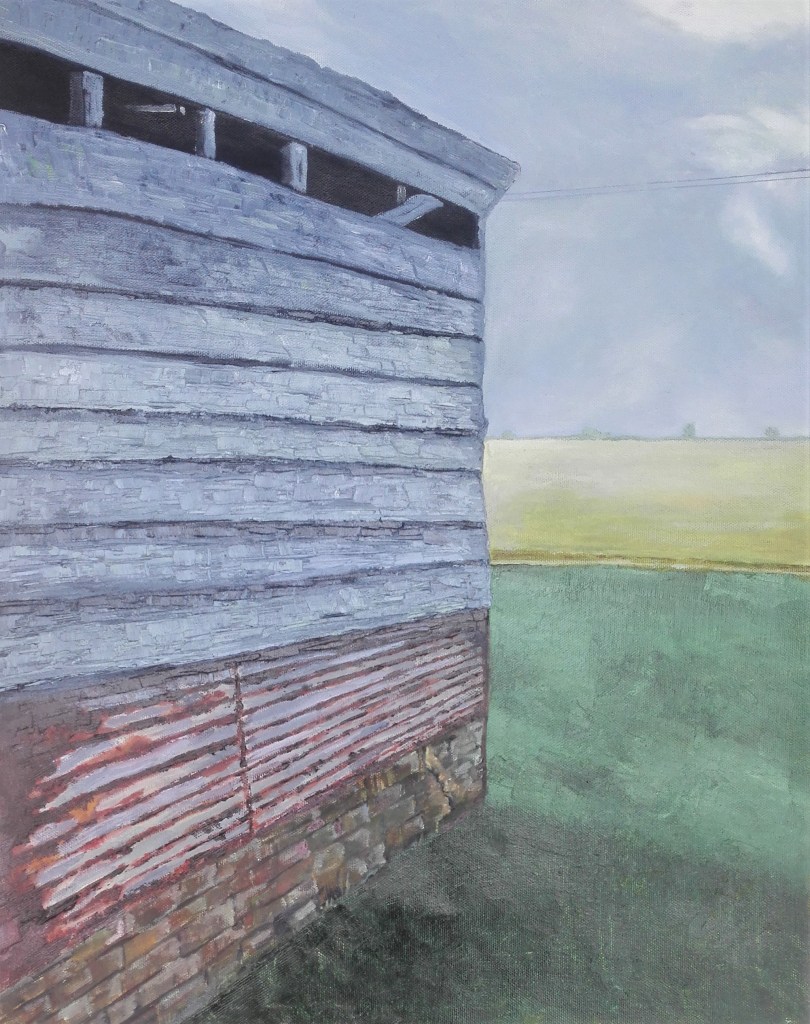
Following comments received during Feedback session I have made further adjustments and reworked the painting. The main observation was that the bottom of the building and the shadow on the grass could be toned down further. This should add further contrast and drama to the overall composition. This I have carried out and additionally I also toned down the colour of the wood on the building. The result is that the building sits more comfortably in the landscape, it appears cooler and calmer. Subtle changes that I hadn’t noticed. The acceptance of valued criticism set against the resistance to make changes to finished pieces is something that I have come to accept. One of my challenges is to be able to better critique my work.
The before and after is shown below and after that the reworked painting on its own.
A last rework of this painting was performed following it being reviewed at Formative feedback for Part 5. The faded yellow field was overpainted with green to give a more harmonious feel to the composition.
Derelict Out Building, Aqua oils on canvas, 50 x 40 cms
To help me to assess the progress that I have made to date towards the completion of my Parallel project I felt it would be useful to present the paintings together. At this time, early September 2020, I have around three months before I need to prepare my submission for Assessment in January 2021.
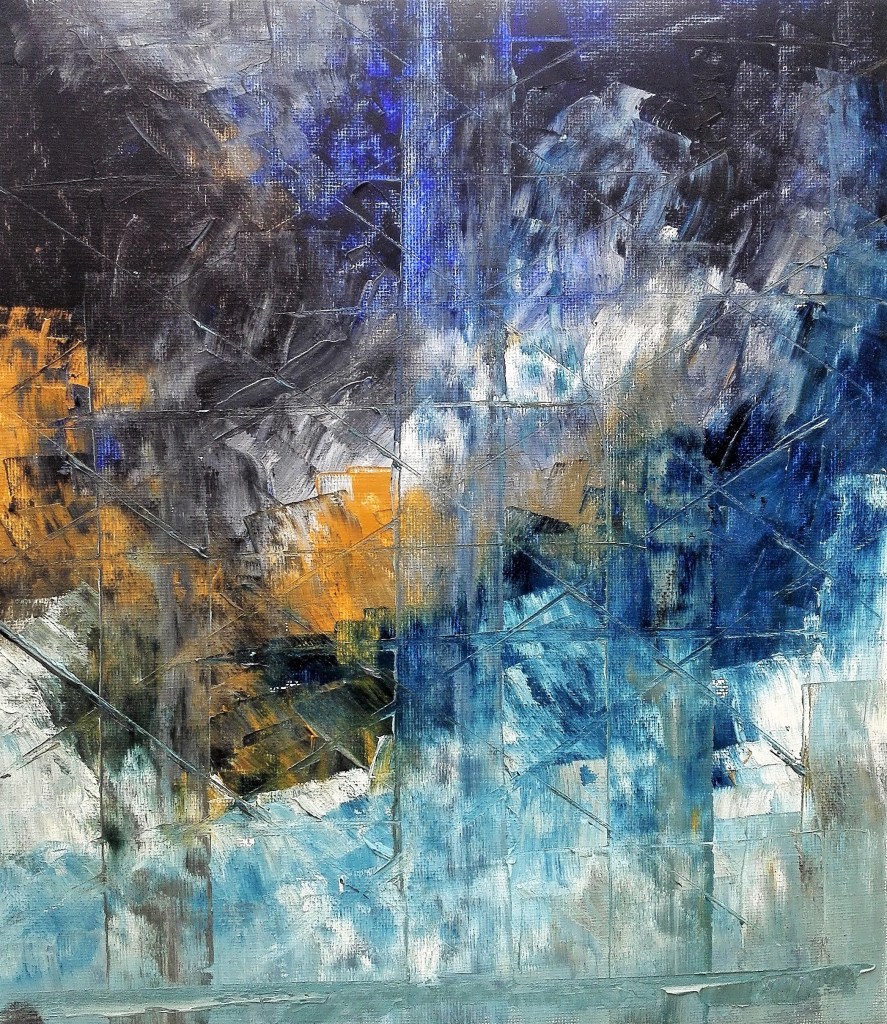
I have completed nine paintings to date of which I feel that two are outside of the scope of the project. These are:
1. Derelict Out Building & 2. Abstract
The seven paintings that are currently in contention are:
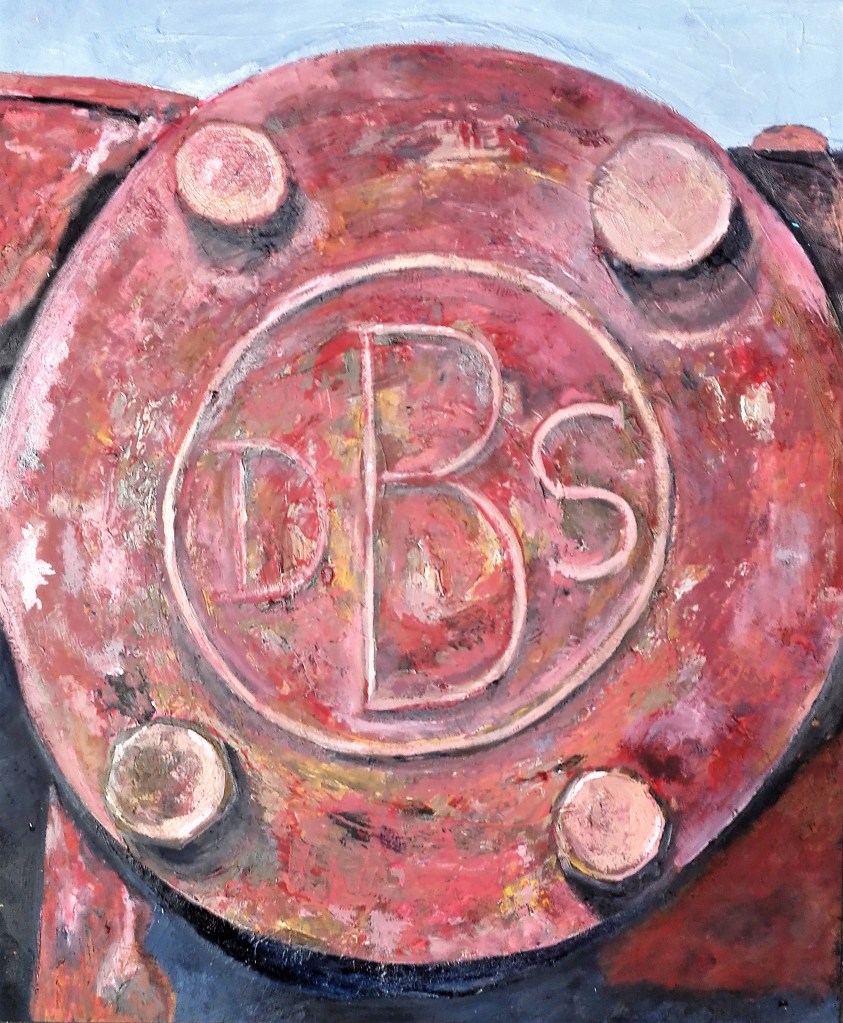
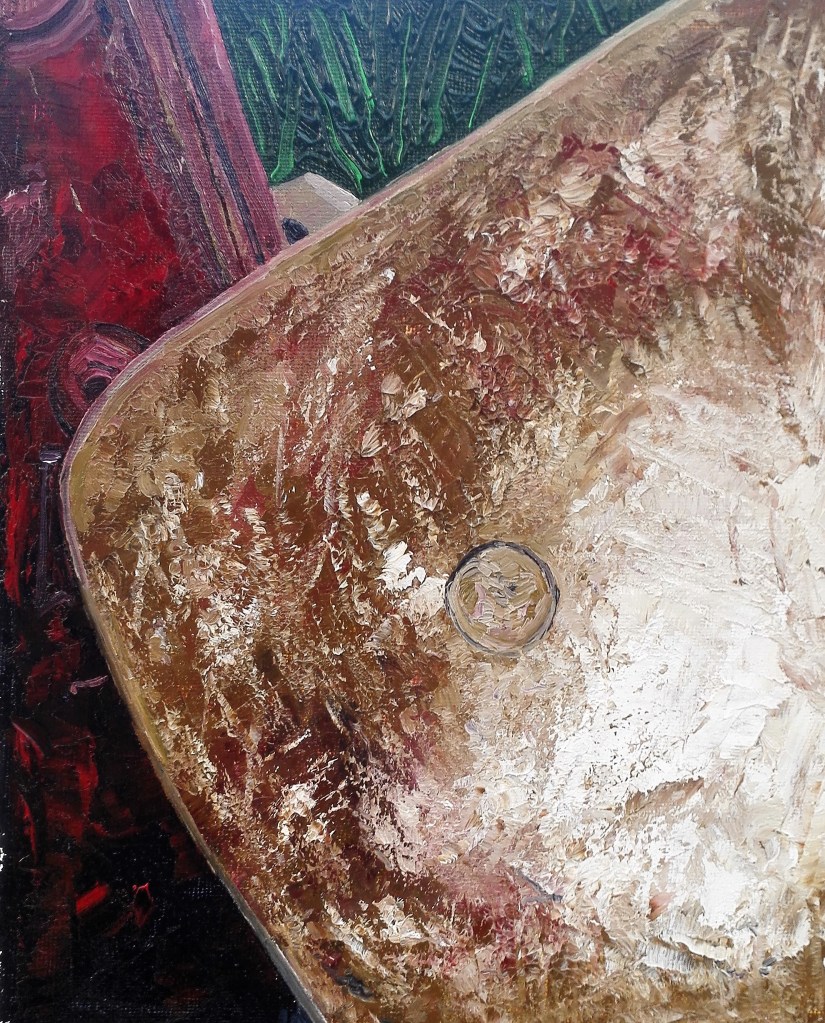
When viewed collectively I see a narrative emerging which is my intention. My aim is to examine this theme further over the coming months and hopefully a realised result will emerge.





 Mark Taylor 'Studio Practice'