For my first investigation into Cut-up techniques I used the lyrics to the song ‘Love will tear us apart’ by Joy Division. My rather naïve thought was that as the words were already in a poetic style and included poetic meaningful phrases that more would emerge. This proved to be an error as I found that I kept being drawn back to the song. Was this because I knew it too well and the echoes of the phrases called out for me to make them whole again?
The process and the results. I was aware of cut-up techniques having seen several examples over the years. This included a documentary on David Bowie where he was using the technique to create interesting phrases for song lyrics. I hadn’t directly used the technique myself but have tried using random unconnected phrases and illogical rhymes when trying to write lyrics for my own songs. I must admit that I never found it to be particularly successful. Like many things it needs to be worked at, learnt, refined. Initially I typed out the words to the song, printed it out and randomly cut it up into phrases. These were randomly placed on card. The result was overpowering, too many phrases and half sentences that made little or no sense.
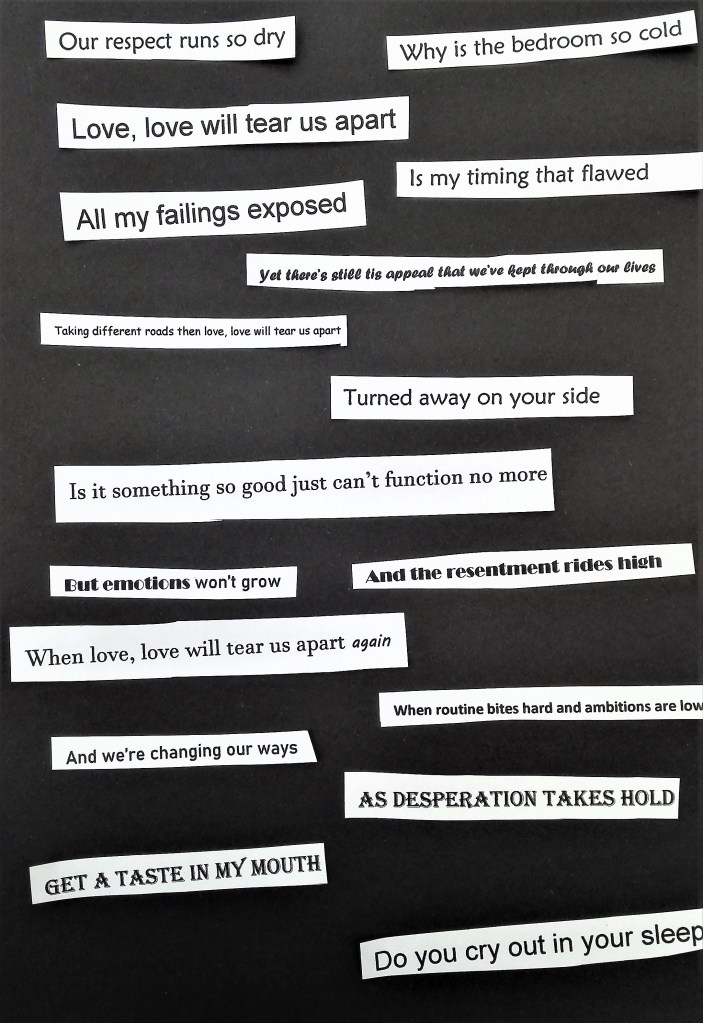
Part of the problem, which I have already indicated was that I couldn’t divorce myself from the structure of the song. Trying to break away from this I reduced the length of the phrases by cutting them up.
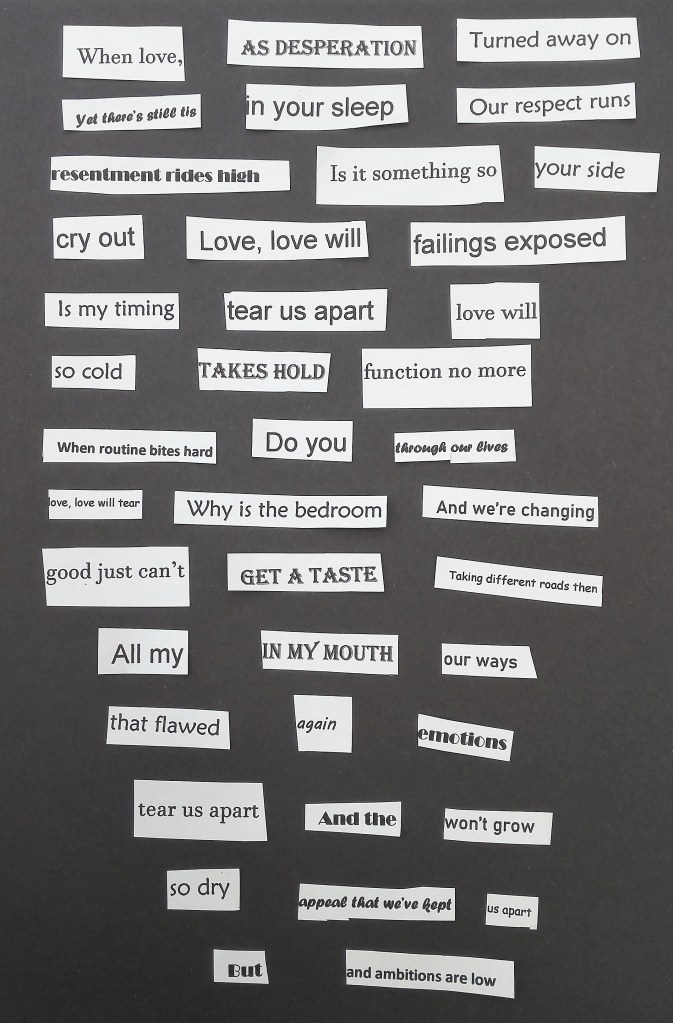
I then randomly selected seven phrases and tried to form these into a sentence. I repeated the process several times, adding words, re-arranging until I eventually ended up with four sentences, see below.
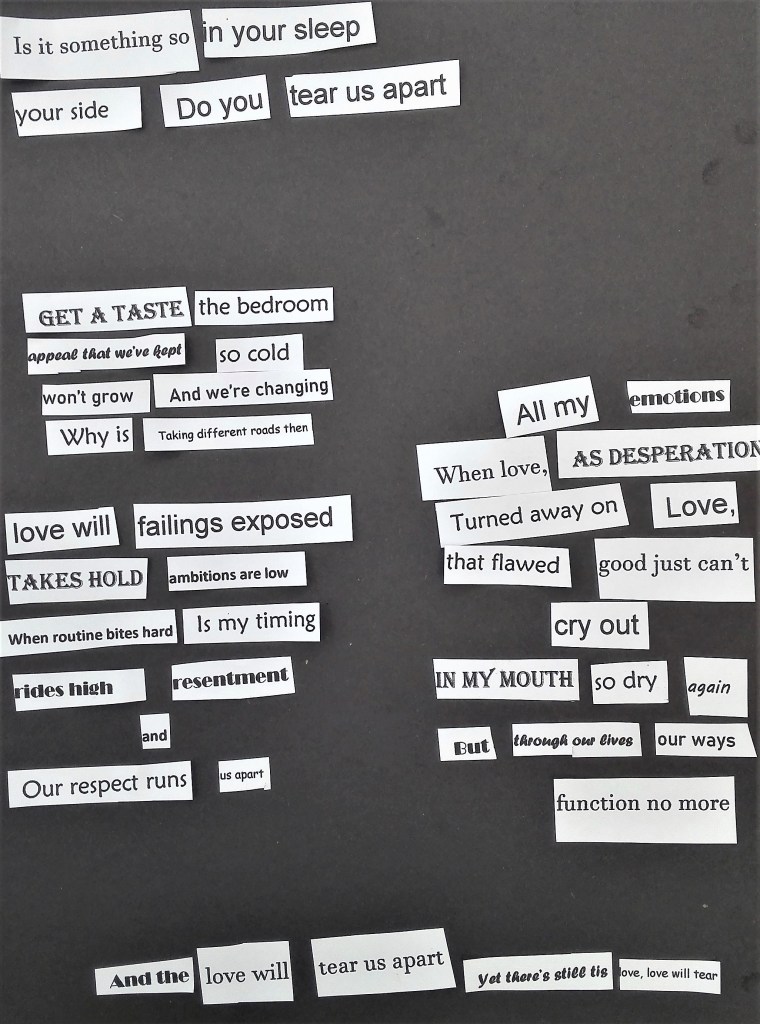
The results were disappointing. I hadn’t revealed a hidden gem of a line that I had hoped for. Being realistic it was unlikely for all of the reasons that I have already touched upon.
The second part of the exercise was to try to form two or more coherent phrases and make these into collages/paintings. Having created the text in different fonts and sizes had lent the creation of simple collages that had the look of ransom notes or punk iconography.
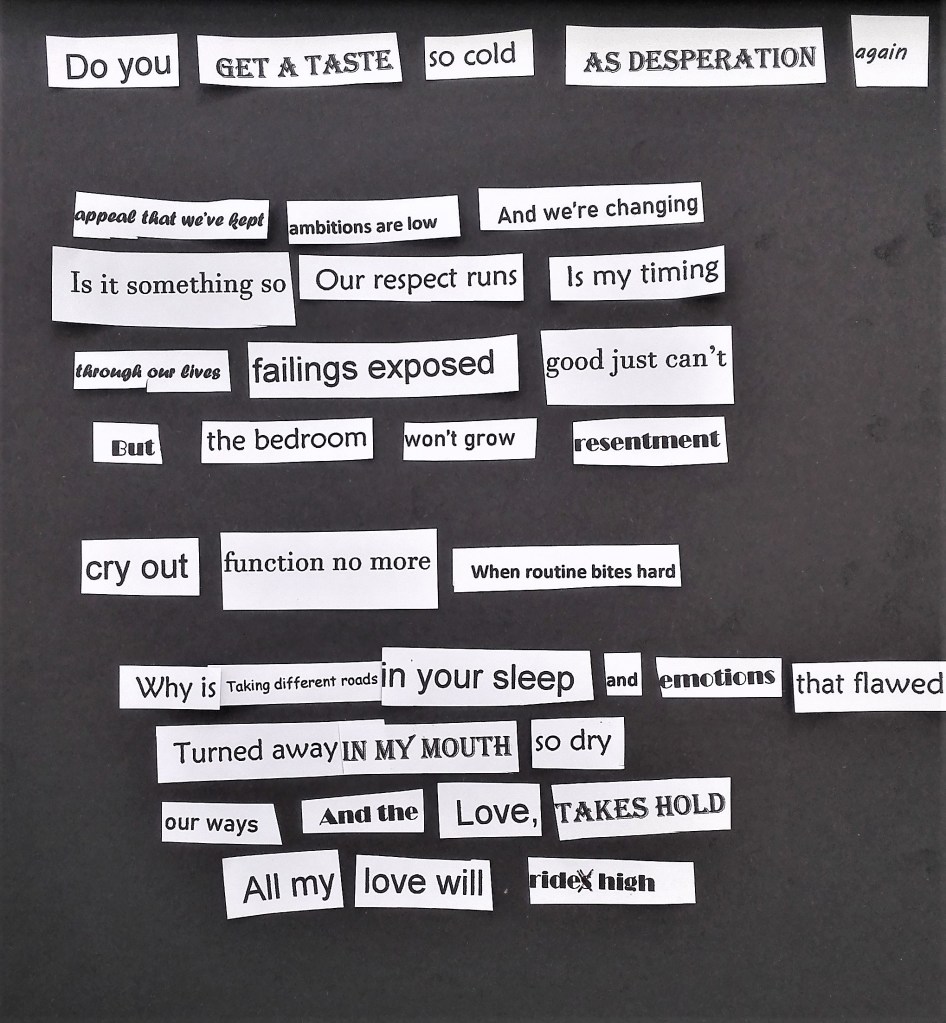
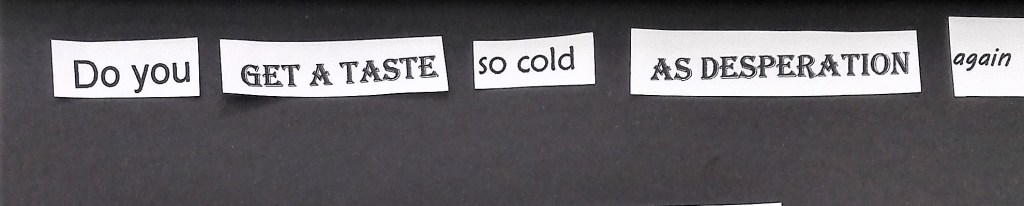
The collage above is of four different results. Individually they are:
Question; Do you get a taste, so cold, as desperation again?
Poem / rhyme;
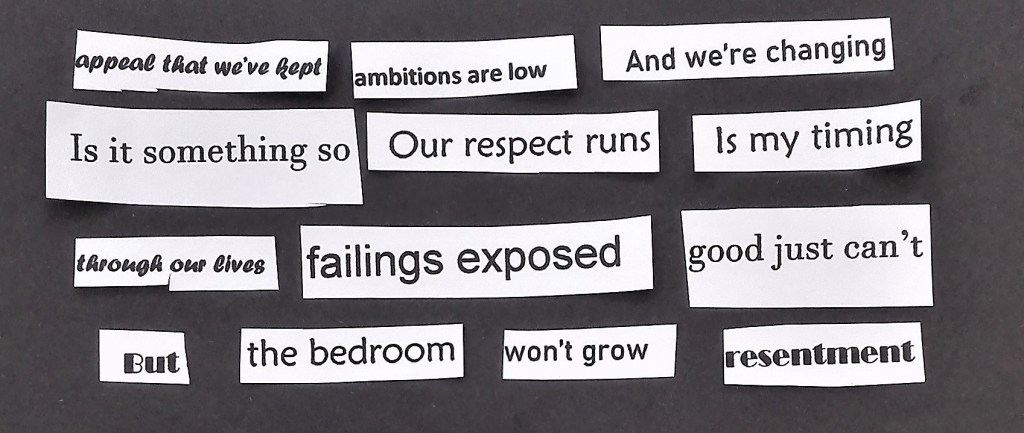
Appeal that we’ve kept, ambitions are low and we’re changing,
Is it something so, our respect runs, is my timing?
Through our lives feelings exposed, good just can’t
But, the bedroom won’t grow resentment.
A declaration;
Cry out, Function no more when routine bites hard, this might have been better as “When routine bites hard, function no more, cry out“

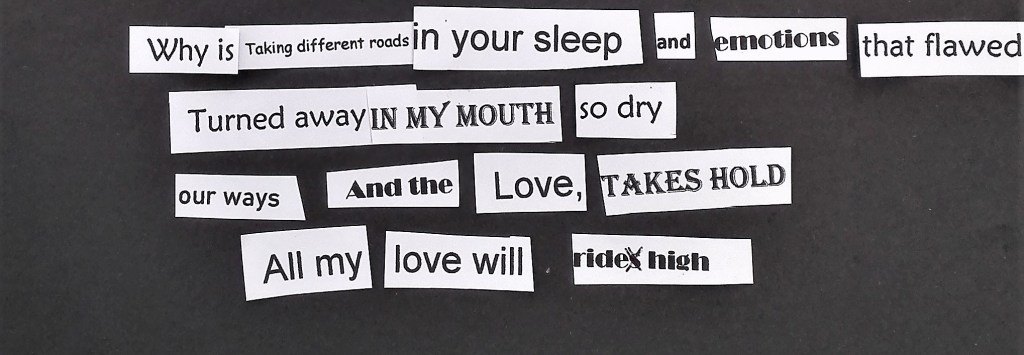
A second poem, in the form of a convoluted question
Why is taking different roads in your sleep and emotions that flawed?
Turned away in my mouth, so dry
Our ways and the love, takes hold
All my love will ride high
They all have some meaning, albeit vague in some cases. It had been a revealing exercise. To further examine the process and to get away from what I felt were, the constraints of using words and phrases that already had meaning, I tried did the exercise again but this time cutting out random phrases from a magazine, WWF Action.
The results, I again created an overall collage which has then been broken down into a number of phrases.
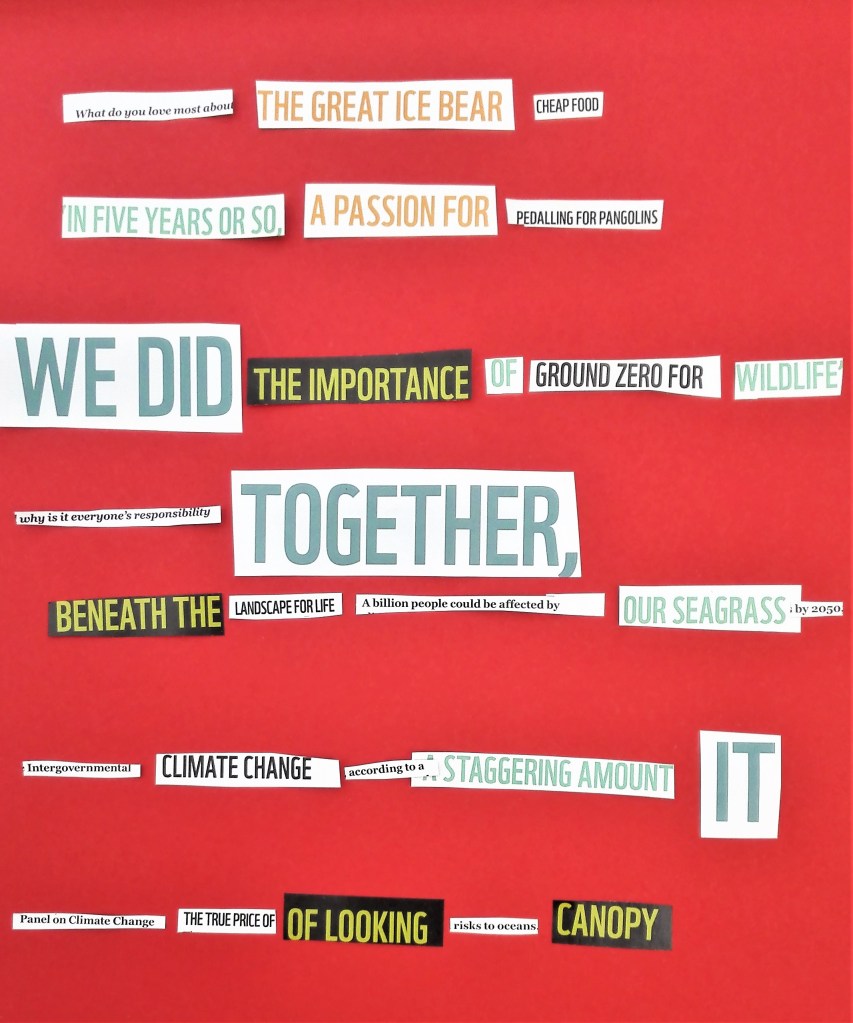
The first, an enquiring question with a statement.
What do you love most about the great ice bear, cheap food? In five years or so, a passion for pedalling for pangolins!

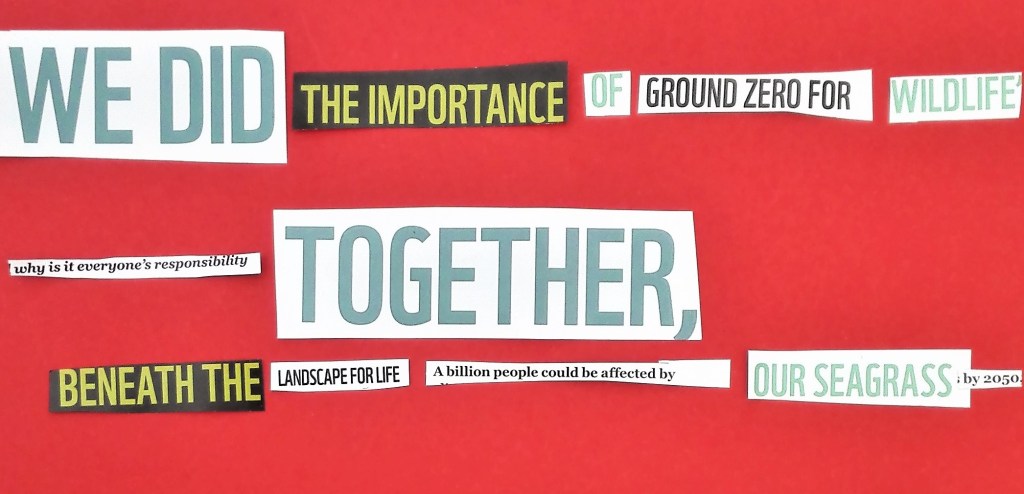
The second, a manifesto statement
“We did, the importance of ground zero for wildlife. Why is it everyone’s responsibility, together, beneath the landscape for life. A billion people could be affected by our seagrass by 2050.“
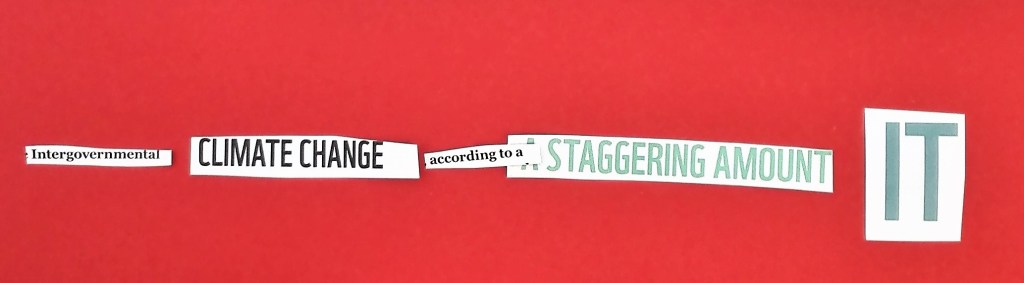
The third, humour?
“Intergovernmental climate change according to a staggering amount (of) IT”
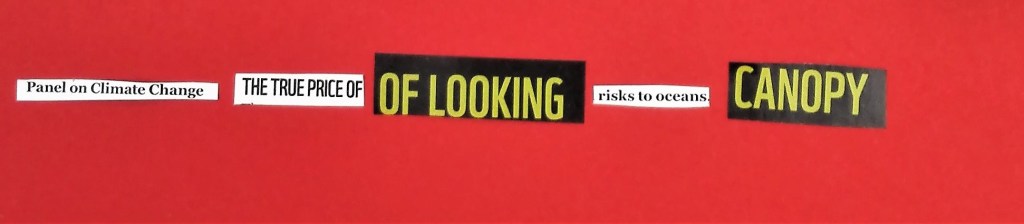
Lastly a declaration
“Panel on climate change, the true price of looking, risks to oceans canopy!“
Conclusion: using words and phrases that, to me, were previously not consciously connected made the process of re-arranging the cut-ups easier to perform. Whether the results are more realised is questionable. As an idea generator I can see the value in this approach. It also ties into the work completed in Part Three, where the parts of a painting were taken apart. Dissection and reconstruction can create inspiration. It breaks down barriers in an unconscious way to form new possibilities.
 Mark Taylor 'Studio Practice'