As part of the feedback from Assignment Two and the work completed for Part Two I received a list of suggested artists to view and research. These suggestions were based on the the conversation and ideas that had been discussed during the feedback session. Although this is quite a long blog I have deliberately kept the text brief.
The following are my notes and thoughts:
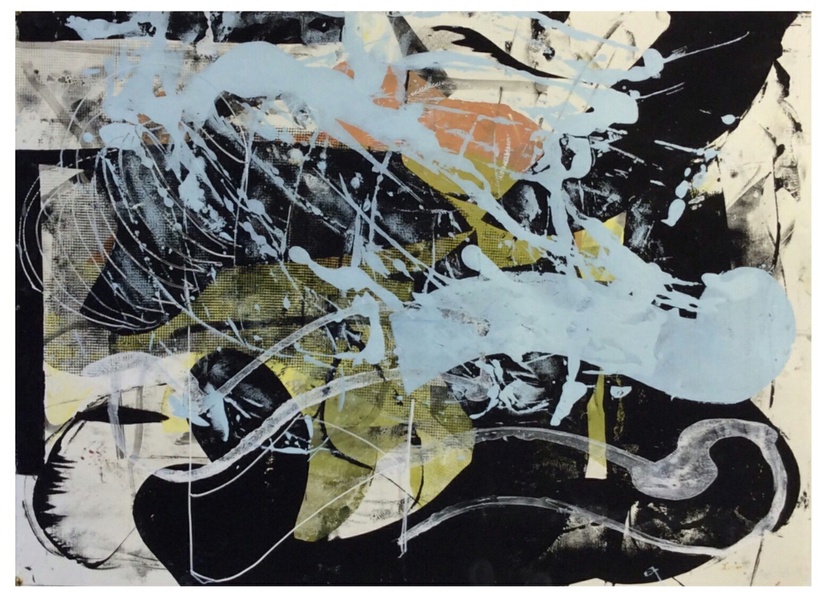
Vincent Hawkins, 1959 – , painter / draftsman working in acrylic on canvas, cardboard and paper. Influences cited as Picasso, Paul Nash and his work has been compared to that of Matisse and Klee. The expressive nature of his abstract paintings contain an energy that remind me of Jackson Pollock’s floor paintings. The palette is similar but there is more structure to the composition.
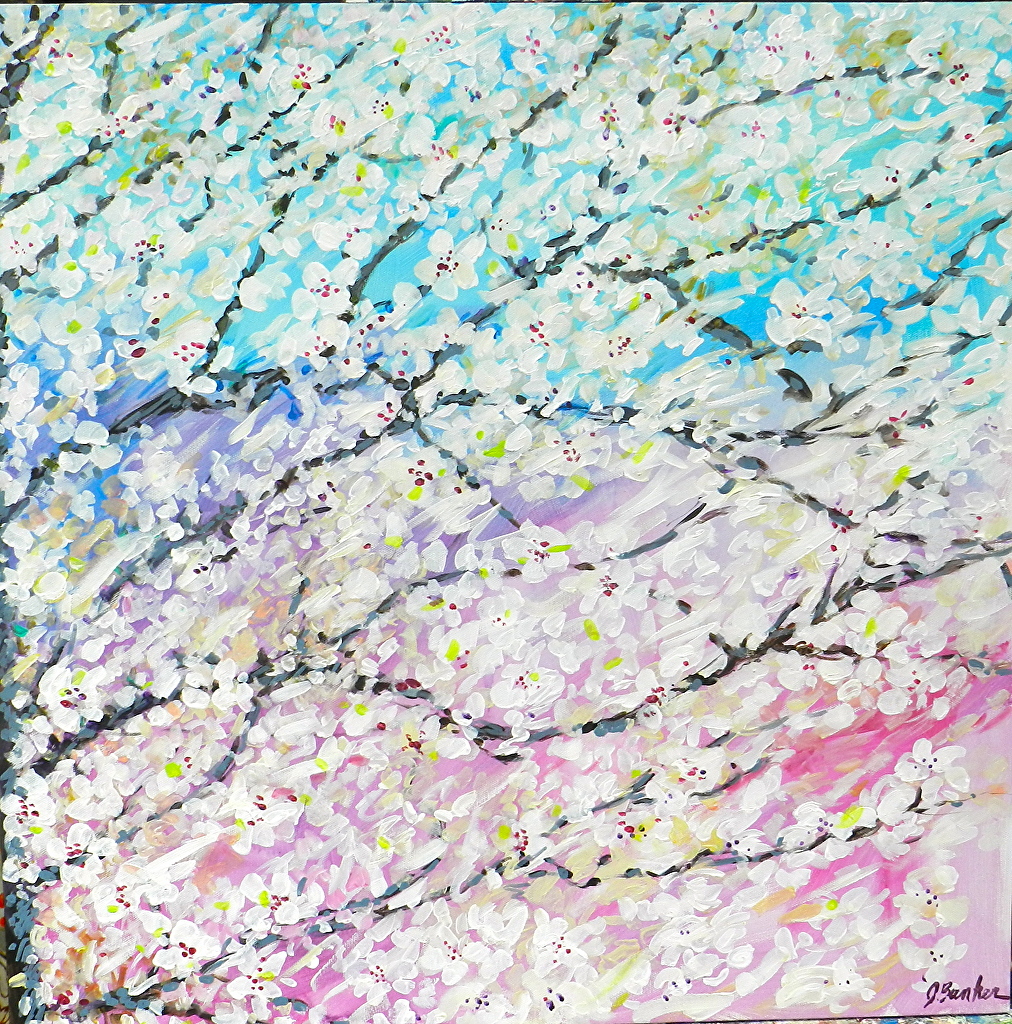
John Bunker – colourful flower inspired collages, paintings with blossom. I enjoyed the blossomed tree paintings but hose with human nymph like images I found a bit twee.
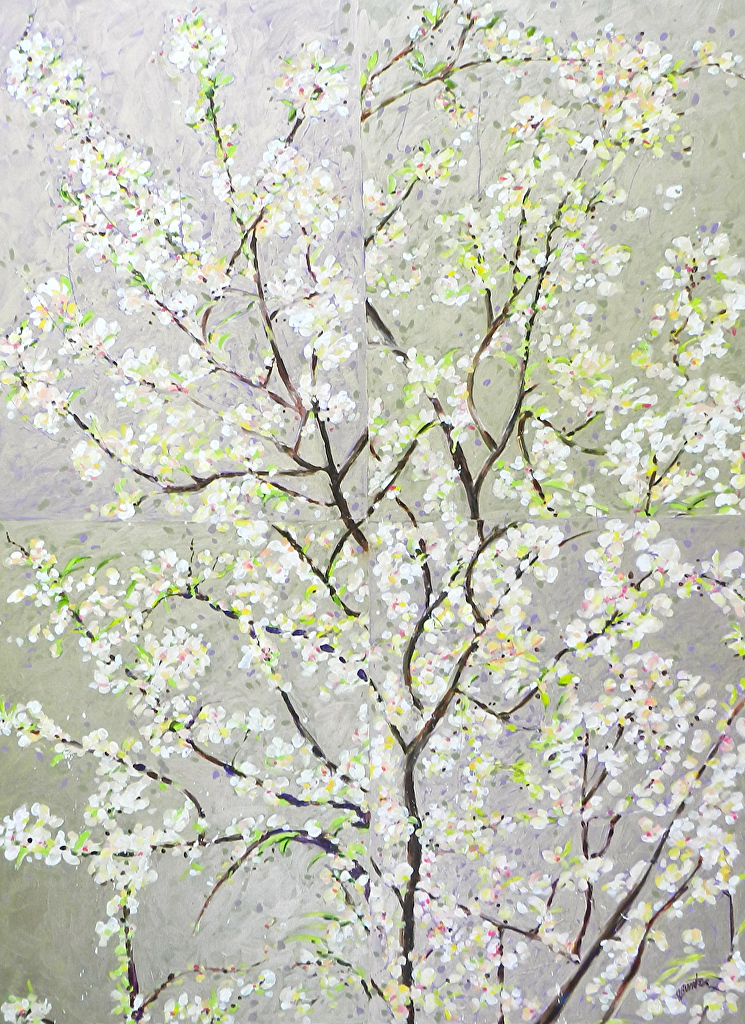
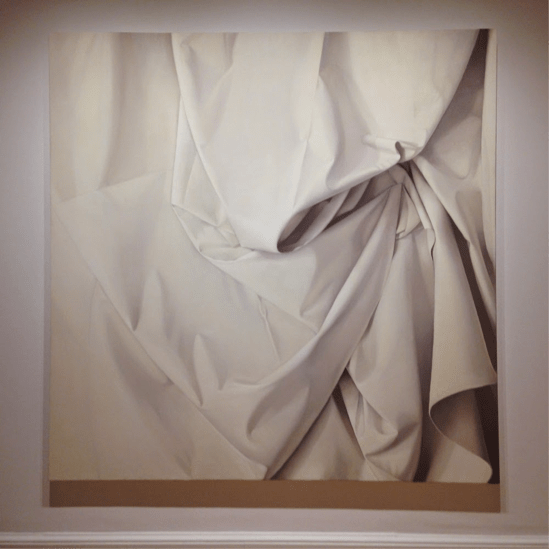
Alison Watt, paintings of white fabric, very large paintings where the tonal quality and subtle adjustments seems to envelope the observer and comfort them.
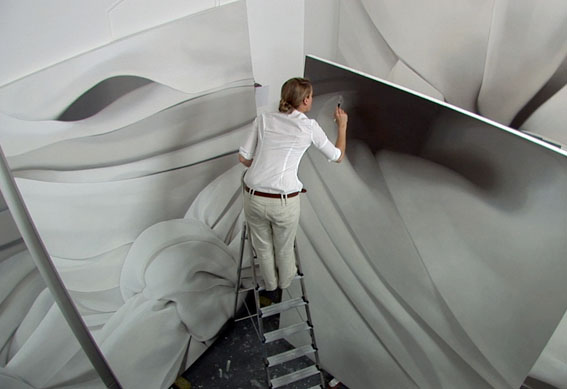
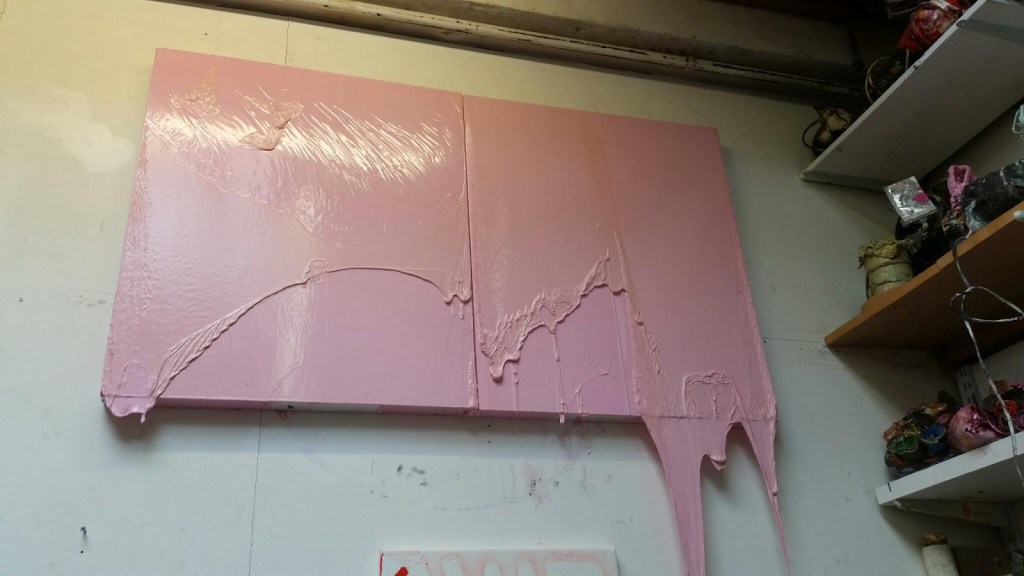
Alexis Harding, layered paintings that have a skin to them, lumpy large canvases where often the paint seeps beyond the limitations of the canvas or support.
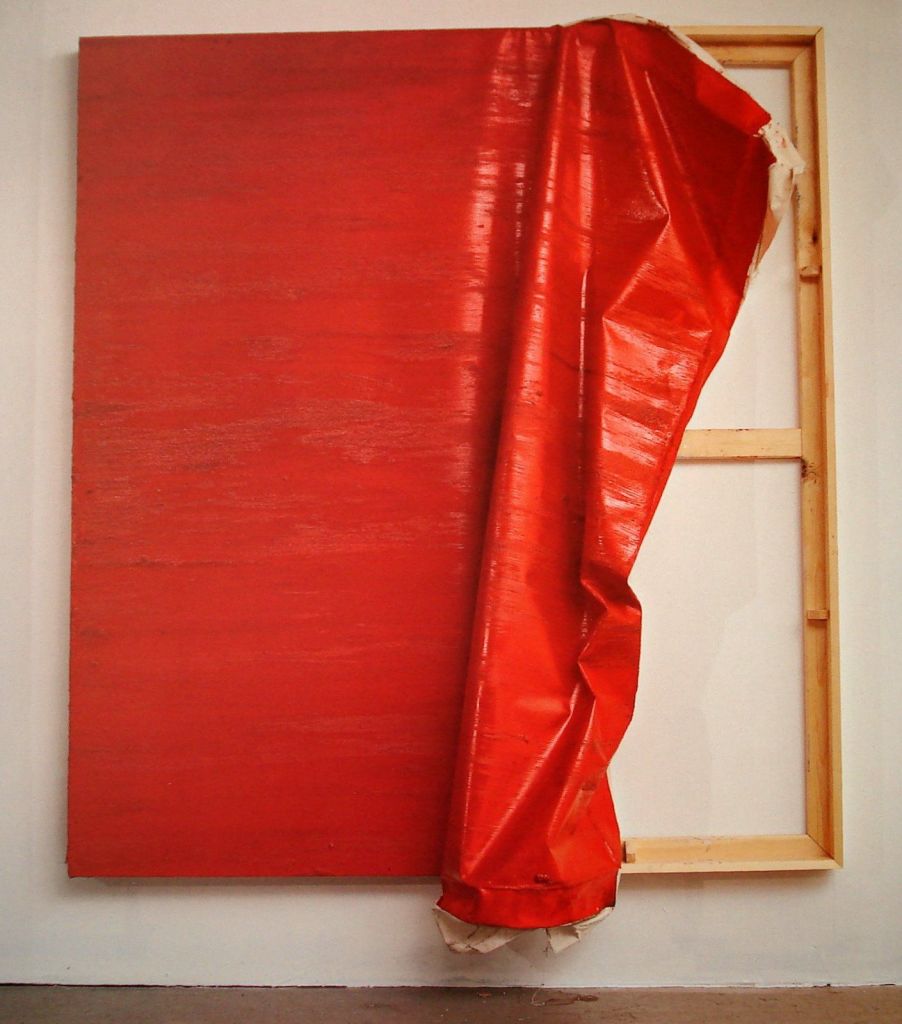
Angela De La Cruz, her paintings seems to exist in a place that is somewhere between painting and sculpture. There is an exploration of the nature of paint itself in her work.
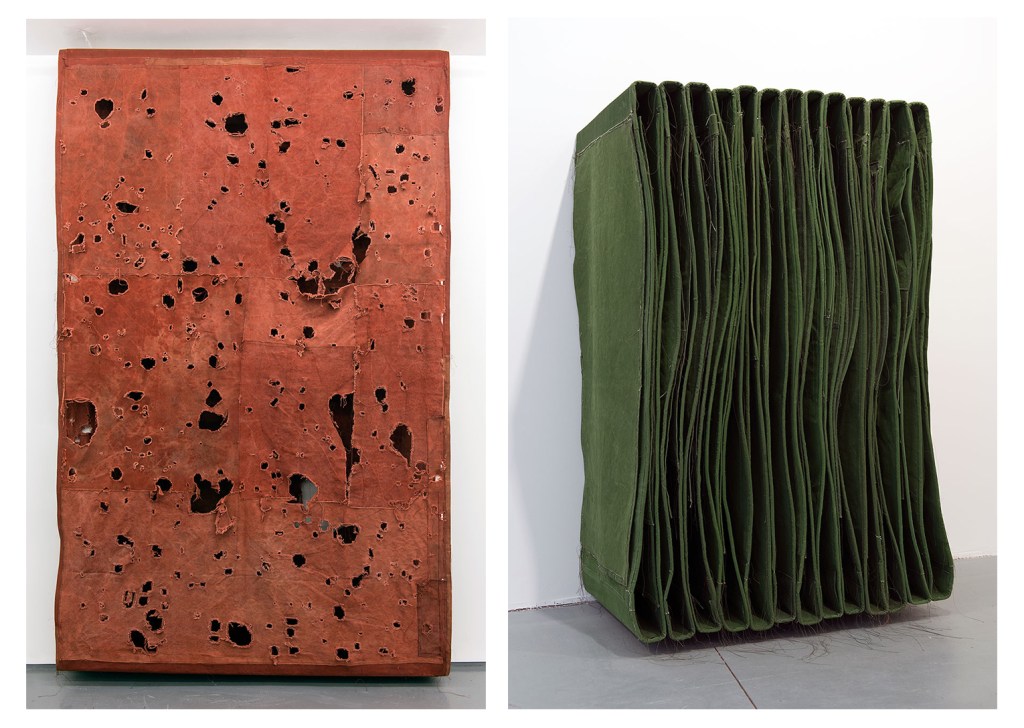
Simon Callery, his work is somewhere between painting, combines and sculpture. The works have a sculptural quality to them. I find these works difficult to read.
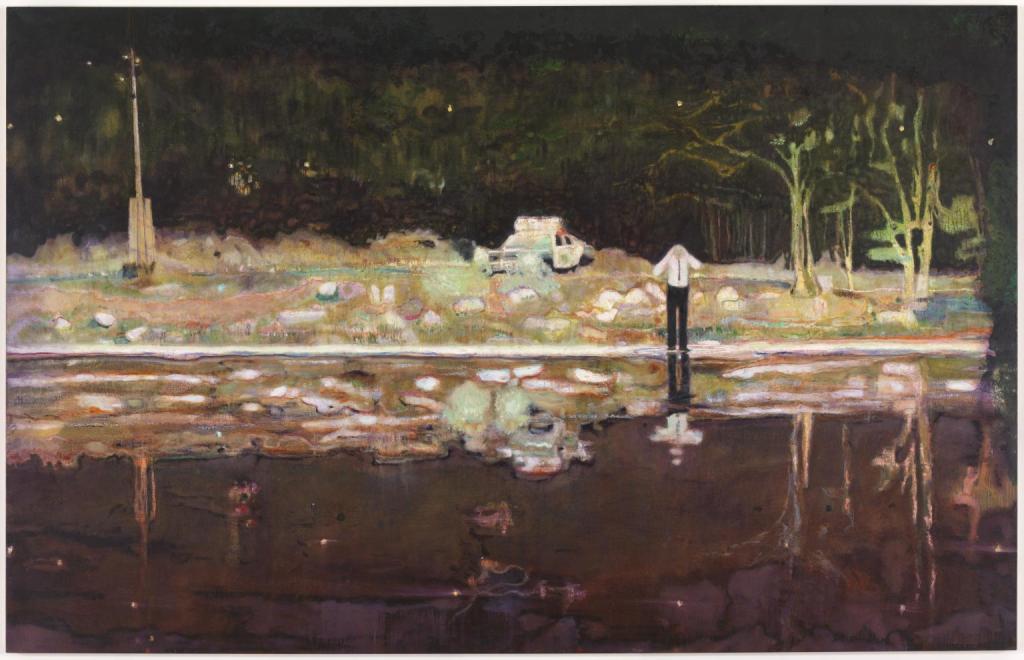
Peter Doig, 1959 – , I had looked at Peter Doig’s work previously. This time as suggested I concentrated on his landscape paintings. Those that I found resonated with me were those that had a European, perhaps Scottish, feel to them. I was less captivated by the Caribbean influenced paintings. I will consider whether to base my critical review on Peter Doig’s landscape paintings. The other artist suggested to me is George Shaw whose work I feel is perhaps closer to my own. Returning to Peter Doig one of the key aspects of his landscape paintings is the inclusion of a human element. An example of this is his painting ‘Echo Lake’. This painting, see below, has a narrative to it. The lakeside setting appears to be on the outskirts of a town. The lights from the town can be seen behind the dark trees. The scene is lit by the headlights of the police car and the reflective quality of the water. This highlight the tress to the right of the painting. These trees fade into the night sky. There is a symmetry to the composition, the telegraph pole on the left, the trees on the right, the police car just offset from the centre of the painting. The white shore line about a third of the way up and the reflections in the lake all work together to give the painting a cohesiveness. The storytelling narrative comes from the policeman, presumably, who is calling, shouting out to the observer across the lake. What is he shouting? Is he shouting at us? What is happening in / on the lake? These questions remain unanswered but give the painting a drama.
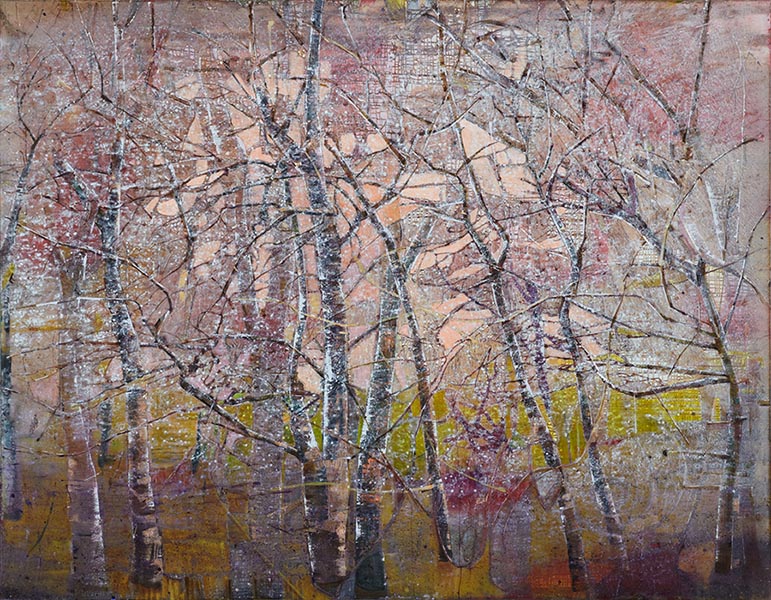
Elizabeth Magill, 1959 -, I have downloaded a number of Elizabeth’s paintings as these really resonate with me. The capturing of the delicacy of trees and the timid light that surrounds them is something that I have tried to capture in my work. Two examples are reproduced below.

Hurvin Anderson 1965 – , depictions of Caribbean landscapes often verging on abstraction. Student of Peter Doig.
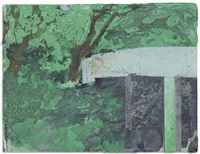
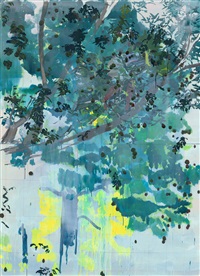
Mamma Andersson 1962 – , influenced by the Swedish landscape which she grew up in her paintings are inspired by filmic imagery, theatre sets and period interiors. Her landscapes are melancholic and dreamlike.
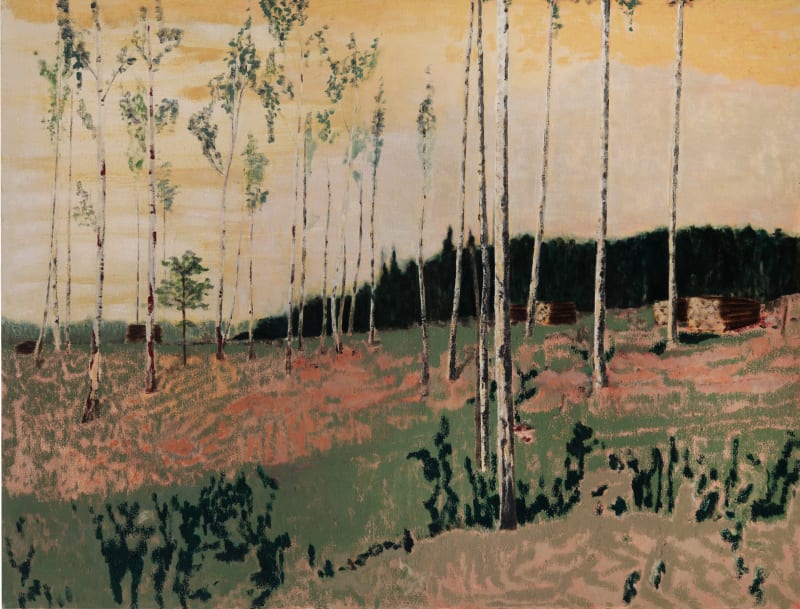
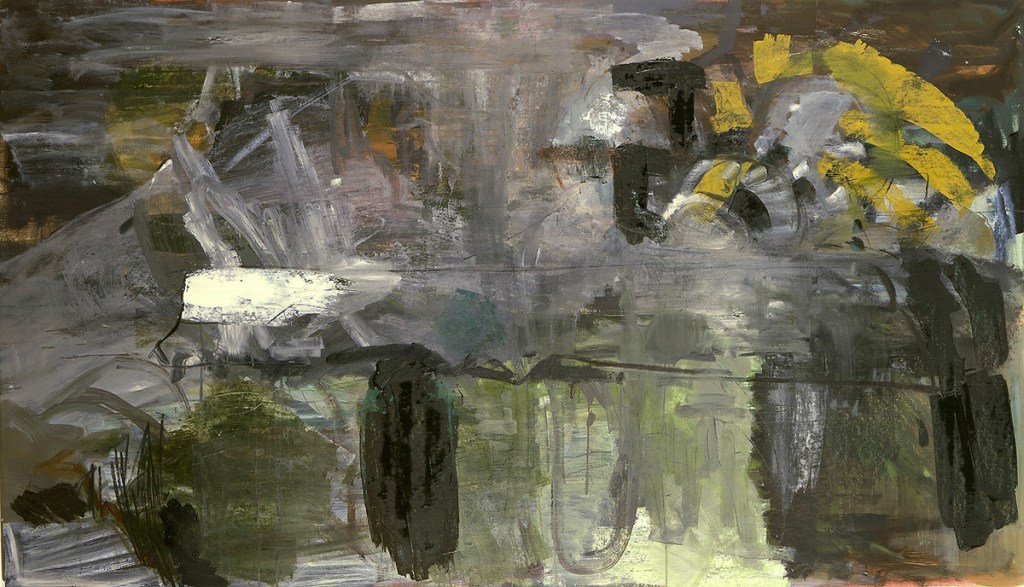
Per Kirkeby 1938 – 2018, Danish, part of Danish experimental art school “eks-skolen” working primarily as a painter, sculptor, writer and lithographic artist. His works was informed by geology and nature. The two examples below are abstracted paintings which explore the colours and solidity of harsh landscapes.

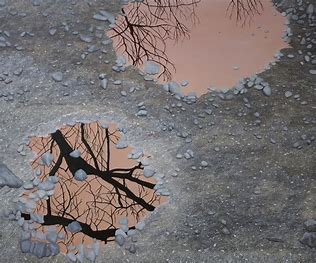
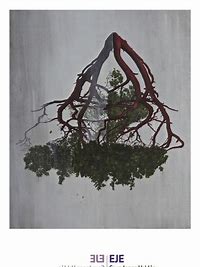
Calvadonga Valdes , Spanish artist using the landscapes of Spain, England, Italy and Swedish Lapland to create surreal paintings, often group of paintings on a theme. Two examples are a series called “Homeland” where the reflection of trees are observed in small pools of water and puddles. The second series “Vascular” uses the heart and vascular system as a vehicle to organise the paintings. Examples of both of these series are replicated below.
 Mark Taylor 'Studio Practice'