I knew that this exercise would be a challenge as soon as I had read the brief. Undaunted I would plunge into it although I did procrastinate for a few days. I prefer to think of it as time to get my thoughts together and subconsciously explore options as to how to approach the task. An option that I considered was to make a mannequin using old clothes. This I dismissed as it didn’t seem to be in the spirit of the exercise. It seemed to be more akin to making a ‘Guy’ as in, Penny for the Guy, which I remember doing as a boy. The process that I undertook and the results are documented on a separate blog.
My reflections on the results are as follows. the initial cut-out t-shirt shapes and the fashioning of these into a stand in for the garment were disappointing. This was for two reasons. The first was my limitations as a model maker. The re-made t-shirt was cumbersome, stiff, plain and unrealistic as a stand in for the actual object. The second was that although it inhabited a space it did not act as a stand in for the human form. It looked to be what it was, a model. This was true in whatever situation that I placed it in. Some were slightly less incongruous than others.
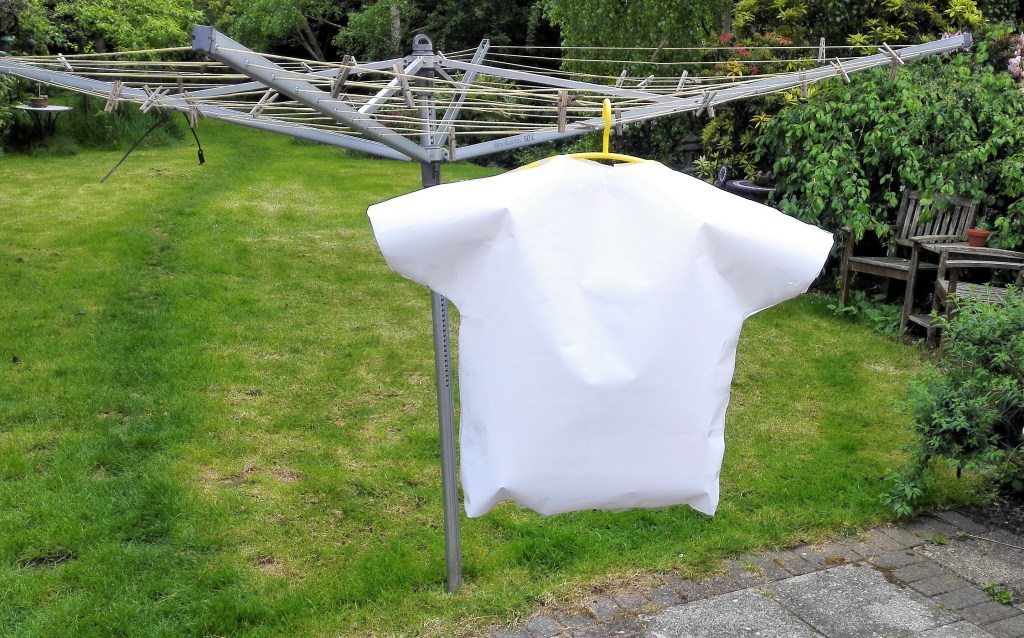
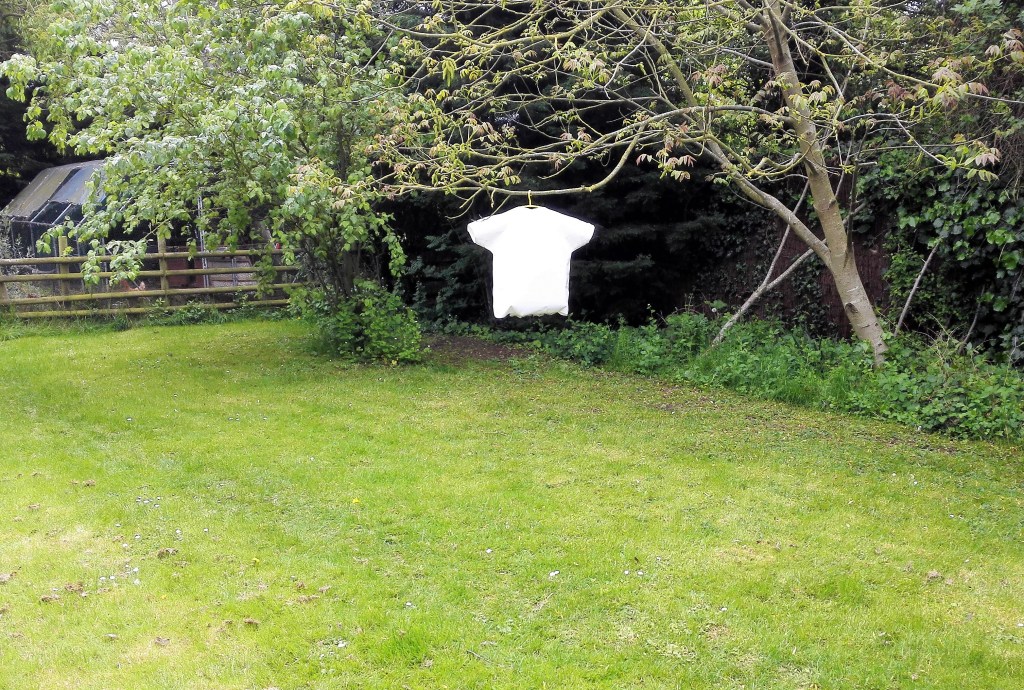
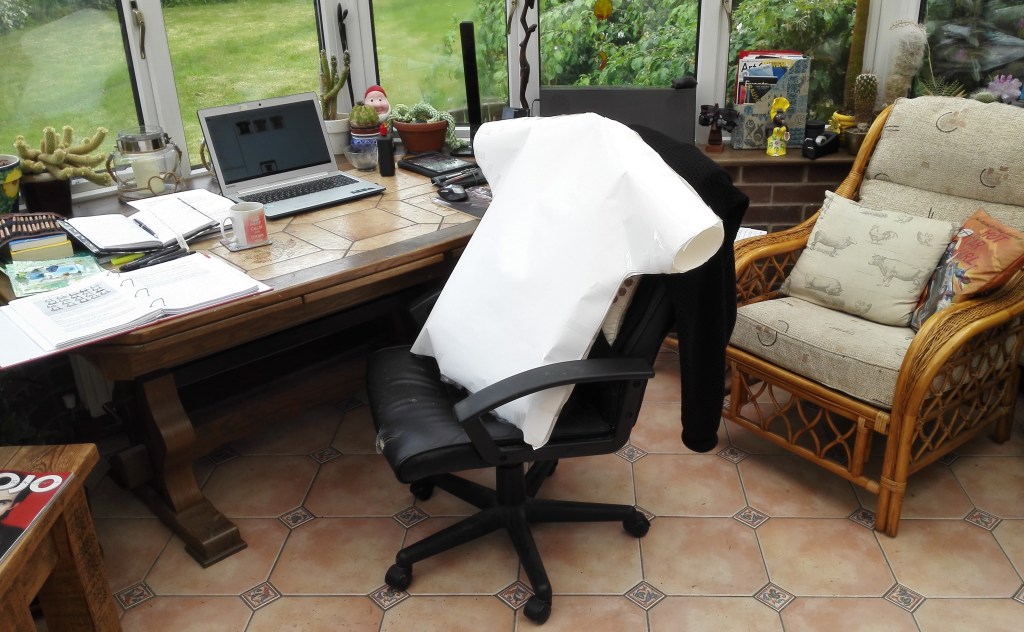
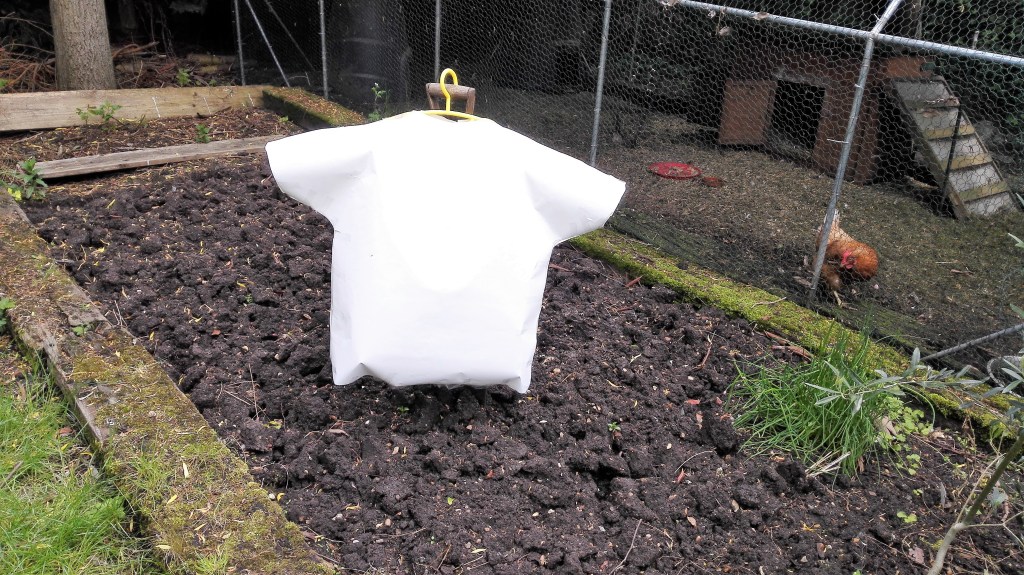
The second phase was to try to make the model more true to the t-shirt. This was done by the addition of a logo ‘Logo’ and a label ‘T shirt’. This had the immediate impact of breaking down the visual barriers and it started to take on more of a life of its own. The notion that it was a stand in for the human form became more apparent. The model not only occupied a space but represented form, albeit in a crude manner. The photographs from this stage have a curious interest to me.
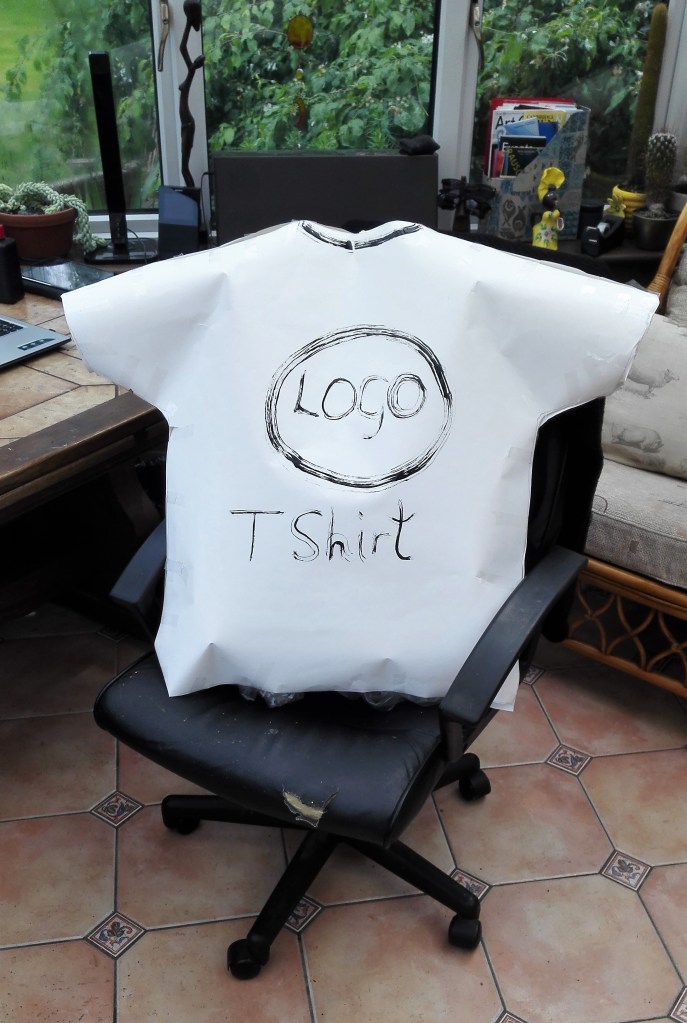
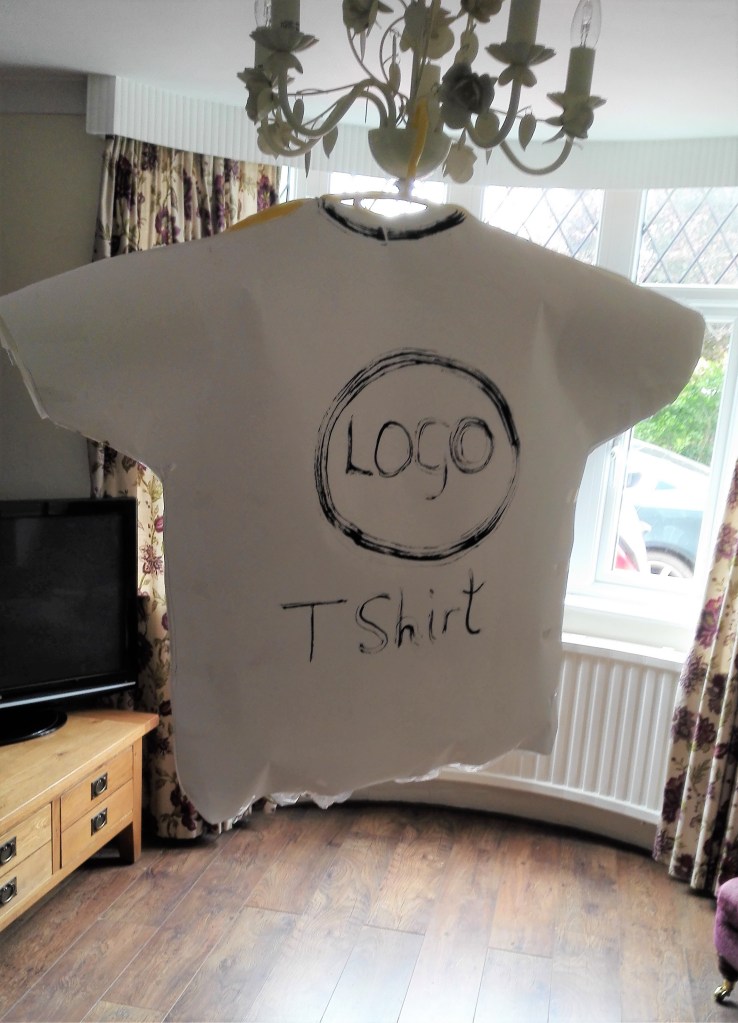
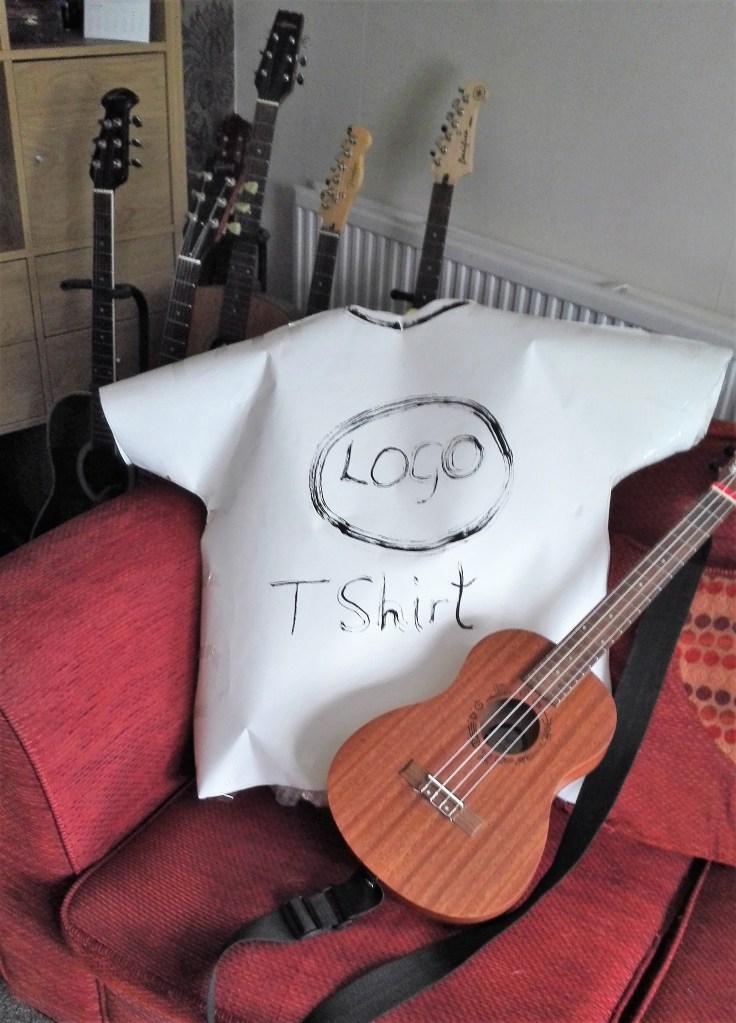
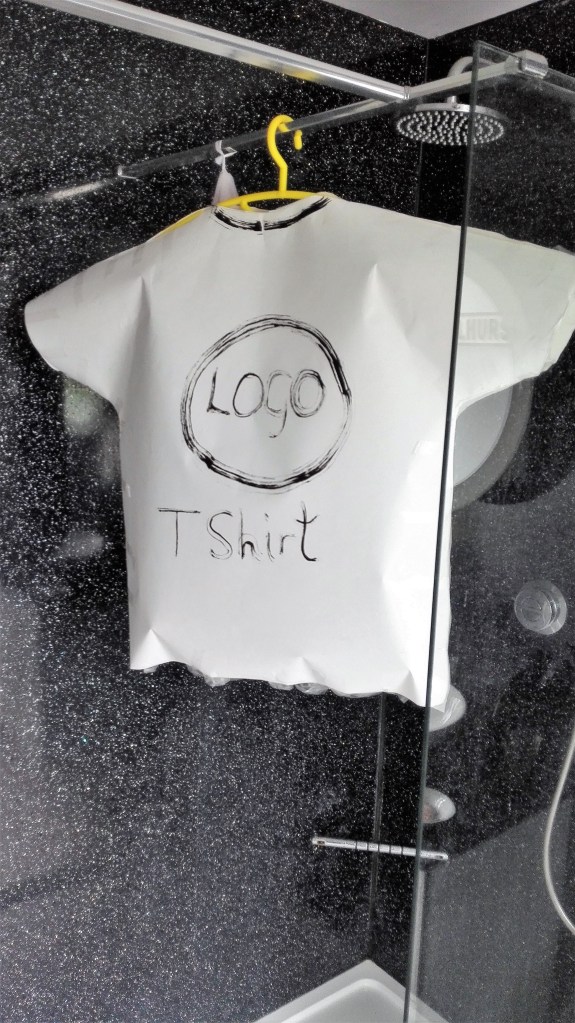
I still felt that I hadn’t explored how the model could replace the human body. Although not in the spirit of the exercise I clothed the model in a lab coat. This immediately gave it a greater presence. The lab coat indicated greater form. The arms gave it gestural qualities which were enhanced and accentuated by the flow and form of the coat. The photographs from this stage are much more satisfying. I was able to pose the model in various situations where it took on a replacement for the body. It could be placed in a position and had a presence.
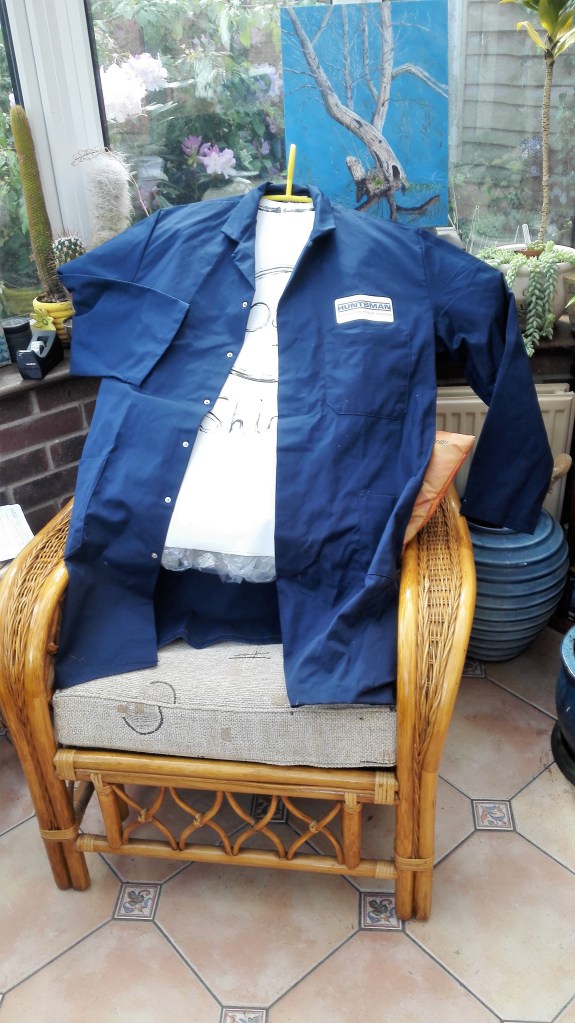
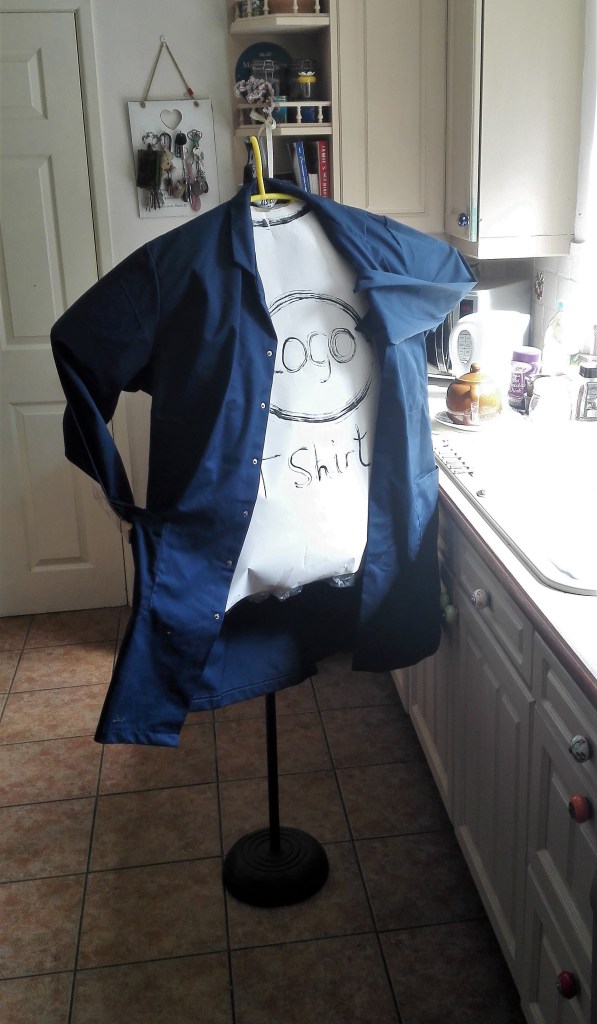
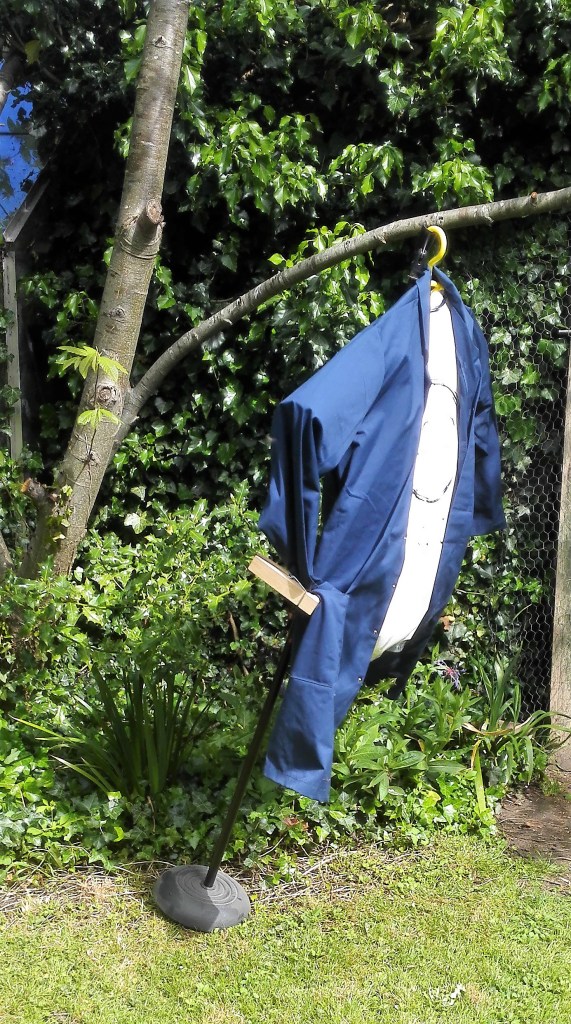
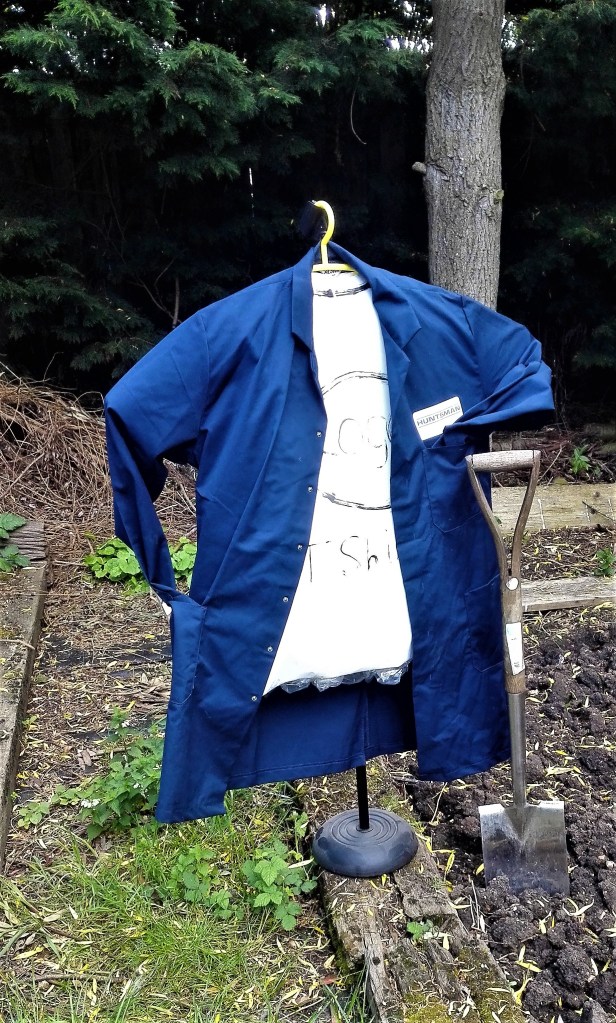
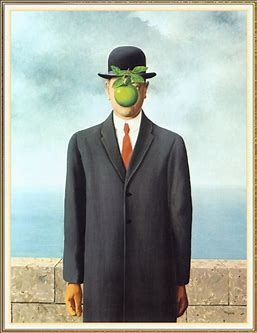
The last stage, and the most satisfying, was to revert to painting. The four paintings that I made were completed quickly, each one taking less than 30 minutes. There is a definite feeling in the paintings that the model is occupying a space of its own. It is animated, it suggests the presence of a human body. In one of the paintings in particular it hovers and remind me of some of Rene Magritte’s surrealists paintings particularly ‘Son of Man, 1964’. although my painting doesn’t possess the religious significance inherent in Magritte’s painting.
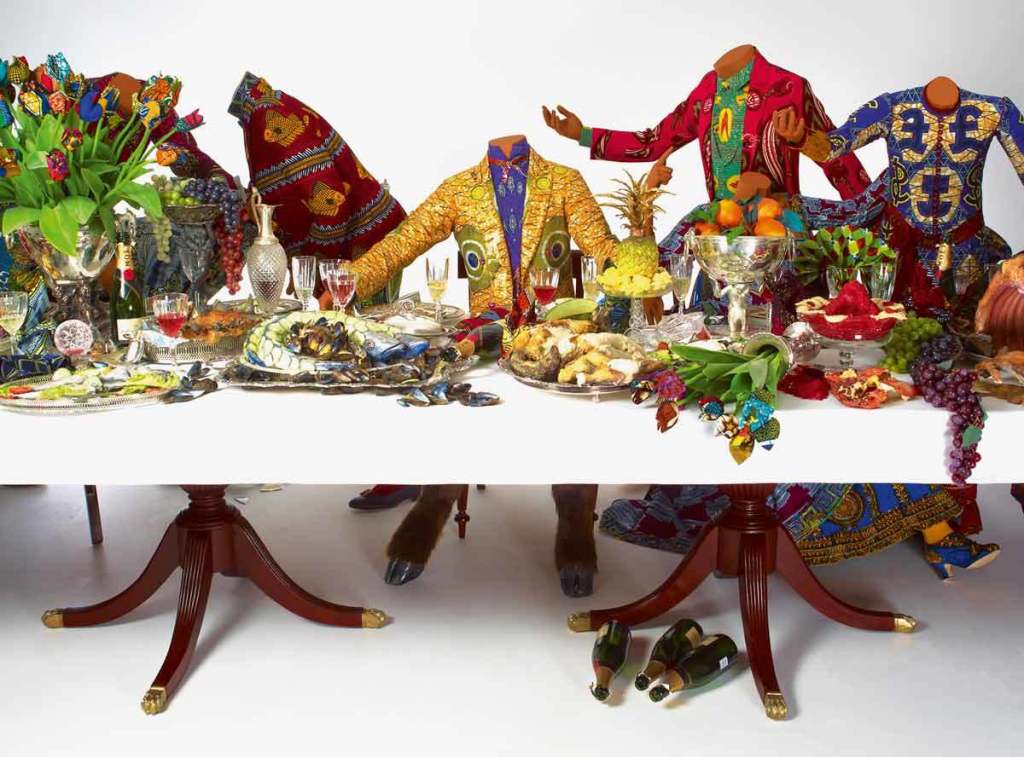
A further inspiration for the headless prop that I used was inspired by the suggestion in the course material to examine the work of Yinka Shonibare and his use of headless models. In these he is exploring cultural identity, colonialism and post-colonialism. His choice of working in Dutch Wax fabric is much more colourful than a Lab coat and manufactured t-shirt.

In summary the exercise was a challenge which forced me to confront territory that I wouldn’t ordinarily have considered. The final outcome resulted in four paintings which successfully resolve the process. They also help to confirm to me that I consider myself a painter rather than a sculptor or a model maker.
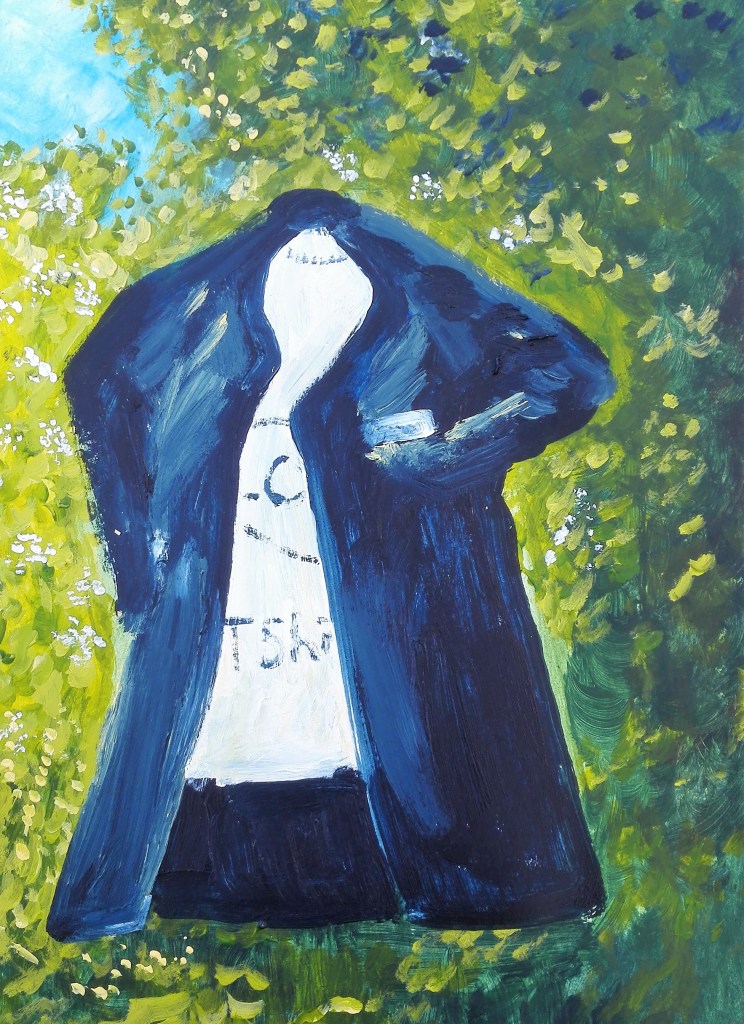
 Mark Taylor 'Studio Practice'
One thought on “Part Three – Project 1 – Reflections on Exercise 1.0”