It took some time for me to embrace this exercise. I read through the requirements and was not inspired to get started. I needed to stop and think about how I was going to tackle it. As a distraction I embarked on a painting of a photograph I had recently taken. It was whilst completing this painting that I collected some objects together and started trying to manipulate them. The brief asked that the initial ideas be based upon the collection of objects pulled together for exercise 1. This I did more in idea than in using the actual objects. My main material was going to be polystyrene. The intention was that it could shape to replicate the shapes from the table. Easier thought about than done. I found that cutting and shaping the polystyrene was much more difficult than I had expected. I fashioned a piece that resembled the shape of a harmonica other shapes would be problematical. At this point I looked for other materials that I could manipulate, cut up, re-arrange. An empty crisp tube and egg boxes were added. I had a vague idea of using music as an underlying idea, perhaps creating a representation of a radio or boombox or alternatively some sort of stage.
The objects were not too large but large enough to need to be placed on a table. This could be moved around and worked upon from different aspects. The initial construction is shown in three photographs below.
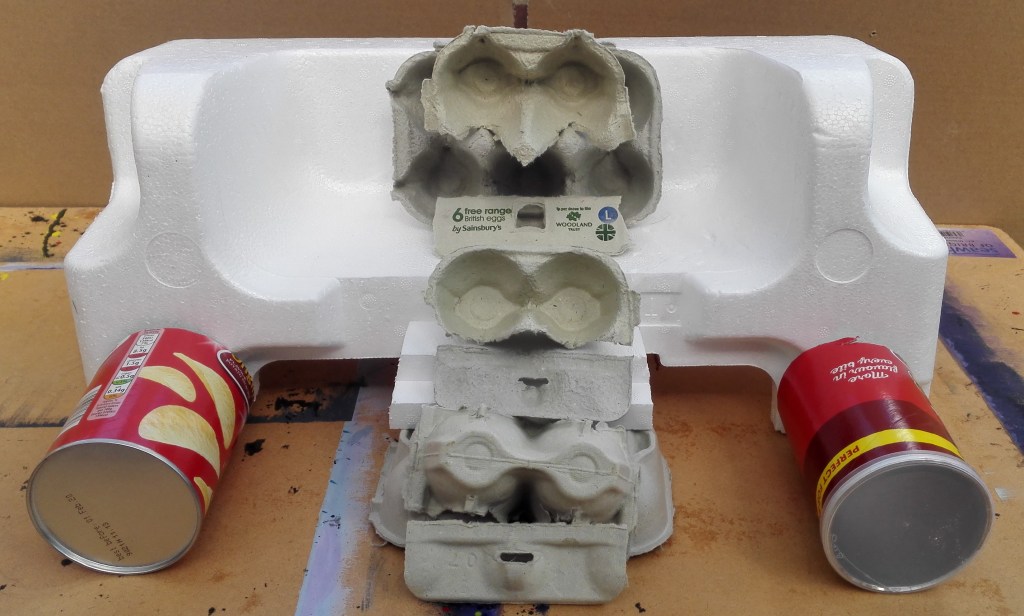
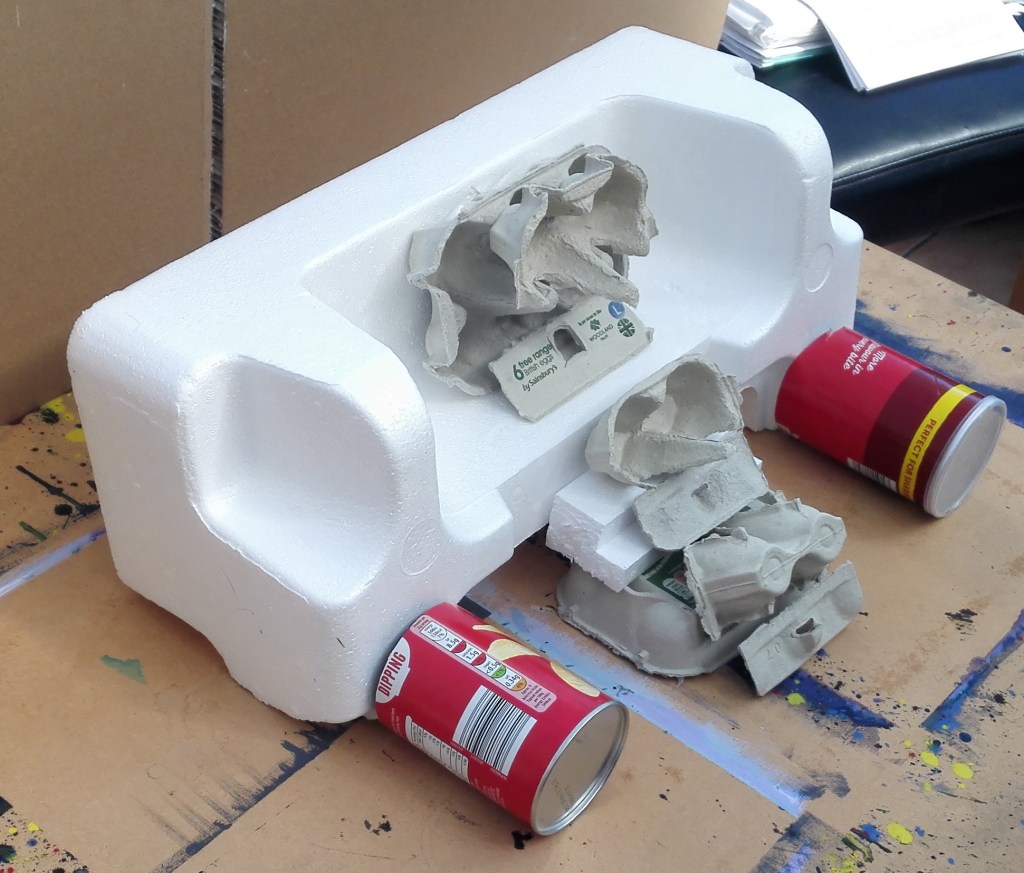
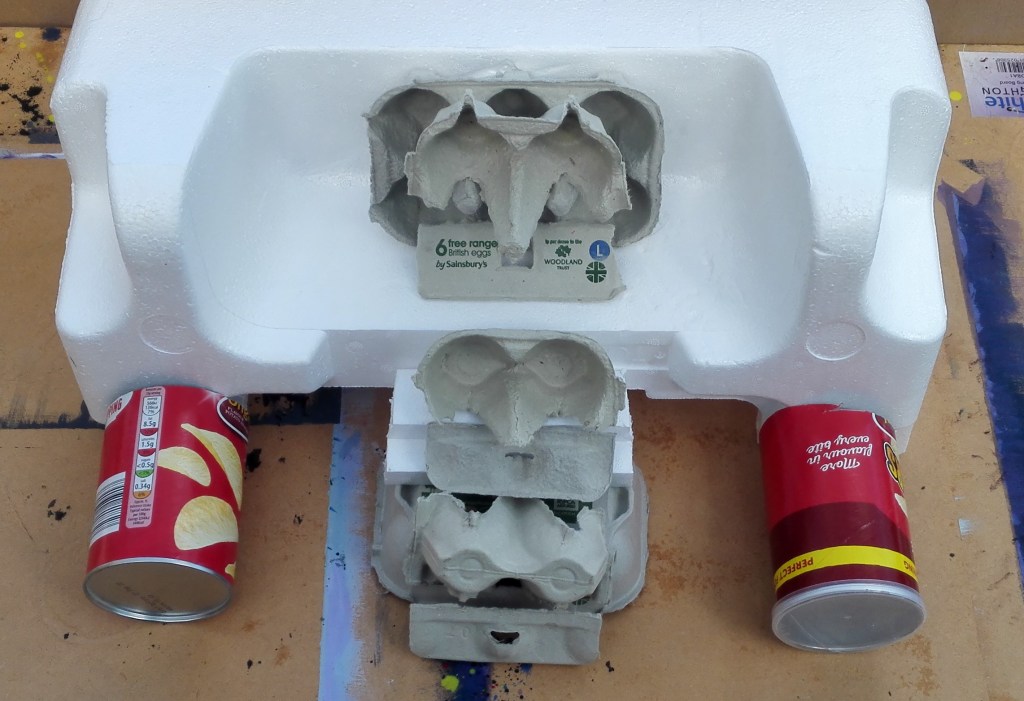
The initial construction was extended. The work started to take on its own life. Another piece of polystyrene was added which gave the work height and another piece was used to provide support. I continued to move the object around and supplemented them with further objects. An empty yoghurt pot, garden wire, a cellotape dispenser, small bouncy balls, string and elastic bands. The piece grew.
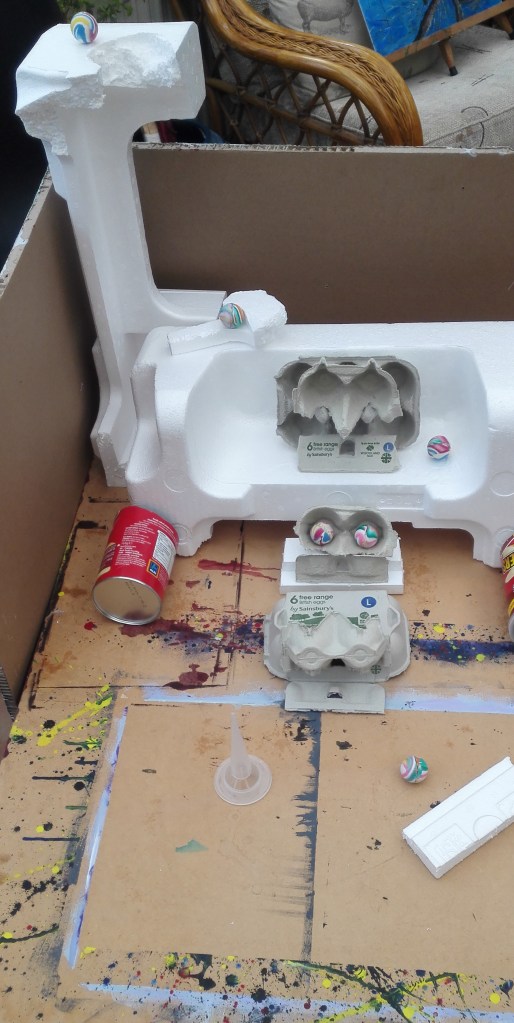
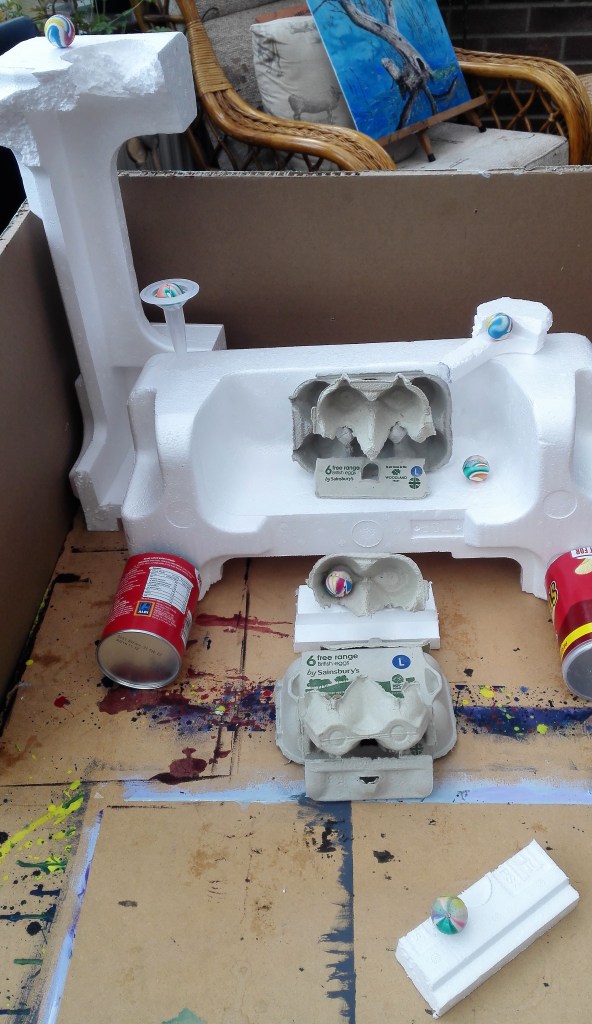
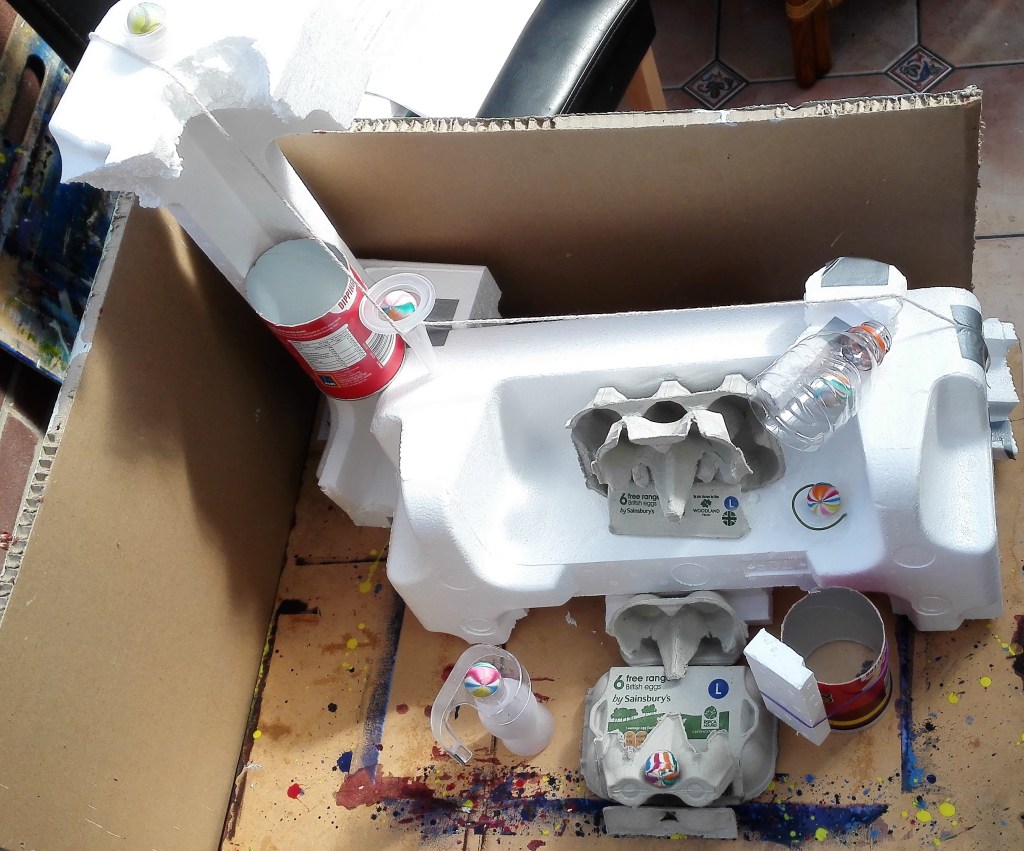
I now had a relatively fixed idea of how the objects would be arranged and connected. The next step was to consider colour.
I followed the links to the work of Jessica Stockholder and Katherina Grosse. It struck me that colour and paint was used both as a skin and a way of bringing the objects together and blurring the edges between them. Colour itself has a quality, it is ephemeral and embodied. Its application is also part of its quality, applied by hand, applied in gestural ways with brushes or other tools. I would try to incorporate these ideas into my work.
For the main blocks I thought that black would give them a look of solidity. All painting would be by brushes but I would keep it as loose as possible not worrying whether any underlying colour was visible. I would end up using three colours, black, Naples yellow and green earth. Other colour would come from the coloured balls and garden wire. After painting their was a connection between the objects and pieces that had not been apparent before.
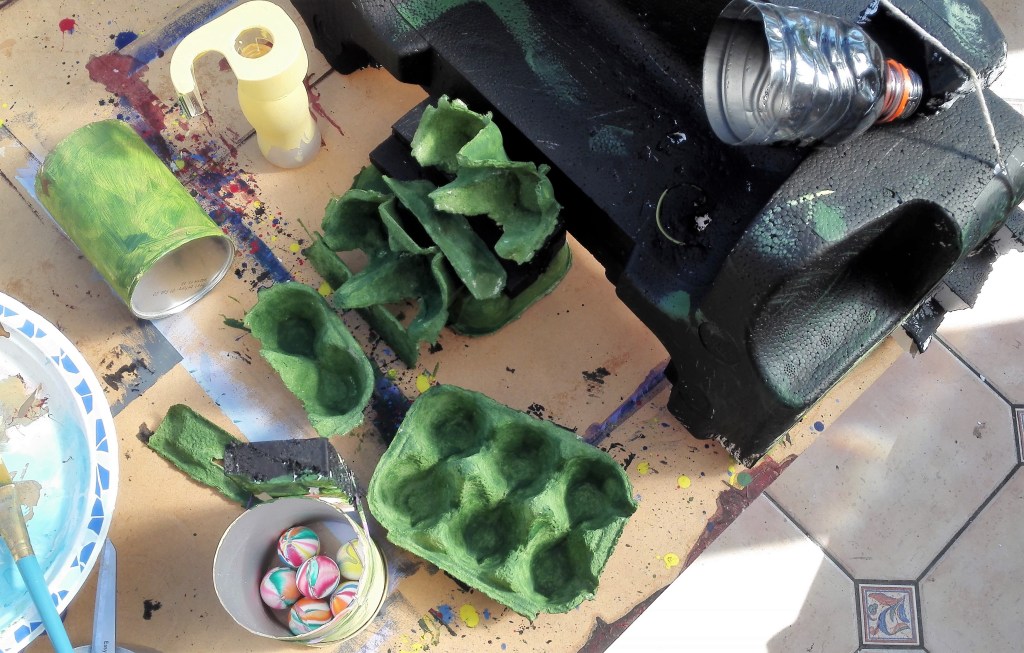
The task that remained was to construct the pieces into one coherent work. I would use the garden wire for two purposes, to aid in stabilising the work and as a link between the separate parts.
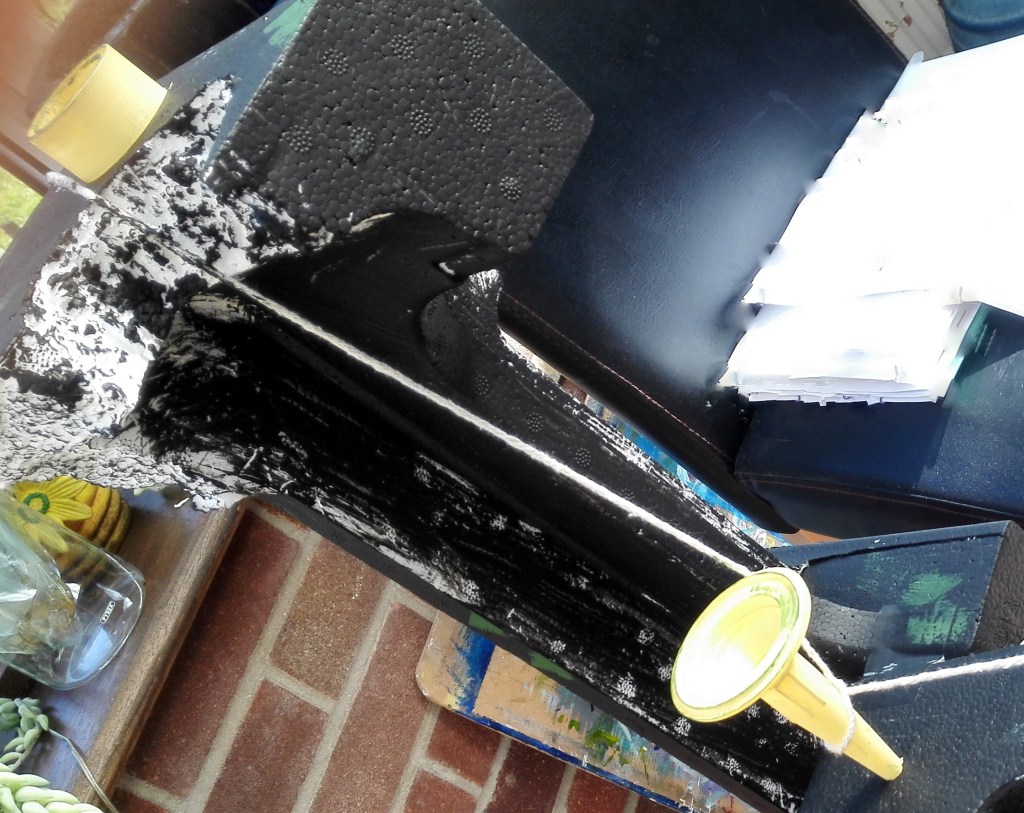
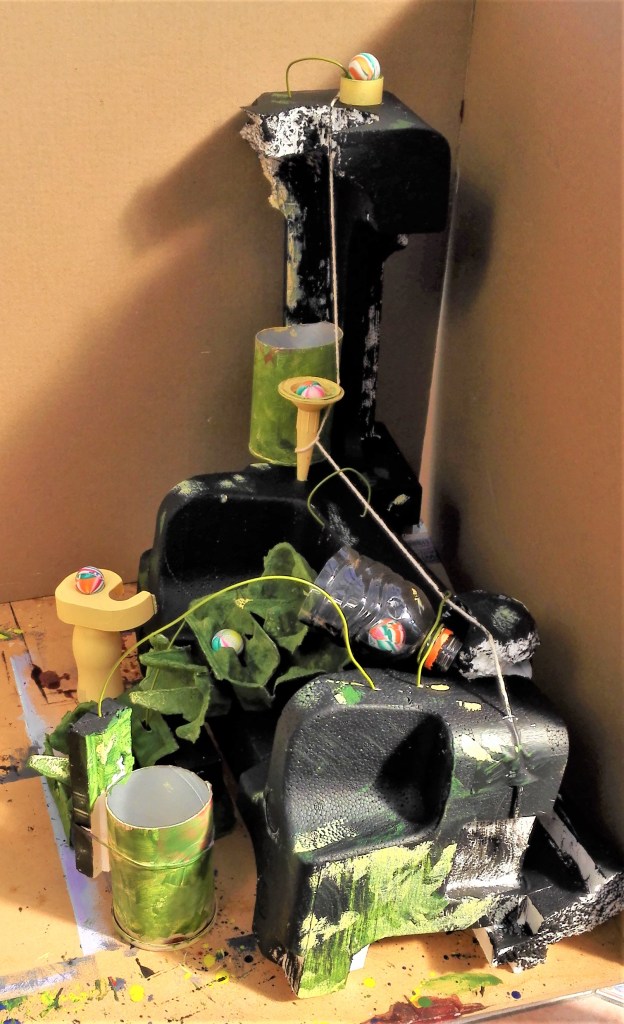
I found that the completed work was difficult to photograph and video without getting interference from its surroundings. It needs its own space in which to exist so that it can be itself. I used some cardboard to separate it from its surroundings. I then set about photographing and videoing the work. Whilst I was a non instructive name for the piece arose, Construction 1. Detailed photographs below.
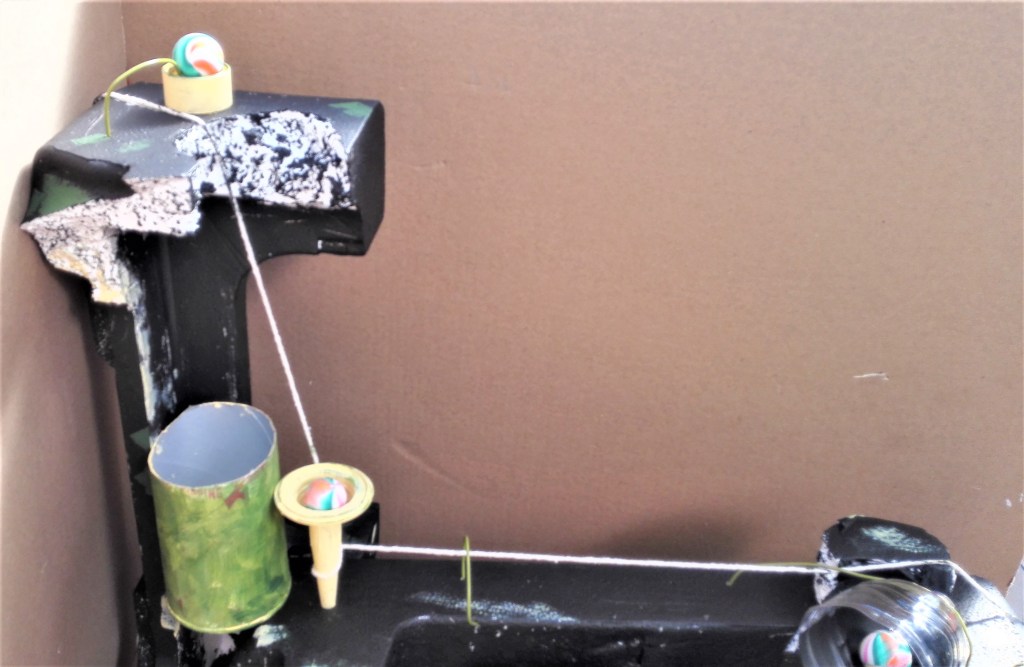
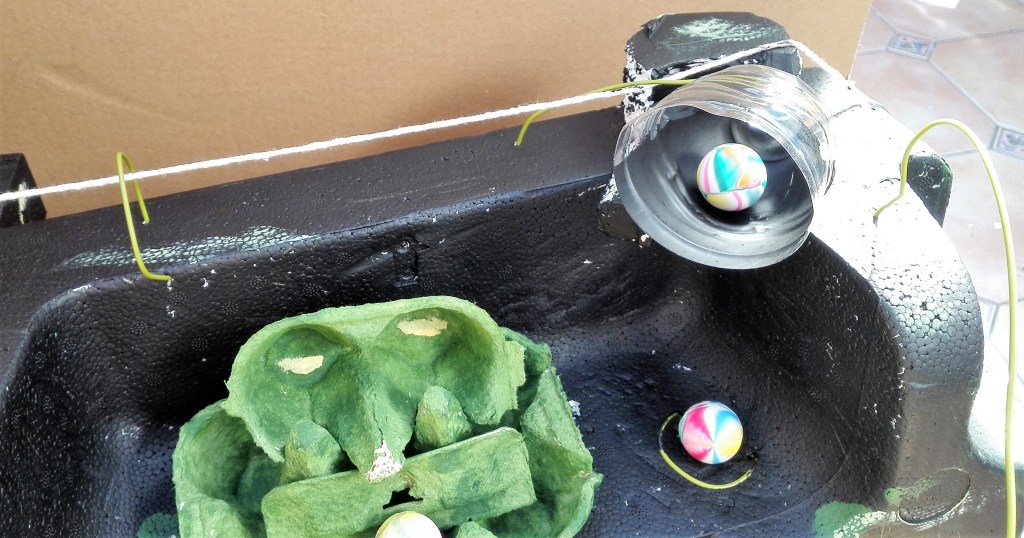
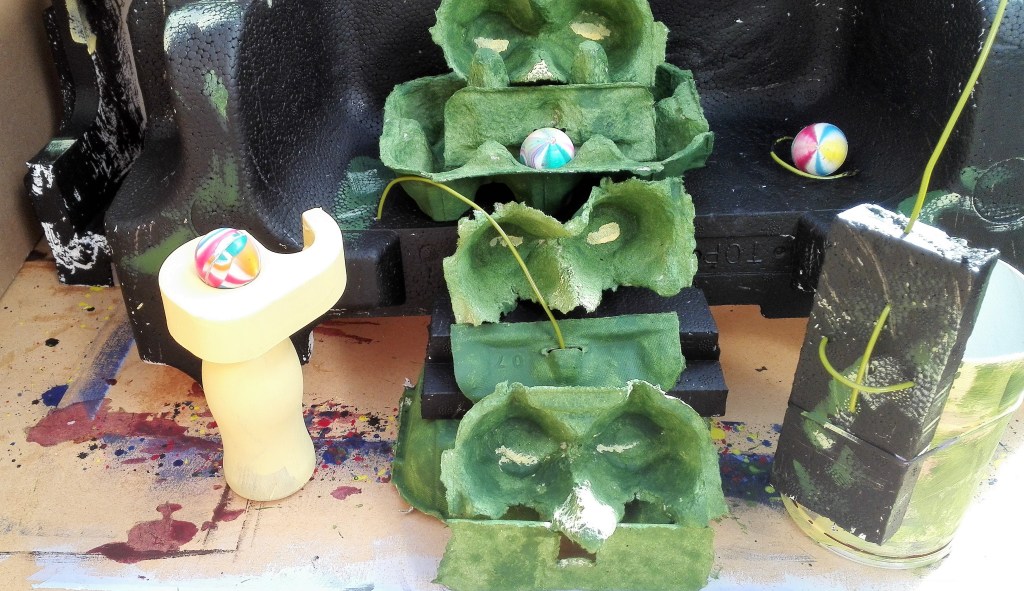
What did I learn from this exercise?
I found it problematic to find inspiration. I was limited by what materials I had available and therefore had to adapt. The importance of colour in providing unity was revealing. I have continued to think of other ways I can create similar works and my approach to creation of work has been expanded.
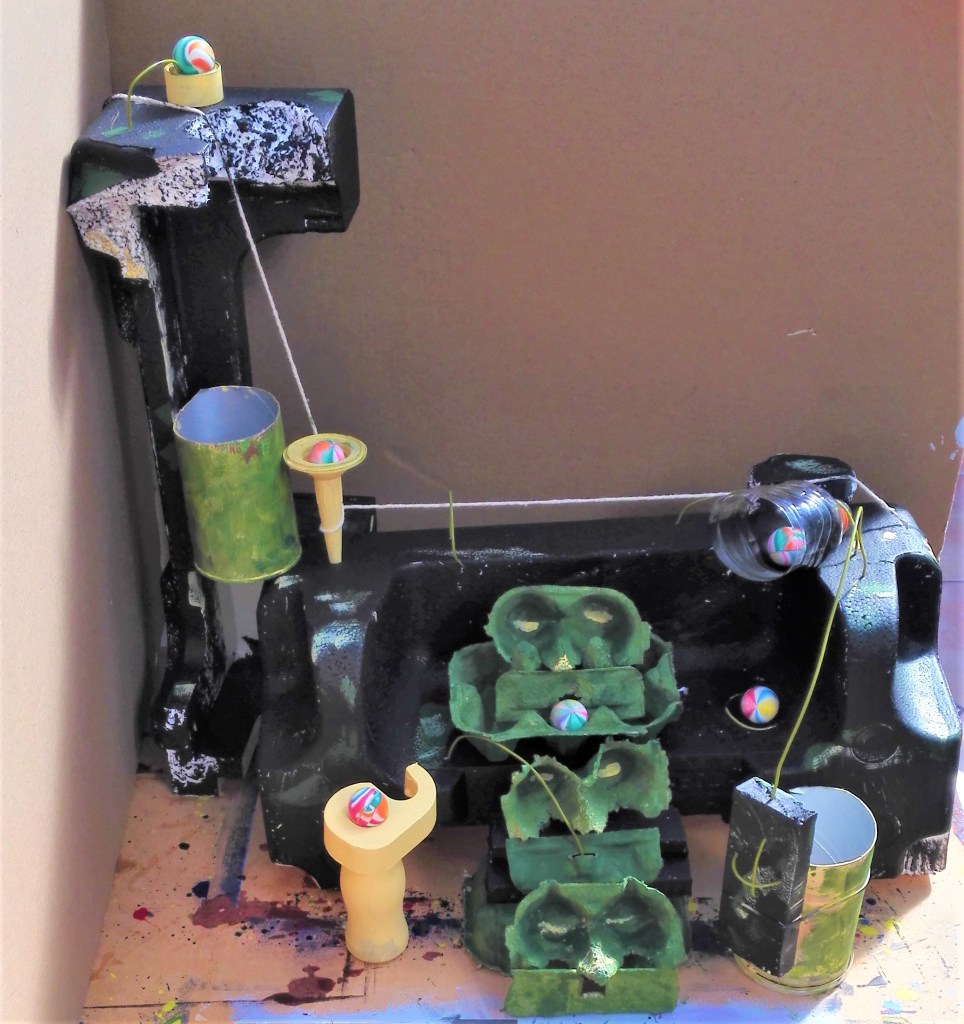
Two photographs of construction 1 below. I also have four videos which will be added when I am able to.
 Mark Taylor 'Studio Practice'