When I read through the requirements for this exercise I expected a challenge. I had confronted Combines previously when visiting Tate Modern and took the opportunity to visit the Rauschenberg exhibition in 2017.
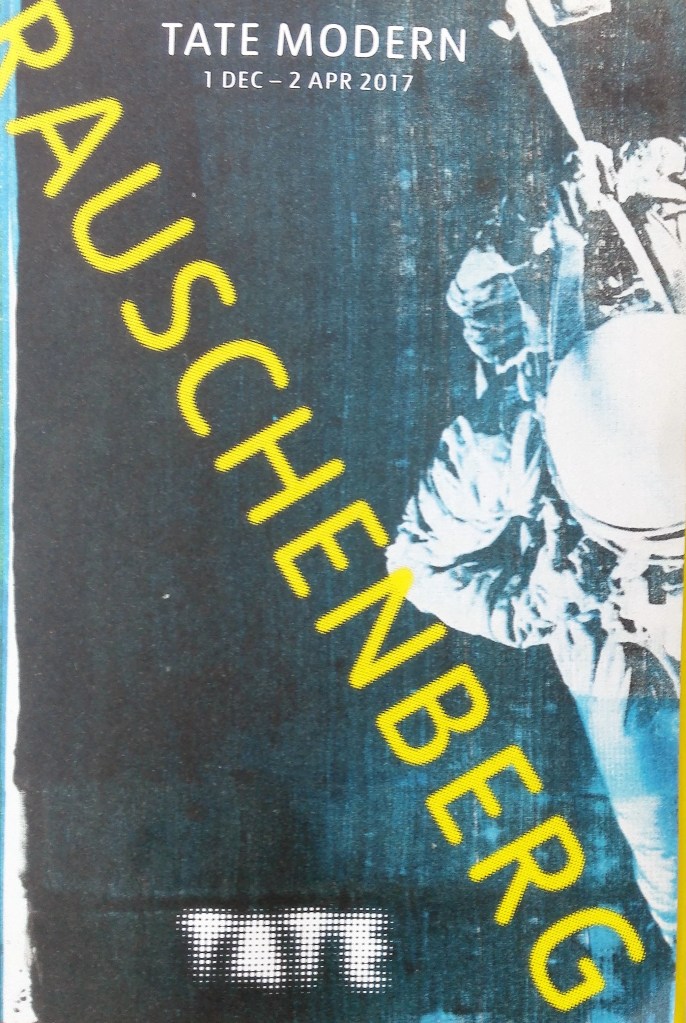
I found the Combines confusing and very difficult to read. Thinking back I was looking for a narrative to the paintings. At the time I was far more comfortable with representational work. I feel that my studies have now brought me to a place where I am better able to make some sense of Combines. However this exercise was asking for me to try to construct my own Combine. This started a train of thought as to how I could go about the process?
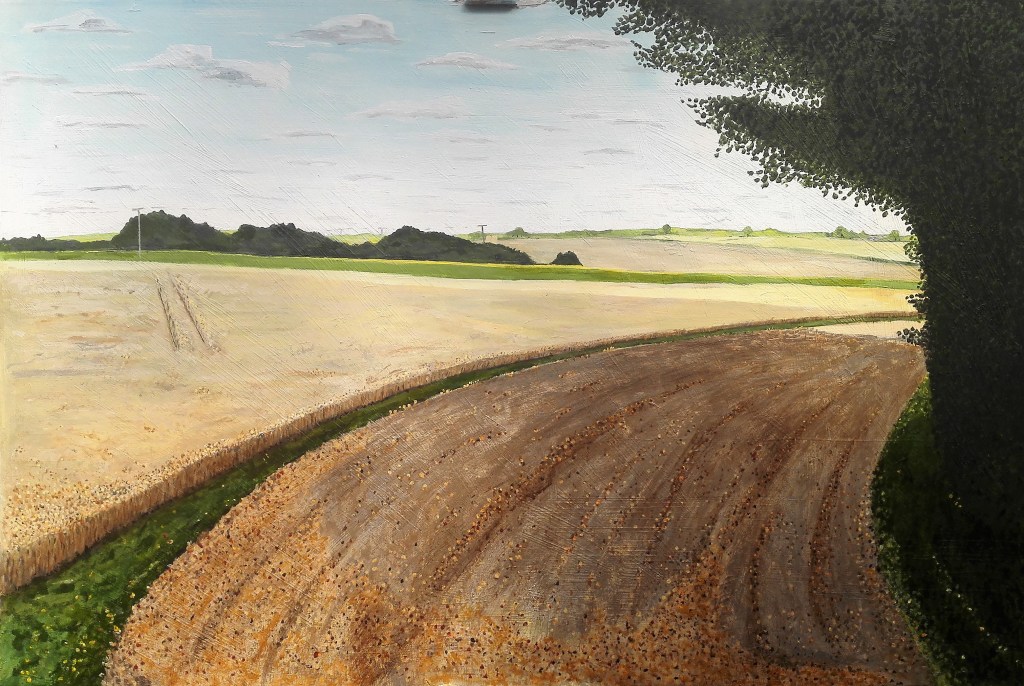
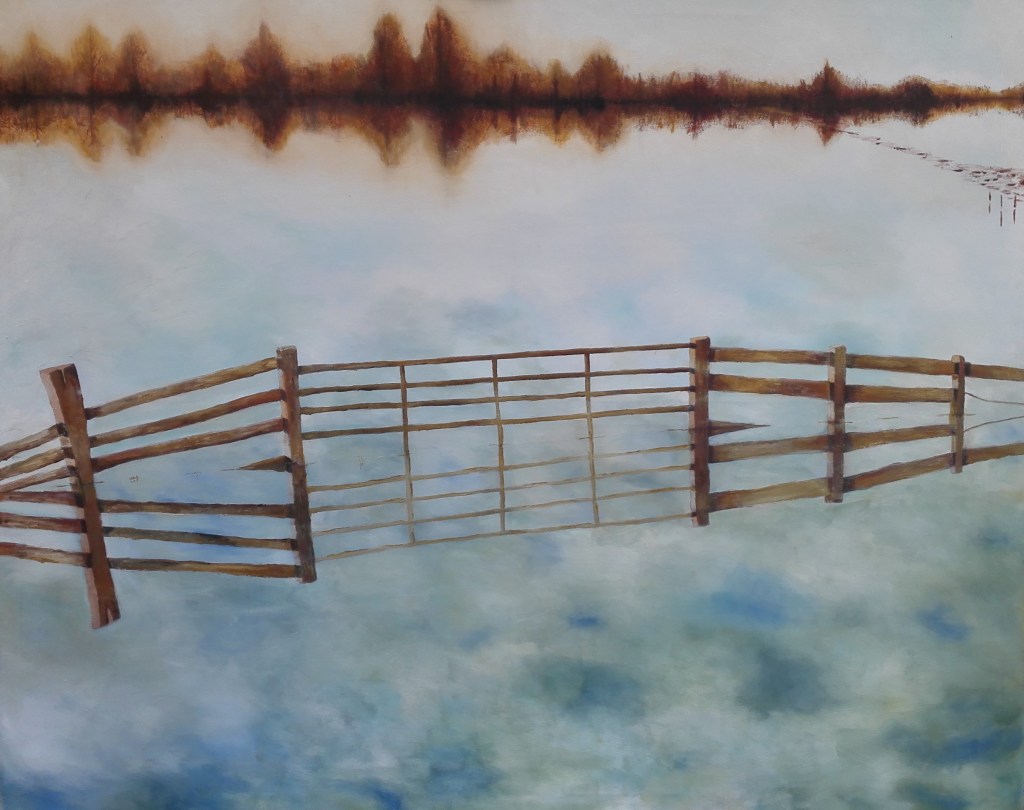
It took me some time to make progress. I started with trying to solve basic problems like what support to use? What to use? How to use it? A further limitation on the process was the prevention of going out to purchase a suitable support as the country had entered lock down due to the Coronavirus pandemic. This situation, in hindsight, was a benefit as it forced me to consider what I had available. The brief pointed in the direction of a canvas. I wanted to work quite large and the only two large canvases I had were used. Should I paint over these or incorporate them into the work. Whilst not my best paintings I felt that both were representative of a phase in my evolving practice and therefore I should preserve them. The two paintings are replicated below.
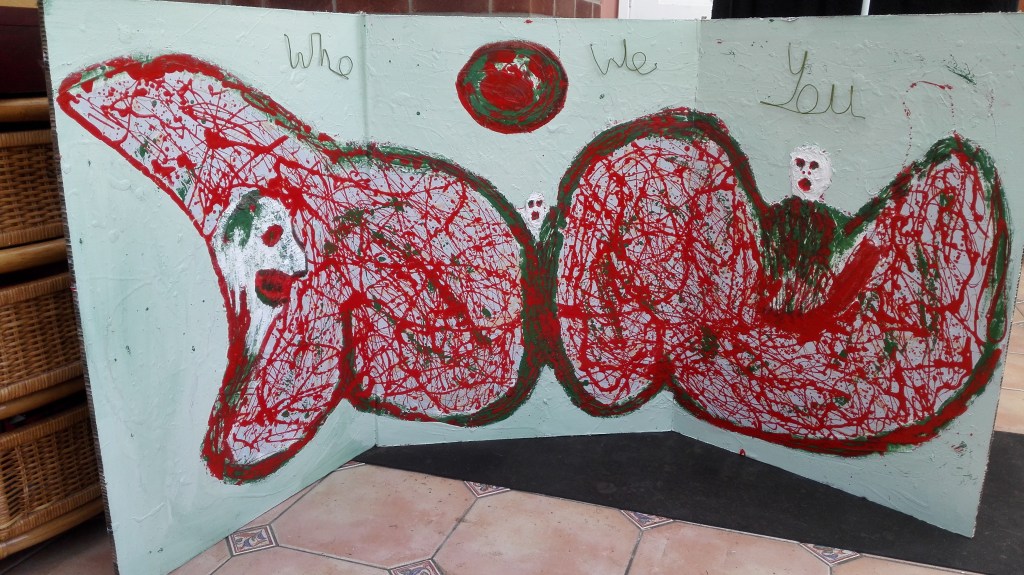
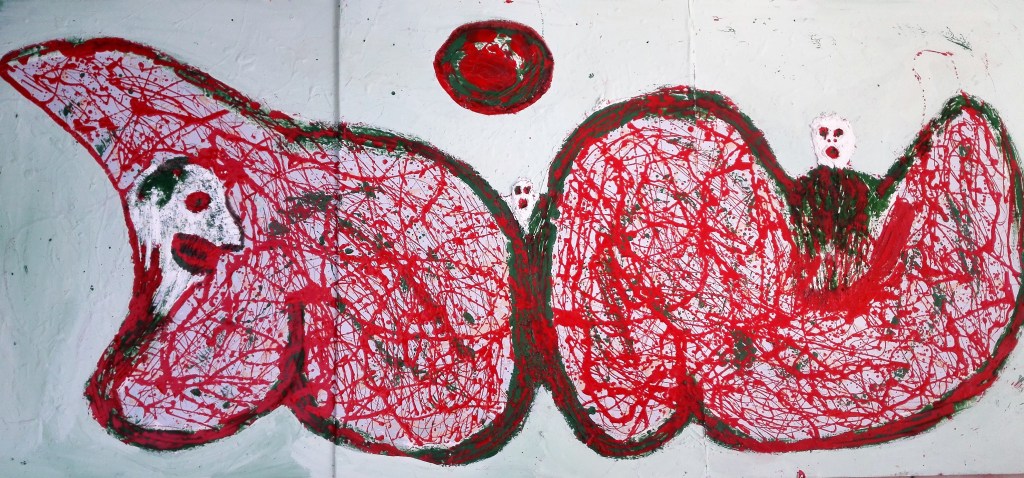
I reflected on what solutions I had used during ‘Concepts in Practice’ and remembered a large work that I had completed called ‘Who, we, you’ where I had used the cardboard that had come with the delivery of our washing machine. The work was now stored in the loft and was unlikely to see the light of day again. I could use a section of the cardboard for the Combine. Prior to its re-use I made a video of the work for my records. Two photographs of it are shown below.
I now spent a lot of time thinking about what to do? How to do it? Thinking about what to incorporate, solving problems, searching and finding objects, considering them, dismissing them. I seemed to be making little actual progress. It was all planning and no action but it certainly wasn’t procrastination. Eventually I decided on a way forward and started on the construct phase. The laying out of a couple of objects on the support and then the attaching of them broke the impasse and I now had a physical work in progress.
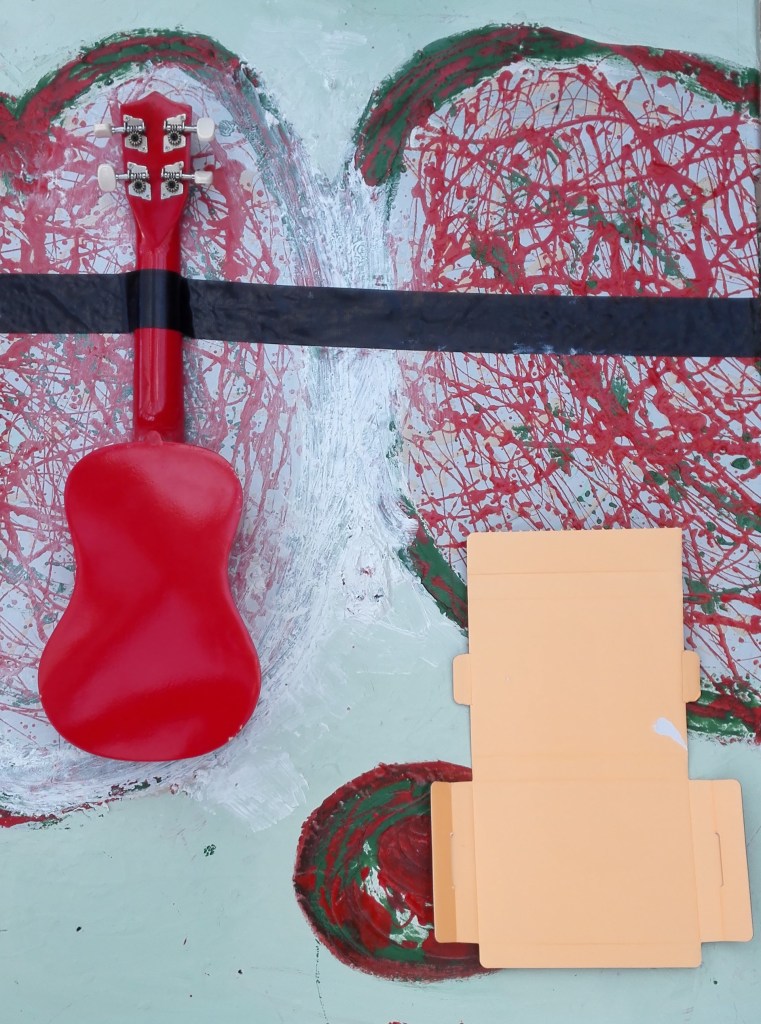
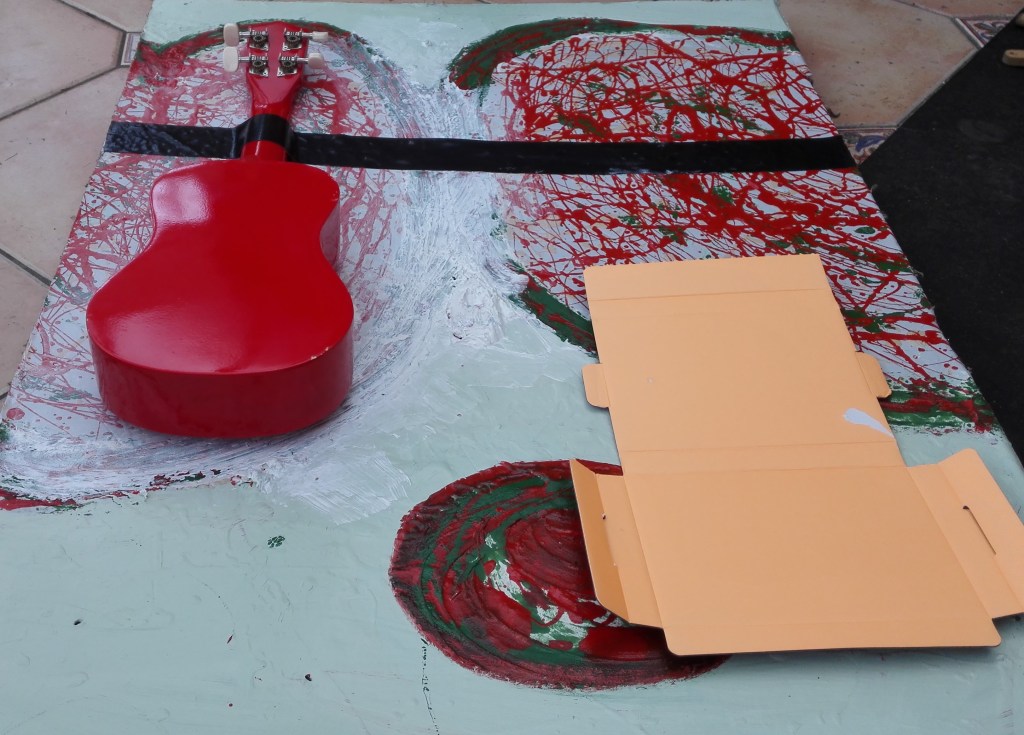
The physicality of what I was doing was far removed from the act of painting but it felt creative. A process was unfolding where I was adding, taking away, moving, arranging, considering and reacting to what I was placing on the support. Did the objects look and feel right? What was I trying to say about them? did I need to say anything about them?
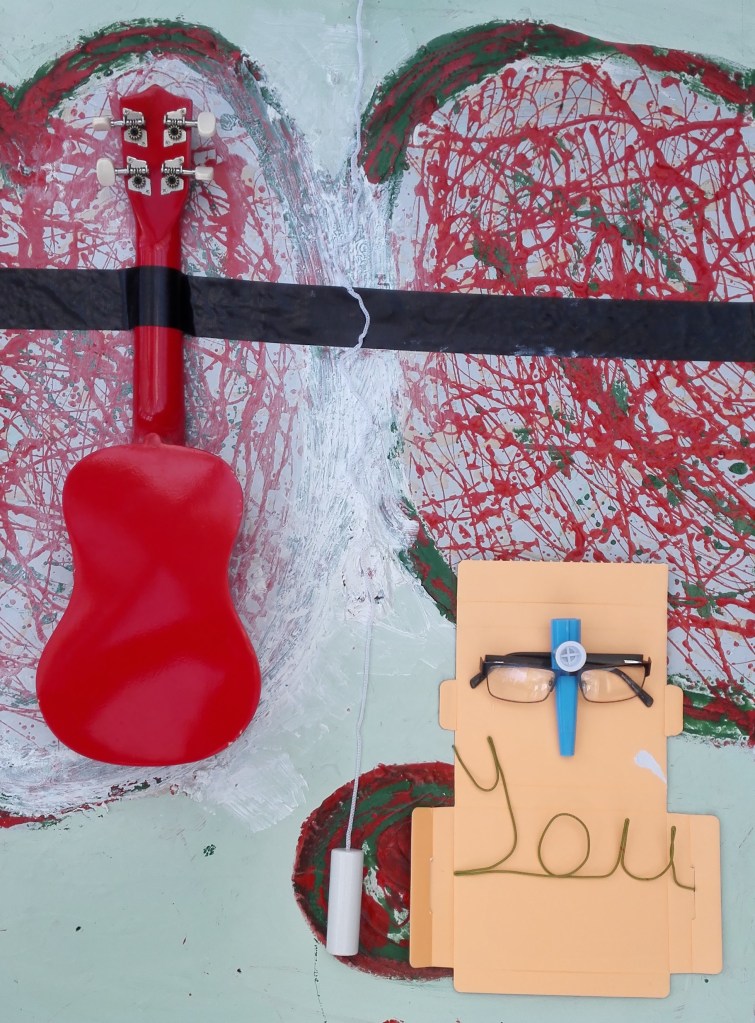
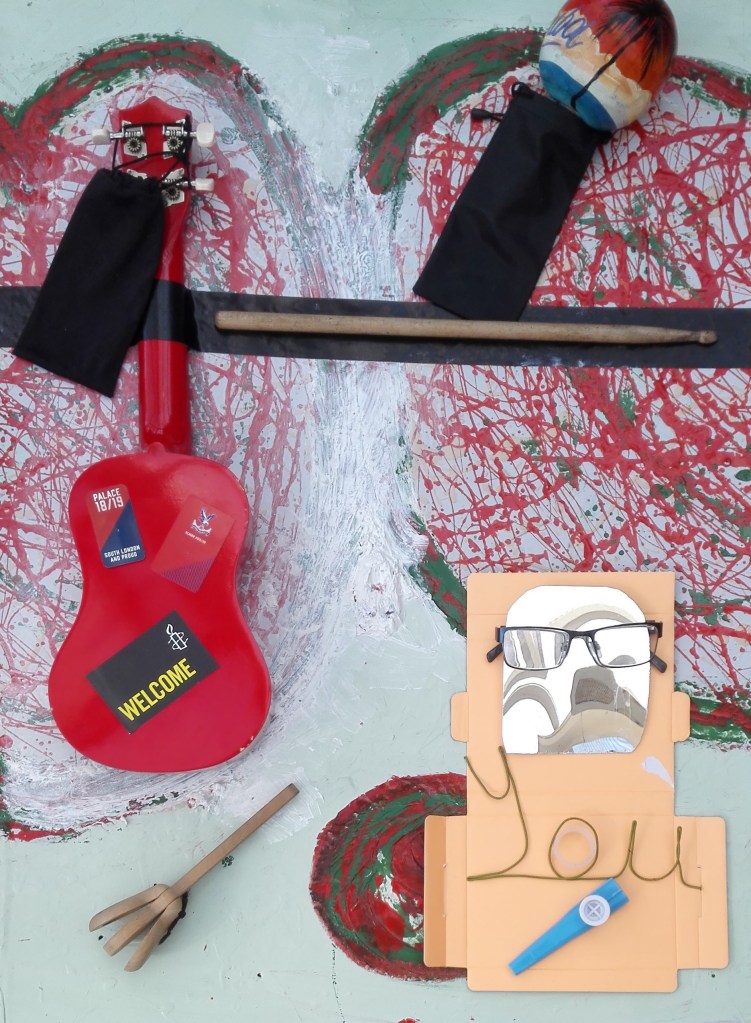
A pleasing aspect of the process was that I didn’t feel constrained. I felt an energy towards the work. It was tactile to move objects around and to move around the work. Whilst working I took time out to look at Rauschenberg’s Combines and to try and draw inspiration from them.
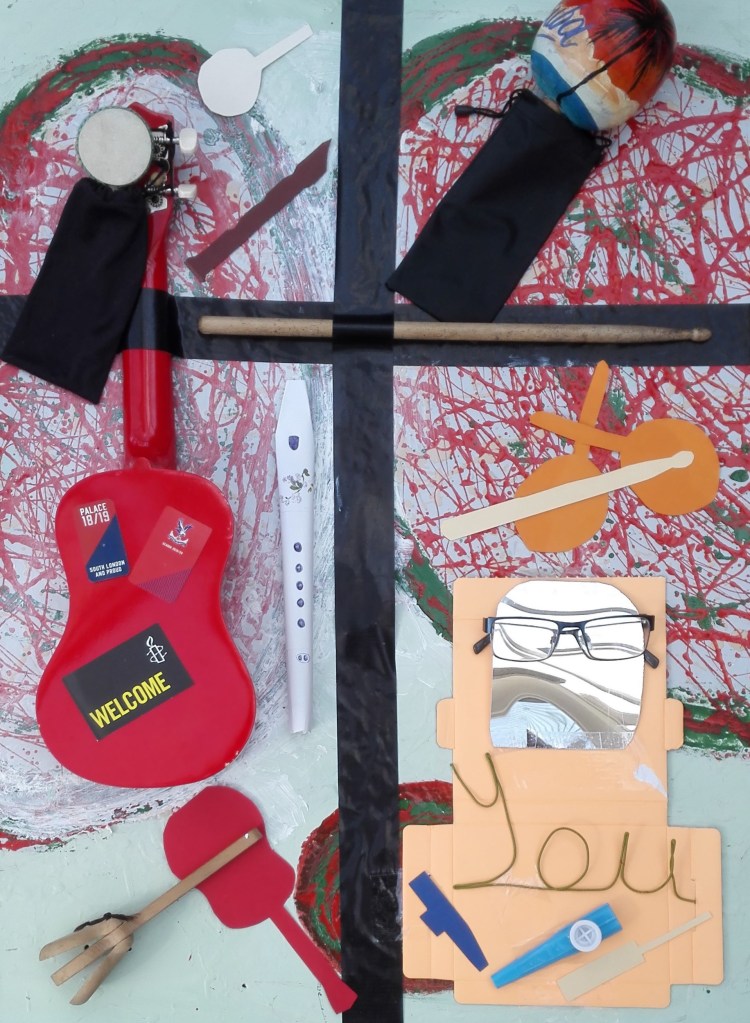
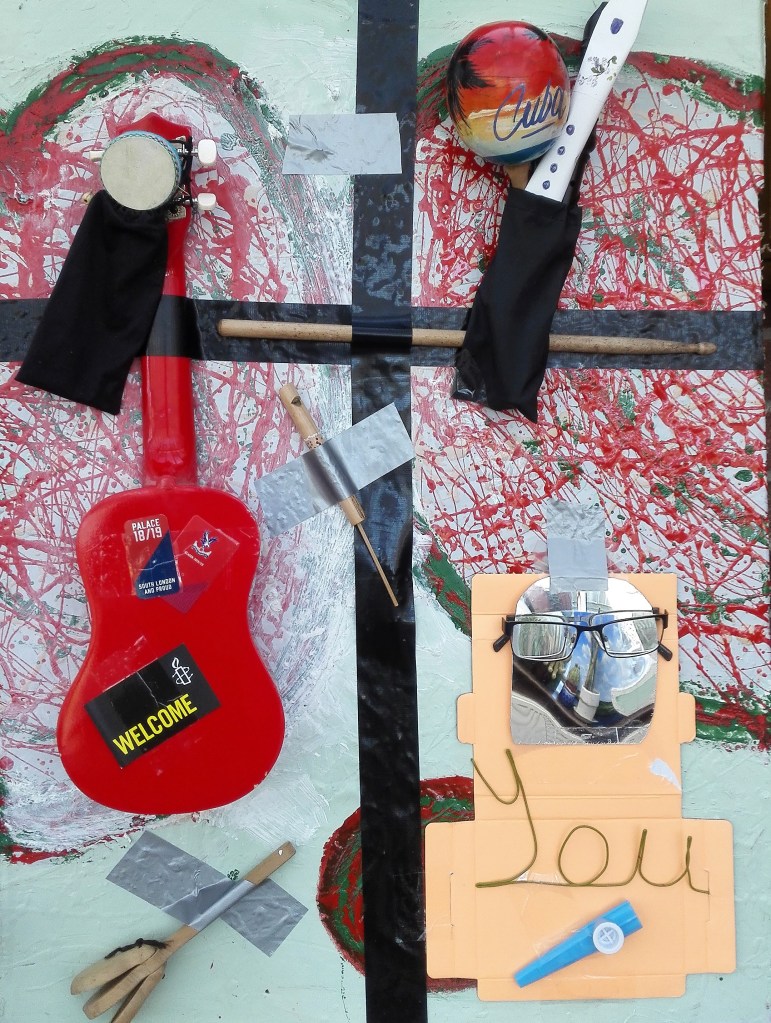
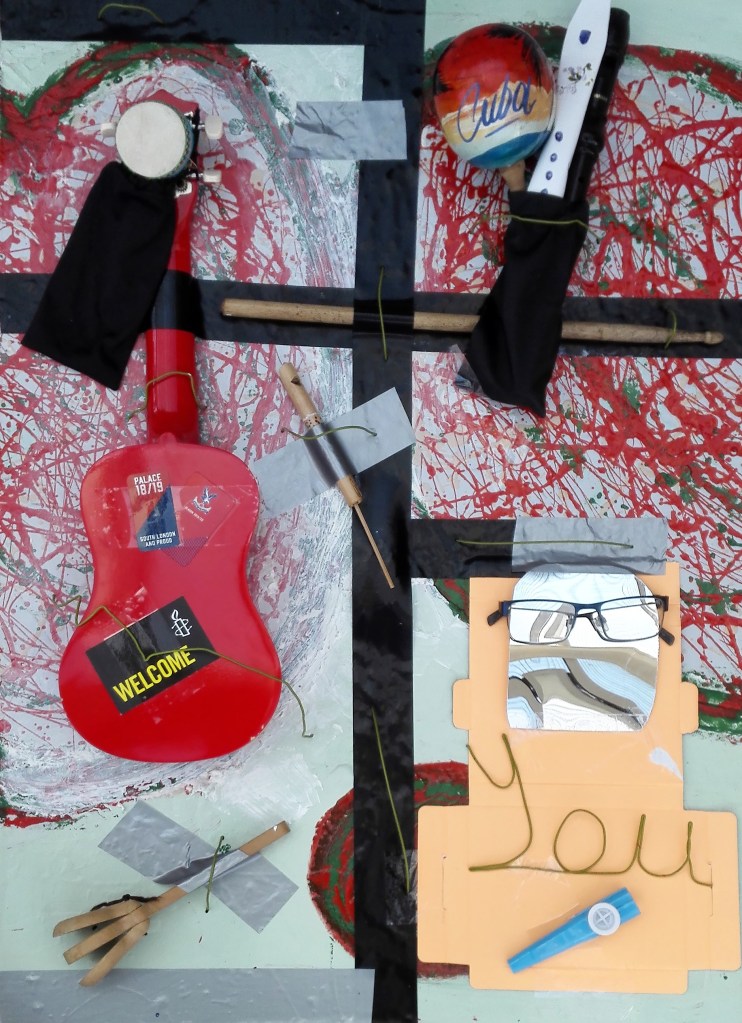
I noted that many of Rauschenberg’s combines were titled and my mind considered many options for naming my work most of which I thought were pretentious. I should allow the finished piece to convey its own meaning if it has one at all. The last step was to add paint. Again I spent more time considering, reflecting and pondering how to add paint, what colours to use, controlled or random application. I finally arrived at applying paint loosely using a brush.
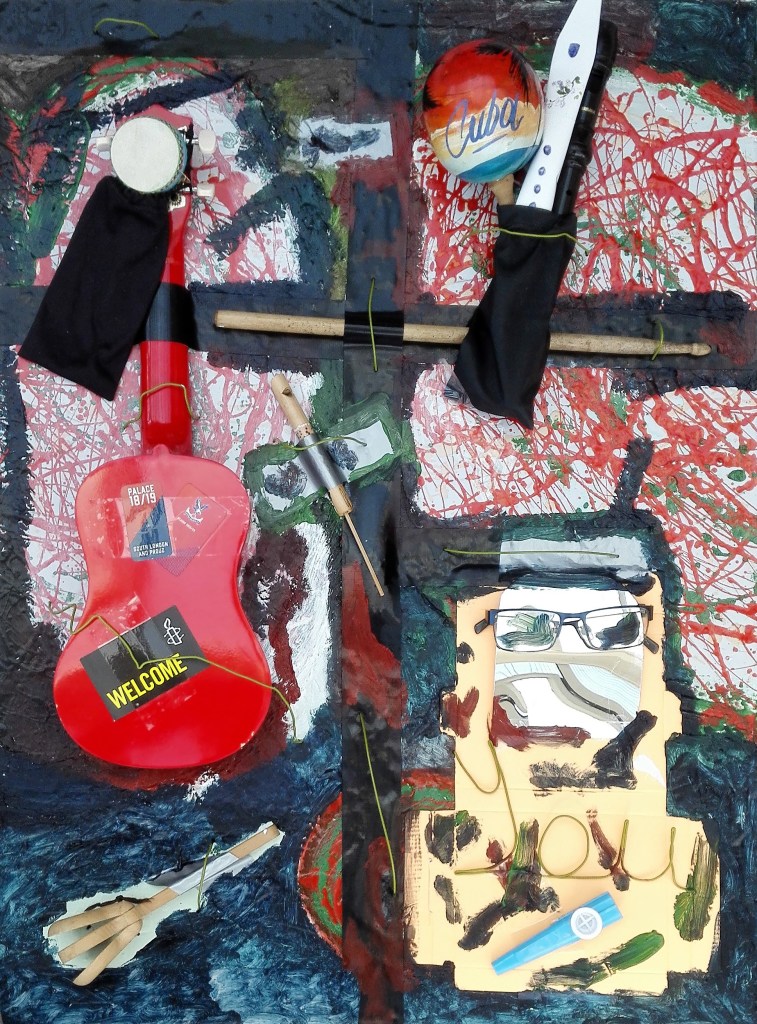
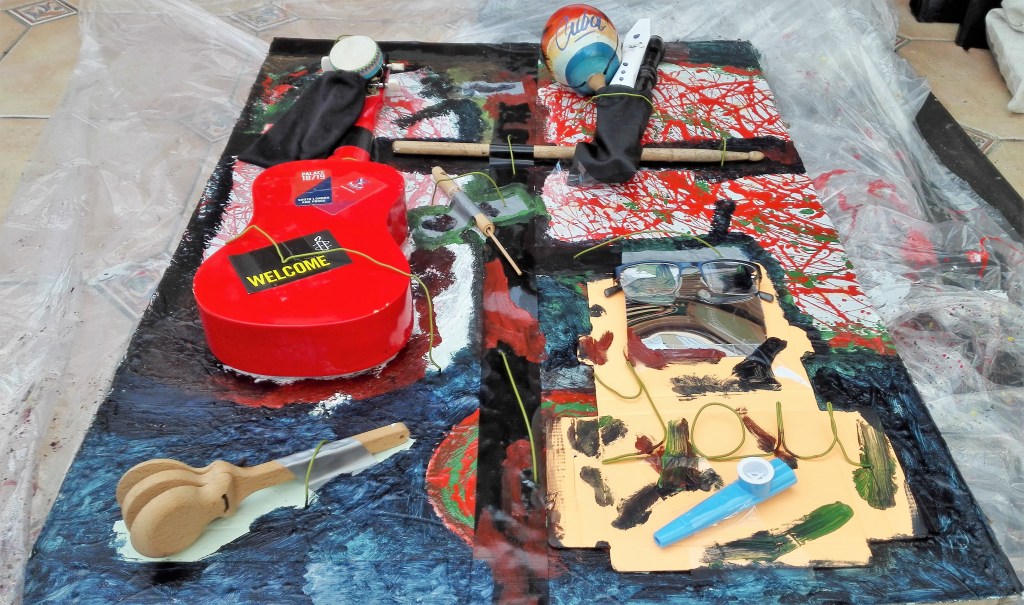
The addition of paint seemed to bring the work together and gave it a coherence that wasn’t previously present. The objects now had a relationship to each other became unified. Have I completed a Combine that can be read, does it say something, is it interesting to look at? I am unsure. I enjoyed the process, particularly the act of creation, but wonder at the result.
I did make a couple of short videos where I moved around the painting and spoke about it. The video of the finished can be found vis the link below.
 Mark Taylor 'Studio Practice'