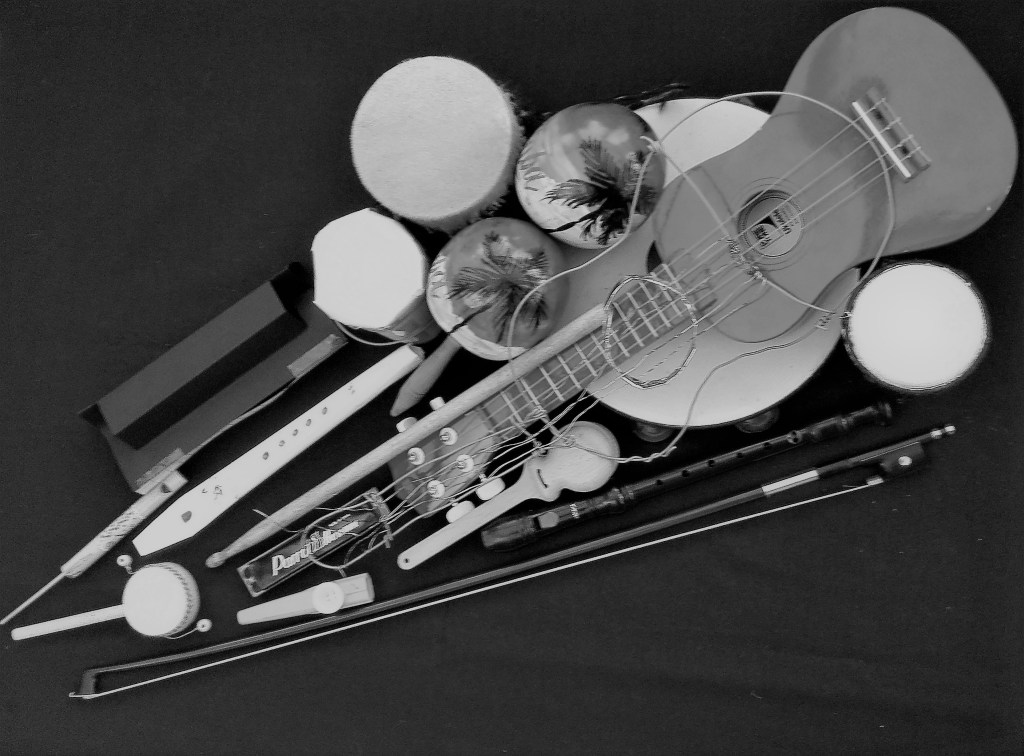
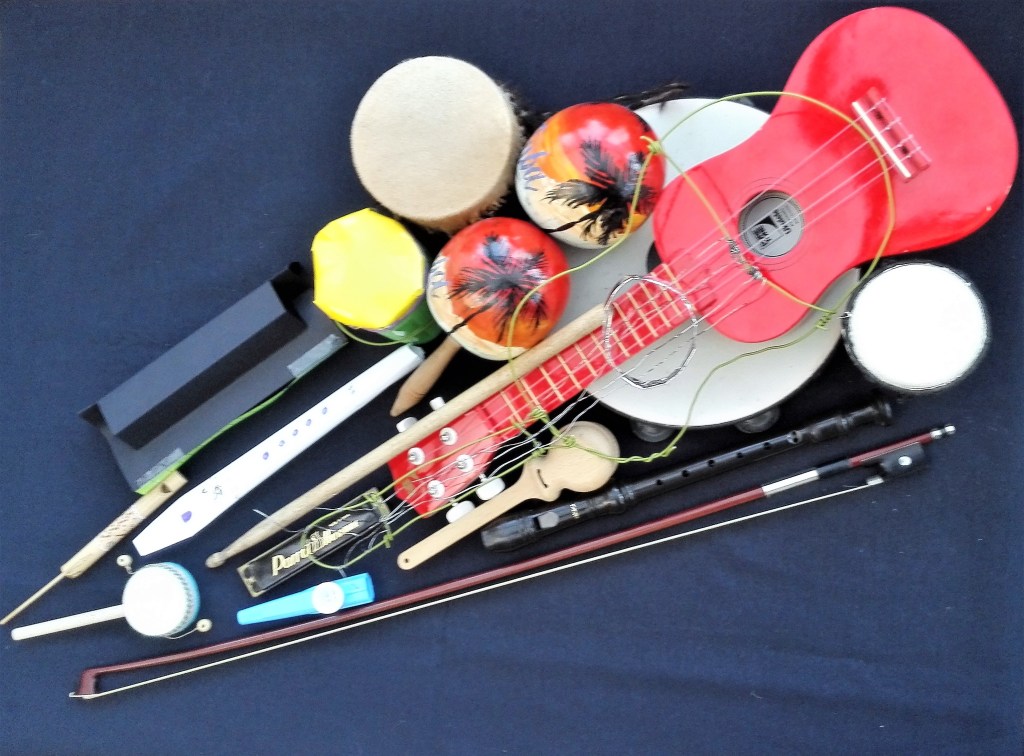
I made one quick sketch of the display, due to the cluster of objects it was quite confusing to draw. I would need more time to pick out the detailed relationships, colours, contours and lines to make a coherent depiction of the arrangement.
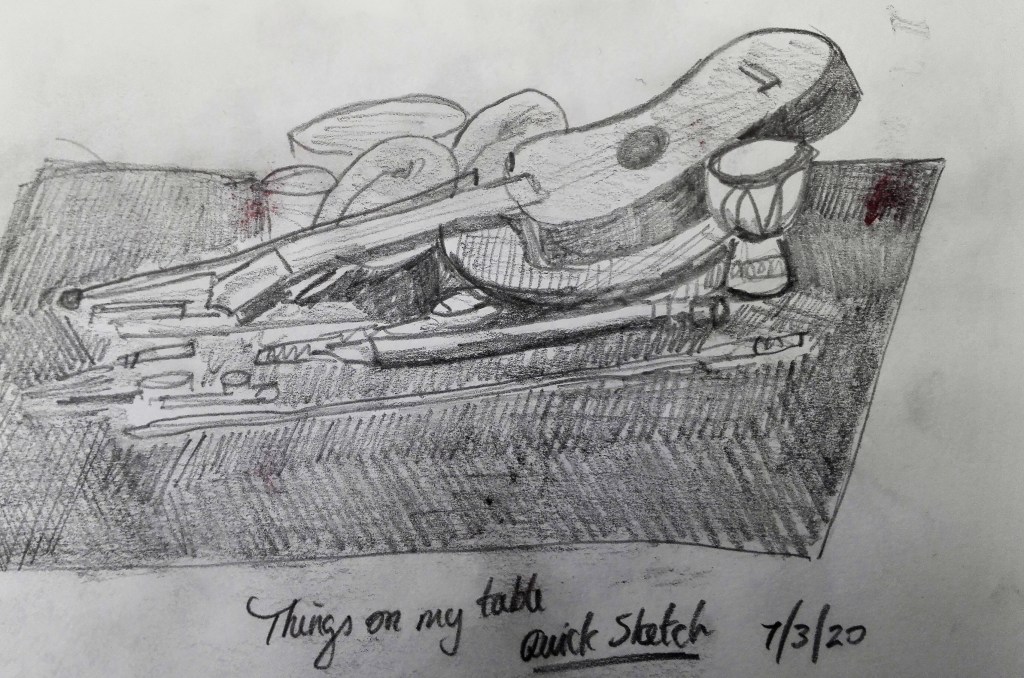
The objects have been on the table for a few days now, see photographs above. I have got used to how I have placed them and pleased with how they relate to each other and as a whole. The display has been commented on by others. One comment was, oh I like that. I investigated further as to why and received the reply that there was a coherence to it. There was also a suggestion that the orientation of the recorder and the paper model of the recorder could be switched, I tried this out, and agreed with the suggestion which is now how the arrangement looks. Additionally one specific object, the swivel drum, was picked out as having interest in how the striking bits looked animated. On a further separate occasion my son, who was visiting picked up, without asking, the aforementioned swivel drum and started playing with it. Fortunately he didn’t disturb anything else on the display so it could be placed back in the arrangement. However even if he had of moved other objects I already had sufficient photographs to be able to reassemble.
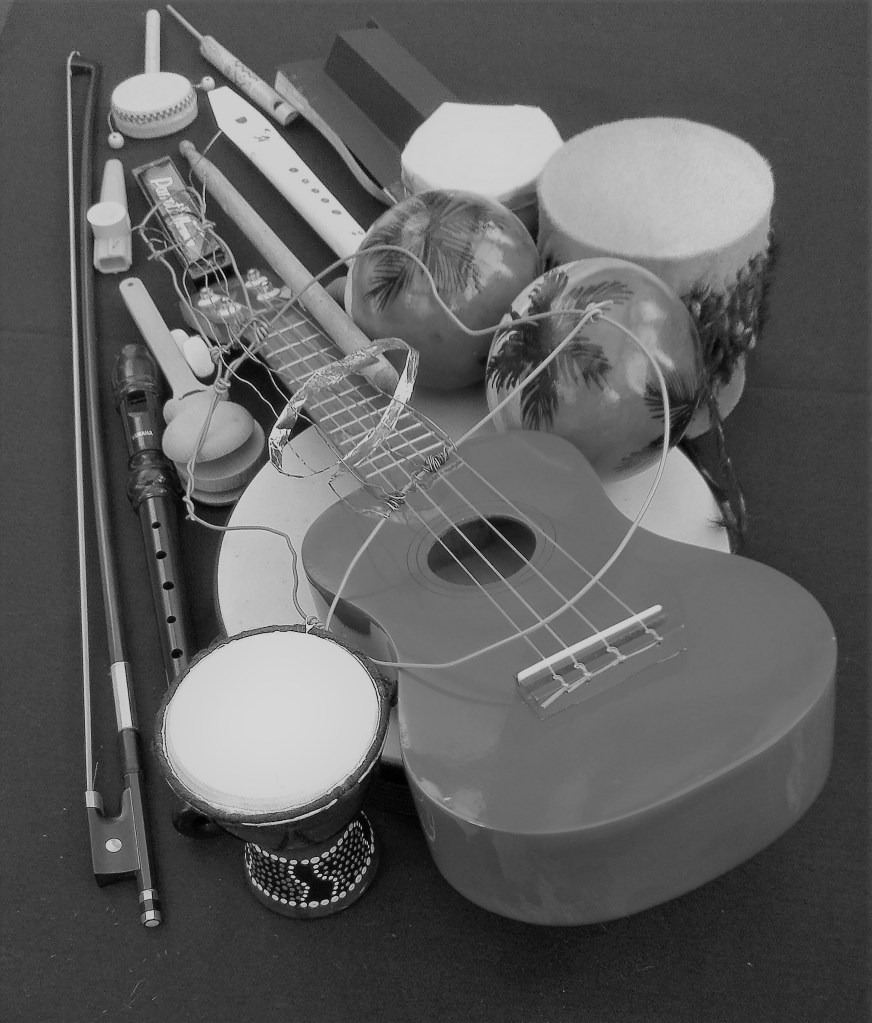
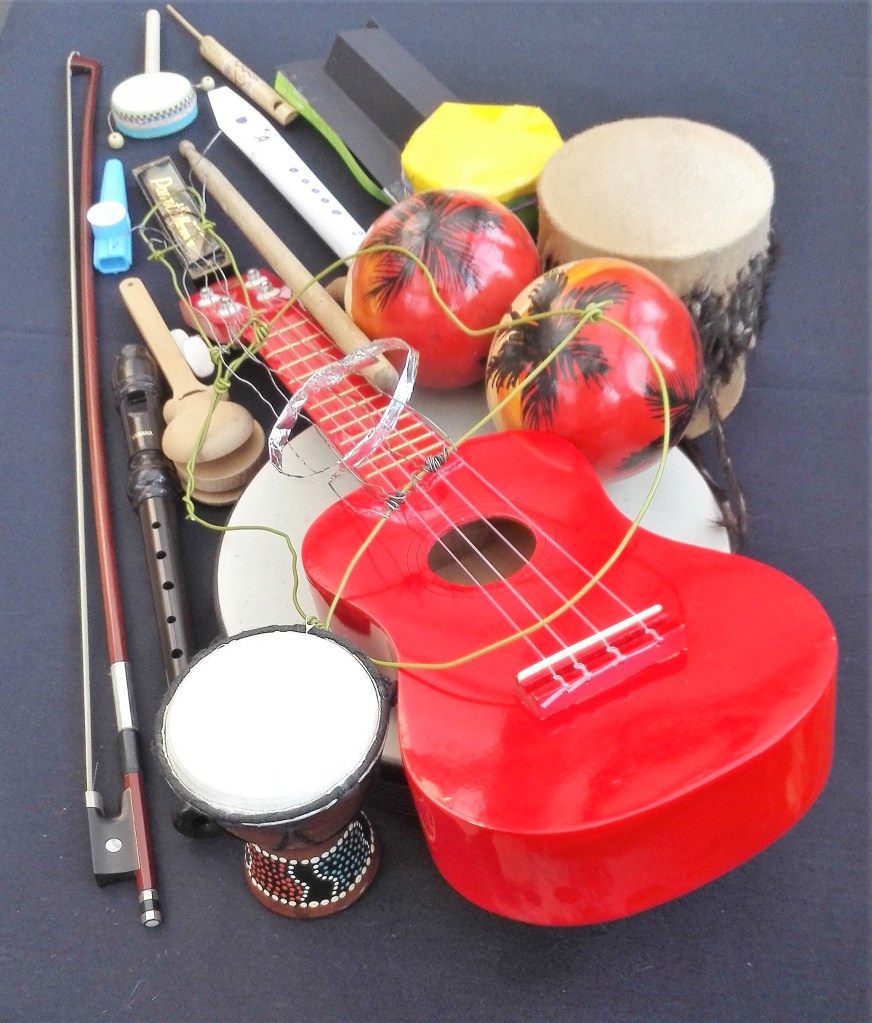
As mentioned I had already photographed the table from several angles and viewpoints and had also discussed the relationship with the edge of the table in my previous blog for Exercise 1.0. I decided to explore the internal relationships in a bit more detail with the emphasis on the special relationships between the objects that were close, on top and under each other. This involved looking from some previously unexplored views. I took a series of photographs which are reproduced below. I will discuss my thoughts on these below.
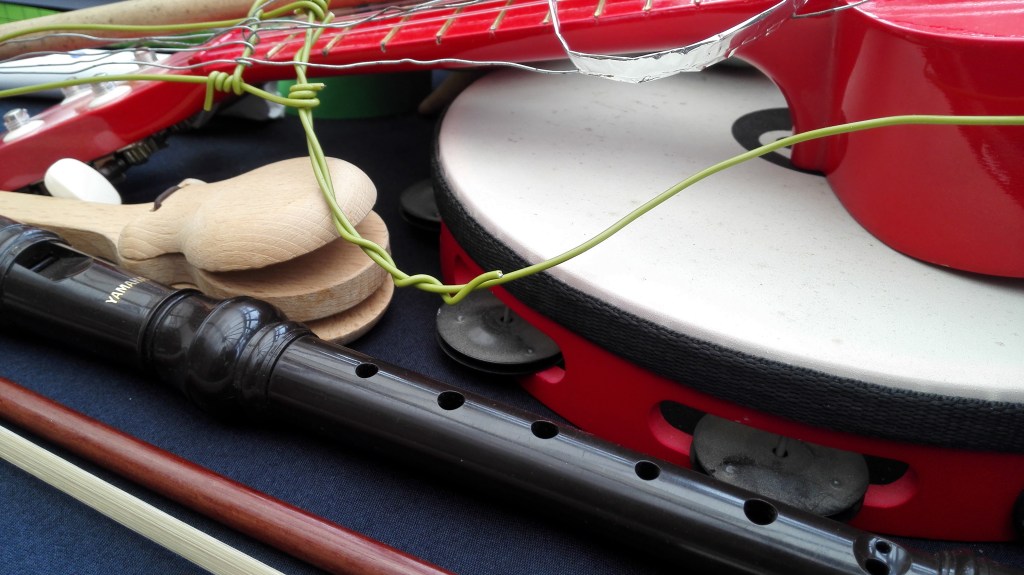
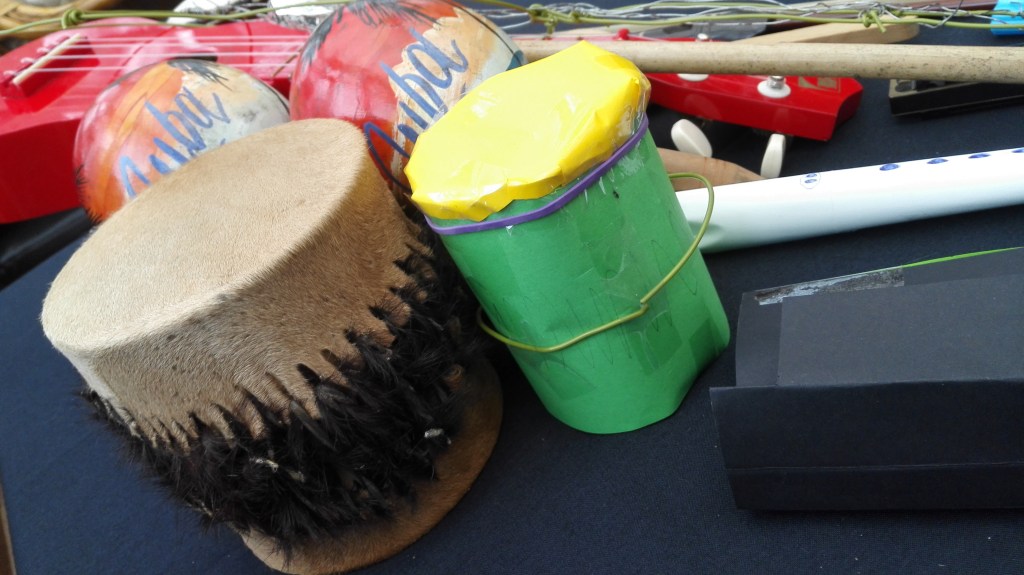
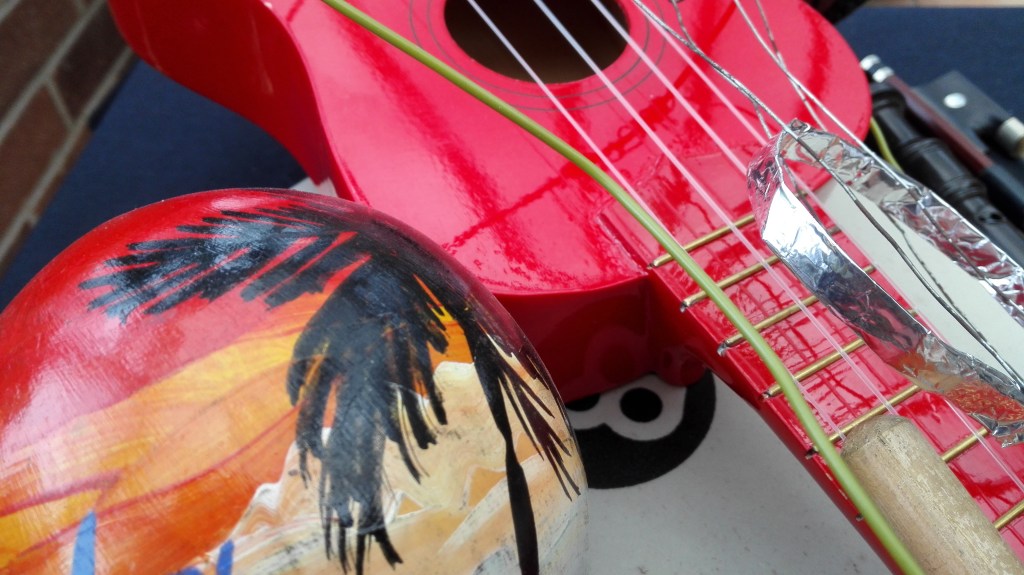
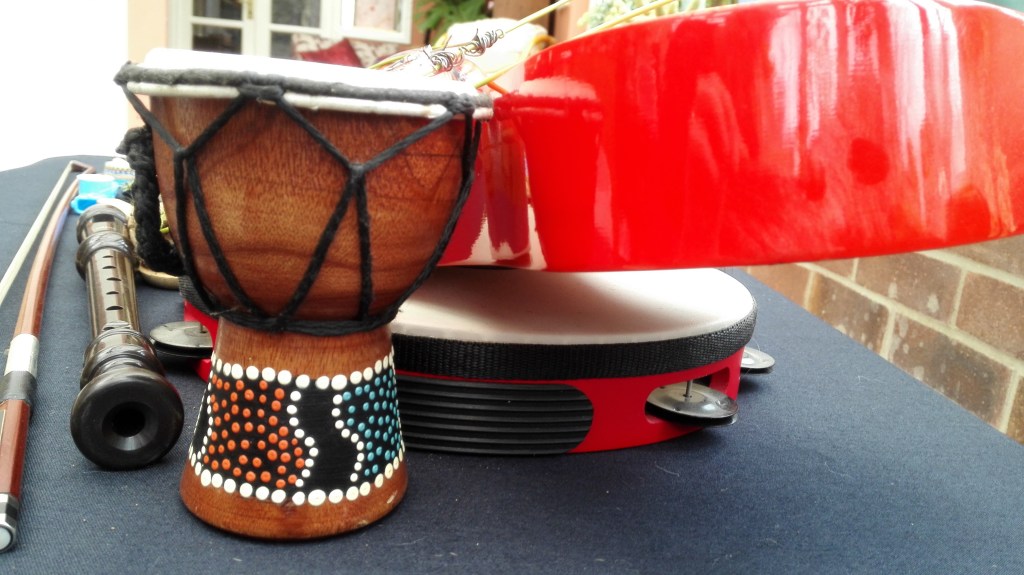
Photograph 1, it looks cluttered, not much space and little if any relationship between the objects of which none are seen in their entirety.
Photograph 2, similar to photograph one, cluttered but in this one there is more symmetry. The lines are all moving in the same direction including the strings on the Ukulele.
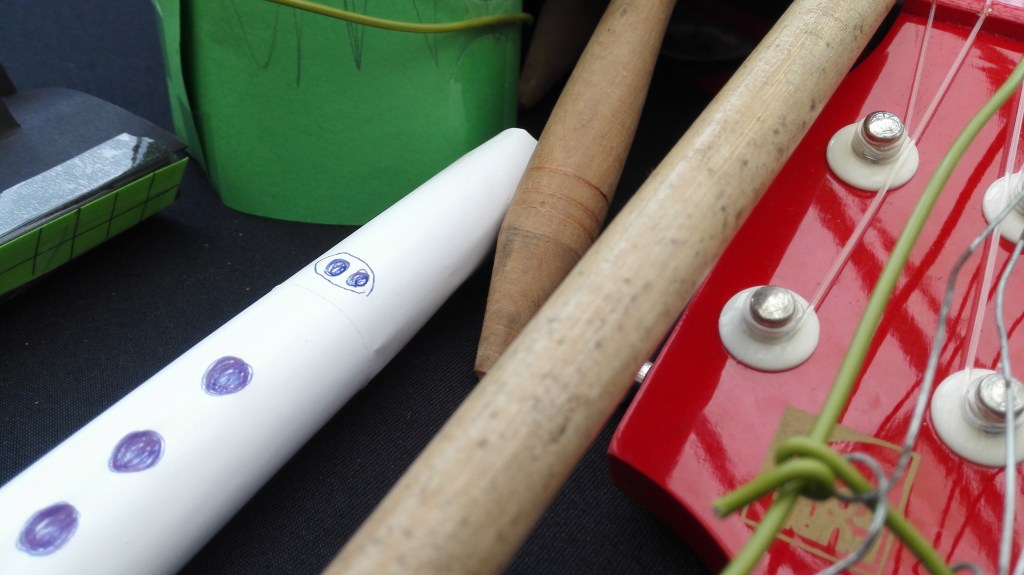
Photograph 3, this explores further the symmetry in the lines of the objects as the display approaches its tail.
Photograph 4, four circular objects in close proximity. The objects with rounded edges were deliberately placed near to or on top of each other.
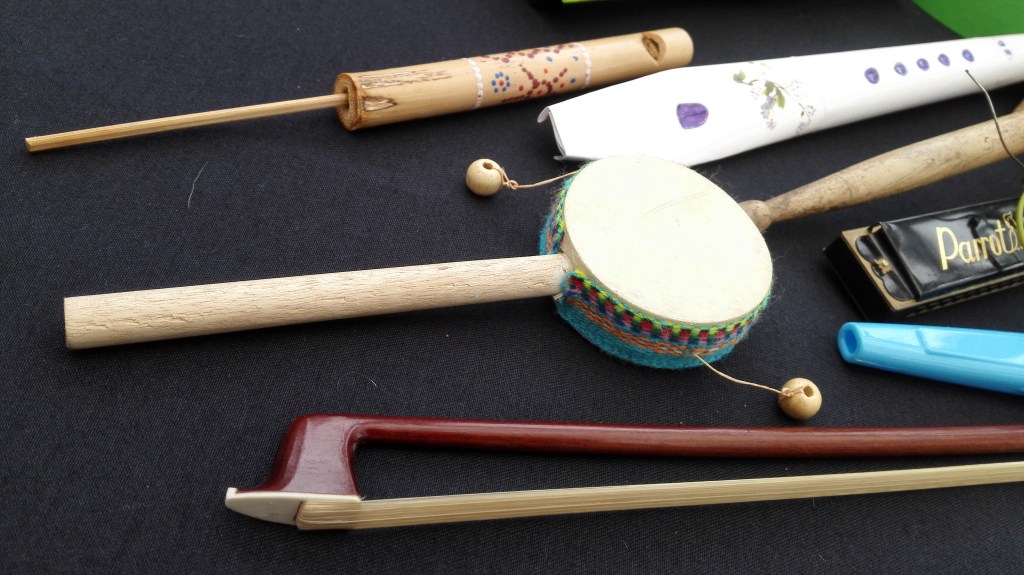
Photograph 5, There is little to be gleaned from this. A mixture of shapes, colours that have very little relationship to each other.
Photograph 6. This angle explored how the height of the display has been built up with objects placed on top of each other and sloped downwards.
I made six sketches, three in black and white and three in colour. These were more detailed. In them I looked to examine different aspects of the display. All the sketches were drawn quite quickly as I wanted to try to capture my intuitive responses.
The first examines the whole display. Here I was trying to make sense of the whole arrangement and the relationship of the objects to each other.
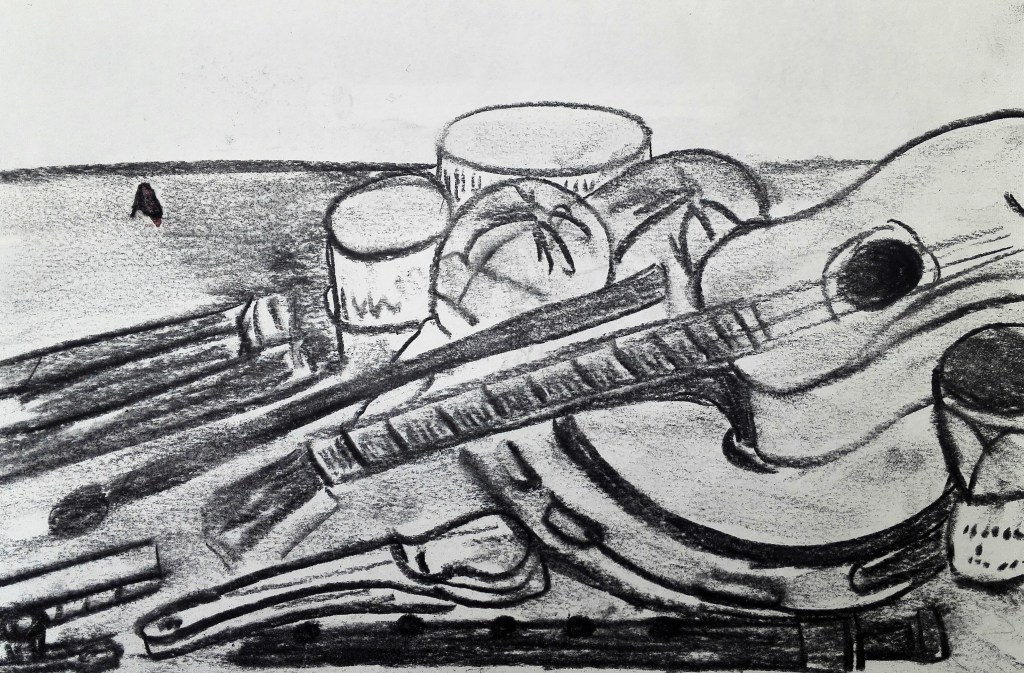
For the second sketch I focused in on the tail end of the display where the straight and longer items converge. As much as the objects themselves I was looking at the negative spaces in between them, this is highlighted by the black cloth.

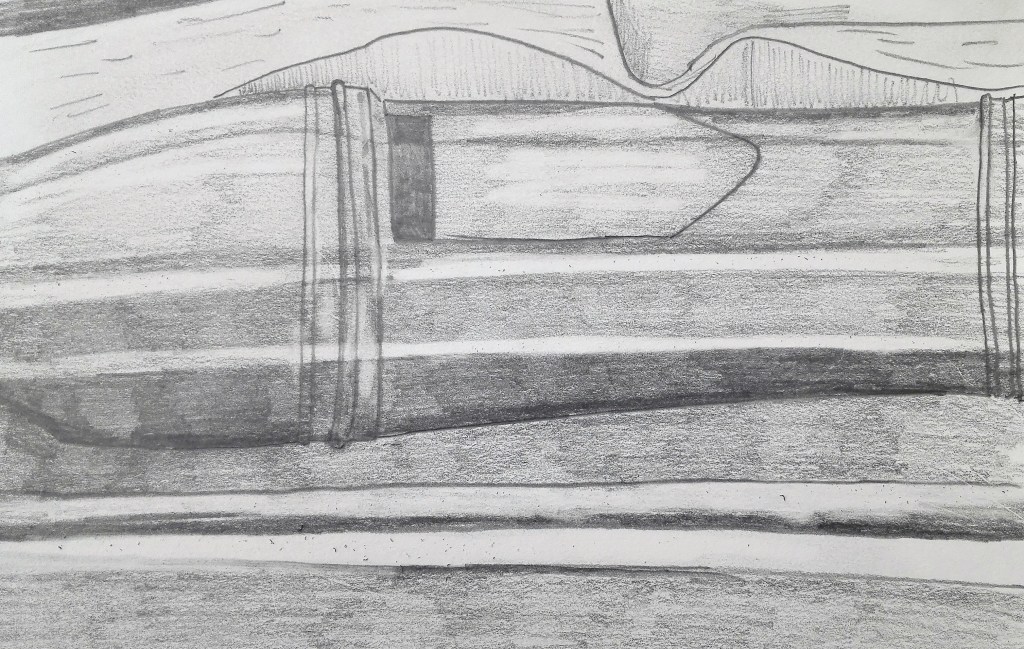
For the third sketch I focused in closely on a part of the recorder. for this sketch I was looking to bring out the tonal aspects. When I look at this sketch now I note that I should have made more emphasis of the darkness of the cloth.
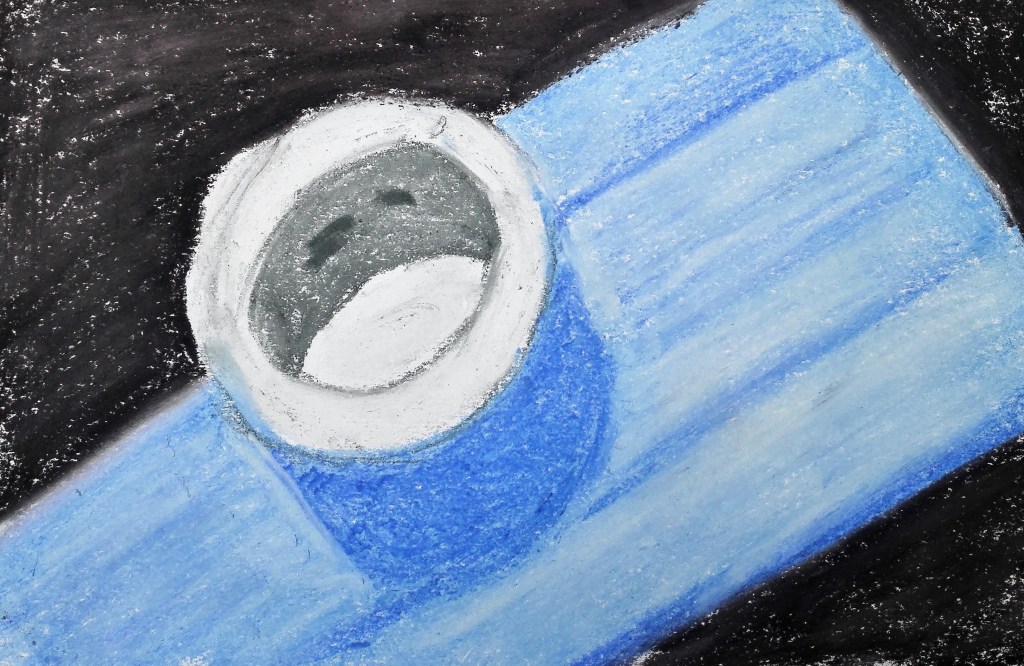
For the forth sketch I moved to colour and picked out a close study of the blue kazoo. I was also interested in the subtle tonal changes on the plastic surface and tried to capture these too.
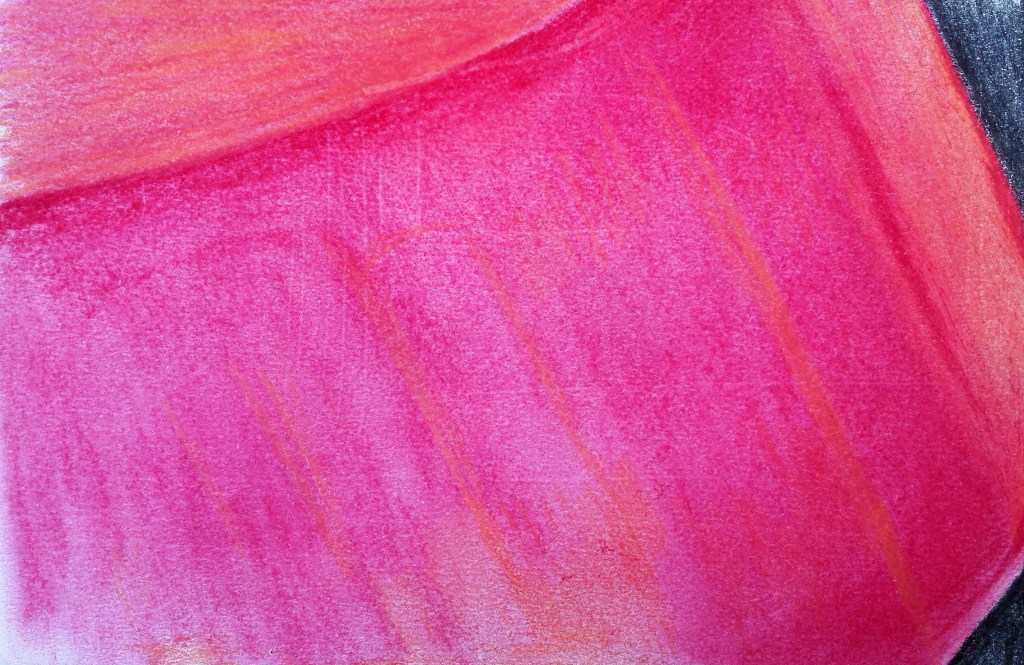
The fifth sketch focuses on the back of the Red Ukulele and the way the light is reflected on its surface. I didn’t have a red of similar intensity as the ukulele. however by adding orange and rubbing the red I was able to give an indication of the sheen.
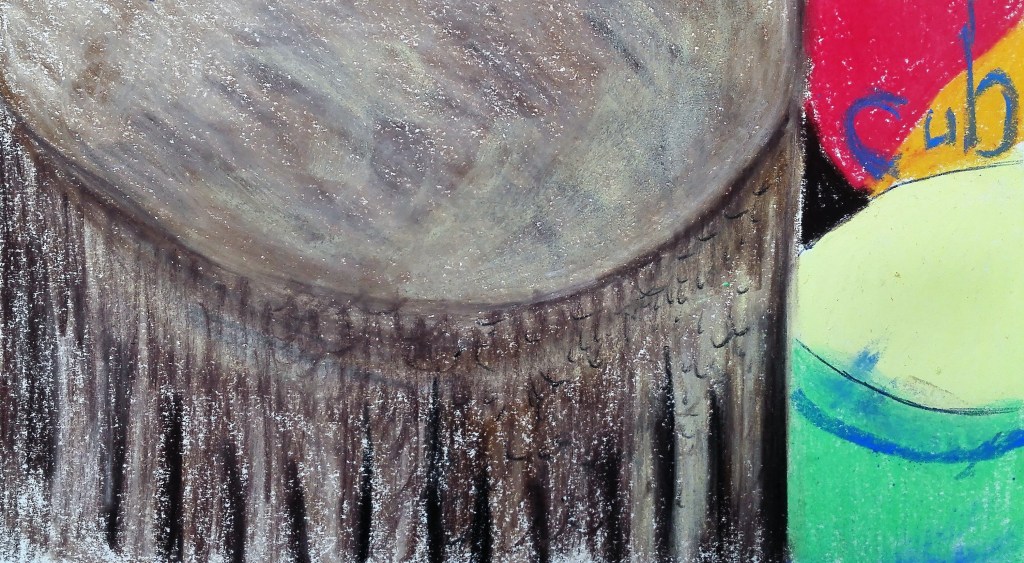
And lastly in the sixth sketch I was looking to capture the animal skin on the drum and contrast this with the lively colours of the maquette drum and the colours of the maraca.
Reflection on Exercise 1.1
I was struck with how complicated and interlinked the objects had become. Yes it was my aim to try to make them into a coherent display and to reduce their appearance away from what the viewer knows them to be. In doing so I wanted to try to suggest an alternative view. It was when I began to observe the arrangement closely that I realised how entangled the objects had become and that it was now difficult to separate them. This was very apparent when attempting to draw the whole thing. There were so many different angles, lines, perspectives, foreshortening and tonal variations that it would be a difficult task to replicate the arrangement in a representational drawing. The most pleasing images were the photographs, in particular, the black and white ones. These took the focus away from the colours and made the eye concentrate on both the form of the objects, their relationship to each other and to the whole arrangement.
A final observation came to me when writing this review and that was that the maquette ukulele that I had made out of wire doesn’t feature prominently in either the photographs or the sketches. It is as if it becomes unseen but when looking at the whole display. I do feel that it helps to hold it the whole together and is an integral part of the arrangement.
 Mark Taylor 'Studio Practice'