I tried out a number of different processes for applying both paint / ink, graphite sticks and felt tip pens to paper. These explored trying to remove myself from the process, using mechanical aids for drawing, collaboration with others and using tools. The experiments cover aspects of the exercises in Projects 2 & 4 and are a continuation of the work completed for Project 1.
In this blog I will document the processes used, the outcomes and my thoughts and reflections on the results and what I learned.
I initially carried out four experiments using different techniques and ways of making marks and applying paint to paper. This was followed up by trying to utilise a mechanical or constructed drawing tool. All of these experiments and their outcomes are documented below.
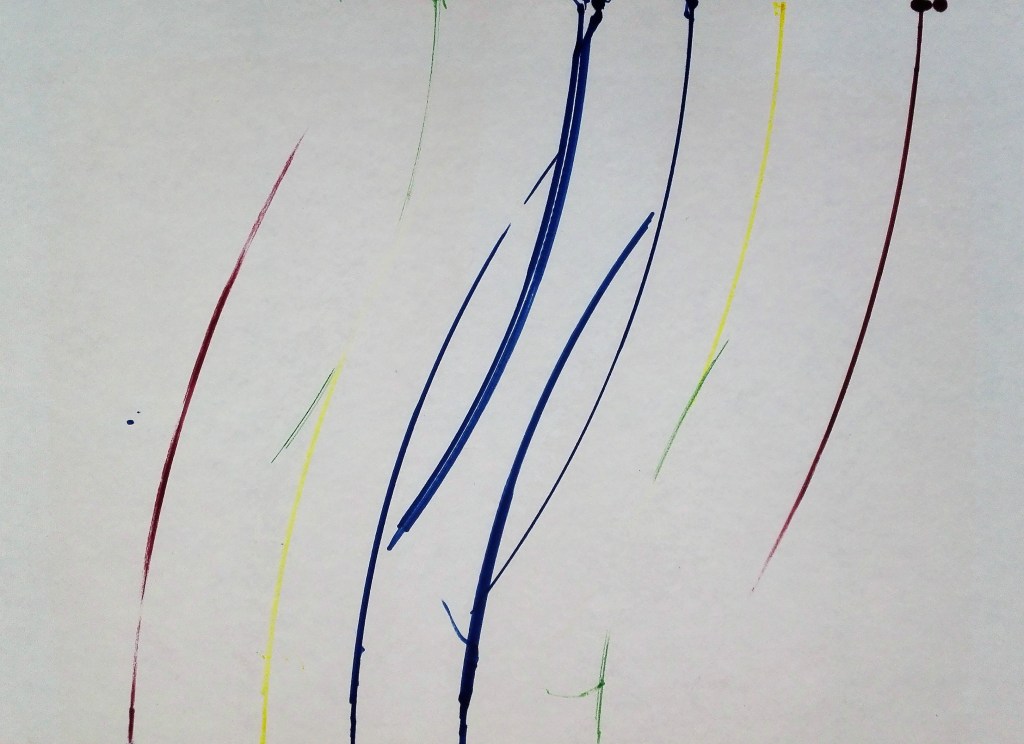
Experiment 1, Door Drawing – For this five felt tip pens were attached to the bottom of a door and paper placed in such a way so that marks were made when the door was opened and closed.
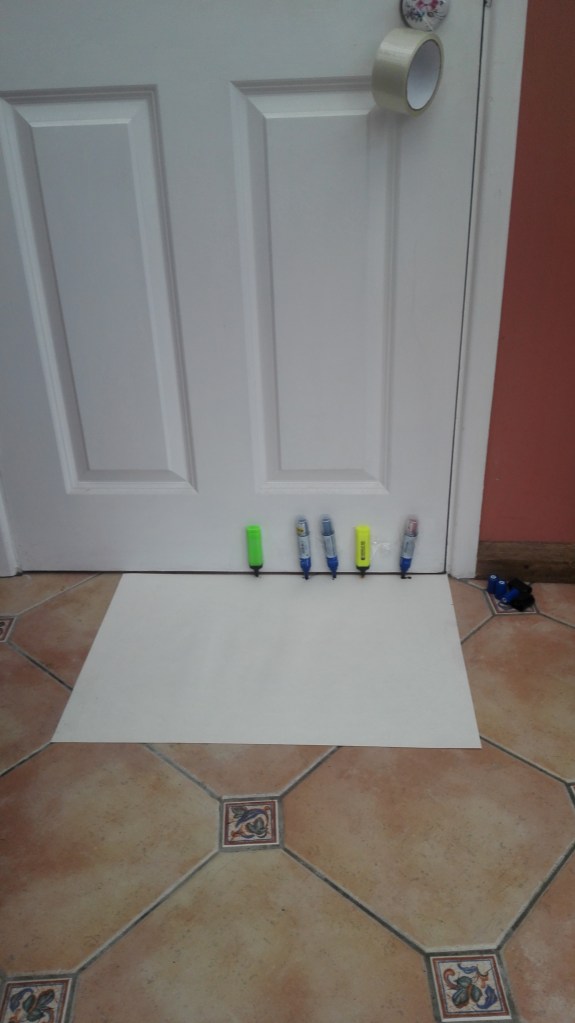
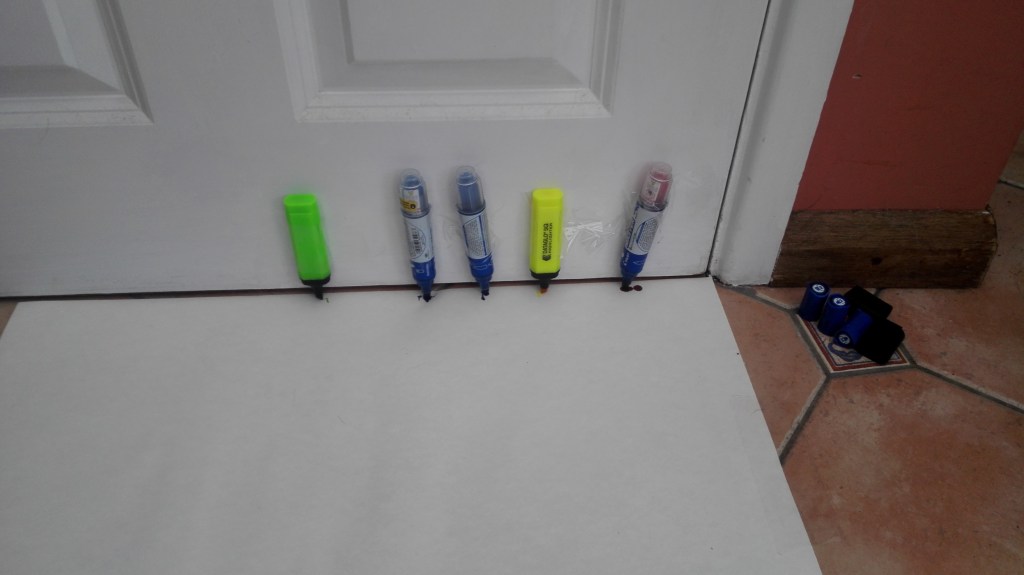
I found the results of this process poor and uninteresting. The paper was moved once, in hindsight it could have been moved more, but the marks being made were of a uniform nature.
Experiment 2, Paint Dripping 1 – This process involved a small yoghurt pot suspended from string above paper. A small hole was made in the bottom of the pot. Black drawing ink and later diluted red acrylic paint was allowed to drip from the pot onto the paper.
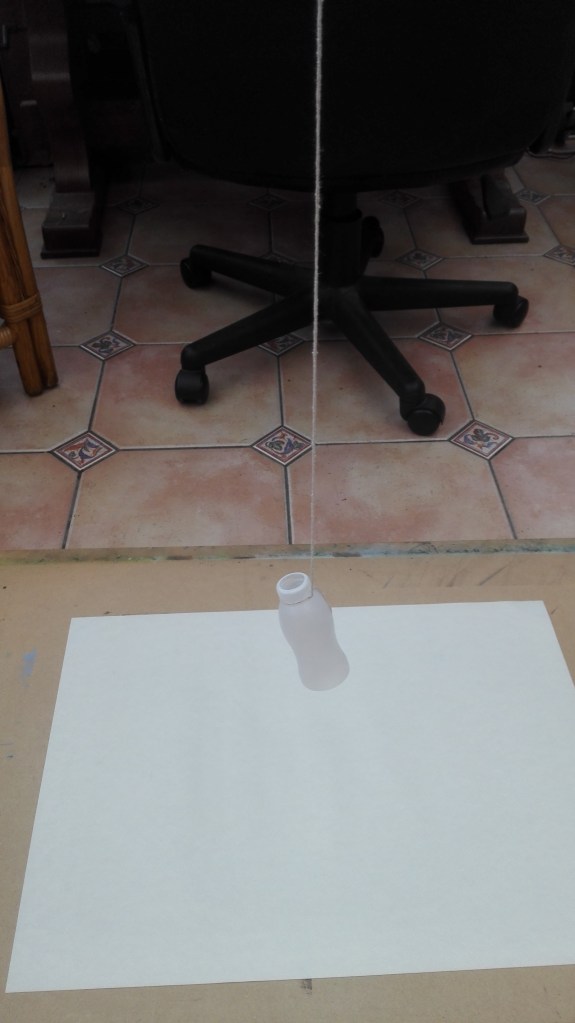
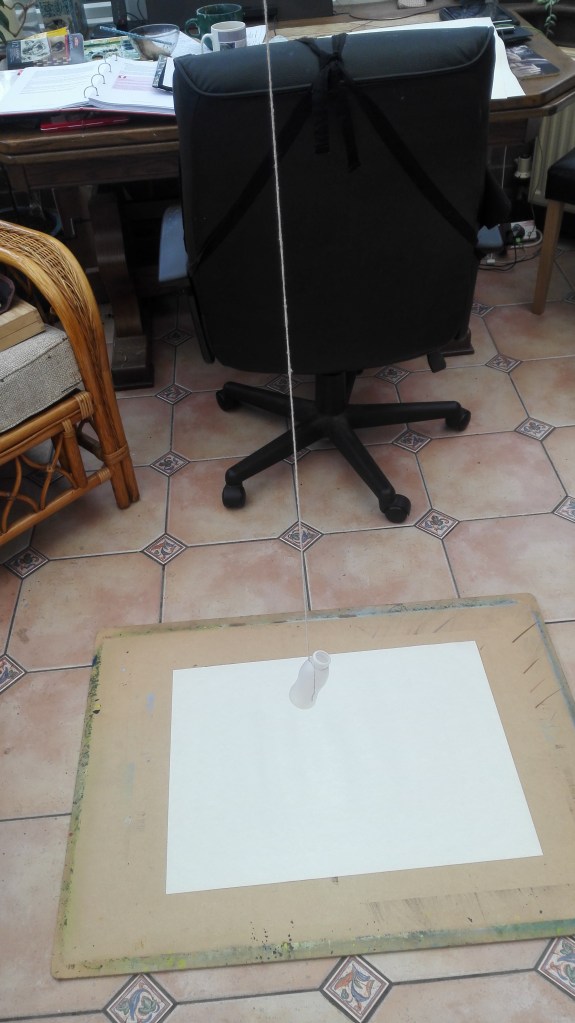
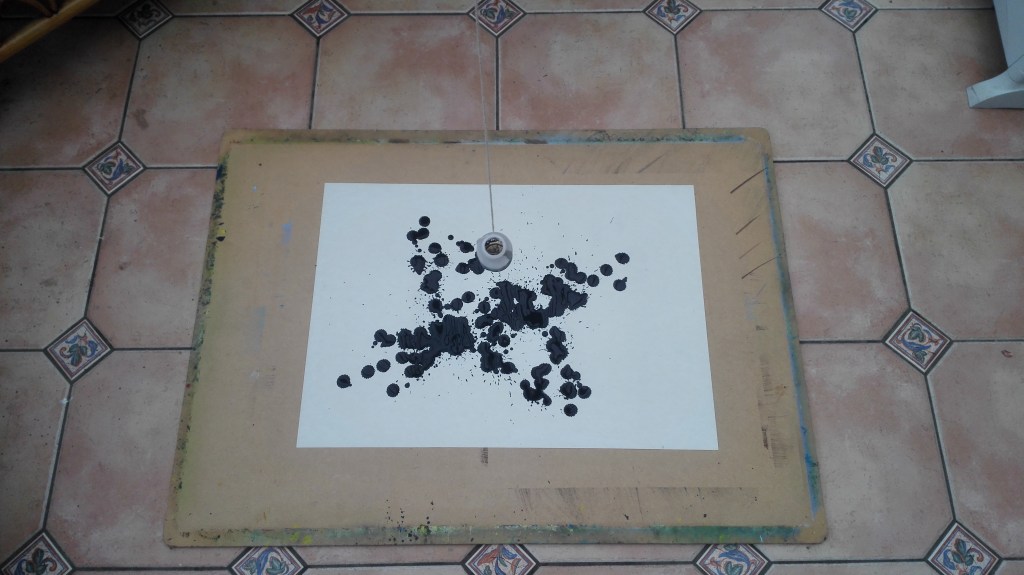
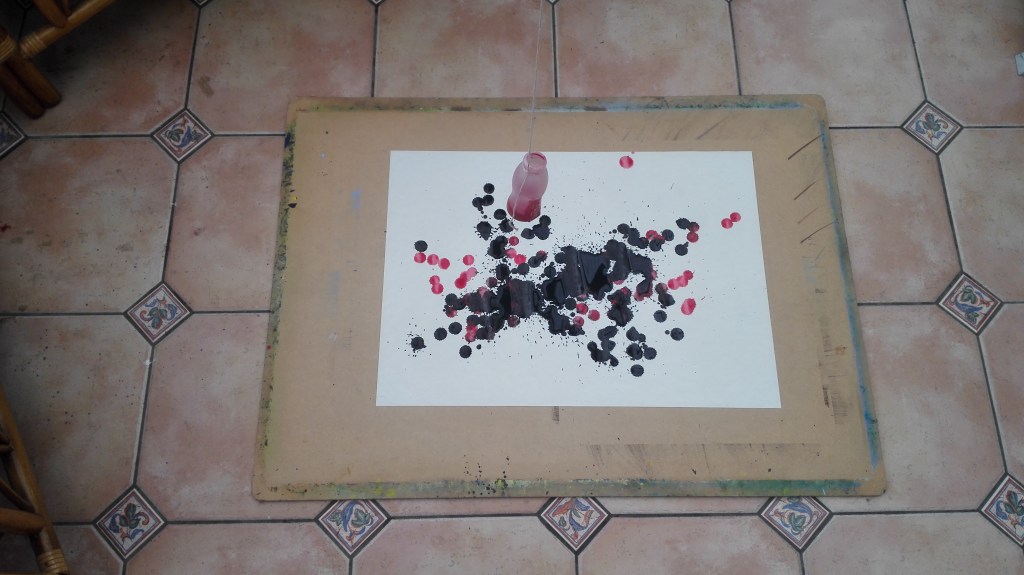
This process created a limited range of paint drips on the paper. The drips tended to be centred towards the middle of the paper and consisted of blobs of paint. I did notice that when the red acrylic paint was added that there were some momentary interesting pools of mixed colour. However these soon faded away and an uninteresting muddy pool remained.
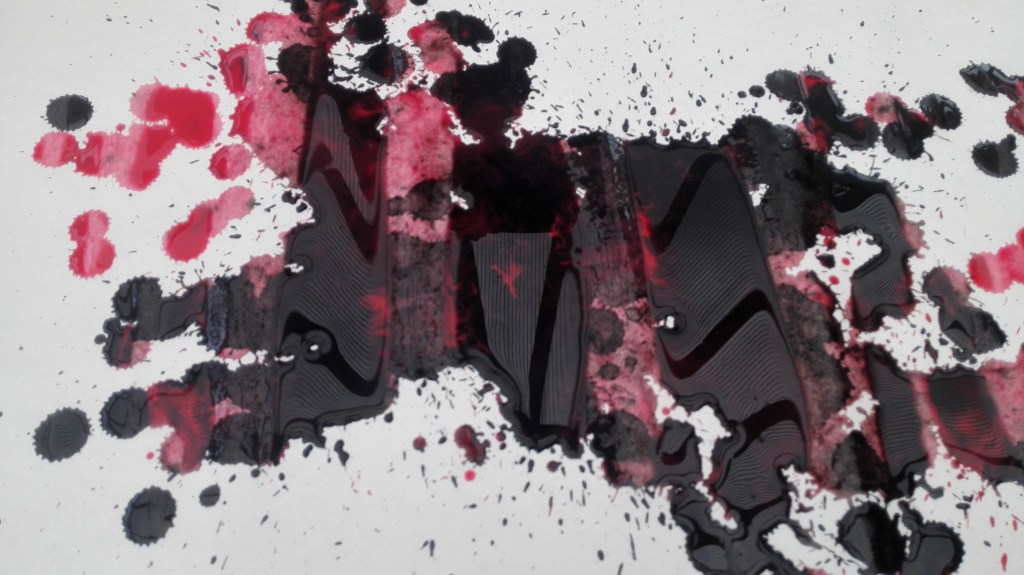
Experiment 3, Paint Dripping 2 – for this I used a similar process as that used for the previous dripping but the string was made into a swing motion. The aim was to try to make the marks elongated. The paper I used was part of a roll of Xmas wrapping paper. Whilst the swing motion was in progress the paper was moved so as to vary where the drips fell.
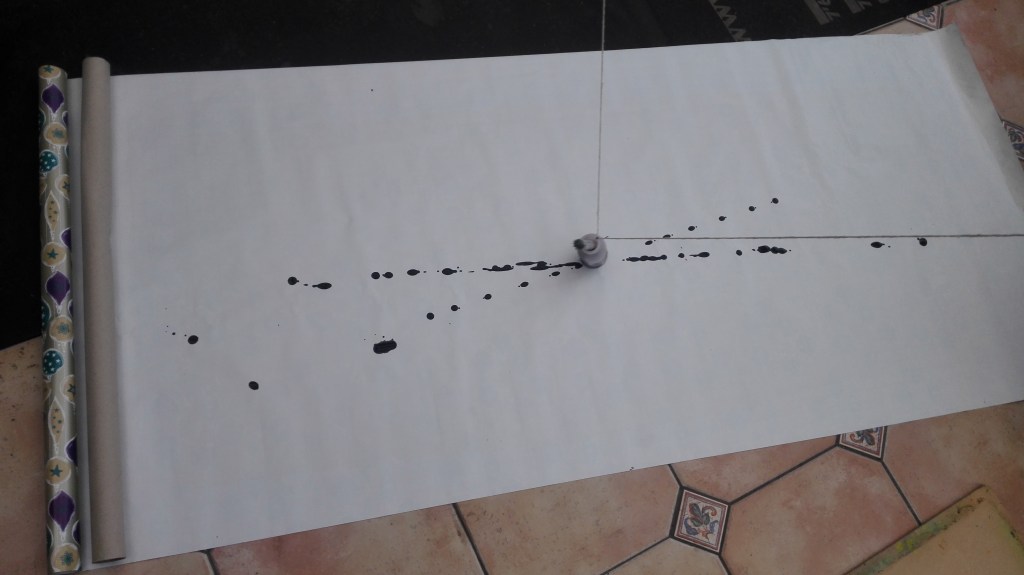
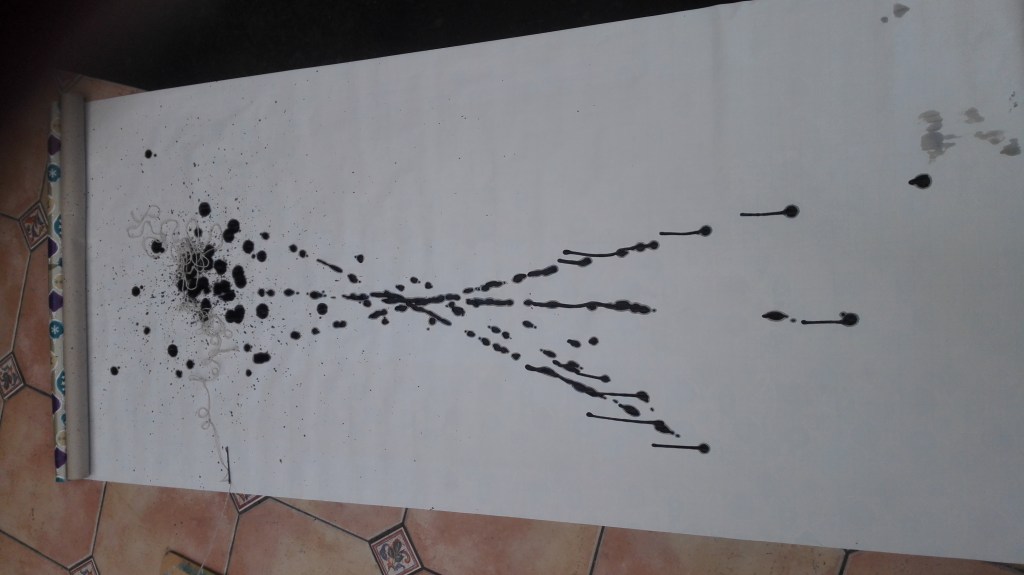
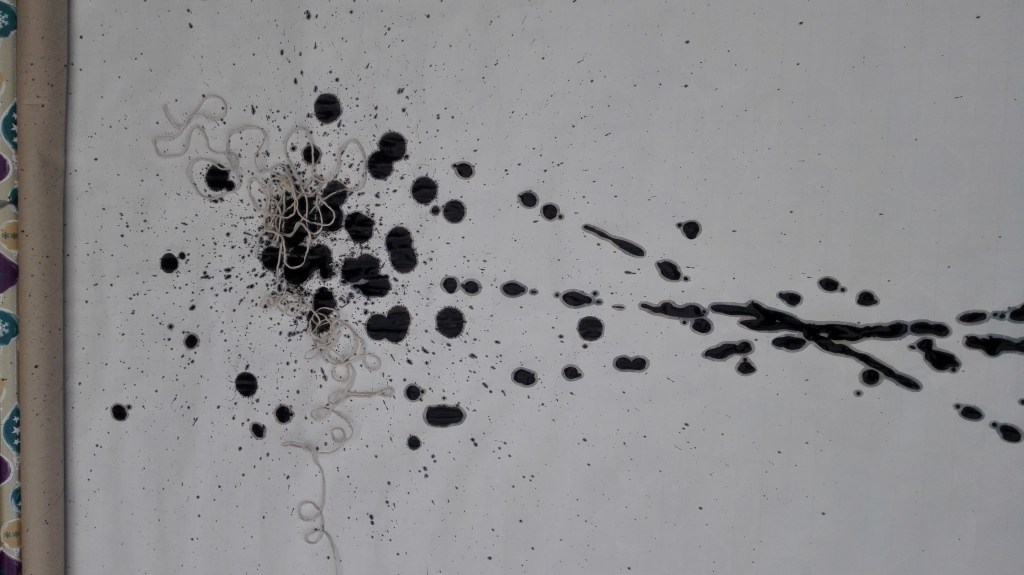
A further process was introduced whereby some of the discarded string along with a hairclip, to give it some weight, was dipped into the residue ink from Experiment 2 and this was dragged and pulled across the painting.
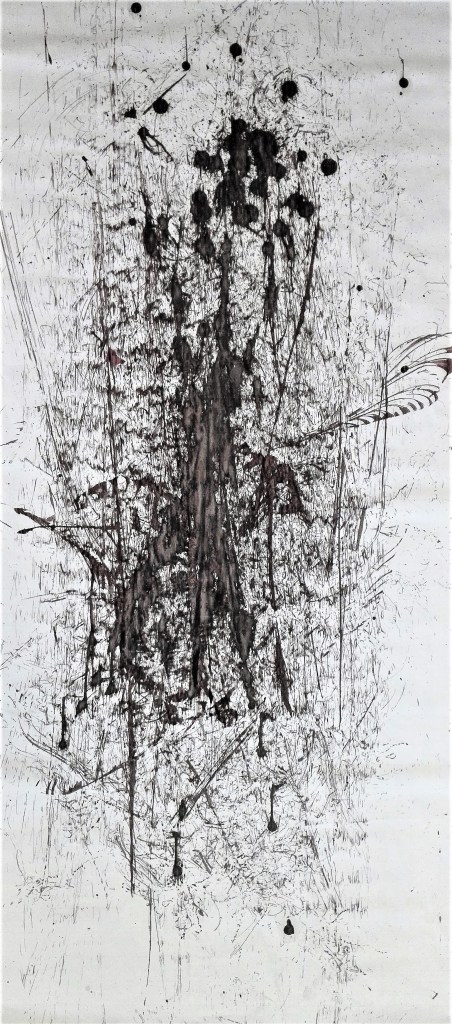
The resultant painting has interest as the marks have an energy to them. the random quality challenges the eye to try to make sense of the painting. Additionally the Xmas wrapping paper gives the painting a feeling of fragility and delicacy.
Experiment 4, Paint Dripping & Splattering. I used a similar technique to that used for the second part of Experiment 3. I started but trying to drag a sponge, which had been dipped in ink, across the surface of the paper. This proved to be unsatisfactory as the sponge had very little weight and made poor contact with the paper. I had already performed some dripping and again used the hairclip weighted string to create random marks. Lastly using a food syringe I squirted diluted yellow acrylic paint onto the surface. This was allowed to run down the paper when I lifted it
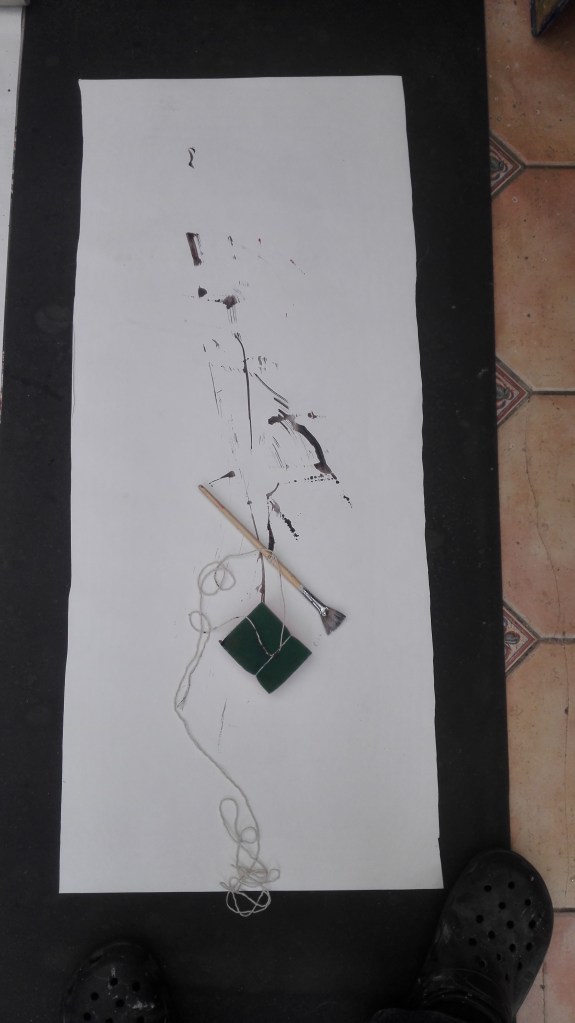
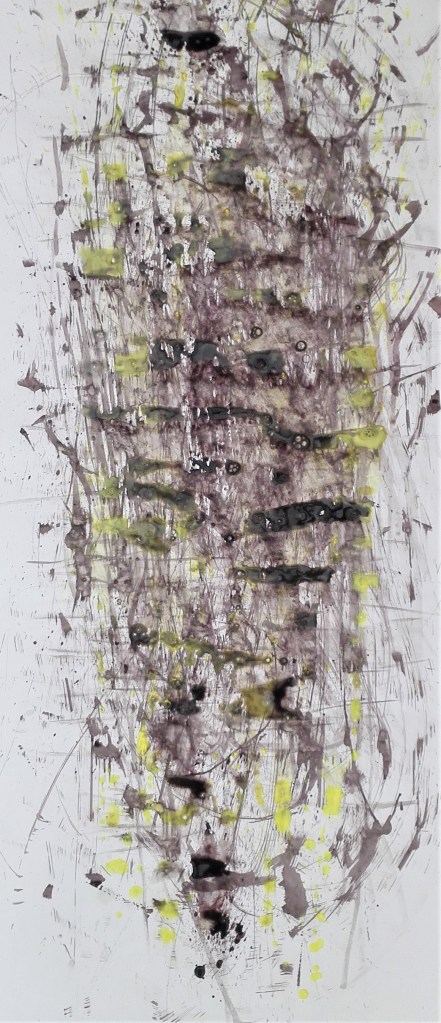
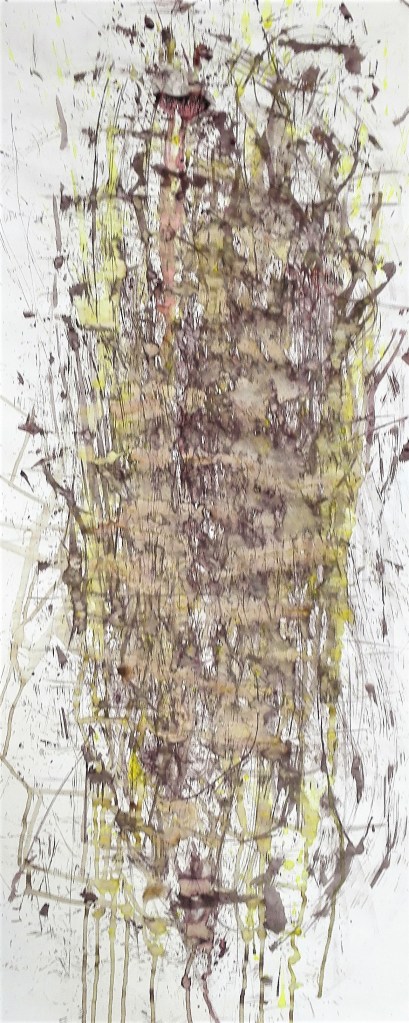
Similar to Experiment 3 this painting has a lively, energetic feel to it. The lifting of the paper allowed the paint and ink to reveal drained, washed out sections which contrast with the small scratchy string made marks. This helps to convey a sense of movement.
Reflection on results
I appreciate that these experiments were mainly concerned with the process rather than the outcome and the techniques used could be refined and manipulated to perhaps create more interesting and fulfilling results. However the breaking of the conscious connection to the mark making / painting is challenging and thrilling. It also prevents the paintings from being pictorial. The aesthetics of the paint or ink and the paper supports are explored. My challenge is to try to invent further ways to apply paint and marks to create works that have more satisfactory results.
 Mark Taylor 'Studio Practice'
love these ideas/experiments!!
LikeLike